Can AI Spot Bias in Cancer Detection?

A new study explores how intelligent agents can help ensure fairness in early-onset colorectal cancer screening.
A new study explores how intelligent agents can help ensure fairness in early-onset colorectal cancer screening.

A new framework leverages real-to-sim transfer and lightweight machine learning to significantly improve the efficiency and reliability of remote manipulation tasks.
A new research protocol allows for automated specification search in empirical economics while maintaining full transparency and auditability.
![The study demonstrates a competitive dynamic wherein a learning heuristic-assessed by [latex]Q[/latex] values-engages in a one-off contest against an artificial intelligence, revealing the relative performance of each approach in a direct, isolated encounter.](https://arxiv.org/html/2603.16916v1/game_BattleOfSexes/sh_0/V-basedQ.png)
New research reveals how incorporating behavioral economics into multi-agent AI systems alters strategic interactions and challenges traditional game theory assumptions.

Subtle changes to the mechanical design of handheld grippers used in human demonstrations can dramatically improve the quality of robot training for complex manipulation tasks.

A new framework and foundation models are poised to unlock the potential of machine learning for understanding and predicting the behavior of these complex systems.
New research demonstrates how robots can learn to navigate spaces based on nuanced human preferences, moving beyond simple goal-oriented movement.

A new agentic AI framework automates the analysis of 2D materials, promising faster characterization and fabrication for quantum technologies.
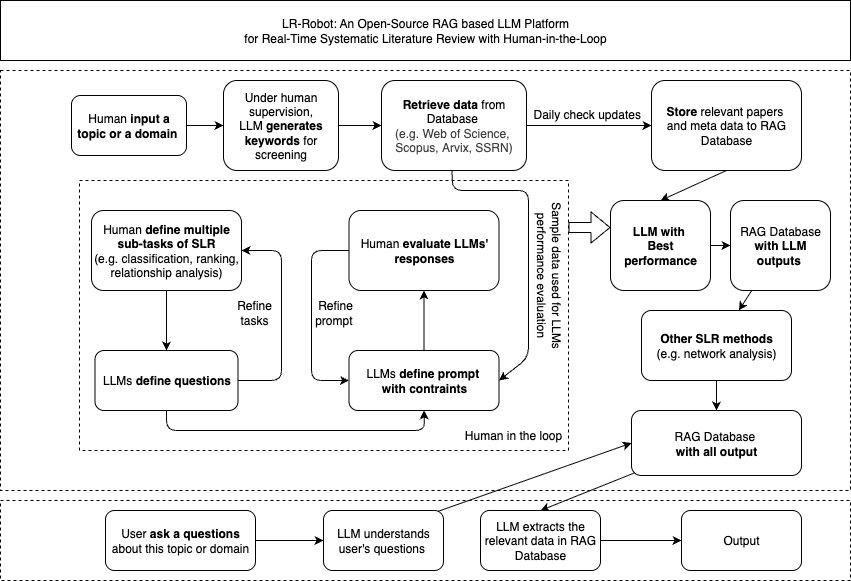
A novel framework leverages artificial intelligence and human expertise to dramatically accelerate and improve the systematic review process.

A new approach uses artificially generated research problems to train artificial intelligence agents in the iterative process of scientific discovery.