Building Blocks for Swarm Intelligence
A new approach to designing and verifying distributed systems treats swarms as composable modules, enabling greater flexibility and reliability.
A new approach to designing and verifying distributed systems treats swarms as composable modules, enabling greater flexibility and reliability.
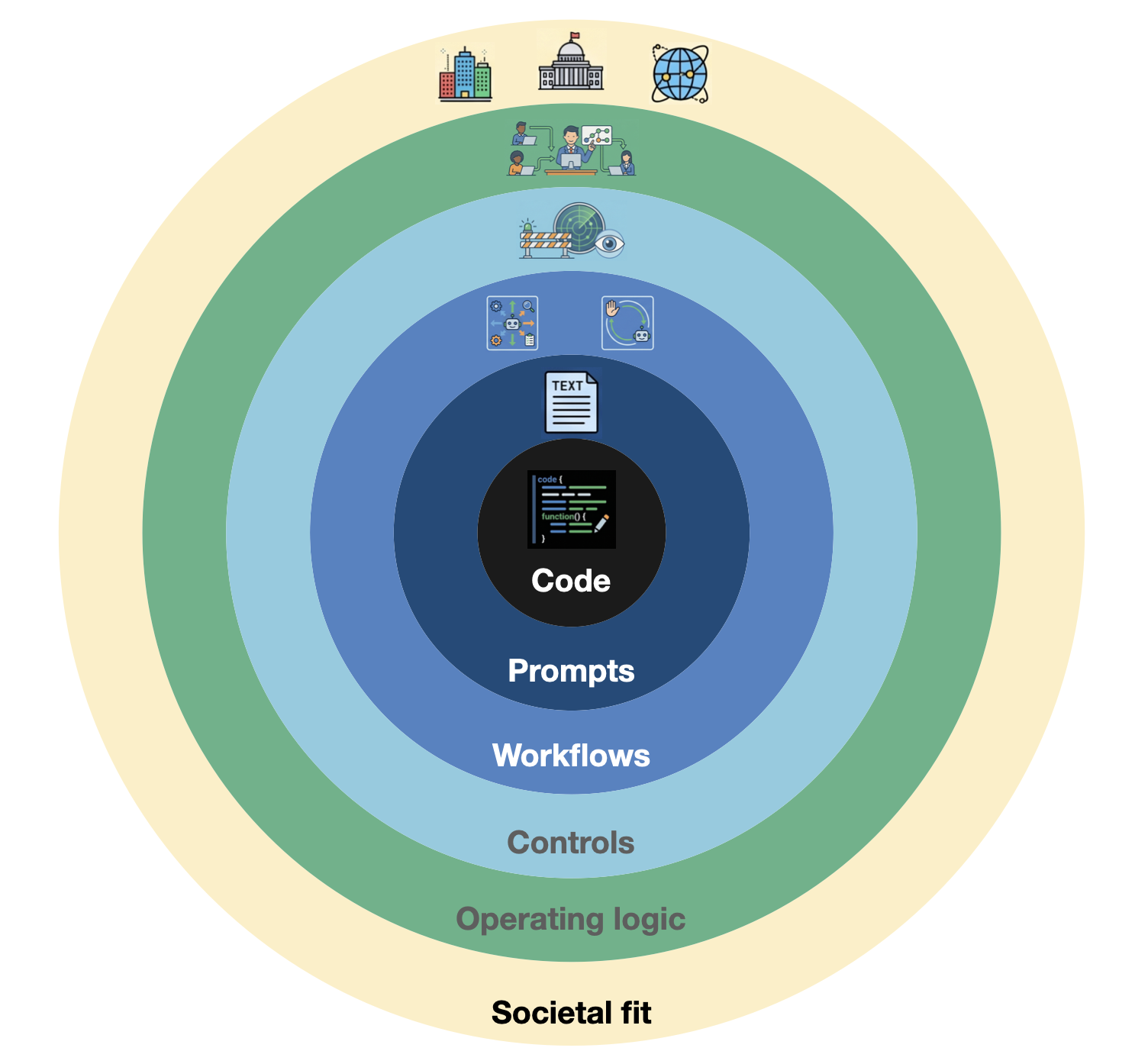
Artificial intelligence is reshaping software engineering, extending its reach beyond traditional code to encompass workflows, prompts, and the broader organizational systems that support them.
Researchers evaluated a breathing companion robot, NEFFY 2.0, to determine its effectiveness in reducing perceived stress among Ukrainian refugees, finding promising results compared to audio-guided breathing.

Researchers are demonstrating that simple, symbolic constraints can significantly improve the safety and security of AI agents without hindering their performance.

A new framework empowers multi-robot systems to perform complex search and exploration tasks by interpreting and acting on human language instructions.

New research reveals surprisingly consistent patterns of evolutionary change across both biological and artificial systems.

A new approach to AI-assisted writing uses iterative goal setting to help researchers maintain clarity and agency throughout the writing process.
Researchers have developed a deep learning model capable of realistically simulating how children with and without autism engage with virtual social robots during music lessons.
A new forensic technique reveals that AI music generators leave detectable fingerprints in their audio output, allowing for reliable detection without analyzing the music itself.

Researchers are leveraging generative models and real-world data to create diverse and realistic simulation environments that accelerate robot learning and improve real-world performance.