Who Decides What’s Real Online?
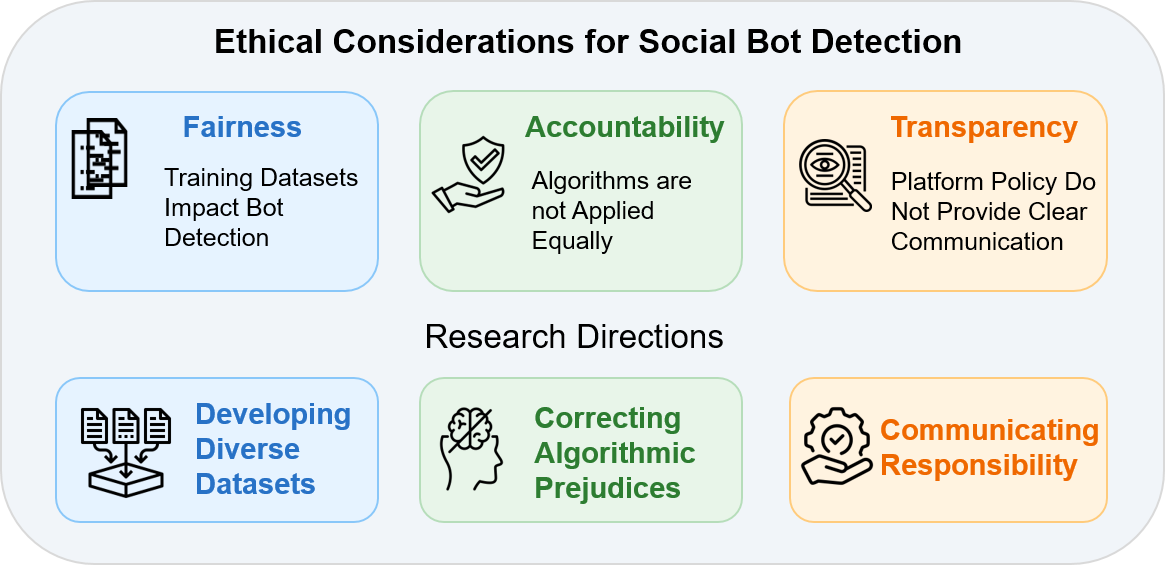
As social media bot detection becomes increasingly sophisticated, critical ethical questions about fairness, accountability, and transparency demand urgent attention.
As social media bot detection becomes increasingly sophisticated, critical ethical questions about fairness, accountability, and transparency demand urgent attention.
![The LinguistAgent architecture establishes a framework for reasoning about language through the formalization of linguistic structures, enabling the agent to decompose complex sentences into their constituent parts and derive meaning based on underlying grammatical relationships - a process fundamentally rooted in the principles of compositional semantics, akin to evaluating [latex] f(g(x)) [/latex] where <i>f</i> represents semantic interpretation and <i>g</i> syntactic parsing.](https://arxiv.org/html/2602.05493v1/x1.png)
A new platform leverages the power of large language models and multi-agent systems to automate complex linguistic tasks, offering a transparent and reproducible approach to annotation.
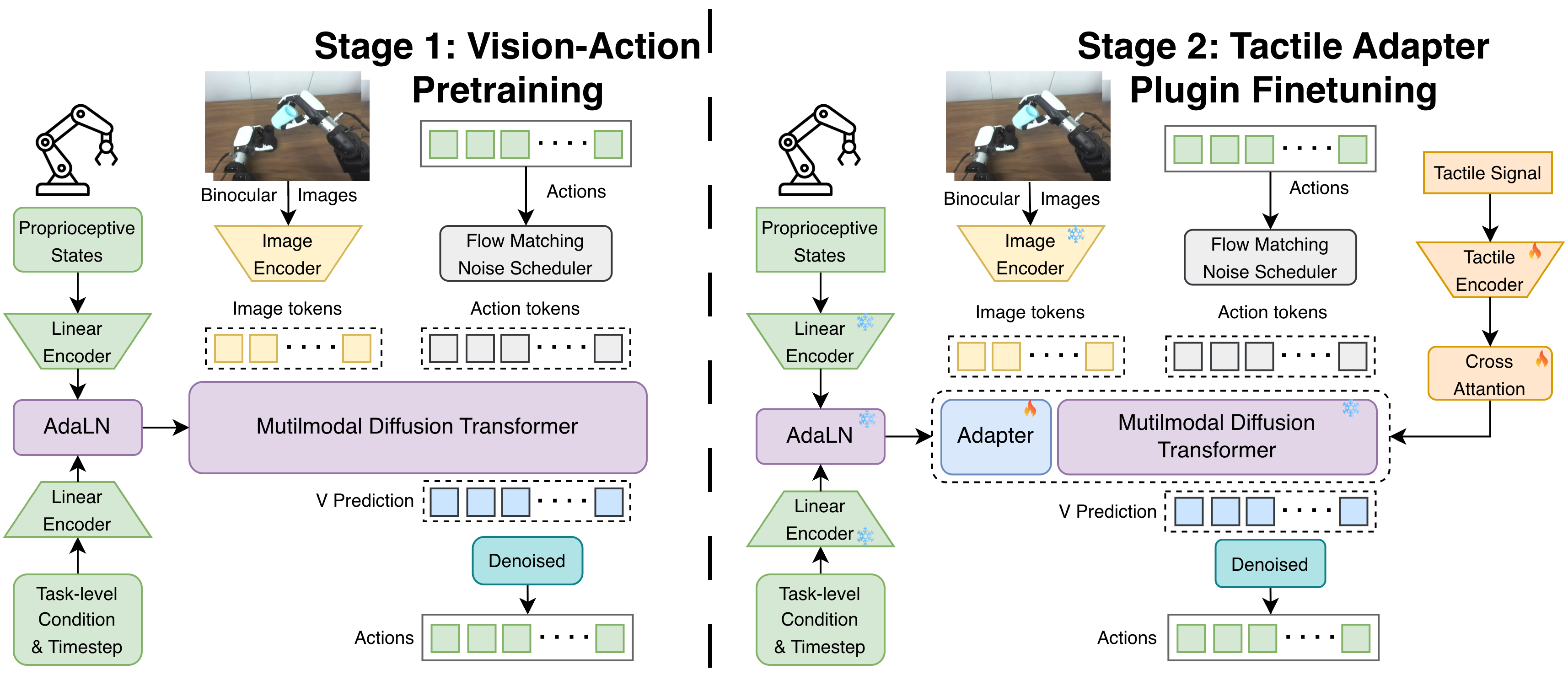
Researchers have developed a new AI framework that enables robots to perform complex, two-handed tasks with greater precision and adaptability.
Researchers have developed a new system, Weaver, that learns to actively gather visual evidence from videos to improve its reasoning abilities.
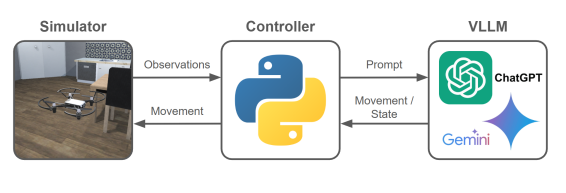
Researchers are exploring how large language models can give drones the reasoning skills needed to navigate complex indoor environments without pre-mapping.
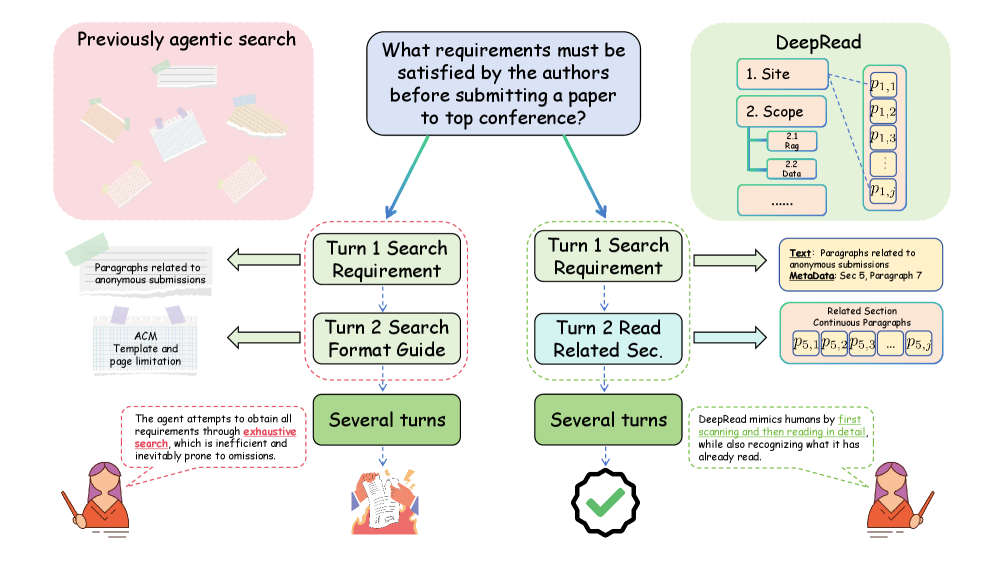
A new framework improves question answering over lengthy documents by understanding their structure and intelligently navigating content.
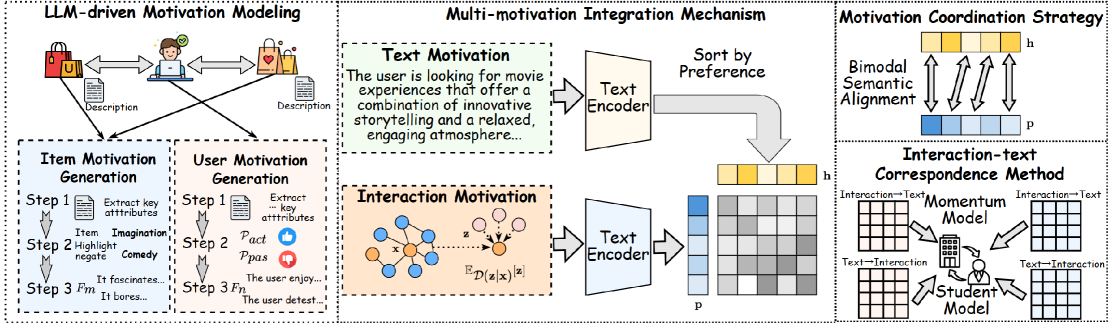
Researchers have developed a system that uses the power of large language models to decipher user motivations from reviews and behavior, leading to more relevant and effective recommendations.
New research bridges causal inference and stochastic modeling to reveal the underlying mechanisms generating complex event sequences.
![Despite all BusyBox configurations being within the training data’s affordance distribution, the algorithms [latex]\pi_{0.5}\pi_{0.5}-canon[/latex] and GR00T-N1.6-canon demonstrated robust performance only with visually familiar canonical configurations, revealing a significant failure to generalize to even slightly altered, out-of-distribution visual arrangements of the same underlying affordances.](https://arxiv.org/html/2602.05441v1/figures/res_fully_s.jpeg)
New research reveals that even advanced AI-powered robots struggle to reliably perform simple physical tasks when faced with slight variations in their environment.
![The STProtein training framework leverages a multi-stage approach-initial protein structure prediction, followed by iterative refinement using [latex] \nabla_{\theta} L(\theta, x) [/latex]-to sculpt protein conformations capable of fulfilling designated functional requirements, ultimately demonstrating an adaptive system responding to the inherent entropy of structural possibilities.](https://arxiv.org/html/2602.05811v1/images/structure/framework4.jpg)
Researchers have developed a powerful new method to predict where proteins are located within tissues, even when direct protein measurements are limited.