Building Smarter AI Agents: A System for Adaptive Configuration
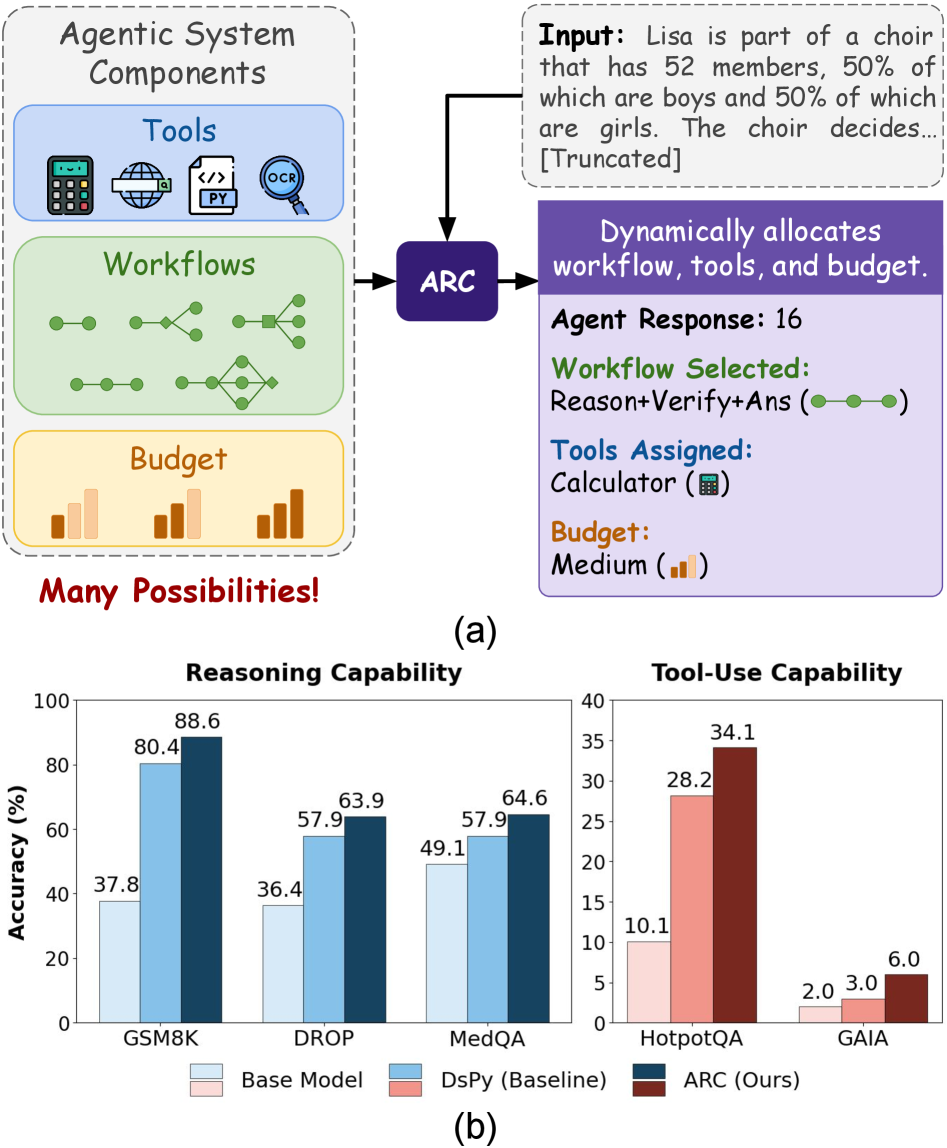
New research details a framework for automatically optimizing the workflows and instructions of AI agents powered by large language models.
New research details a framework for automatically optimizing the workflows and instructions of AI agents powered by large language models.
![Delegate agents demonstrably improve trade outcomes by consistently proposing offers that yield a significant increase in receiver surplus-a statistically significant shift not observed in non-AI-assisted scenarios [latex] (p<0.01) [/latex], suggesting a capacity for mutually beneficial negotiation.](https://arxiv.org/html/2602.12089v1/figs/spillover.png)
New research explores how different levels of AI involvement in multi-party bargaining – from advice to full delegation – impacts strategic choices and overall outcomes.
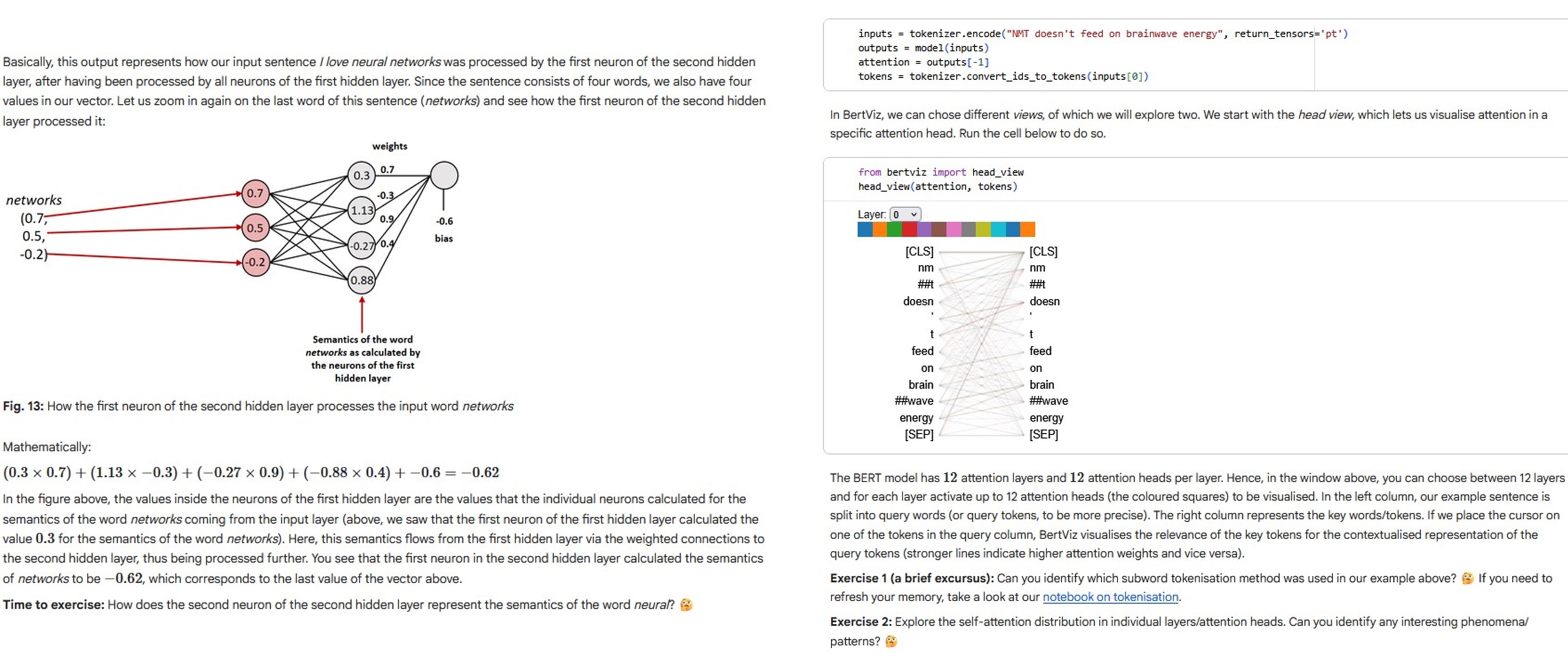
A new technical curriculum aims to equip translators and communicators with the skills needed to navigate the rapidly evolving landscape of language-oriented artificial intelligence.
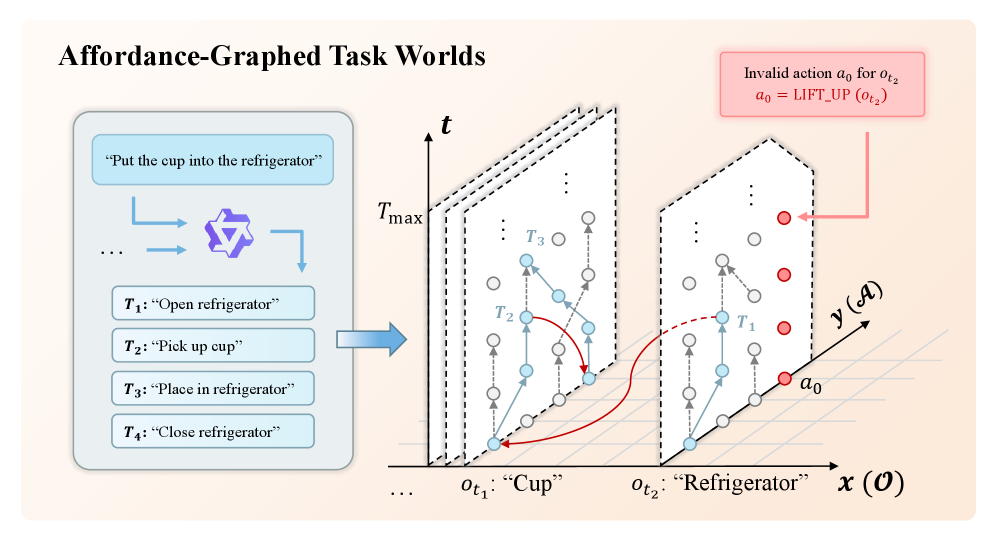
Researchers have developed a system that allows robots to generate increasingly complex environments and tasks, enabling more robust learning for long-horizon challenges.
Generative AI is flooding the art world with images, but a critical look reveals a troubling tendency towards superficiality and the normalization of kitsch.
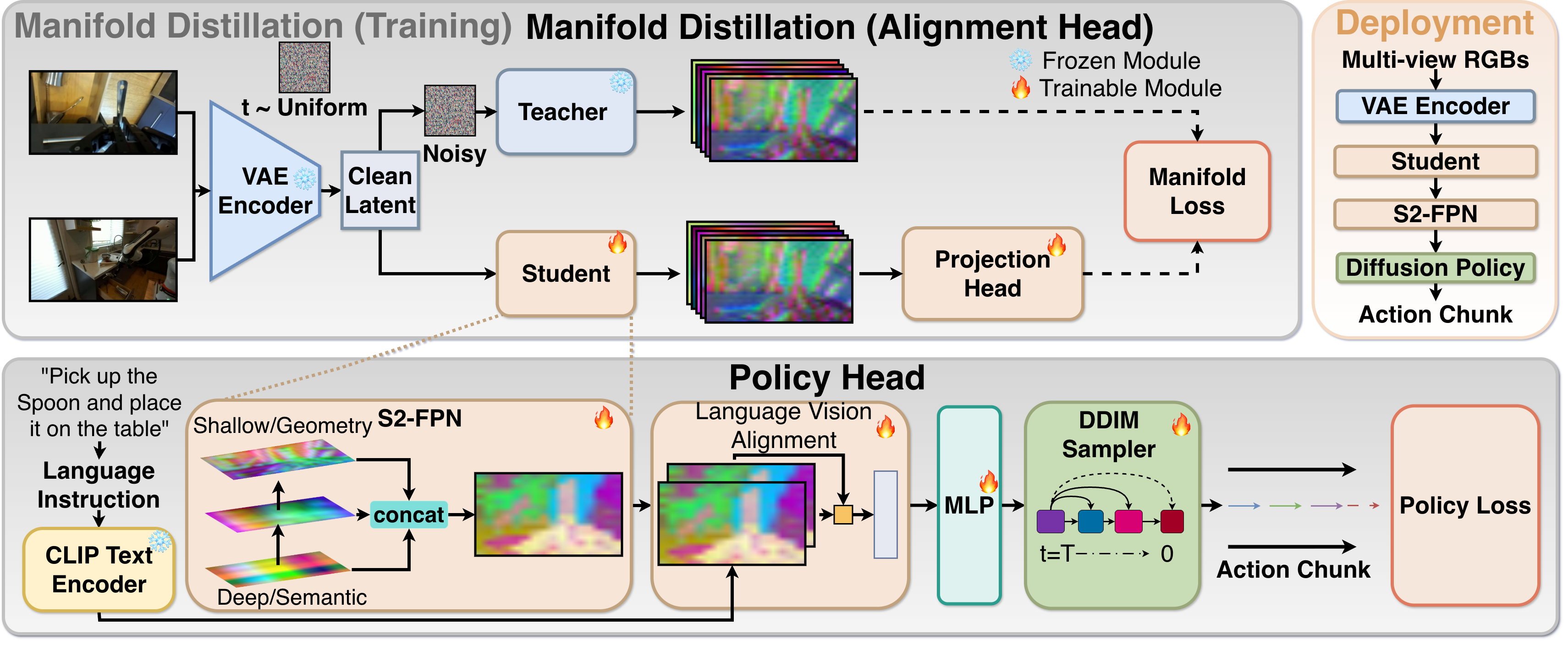
Researchers have developed a new framework that imbues robots with improved geometric understanding by distilling knowledge from powerful diffusion models.
![A system employing differentiable trust dynamically adjusts agent weighting during communication, allowing reliable agents to maintain a consistent trust value of approximately [latex]0.94[/latex], while progressively down-weighting malfunctioning agents to around [latex]0.08[/latex], ultimately enabling the consensus mechanism-represented by a multilayer neural network-to closely track ground truth signal quality, a performance notably superior to that achieved through simple averaging biased by the faulty sensors.](https://arxiv.org/html/2602.12083v1/x8.png)
Researchers are blending the power of symbolic reasoning with neural networks to create multi-agent systems that can better understand, diagnose, and coordinate with each other.
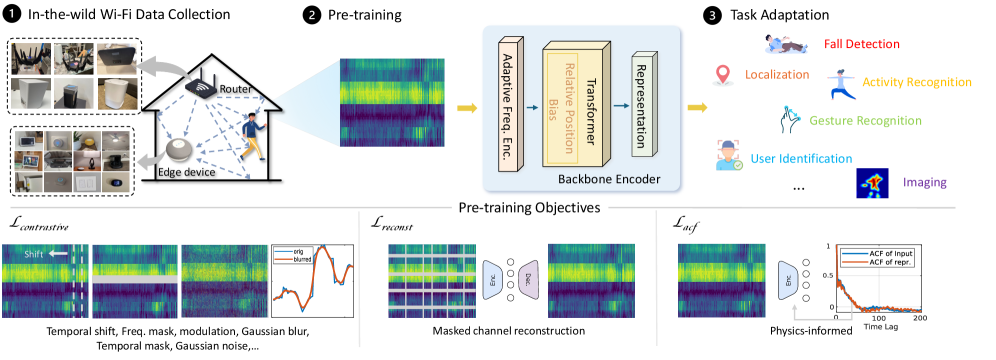
Researchers have developed a foundation model that leverages readily available WiFi signals to understand and interpret surrounding environments, paving the way for smarter, more responsive ambient systems.
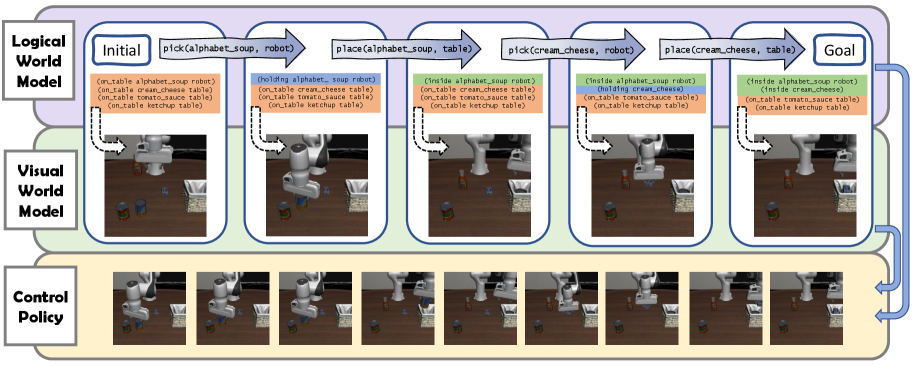
Researchers have developed a hierarchical system that allows robots to better understand and predict the outcomes of complex actions, significantly improving long-term task planning.
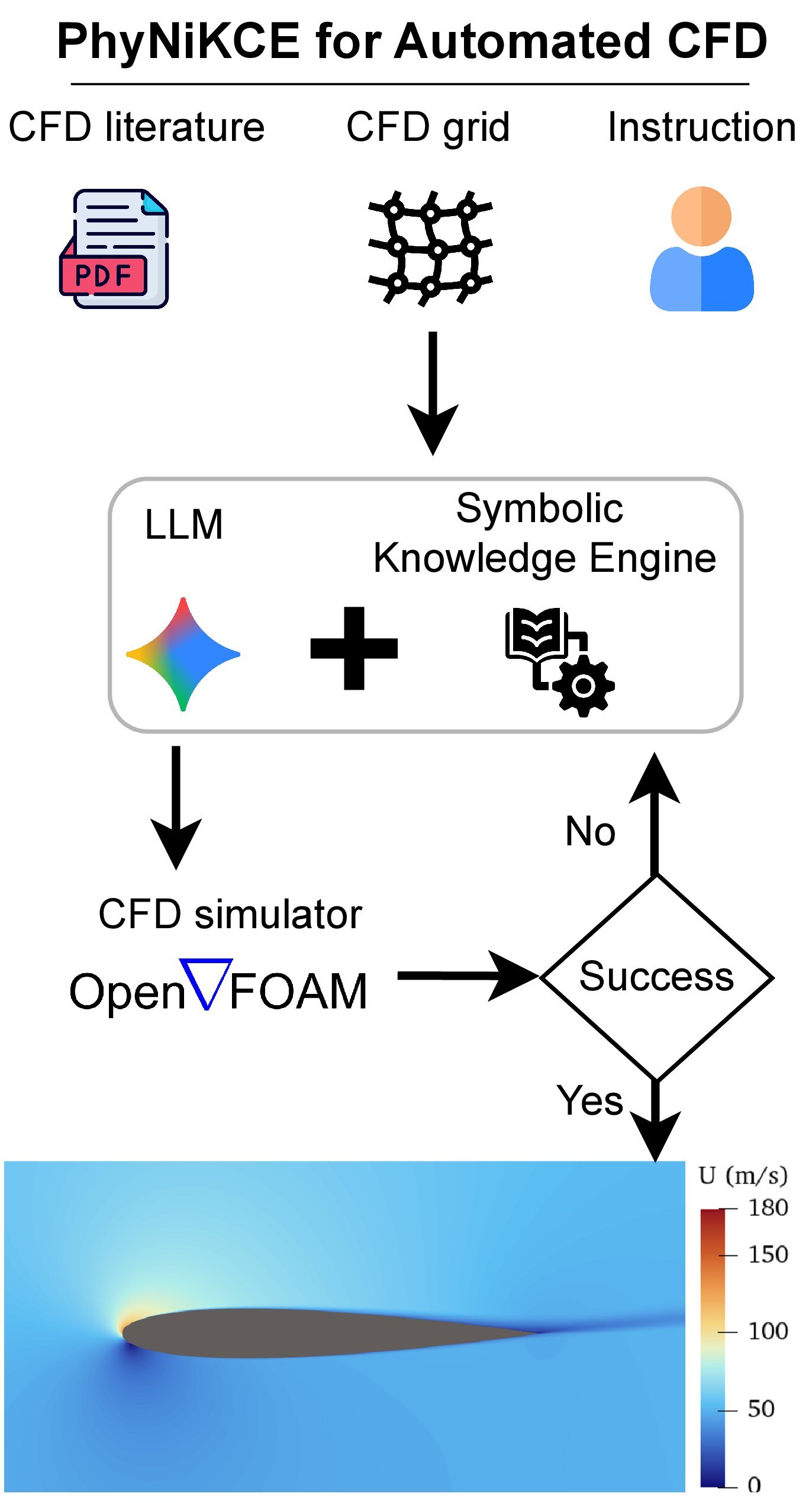
Researchers have developed a novel framework that combines neural reasoning with deterministic validation to create more accurate and reliable autonomous simulations of complex fluid flows.