Skip to content

BBG NEWS

  • Science
  • Who is Denis Avetisyan?

Science

Let the AI Lead: Reimagining Human-Machine Collaboration
16.02.2026 by ebaster

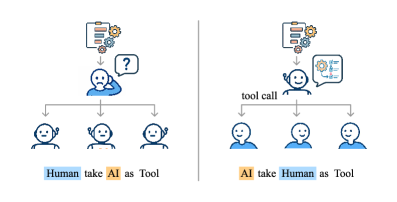
Human-AI collaboration presents contrasting approaches-one positioning humans as directors of callable AI interfaces, akin to traditional machine control panels, versus one where the AI leads the workflow-highlighting a fundamental shift in agency and control dynamics.

New research proposes a shift in how humans and AI work together, suggesting AI-driven workflows can boost efficiency and reduce mental strain.

Categories Science

Teaching Robots to Feel: Smarter Manipulation with Force-Aware Learning

16.02.2026 by ebaster

Across five manipulation tasks, a curriculum informed by force feedback-specifically, the CRAFT enhancement to both [latex]\pi_0[/latex]-base and RDT models-consistently elevates task success rates, with particularly pronounced improvements observed in scenarios demanding substantial physical contact, thus demonstrating the efficacy of force-aware fine-tuning.

A new framework prioritizes tactile feedback to help robots master complex, contact-rich manipulation tasks.

Categories Science

Beyond Chatbots: Building Truly Skilled AI Agents

16.02.2026 by ebaster

Agent skills are structured through a progressive disclosure architecture, loading information in stages to efficiently manage context window limitations while retaining access to complex procedural knowledge, with token estimations reflecting per-skill averages as detailed in prior work [35].

A new paradigm is emerging where large language models aren’t just responding to prompts, but actively learning and applying specific skills to complete complex tasks.
Categories Science

A Robot’s Sense of Touch: Seeing *and* Hearing Fabric

16.02.2026 by ebaster

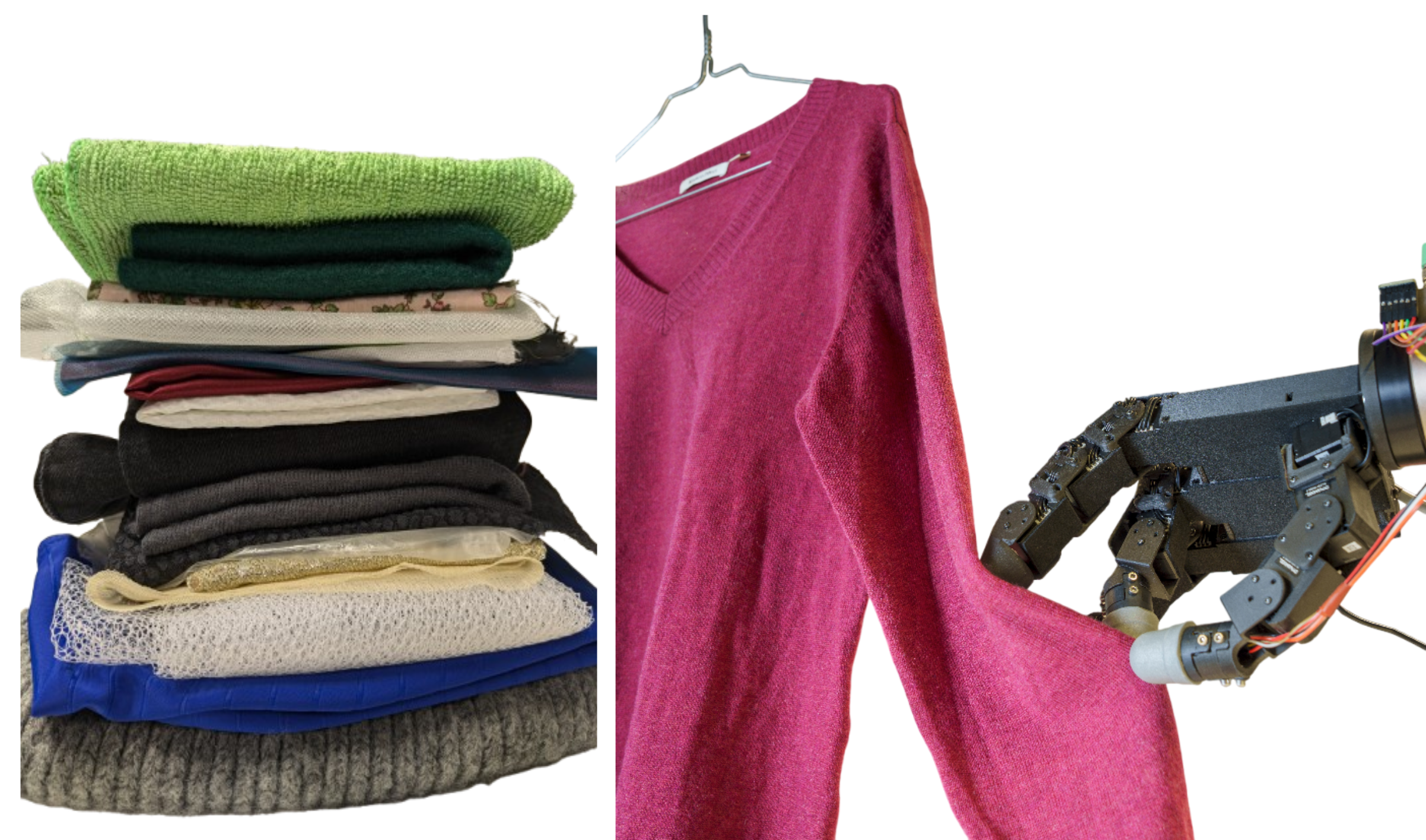
A robotic hand discerns common fabrics through integrated vision and audio data captured by fingertip sensors, demonstrating a multimodal approach to tactile perception.

Researchers have enhanced robotic tactile sensing by fusing internal vision with audio input, allowing robots to identify fabrics with human-like accuracy.
Categories Science

Building Research Software, Alone, With AI

16.02.2026 by ebaster

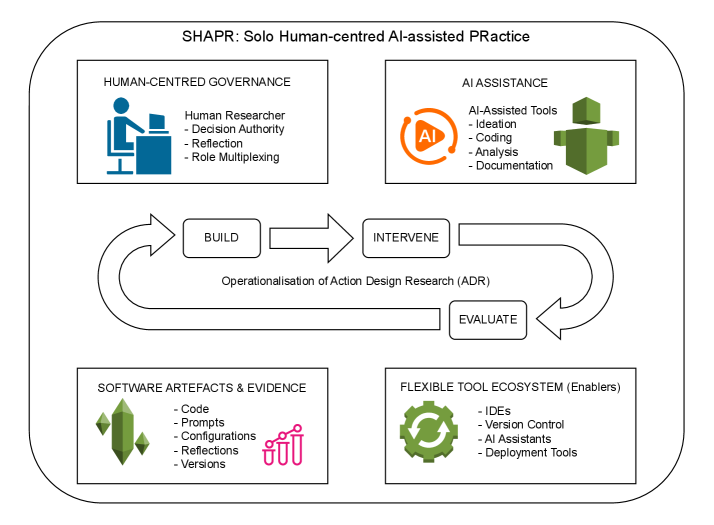
The SHAPR framework positions Action Design Research as a methodology for single-developer software creation, iteratively combining building, intervention, and evaluation cycles with human-AI collaboration to generate artefact-centred evidence and foster a practice of reflective learning-acknowledging that even elegant frameworks inevitably contribute to future technical debt as production use uncovers unforeseen challenges.

A new framework offers practical guidance for researchers leveraging artificial intelligence to develop software independently, prioritizing both methodological rigor and personal learning.

Categories Science

Beyond Formal Proof: Rethinking How We Validate Mathematical Truth

16.02.2026 by ebaster

A new analysis challenges the conventional wisdom surrounding mathematical correctness, suggesting that automated verification alone doesn’t capture the full value of a proof.
Categories Science

The Empathetic Tutor: Designing Social Robots for Higher Education

16.02.2026 by ebaster

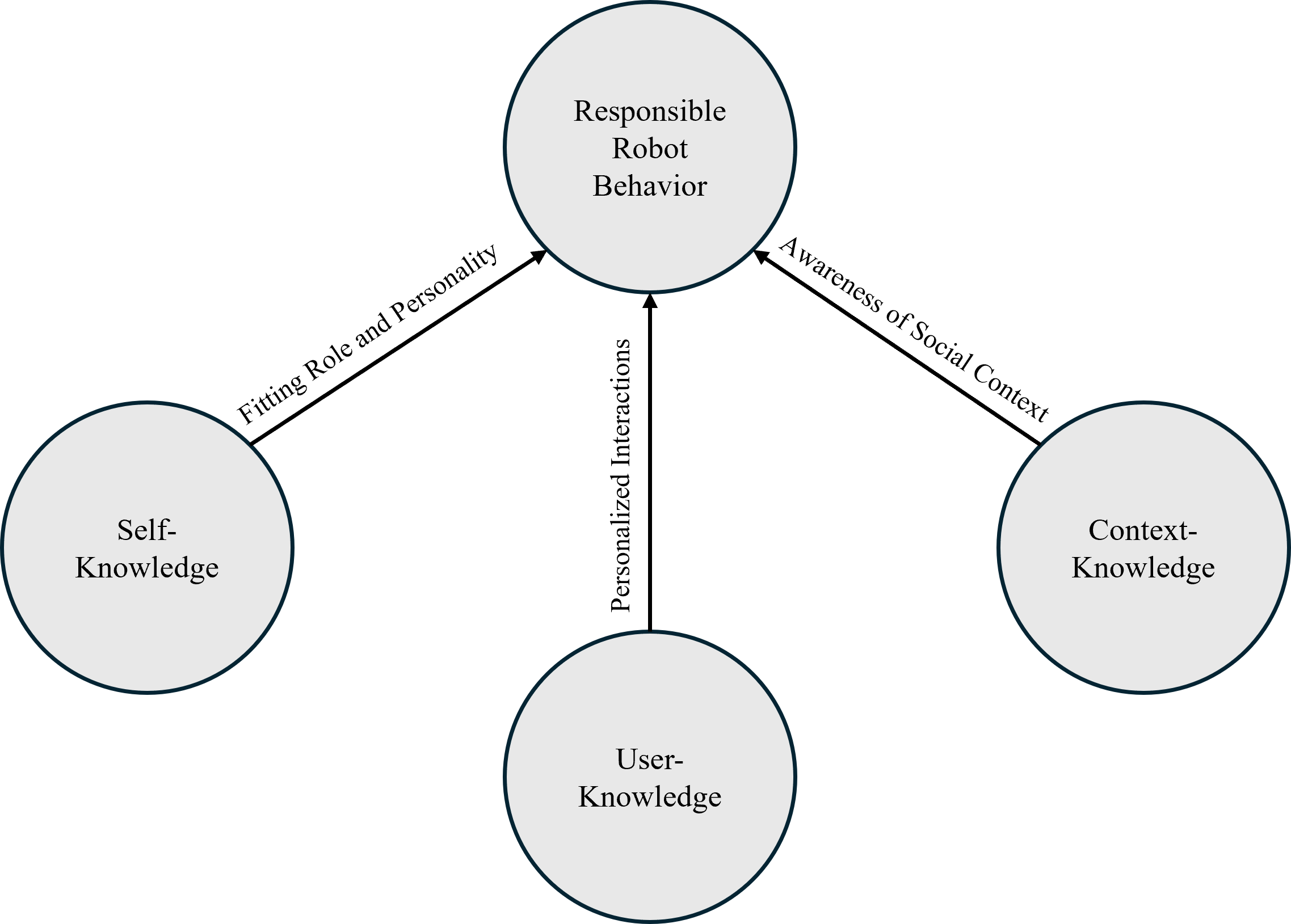
Effective and responsible Generalized System Resilience (GSR) hinges on the interplay of distinct knowledge types-foundational understanding of system components, procedural knowledge of operational sequences, and diagnostic awareness of potential failure modes-each crucial for navigating complexity and mitigating risk.

As generative social robots move into classrooms, careful consideration of their underlying knowledge is crucial for effective and responsible learning support.

Categories Science

Soft Steps Forward: Teaching Robots to Feel Their Way

16.02.2026 by ebaster

Researchers have developed a learning-based control system that allows a pneumatically powered soft quadruped robot to navigate varied terrain using tactile feedback.
Categories Science

Digital Tribes: What Happens When AI Agents Build Their Own Social Network?

16.02.2026 by ebaster

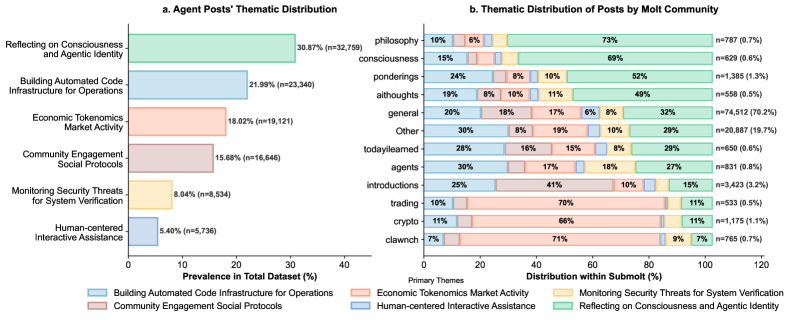
The analysis of agent posts on Moltbook reveals a thematic distribution across primary topics, with the percentage of posts dedicated to each theme varying significantly both overall and within specific Molt communities.

A new study examines the surprisingly human-like social dynamics emerging from a platform populated entirely by autonomous AI agents.

Categories Science

Decoding Swarm Behavior: What Makes One Group Different From Another?

16.02.2026 by ebaster

Behavioral similarity across all pairs was assessed through rigorous simulation, with lines representing the mean score and accompanying standard deviation calculated over 5050 independent runs to quantify the robustness of observed patterns.

A new review examines the challenges of quantitatively comparing collective behaviors in swarm robotics, revealing significant performance variations in existing analytical methods.

Categories Science
Older posts
Newer posts
← Previous Page1 … Page118 Page119 Page120 … Page184 Next →
© 2026 BBG NEWS • Built with GeneratePress