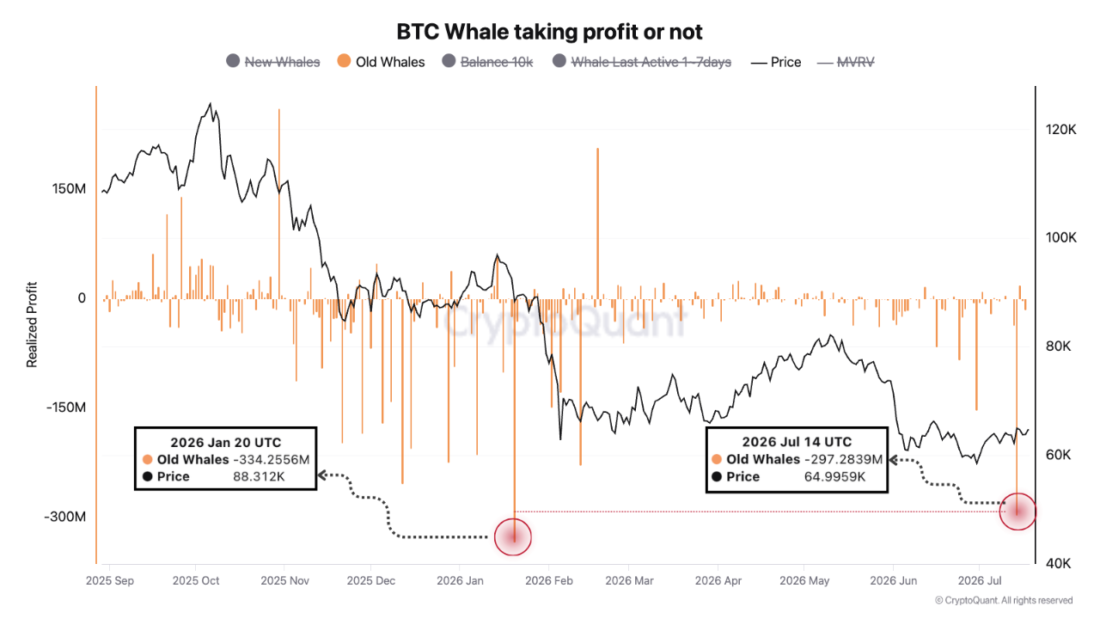
On July 14th, long-term Bitcoin holders – those who’ve had the cryptocurrency the longest – experienced $297.3 million in losses, making it the second-worst day of this market cycle. Recent data reveals that these established Bitcoin owners are the primary sellers.
On July 14th, a significant shift occurred in the Bitcoin market. Long-term Bitcoin holders – those who hadn’t sold despite previous price drops since late 2025 – finally started selling at a loss.
On Saturday, analysts noticed that older Bitcoin holders – often called ‘whales’ – experienced around $297.3 million in losses in a single day. According to on-chain analyst MorenoDV_, this was the second-biggest daily loss for this group since September 2025.
Only one day this cycle was worse.
The January Ghost Nobody Wants Back
Long-term Bitcoin investors – those who’ve held their coins for years, even through previous market ups and downs – are often considered financially stable. They usually have enough capital to withstand price drops that impact others. However, when these veteran holders start selling at a loss and in large amounts, it signals that the downturn is affecting even the most established players in the Bitcoin world.
January 20th turned out to be particularly difficult for me as a researcher following this market. It marked the beginning of a very rapid sell-off – one of the steepest I’ve seen in this current downturn, and it happened after prices had already climbed fairly high. Looking at the data, these two moments stand out sharply; they’re like isolated spikes on an otherwise relatively flat line over almost a year.
Source: CryptoQuant QuickTake by MorenoDV_ — cryptoquant.com
Who Is Actually Doing the Selling
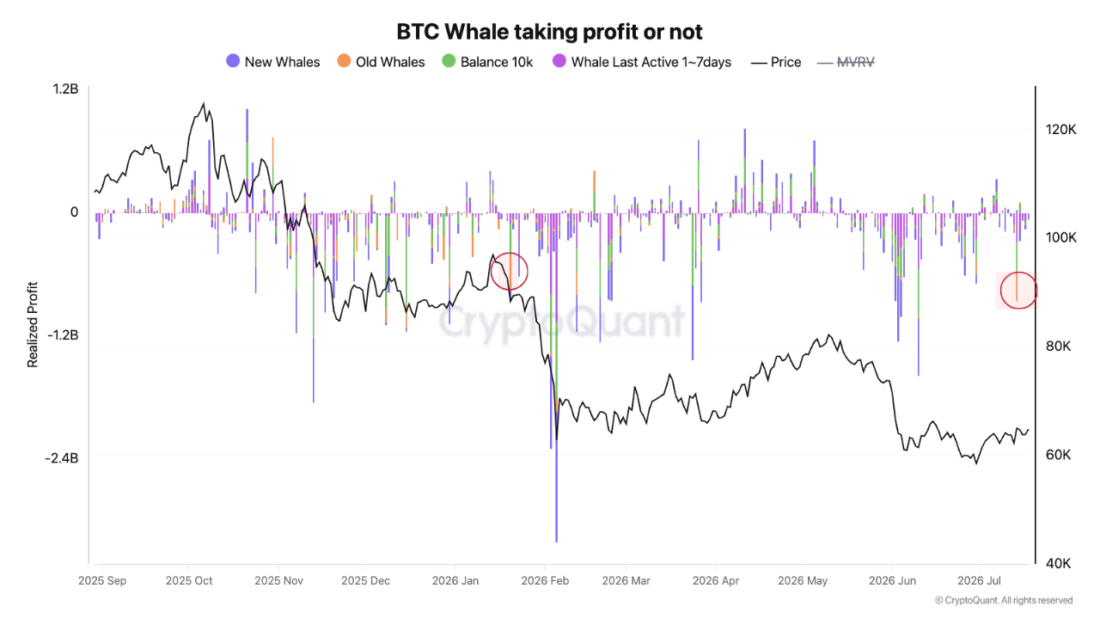
What’s really interesting, and frankly shifts my understanding of this situation, is that the long-term holders – what some might call ‘old whales’ – aren’t actually driving the selling pressure. It seems someone else is.
During this recent market decline, large cryptocurrency holders – including new investors with significant funds and those holding over 10,000 units – have sold off substantial amounts of their holdings, sometimes reaching billions of dollars in a single instance. Miners are also facing considerable pressure, and the speed at which they’re selling off their coins is now being seen as another sign that the market will continue to fall.
Considering the larger market situation, $297 million doesn’t seem like a huge amount. While some long-term investors are also selling, they aren’t driving the current downturn – it’s mostly being caused by newer, more reactive traders.
Source: CryptoQuant, whale cohort realized profit and loss — cryptoquant.com
What Would Confirm a Bottom
As a researcher tracking Bitcoin, I observed that on July 14th, BTC was trading around $65,000. This is quite a shift when compared to January, where we saw a loss of $334.3 million with the price near $88,300.
MorenoDV_ believes a market bottom isn’t confirmed until three things happen. First, large sell-offs from older investors need to stop. Second, the overall group of large investors needs to reduce their losses. Finally, the market needs to absorb the selling pressure without falling to new low prices. Analysts watching Ethereum used similar reasoning this week when observing its attempt to stay above $1,780.
One extreme print does not confirm a bottom, though.
Stronger Hands or Another Leg Down
When people rush to sell their coins out of fear, it can actually be a good thing if those coins are bought by more stable investors. However, this isn’t guaranteed – it *could* happen. Right now, the key is for strong buyers to absorb the selling pressure.
The analyst cautions that if sudden drops in price start happening close together, especially as Bitcoin struggles to stay within its current trading range, it suggests further selling pressure is likely, not the end of it. A single day’s data from July isn’t enough to determine if this trend is over.
This article covers on-chain data and analyst commentary. It is not financial or investment advice.
2026-07-19 21:43