Key Takeaways
- Bitcoin’s on-chain trader loss margin has improved to -11%, returning to the neutral range used in the analysis.
- The realized prices of 1-3 month and 3-6 month holders have converged in the low-$70,000 area.
- Old whales realized approximately $297.3 million in losses on July 14, their second-largest daily loss event since September 2025.
- The reset becomes more convincing only if BTC absorbs the released supply and reclaims recent-holder cost bases.
Various data sources confirm the same market shift. Newer Bitcoin investors have reduced their average purchase price as coins were sold during the recent price drop. Long-term, established investors are now experiencing significant losses, indicating the selling pressure is no longer limited to recent buyers. Despite this, Bitcoin’s price is still below the point where both these groups would recover their initial investment.
The current on-chain data appears healthier than it was in June, but we still need to see consistent buying activity to confirm that the increased supply is being absorbed by long-term investors.
Recent Holders Have Repriced Lower but Remain Underwater
According to a CryptoQuant analyst, Bitcoin’s on-chain trader profit/loss margin has improved to -11%. This is considered a neutral indicator, as it’s moved out of the -12% range that typically signals a bearish trend.
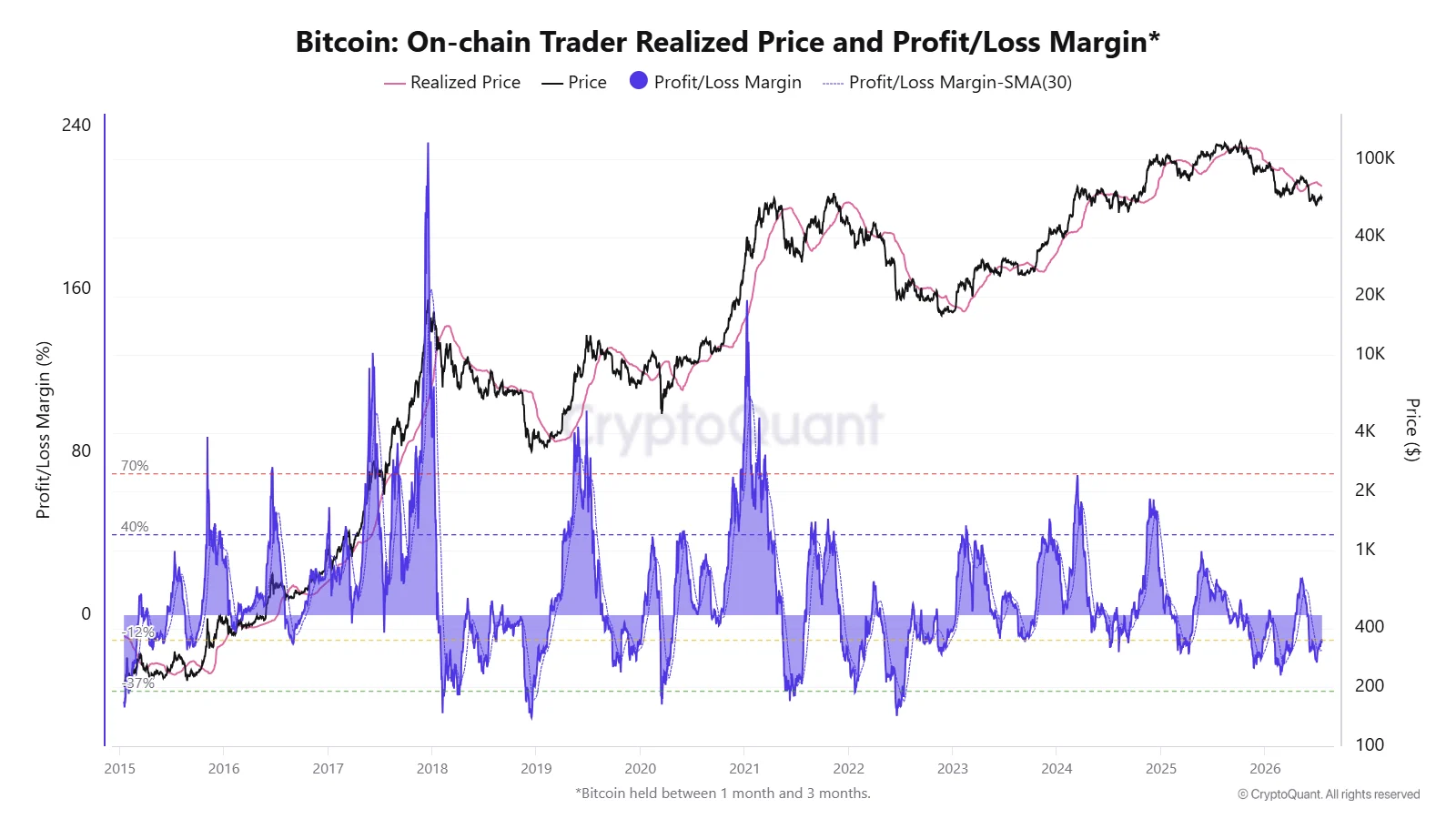
A narrower loss might seem like prices are going up, but it can also happen when people sell coins they bought for more money – resulting in a lower average sale price, even if the overall market hasn’t fully recovered. This lowers the reported losses for those currently selling without necessarily indicating broader improvement.
ShayanMarkets observed a similar pattern when analyzing Realized Price UTXO Age Bands. Realized Price estimates the average purchase price of coins by looking at their market value when they were last moved on the blockchain – it’s a helpful way to understand what a group of investors generally paid for their holdings, even if we don’t know each individual’s exact price.
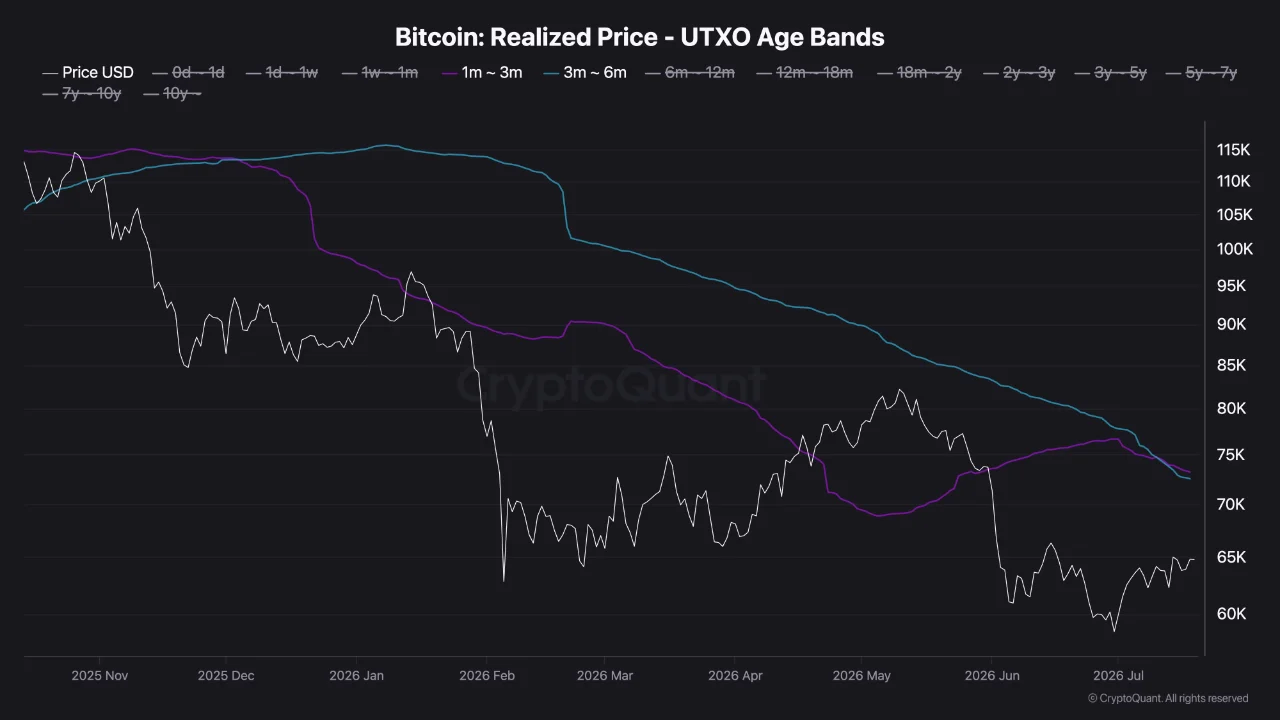
Prices for both the 1-3 month and 3-6 month groups have settled around $70,000. Despite entering the market at different times, continued selling during the recent market decline caused prices for both groups to fall to similar levels.
Don’t consider these two findings as separate positive signals. They both point to the same thing: recent coin holders have experienced losses as coins have been sold at lower prices, ultimately lowering the overall break-even point for the market.
This change means Bitcoin doesn’t need to rise as much for recent buyers to start seeing profits again. However, it also creates a likely area where people might sell. Those who bought higher and experienced losses may see a price recovery into the low $70,000s as an opportunity to get out at around even cost, which could create a barrier preventing further price increases.
Old Whales Are Now Participating in the Loss-Taking
Our latest findings indicate that selling pressure is now affecting long-term Bitcoin holders, suggesting a deeper level of concern in the market.
On July 14th, when Bitcoin was trading around $65,000, long-term Bitcoin holders – often called ‘whales’ – collectively experienced roughly $297.3 million in losses, according to CryptoQuant analyst Moreno. This was the second-largest single-day loss for these holders since September 2025.
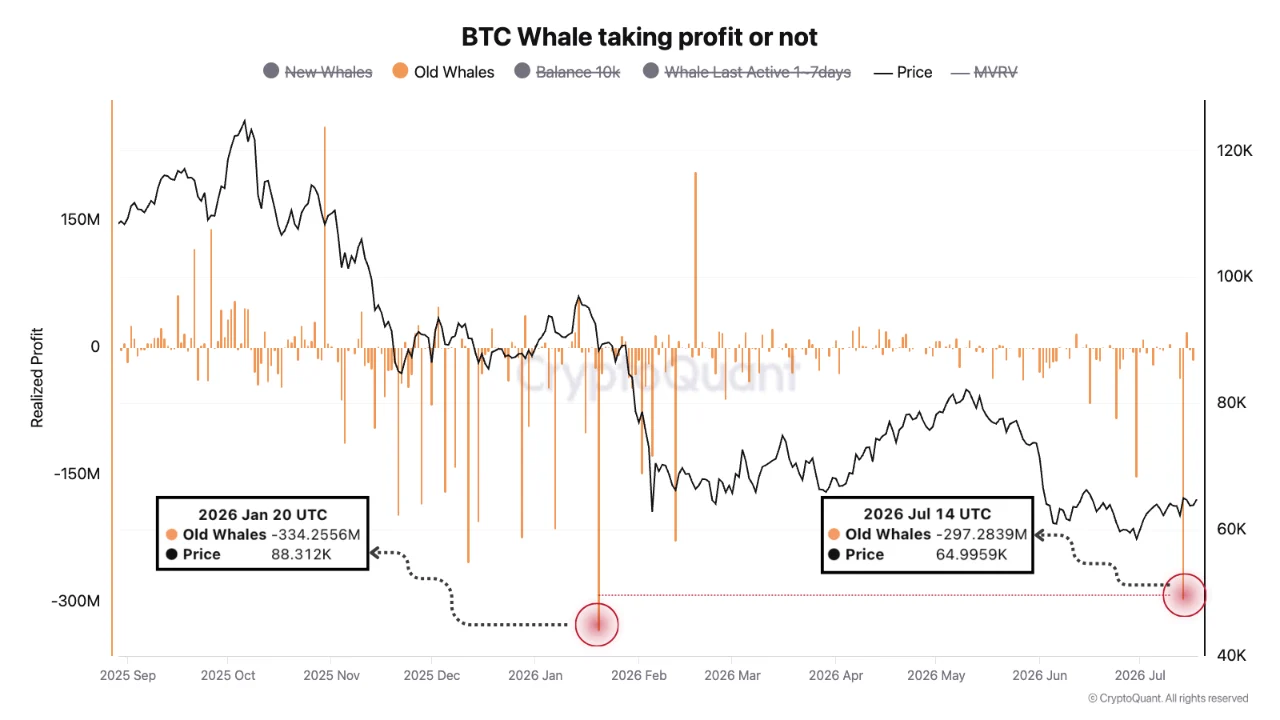
A bigger instance of losses happened on January 20th, totaling around $334.3 million when Bitcoin was trading at about $88,300. Because that previous event occurred before a further decline in the market, this recent loss doesn’t necessarily mean selling pressure is over.
Experienced whale investors are better able to handle market dips than newer ones. When these long-term holders start selling their coins even at a loss, it suggests the price decline has gone on for too long or fallen too far, prompting them to reconsider their investments.
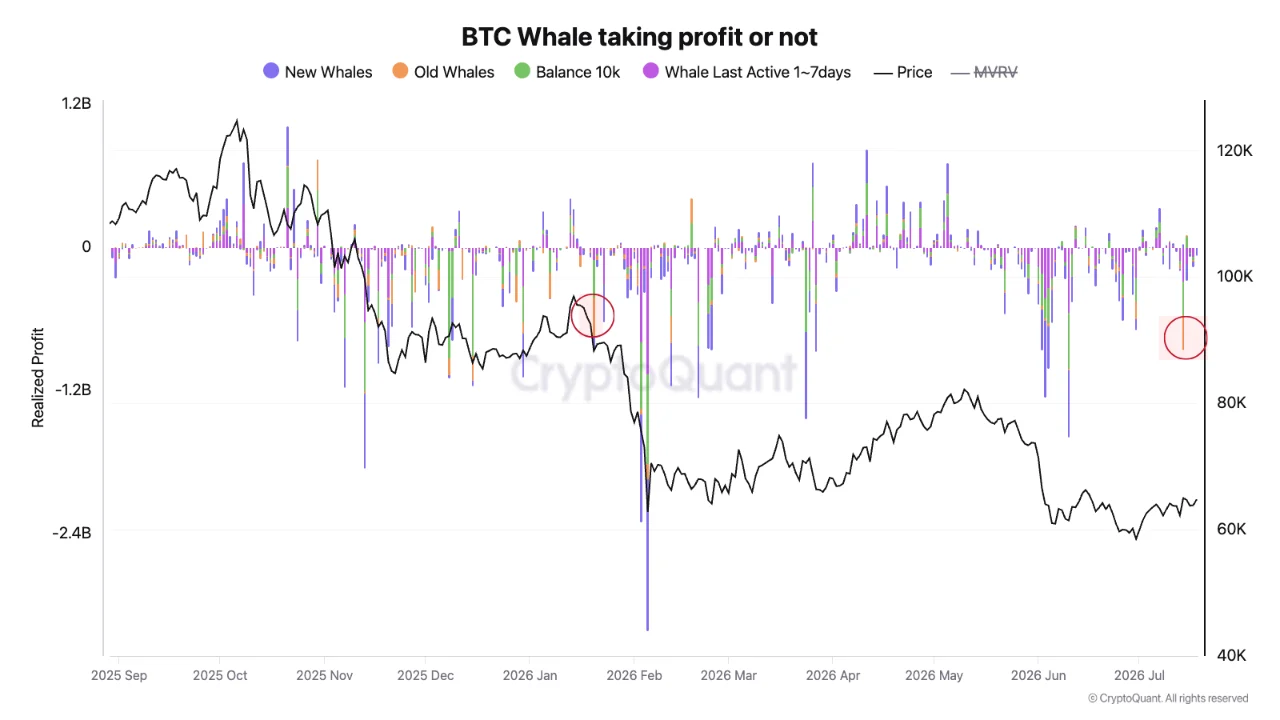
They weren’t primarily responsible for the recent price drop. Newer and recently active large Bitcoin holders, along with those holding over 10,000 BTC, experienced significantly bigger losses during the downturn. While older, long-term holders also started selling on July 14th, it’s newer and faster-reacting investors who are currently driving most of the selling pressure.
The Three Signals Describe an Ownership Reset
The sequence across the datasets is more informative than any individual reading.
Traders who frequently buy and sell have seen enough losses that the price they originally paid for their investments has decreased. Two groups of more recent investors now have roughly the same break-even point, meaning they’d need about the same price increase to avoid losing money. Meanwhile, some long-term, large investors are just starting to acknowledge significant losses.
This means coins are moving from people who bought at higher prices to those buying now at lower prices. This is good for stability, as these new owners won’t need the price to rise as much to become profitable and might be less inclined to sell quickly if there’s a small price increase.
We can’t pinpoint who is buying or confirm they’re particularly confident. The fact that people are taking losses suggests ownership is shifting, and the price will reveal if new buyers can step in and prevent another drop.
What Would Turn the Reset Into a Reversal?
Three developments would provide stronger confirmation:
- Whale losses begin to fade: The market should absorb the July 14 event without a cluster of larger losses from old or recently active whales.
- Bitcoin holds while supply changes hands: Avoiding new lows during continued loss realization would indicate that buyers are taking the released coins without requiring progressively lower prices.
- BTC reclaims the low-$70,000 area: A move above the converged 1-3 month and 3-6 month realized prices, followed by a successful retest, would show that recent-holder selling has been absorbed.
As a crypto investor, I’ve been watching closely and it looks like prices are finally recovering to levels where on-chain traders – those actively buying and selling directly through blockchain networks – are starting to see profits again. For a while there, many of us were actually *losing* money overall. But with this price rebound, we’re now moving back into positive territory; the balance has shifted from collective losses to collective gains.
If we continue to see large sell-offs by major Bitcoin holders, or if the price keeps hitting new lows and fails to bounce back above what early holders paid, the pessimistic outlook will likely hold true. In these scenarios, falling realized prices would suggest continued selling pressure, not the start of a lasting price increase.
Bitcoin owners are changing how they hold their coins, but the process isn’t finished yet. Some investors have taken profits, lowering the average purchase price across the market. Now, increased buying pressure is needed to push the price above the $70,000 level where a lot of Bitcoin is currently held.
Just breaking above $70,000 wouldn’t automatically signal that Bitcoin is changing direction. It would also need to stay above key price levels where many investors bought, handle any new selling pressure, and avoid quickly falling back down. Until all of that happens, the current data suggests a temporary correction, rather than a full turnaround.
This article is just for general information and shouldn’t be considered financial, legal, or investment advice.
2026-07-19 17:51