After recovering from significant drops in June, Bitcoin is expected to start August 2026 trading between $63,800 and $65,500. While the cryptocurrency saw good gains throughout July, upcoming calendar events could pose challenges for continued price increases.
Historically, August hasn’t been a great month for Bitcoin. Now, investors are trying to figure out if the recent price increase signals a lasting recovery or just a temporary break before prices potentially fall again.
Show
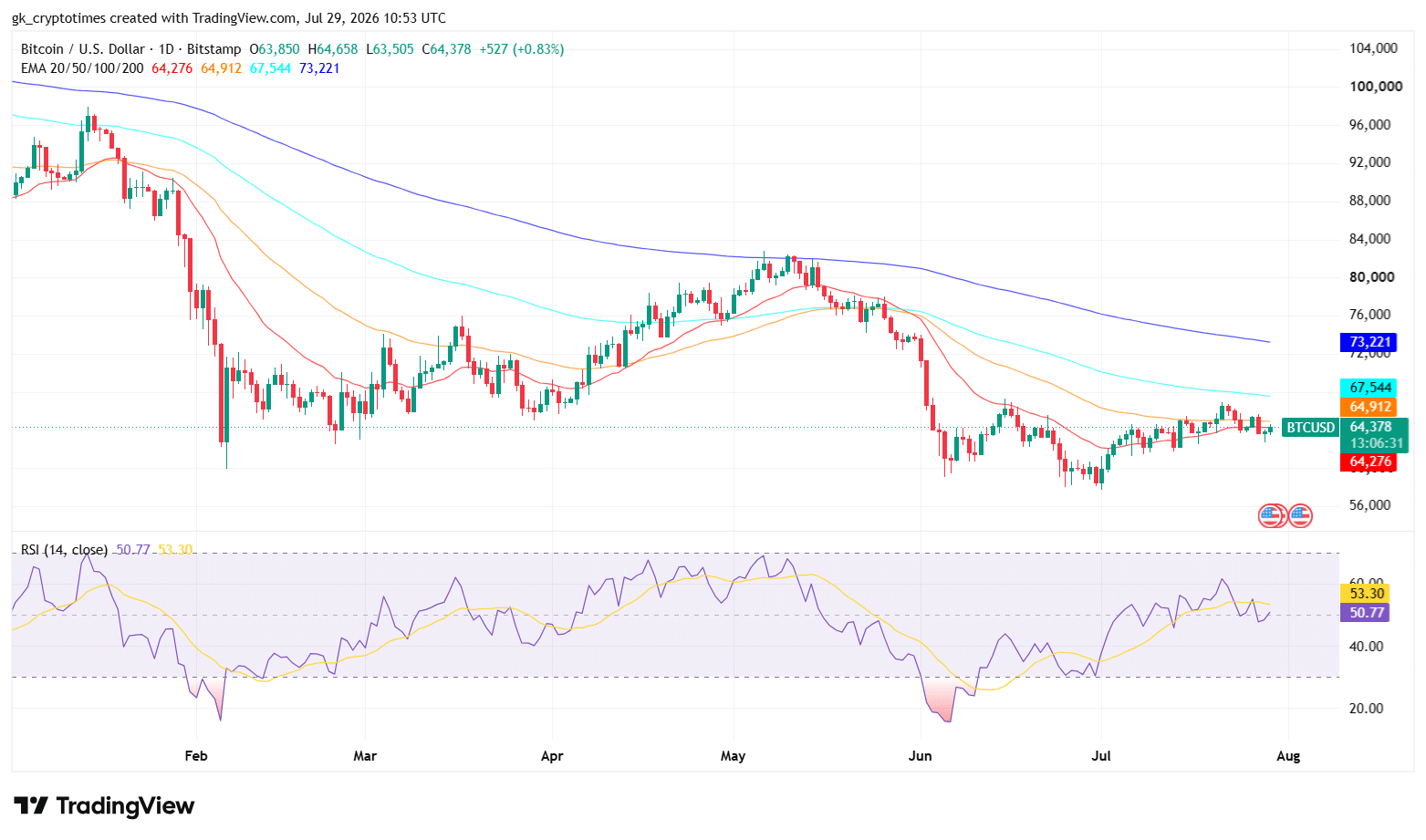
By late July 2026, Bitcoin had settled around $64,000 after a volatile first six months of the year. While June saw significant losses – over 20% – July brought a recovery that followed typical seasonal trends.
Throughout much of late July, I observed that prices fluctuated between approximately $61,000 and $66,900. It seemed like there was strong buying support around the $60,000 to $61,000 range, preventing further declines, while attempts to push above $66,000 or $67,000 consistently met with resistance.
As an analyst, I’ve been watching institutional investment closely and it’s been quite uneven. We saw significant selling pressure on U.S. spot Bitcoin ETFs in June, with outflows hitting a record $4.51 billion. July offered some brief hope with occasional inflows, but ultimately ended with net negative flows as the month closed.
Overall investment flows for the year are still significantly down, and total assets managed are well below their high point in early 2026. Without a consistent influx of new money, it will be difficult for prices to increase.
Overall economic conditions are creating some instability. Traders are closely watching what the Federal Reserve does and whether there’s any progress on new crypto laws in the U.S. Because of these things, plus the fact that large institutions are still being careful with their investments, Bitcoin is showing signs of recovery but hasn’t yet entered a clear upward trend.
August’s Historical Track Record
Looking at historical data since 2013, August hasn’t generally been a strong month for positive returns. While the average monthly gain is around 1.12%, the typical return is actually negative, at -7.49%. Recent years – specifically 2022 through 2025 – have shown consistent losses in August, strengthening the idea that this is a weak period for the market.
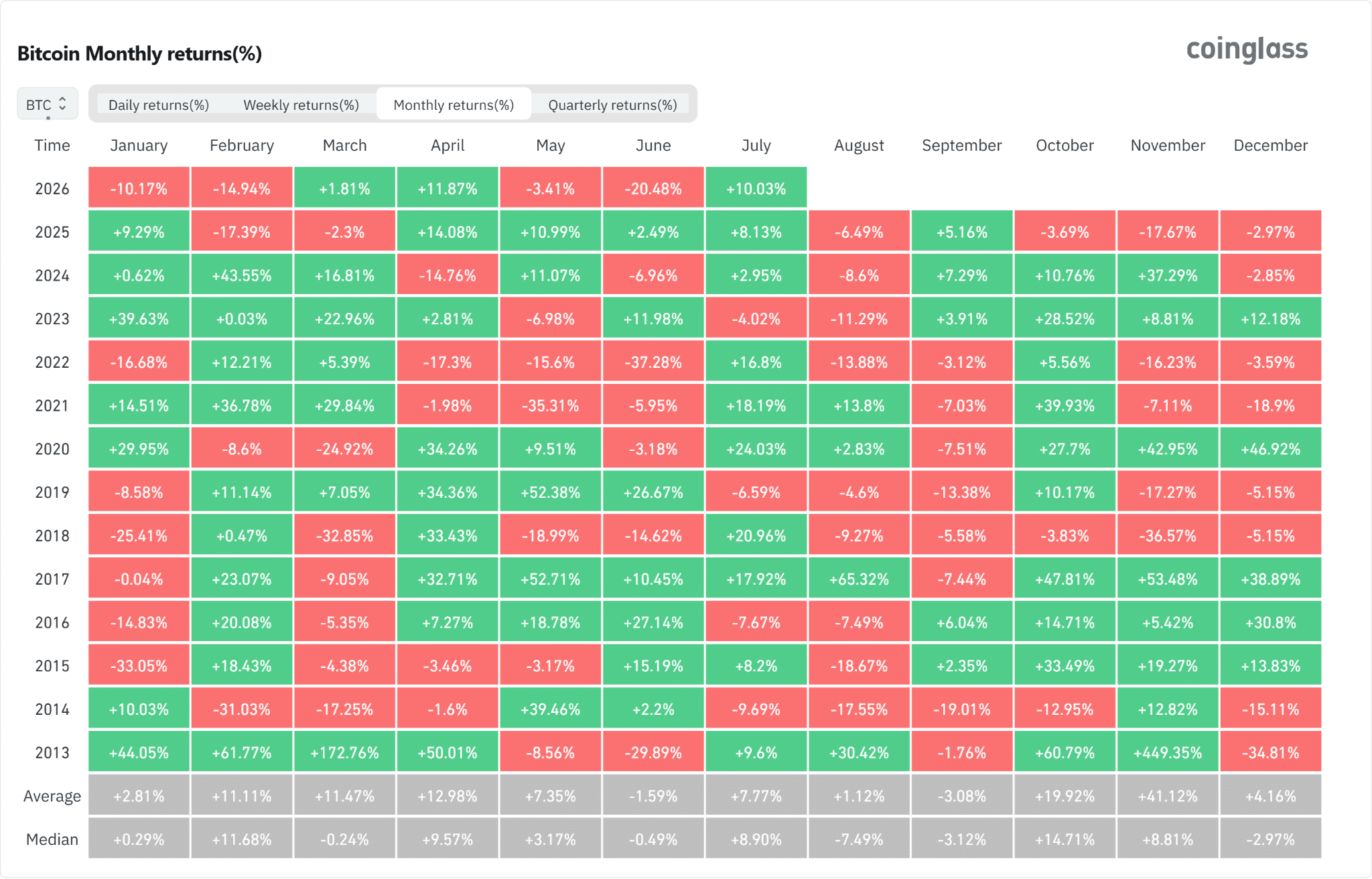
Although there are occasional exceptions, especially in years following Bitcoin halvings, August often sees a slowdown after the gains made in July. Historically, the third quarter of the year generally provides smaller returns than the strong growth typically experienced in the fourth quarter.
Technical Levels That Matter
Bitcoin’s price has shown some clear patterns lately. The price has repeatedly found support around $60,000 to $61,000, and this level also corresponds with key long-term trend indicators according to some analysts.
If the price falls decisively below this current level, it could drop to around $55,000 or even lower, finding support at those prices. Conversely, if the price stays above $66,000–$67,000 for several days, that would suggest a strengthening market with potential to reach the low $70,000s.
Market activity in late July showed some signs that prices might be leveling off or moving within a limited range, indicating an overall period of consolidation. If trading volume is low when the market tries to break out of this range, it suggests those attempts are likely to fail.
If trading volume increases and money continues to flow into ETFs, it would strengthen the argument for rising prices. Right now, the technical picture is simple: if the market stays above its recent low point in July, it’s likely to continue moving sideways or even up. But if it falls below that level, prices could drop quickly.
Analyst Views and the $100K Question
Predictions for Bitcoin’s price in 2026 vary quite a bit. Geoffrey Kendrick at Standard Chartered still believes it could reach $100,000 by the end of the year, and sees the recent price drop as a possible chance to buy if selling pressure from ETFs decreases.
Bernstein remains optimistic, predicting a year-end price of $150,000 and viewing the expected 2026 price decrease as manageable based on past trends. However, other financial firms are becoming more cautious; for example, Citi has lowered its 12-month price target due to ongoing investor selling and slow progress with regulations.
Predictions for August suggest more moderate price movement. Most forecasts anticipate either small increases or slight decreases, with prices averaging between $66,000 and $69,000. Current data and models don’t foresee a rapid surge to over $100,000 within just one month.
Bitcoin hitting $100,000 is still possible later this year, but it would need to increase in value by about 55 to 60% from its current price. Historically, that kind of jump rarely happens in August.
Most experts currently predict the market will likely stay relatively stable in the coming weeks, rather than experience a significant surge or drop. Positive forecasts for the end of the year rely on improvements in investment activity, overall economic conditions, and how the market operates – changes that haven’t fully happened yet.
Catalysts That Could Tip the Balance
Over the next month, three main things will likely influence Bitcoin’s price. The most important is how much money is flowing into or out of Bitcoin ETFs – this gives us a good, immediate read on what large investors are doing. If ETFs start seeing consistent inflows of money, that could push prices up. But if people continue to sell off their ETF holdings, it suggests weak demand and could continue the recent trend of falling prices.
Also important are actions by the Federal Reserve and overall investor feelings about risk. Unexpected announcements from the Fed, or changes in what people expect for interest rates, can cause quick swings in crypto prices. If the Fed suggests it might lower interest rates, that generally helps assets like Bitcoin; but if they signal they’ll raise rates, Bitcoin could fall.
Also, changes in U.S. regulations are still impacting how institutions predict the future of crypto. Slowdowns or failures in passing new crypto laws have already led banks to be more cautious with their goals. If lawmakers make positive progress, that could boost confidence, but continued disagreements will likely keep everyone hesitant.
As I’ve been analyzing the market, I’ve noticed certain factors seem to be influencing price movements. Positive developments, like strong trading volumes and a generally optimistic economic outlook, appear to help prices break through key resistance levels. However, if we see weak flows and a negative economic climate, seasonal patterns seem to have a stronger effect, potentially limiting upward progress.
Scenario Framework for August
If Bitcoin stays above $61,000, and the recent outflows from ETFs start to reverse, with the price moving back towards the higher end of its recent trading range, then a price increase to the high $60,000s or low $70,000s is likely. With even more positive momentum and increased trading activity, Bitcoin could potentially reach $75,000 to $80,000.
Our most likely scenario is that Bitcoin will continue to fluctuate within a range of roughly $56,000 to $65,000. This aligns with recent market performance and current trading activity, suggesting price will stabilize and recover slightly rather than experience a significant upward or downward trend this month.
If the price falls below the $60,000-$61,000 support level with significant trading activity, it could lead to a further decline, potentially down to the mid-$50,000s or even lower, and renew concerns about a major price crash. Although technical analysis suggests even lower prices are possible, a clear trigger for such a drop isn’t apparent right now.
The Bottom Line
By August 2026, Bitcoin is expected to be in a slightly stronger position than it was at the end of June, but several factors still suggest caution. Historically, gains seen in July tend to weaken in August, and recent trends haven’t changed that pattern. We haven’t seen a significant return of investment from large institutions, and Bitcoin still needs to convincingly break through key price barriers.
If the price closes higher than its recent peak each week, and demand for related ETFs increases, it would suggest the price will likely keep going up. However, if the price falls back below its recent low point, it could signal a renewed risk of further declines.
From my analysis, despite recent challenges, several prominent financial institutions still predict Bitcoin could reach $100,000 or more by the end of the year. However, this optimistic outlook hinges on significant improvements in market flow and broader economic conditions during the second half of 2026 – factors that haven’t materialized yet.
Right now, it’s hard to say what will happen with Bitcoin in August. While typical seasonal patterns suggest potential weakness, technical indicators are unclear and demand is unpredictable. Price increases are still possible, but current data doesn’t strongly support that outcome. This month will likely determine if the recent price increase was just a temporary pause before further declines, or the beginning of a longer-term recovery.
2026-07-29 14:48