Author: Denis Avetisyan
New research suggests that the most effective partnerships between humans and robots aren’t built on flawlessly anticipating our needs, but on a blend of prediction and clear, direct communication.
![User experience assessment across three experimental rounds demonstrated that while initial attempts to predict user intent via force and velocity showed limited improvement over a baseline, integrating voice command recognition consistently yielded statistically significant gains in perceived ease of use [latex] (p<0.05, p<0.01, p<0.001) [/latex], suggesting a practical pathway toward more intuitive human-robot interaction despite the inherent challenges of predicting complex user behavior.](https://arxiv.org/html/2602.18850v1/Fig4.png)
Integrating predictive modeling of human intent with explicit natural language communication enhances collaboration and reduces reliance on perfect intent prediction.
Despite ongoing efforts to accurately predict human intention, the inherent randomness of human behavior presents a persistent challenge for autonomous systems. This limitation motivates a re-evaluation of interaction paradigms, explored in the research ‘When the Inference Meets the Explicitness or Why Multimodality Can Make Us Forget About the Perfect Predictor’, which investigates the benefits of combining predictive modeling with explicit communication. Findings from a human-robot collaborative transportation task reveal that integrating both inferred and explicitly communicated intent yields the most effective and user-preferred collaboration, even surpassing improvements achieved by optimizing prediction accuracy alone. Does this suggest a future where robust, multimodal communication strategies are prioritized over the pursuit of a flawless predictive model in human-robot interaction?
The Illusion of Seamlessness: Decoding Human Intent
Achieving truly effective human-robot collaboration demands more than simply issuing commands; robots must decipher what a human intends, not just what they say. Traditional robotic systems, reliant on pre-programmed instructions or rigid interpretations of verbal cues, struggle significantly when faced with the inherent unpredictability of dynamic environments. These methods often fail to account for nuanced gestures, unspoken assumptions, or rapidly changing circumstances, leading to misinterpretations and inefficient teamwork. Consequently, robots may execute tasks incorrectly, require constant correction, or even hinder progress, underscoring the critical need for advanced algorithms capable of inferring human goals and adapting to unforeseen situations in real-time. This requires moving beyond simple reactive behavior towards proactive anticipation and intelligent assistance, ultimately fostering a seamless and intuitive partnership.
Truly effective collaboration between humans and robots depends on bridging the communication gap and fostering a sense of reliability in the robotic partner. Minimizing barriers-whether linguistic, perceptual, or cognitive-allows humans to intuitively understand the robot’s actions and intentions, and conversely, enables the robot to accurately interpret human cues. This isn’t merely about technical proficiency; it’s about building trust. When humans perceive a robot as predictable, competent, and aligned with their goals, they are more likely to accept its assistance, share critical information, and engage in seamless teamwork. Consequently, a robot that prioritizes clear communication and consistently demonstrates trustworthy behavior isn’t simply a tool, but a genuine collaborative partner, enhancing overall performance and user satisfaction.
When communication between humans and robots falters, the consequences extend beyond simple misunderstandings; tangible declines in task performance invariably follow. Studies reveal that ambiguous robot actions or a lack of clear signaling necessitate increased cognitive load for human partners, who then spend valuable time deciphering the robot’s intentions rather than focusing on the task at hand. This breakdown in synergy not only slows progress and elevates error rates, but also generates frustration and erodes the human partner’s confidence in the robotic teammate. The resulting negative experience can diminish willingness to collaborate in future interactions, highlighting the critical need for robust and intuitive communication protocols that prioritize clarity and shared understanding within human-robot teams.
Direct Control: The Illusion of Clarity
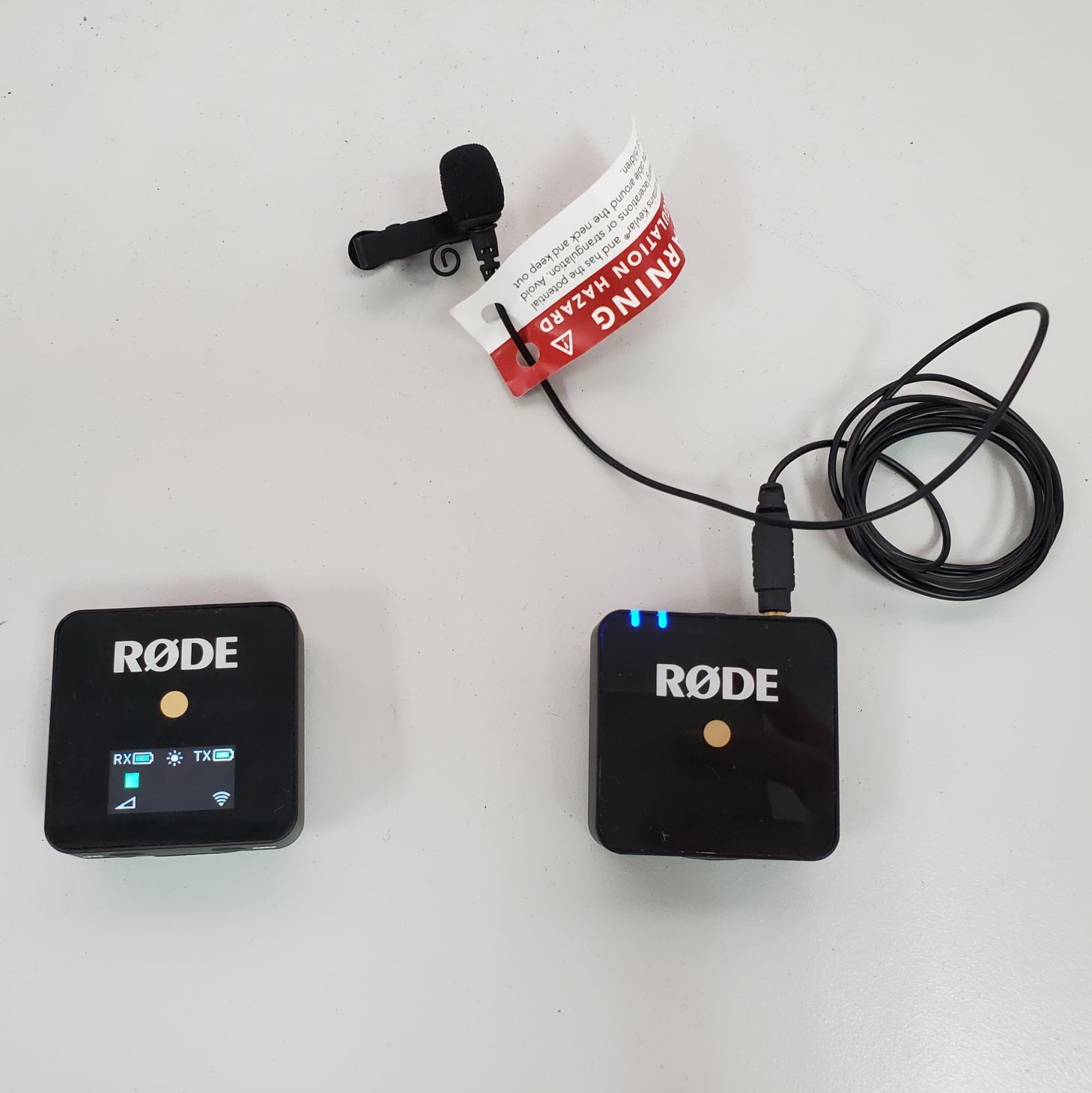
Direct communication methods, encompassing technologies like button-based interfaces and voice command recognition, function by translating user input into discrete, unambiguous signals. Button-based communication relies on pre-defined actions assigned to physical or virtual buttons, providing a clear mapping between input and intended outcome. Voice command recognition systems utilize speech-to-text processing and natural language understanding to interpret spoken requests as specific commands. Both approaches prioritize clarity by minimizing ambiguity in the signal transmitted, ensuring the system receives a well-defined indication of the user’s desired action. This directness is crucial for establishing a reliable communication channel, particularly in time-sensitive applications where misinterpretation could lead to errors or delays.
Direct communication forms the basis of action coordination in collaborative transportation tasks by establishing explicit linkages between agent intent and resulting action. These systems operate on the principle that each agent directly signals its desired state or action to others, eliminating ambiguity inherent in indirect signaling or inferred intent. This is achieved through discrete, predefined messages representing specific actions – such as requesting a route change, indicating arrival, or signaling a need for assistance – which are then interpreted by receiving agents to formulate appropriate responses. The efficacy of this approach relies on a shared understanding of the communication protocol and the consistent execution of defined actions corresponding to each message, enabling synchronized movement and task completion without requiring complex reasoning about another agent’s goals.
Despite the efficacy of direct communication methods like button-based interaction and voice commands, these systems exhibit limitations in complex scenarios due to their reliance on precise input and lack of nuanced interpretation. The requirement for exact commands restricts adaptability; ambiguous situations or those requiring flexible responses are poorly handled. This inflexibility stems from the systems’ inability to infer intent beyond the explicitly stated command, necessitating a predetermined mapping between input and action for every possible circumstance. Consequently, these methods struggle with unforeseen events or tasks that deviate from established protocols, potentially requiring manual intervention or precluding automation in dynamic environments.
![Direct communication experiments reveal that volunteers rated voice commands as significantly more effective than both a no-communication baseline and button-based interactions [latex] (p<0.001) [/latex], and overwhelmingly preferred voice commands for completing the task.](https://arxiv.org/html/2602.18850v1/Fig6b.png)
Beyond Commands: Inferring the Unspoken
Intention inference focuses on determining a human’s objectives through the observation and analysis of their actions, preempting the need for direct communication. This process relies on identifying patterns and correlations between observed behaviors – such as movements, applied forces, or gaze direction – and potential underlying goals. Successful intention inference allows systems to anticipate human needs and proactively offer assistance or adjust behavior accordingly, improving the efficiency and naturalness of human-machine interaction. The system doesn’t require a stated command; rather, it extrapolates goals from ongoing activity.
The Velocity Predictor and Force Predictor are systems designed to estimate a human partner’s intended actions during a Collaborative Transportation Task. These systems utilize sensor data, prominently including measurements from a Force Sensor, to model the partner’s biomechanical contributions to the task. Specifically, the Force Sensor captures data related to applied forces and their direction, which are then processed to infer the partner’s velocity profile and predict their subsequent movements. This predictive capability allows the system to preemptively respond, facilitating smoother coordination and reducing the cognitive load on the human partner during the collaborative effort.
Effective prediction of human intent is fundamental to seamless human-robot interaction, particularly in collaborative tasks where anticipating a partner’s actions minimizes delays and maximizes efficiency. This capability necessitates a comprehensive understanding of the surrounding environment; robust environmental perception provides the contextual data required to accurately forecast likely behaviors. Technologies such as LiDAR are frequently employed to generate detailed environmental maps, enabling systems to identify objects, map spatial relationships, and ultimately, improve the accuracy of intent prediction algorithms by providing critical information about potential constraints and opportunities within the workspace.
![Experiments assessing interaction quality revealed that a force predictor significantly improved performance [latex] (p < 0.001) [/latex] and was preferred by volunteers over a velocity predictor or no predictor, as indicated by both quantitative valuation scores and subjective preference data.](https://arxiv.org/html/2602.18850v1/Fig3b.png)
The Illusion of Fluency: When Machines Appear to Understand
Robot fluency, characterized by the smoothness and responsiveness of its movements, is increasingly recognized as a cornerstone of successful human-robot interaction. Beyond simply completing tasks, a fluent robot fosters a sense of effortless collaboration, minimizing the cognitive load on the human partner. This isn’t merely about speed; it’s about anticipating and reacting to human cues with a natural timing, much like a skilled dance partner. Research indicates that improvements in robotic motion – reducing jerk, optimizing trajectories, and ensuring proportional responses – directly correlate with heightened perceptions of robot competence and trustworthiness. A robot that moves fluidly isn’t just efficient; it’s perceived as intelligent and considerate, encouraging a more positive and productive working relationship.
The creation of truly seamless human-robot interaction hinges on more than just technical capability; it demands a feeling of natural communication. When a robot accurately anticipates a user’s intentions – understanding not just what is asked, but why – and responds with fluid, unhesitating movements, the interaction transcends mere task completion. This confluence of perceptive inference and physical grace diminishes the cognitive load on the human user, removing the need to consciously ‘manage’ the robot. Instead of feeling like a collaboration with a machine, the experience becomes remarkably intuitive, resembling communication with a capable and attentive partner. This naturalness isn’t simply about user preference; it directly impacts efficiency, allowing individuals to focus on the task at hand rather than the mechanics of the interaction, ultimately fostering greater trust and comfort.
The culmination of seamless human-robot interaction is demonstrably improved task outcomes alongside a significantly enhanced user experience. Studies reveal that when robots exhibit fluency and accurately interpret intentions, individuals complete tasks more efficiently and with greater satisfaction. This positive reception isn’t merely anecdotal; rigorous assessment using Cronbach’s Alpha consistently yields high internal consistency scores – 0.786 for fluency, 0.843 for performance, and 0.838 for comfort, among others – validating the reliability of these findings. Critically, this improved interaction fosters a growing sense of trust in the robotic system, allowing for more complex collaborations and ultimately paving the way for wider acceptance of robots in everyday life.
A compelling demonstration of the system’s utility emerged from volunteer trials, where an overwhelming 86.7% indicated a preference for the combined velocity prediction and voice command interface as the most suitable approach to the assigned task. This strong endorsement suggests the synergistic effect of anticipating user needs-through velocity prediction-and allowing direct, intuitive control via voice commands significantly enhances the overall interaction experience. The substantial majority favoring this combined system underscores its practical effectiveness and potential for broad adoption in applications requiring seamless human-robot collaboration, moving beyond purely functional interactions towards a more natural and user-centered design.
![Experiments reveal that combining a velocity predictor with voice commands significantly enhances system performance and user preference, as evidenced by higher valuations (ranging from 1 to 7, with statistical significance at [latex]p<0.05[/latex], [latex]p<0.01[/latex], and [latex]p<0.001[/latex]) and a strong preference among volunteers.](https://arxiv.org/html/2602.18850v1/Fig8b.png)
The pursuit of seamless interaction, as explored in this research, often feels like chasing a ghost. Systems strive for perfect prediction of human intent, yet the study subtly argues for a more pragmatic approach – embracing explicit communication alongside predictive modeling. It’s a humbling reminder that even the most sophisticated algorithms aren’t mind readers. As Donald Knuth observed, “Premature optimization is the root of all evil.” This rings true; focusing solely on predictive power, at the expense of clear communication channels, creates brittle systems. The elegance of a perfect predictor quickly fades when faced with the delightful unpredictability of actual human behavior. It’s not about eliminating errors, but acknowledging their inevitability and building systems resilient enough to accommodate them-prolonging the suffering, as it were.
The Road Ahead (And Its Inevitable Potholes)
This work, predictably, doesn’t deliver a perfect predictor. It merely suggests that chasing one, in isolation, is a fool’s errand. The brief honeymoon of elegant predictive models will end, as they always do, when production encounters the delightful chaos of actual human behavior. A system that requires explicit communication isn’t a failure; it’s acknowledging the inherent limitations of inference. Anything self-healing just hasn’t broken yet.
The challenge, then, isn’t better prediction, but more graceful degradation. Future efforts should focus less on anticipating every nuance of human intent and more on building robust systems capable of rapidly resolving ambiguity when – not if – predictions fail. Documentation of these failure modes, however, remains a collective self-delusion. The edge cases will always multiply faster than any attempt to catalog them.
Ultimately, if a bug is reproducible, this isn’t a sign of a fragile system, but of a stable one. The real progress will be measured not in predictive accuracy, but in the speed and transparency with which these systems admit their errors and solicit correction. Let the pursuit of perfect prediction serve as a cautionary tale, not a guiding star.
Original article: https://arxiv.org/pdf/2602.18850.pdf
Contact the author: https://www.linkedin.com/in/avetisyan/
See also:
- Limbus Company 2026 Roadmap Revealed
- After THAT A Woman of Substance cliffhanger, here’s what will happen in a second season
- Total Football free codes and how to redeem them (March 2026)
- XO, Kitty season 3 soundtrack: The songs you may recognise from the Netflix show
- ‘Project Hail Mary’s Unexpected Post-Credits Scene Is Worth Sticking Around
- The Division Resurgence Specializations Guide: Best Specialization for Beginners
- Wuthering Waves Hiyuki Build Guide: Why should you pull, pre-farm, best build, and more
- Guild of Monster Girls redeem codes and how to use them (April 2026)
- Gold Rate Forecast
- ‘Project Hail Mary’s Soundtrack: Every Song & When It Plays
2026-02-24 20:43