Federal Communications Commission Chairman Brendan Carr has brought a new level of activity to the agency, which has been relatively quiet in recent years.
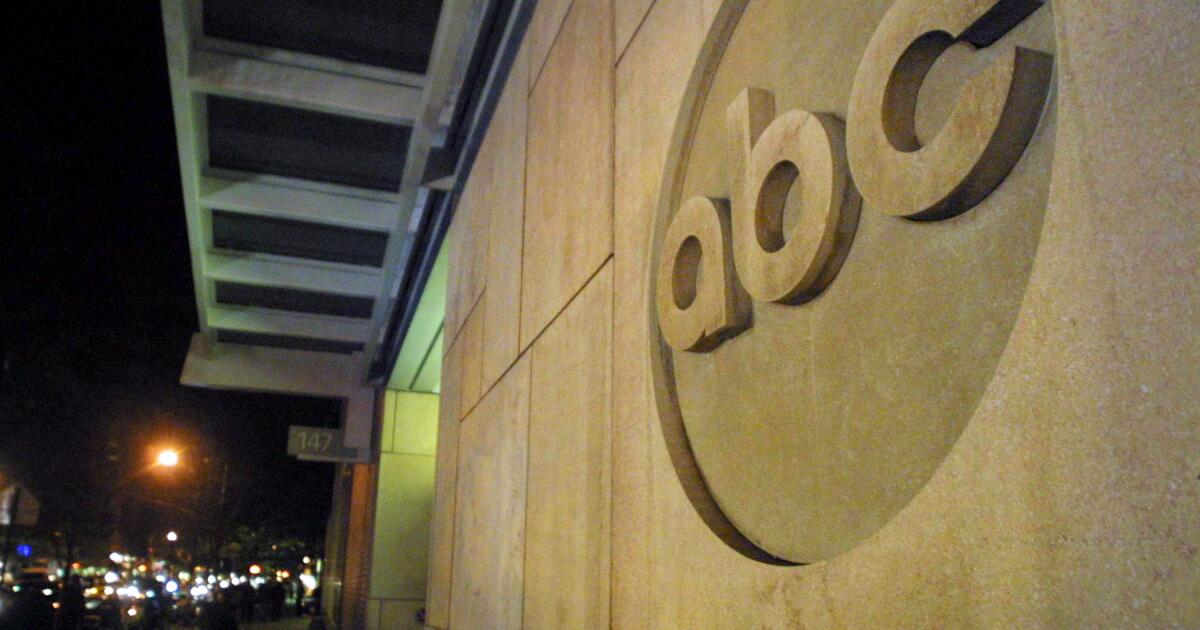
His most significant move so far supporting President Trump—who often warned media organizations he felt were unfair—was the April 28th announcement that Disney’s eight ABC television stations will have their broadcast licenses reviewed sooner than expected.
Carr is requesting a review of broadcast station licenses two years early, pointing to the agency’s recent investigation into Disney’s diversity policies and potential violations of anti-discrimination laws as justification.

Hollywood Inc.
As a big media watcher, I’m seeing a lot of attention focused on ABC’s station licenses right now. It all stems from some jokes made during the White House Correspondents’ Dinner and Disney, as ABC’s parent company, is getting some heat for it. It’s a tricky situation, and regulators are definitely taking a closer look.
People are noticing that Carr’s decision comes shortly after First Lady Melania Trump asked ABC to fire Jimmy Kimmel. This request followed a joke Kimmel made at the White House correspondents’ dinner on April 23rd, where, while wearing a tuxedo, he called Melania Trump “beautiful” and added, “she has the glow of an expectant widow.”
The First Lady spoke after an armed man broke into a formal event in Washington D.C. on April 25th. Cole Tomas Allen, from Torrance, was arrested and is now facing charges, including attempted assassination of the President.
The joke made by Kimmel was used by conservative commentators as evidence that liberals are encouraging political violence.
The comedian explained the joke referenced the age gap between the 79-year-old president and his wife. He insisted it wasn’t meant to encourage violence and has kept making fun of the president on his show.
Last week, Carr held a news conference in Washington, D.C., and stated that his request for a review wasn’t connected to anything Jimmy Kimmel said.
Despite widespread doubt, Carr, who attended the dinner on April 25th, informed The Times that an announcement regarding ABC was imminent. This conversation took place shortly before the shooting.
In March 2025, the Trump administration launched an investigation into Disney, as part of a larger push to undo diversity, equity, and inclusion (DEI) programs in businesses, government agencies, colleges, and other institutions.
I really noticed how, after George Floyd’s tragic death in 2020 and the rise of the Black Lives Matter movement, big companies like Disney and Comcast were suddenly highlighting all the work they were doing to promote diversity. It felt like they were really pushing those efforts to the forefront.
However, many experts think Carr is taking action at ABC because of pressure from Trump. The chairman frequently voices his support online whenever the former president attacks a broadcast news channel.

World & Nation
Following reports of gunfire at the Washington Hilton, news crews quickly arrived, turning what should have been a celebratory event into a night of reporting.
According to James Speta, a law professor at Northwestern University, Disney might be able to initially win its case by arguing this is a First Amendment issue. He believes the core of the dispute is that the current administration disagrees with the views being expressed by performers on television and radio.
Disney hasn’t publicly responded to the DEI investigation led by Carr. However, the company previously highlighted the success of its television stations, which consistently achieve high ratings in most areas. Disney stated it’s confident its performance proves it meets the requirements to maintain its broadcast licenses under the Communications Act and First Amendment, and it’s ready to defend its record legally if necessary.
Here’s a primer on what to know and the challenges Disney may face.
Why are TV stations licensed by the government?
The government controls which channels can broadcast on the airwaves, mainly to avoid signal interference. Broadcasters need to renew their licenses and prove they’re benefiting the community by offering local news, a variety of programs, and educational content for kids. Licenses used to be renewed every three years, but changes in regulations have now stretched that period to eight years.
When was the last time a TV station faced a significant license renewal challenge?
A recent case involved Philadelphia’s WTXF, a Fox Corporation station, during its license renewal in October 2023. Groups challenging the renewal argued that Fox shouldn’t own the station because a court had previously determined that its Fox News Channel had spread false claims about fraud in the 2020 election.
Fox News agreed to pay $787 million to resolve a lawsuit brought by Dominion Voting Systems, which claimed the network harmed its reputation.
Fox News, available on cable and satellite, isn’t regulated by the FCC like traditional broadcast channels. It also has a separate leadership team from the company’s local TV stations, which focus on community news and generally avoid political opinion. In January 2025, the FCC decided not to take action against one of the local stations (WTXF in Philadelphia) because the misleading information found on Fox News didn’t air on that station. WTXF wasn’t involved in the Dominion lawsuit either.

Hollywood Inc.
Station owner Audacy will end simulcast of the news format on 1070 AM and launch the Fan on May 11.
Are there any other examples?
Look, as a movie buff, I’ve seen this playbook before – it’s straight out of a political thriller! Apparently, it’s not just something you see in films. I recently read that other presidents have actually threatened to revoke TV stations’ licenses when they didn’t like the news being reported. The most famous example? Back during Watergate, Nixon’s people tried to mess with the licenses of three stations owned by the Washington Post, but thankfully, it didn’t work.
Has a company ever lost its broadcast license?
In 1987, RKO General, which was owned by General Tire and Rubber Co., became the last company to have its broadcast TV licenses revoked. This included their Los Angeles station, KHJ. The decision wasn’t based on the programming the stations aired, but on improper conduct within the company itself.
It took seven years to officially cancel the RKO licenses, starting from the date the FCC approved the cancellation.
But isn’t this case different?
So, this rule Carr brought up? It’s technically on the books, but from what I understand – and I was talking to a pretty seasoned TV exec who didn’t want to be named – the FCC almost never actually does anything with it. Historically, if Disney or anyone else broke that non-discrimination rule, they’d likely just get a fine. Taking away their license entirely? That would feel like straight-up censorship to a lot of people, and the FCC has always shied away from that.
What happens in the event that ABC licenses are not renewed?
Currently, there are no immediate changes, as the existing licenses aren’t up until 2028 to 2032, varying by location. If Disney were to sell these stations, they would likely have to accept a lower price because of the need to sell them quickly.
However, communications lawyer Andrew Jay Schwartzman recently explained to The Times that it’s very difficult to block a license renewal, and any attempt to do so would likely face legal challenges based on constitutional rights.
According to Schwartzman, the law makes it very difficult for the FCC to refuse to renew a broadcast license. The review process is lengthy, and during that time, the station is still allowed to operate as usual.
Read More
- The SATISFY x adidas Adizero Adios Pro 4 Debuts in Three Earthy Colorways
- Honor of Kings x Attack on Titan Collab Skins: All Skins, Price, and Availability
- Top 5 Best New Mobile Games to play in May 2026
- Yummy Tteokbokki ASMR redeem codes and how to use them (May 2026)
- FC Mobile 26 TOTS (Team of the Season) event Guide and Tips
- Last Furry: Survival redeem codes and how to use them (April 2026)
- Honkai: Star Rail Silver Wolf Lv. 999 Build Guide: Best Relics, Light Cone, Team Comps, and more
- These Cartoon Reboots Totally Missed the Point of the Originals (& Went Downhill Fast)
- OVO Releases Premium ‘ICEMAN’ Hoodies to Celebrate Drake’s Album Run
- eFootball 2026 Epic National Midfielders (Ribery, Gattuso, Karembeu) pack review: Strong picks yet not endgame
2026-05-05 13:31