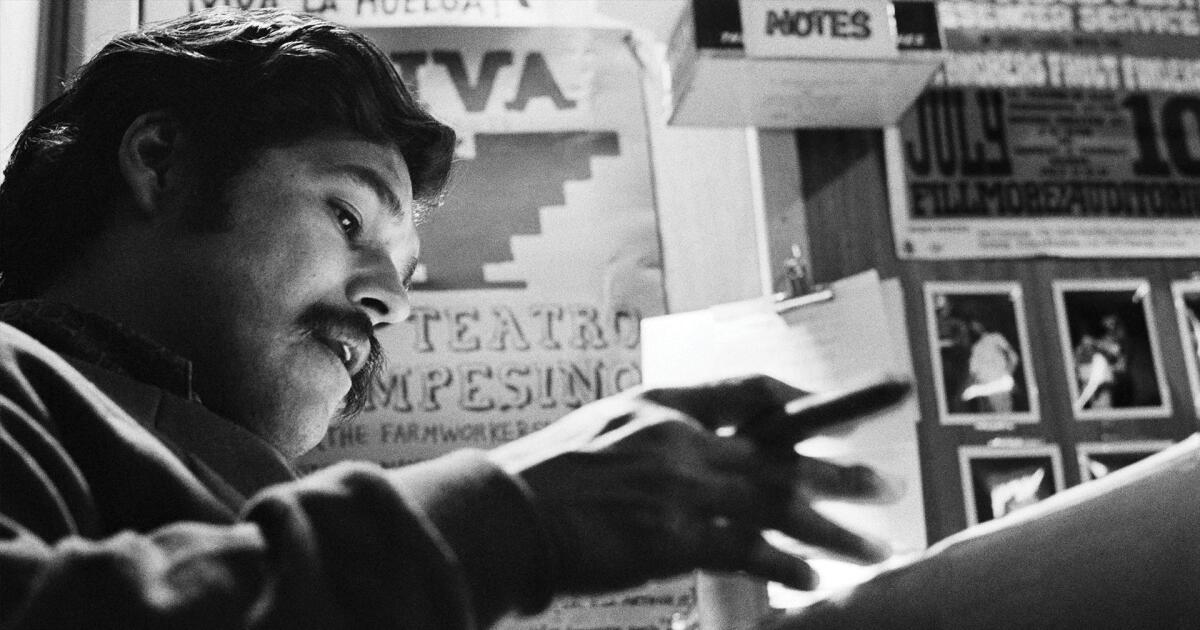
As a critic, I’ve covered a lot of stories about Chicano leaders, but Luis Valdez truly stands out in the world of arts and culture. He’s the son of farmworkers who built El Teatro Campesino from the ground up, then went on to create iconic works like “Zoot Suit” and “La Bamba.” His journey is incredible – a testament to sheer determination. Thankfully, the new documentary “American Pachuco: The Legend of Luis Valdez” captures that spirit perfectly; it’s a lively, engaging film that does justice to this remarkable man and his legacy.
The film centers around Luis Valdez, now in his eighties, who commands attention on screen with a warm, powerful presence. It combines his personal story – told through engaging details – with historical footage and interviews from those who knew him best: family, colleagues, and fellow artists. A particularly clever choice is Edward James Olmos as the narrator; he uses the same distinctive voice he made famous in “Zoot Suit” to highlight Valdez’s impact on theater. The film also features interviews with prominent figures like Cheech Marin, Taylor Hackford, Lou Diamond Philips, and activist Dolores Huerta.
Growing up in Delano, California, Valdez turned to books and language to challenge the prejudices faced by Mexican Americans. He honed his talents through puppetry, school plays, and eventually, the farmworkers’ union in his community. Valdez realized that sharp, honest satire wasn’t just important, it could also help rally people to the cause. These early, spontaneous performances are often described using the term rasquachismo – a vibrant, resilient aesthetic. Valdez explains it as a kind of “funkiness” that’s impossible to diminish, something strong and authentic cultivated from the hard work and value of the fields, much like the grapes themselves.

Before its debut at the Sundance Film Festival, De Los interviewed directors David Alvarado and Edward James Olmos about their film, ‘American Pachuco: The Legend of Luis Valdez.’
As a film and theater buff, I’ve always been fascinated by Luis Valdez and El Teatro Campesino. After the struggles of the Vietnam War era, Valdez really expanded their work across the country. I recently revisited excerpts from the televised version of his play, ‘Los Vendidos’ – it’s brilliant and still feels so relevant. The play, which centers on a shop selling robotic Chicano stereotypes, really gets at the difficult push and pull of assimilation – how trying to ‘fit in’ can actually be a really damaging trap. What’s particularly poignant, though, is learning that the play also reflected Valdez’s complicated relationship with his brother Frank. Frank was an engineer who seemed to be constantly trying to distance himself from their heritage, and that tension clearly weighed heavily on Valdez’s mind while he was writing.
The 1978 musical “Zoot Suit,” which powerfully portrayed the injustice surrounding the violent 1943 Zoot Suit Riots in Los Angeles, was a major success despite a less enthusiastic response in New York. The story of how the film “La Bamba,” about Ritchie Valens, came to life – balancing respect for his memory with smart choices about casting – is equally inspiring and insightful. It’s surprising, though, that more films weren’t made after its success, though given the nature of Hollywood, the reasons are probably clear.
David Alvarado’s film, “American Pachuco,” is a rich and inspiring look at life, art, and activism. It’s a film that encourages viewers to find their own voice and purpose. The story of Valdez, who powerfully shares his life experiences, offers valuable lessons on how to be authentic and make yourself heard, especially in today’s divisive climate. His journey as a trailblazing advocate for truth resonates deeply with the diverse future of America.
2026-07-24 22:31