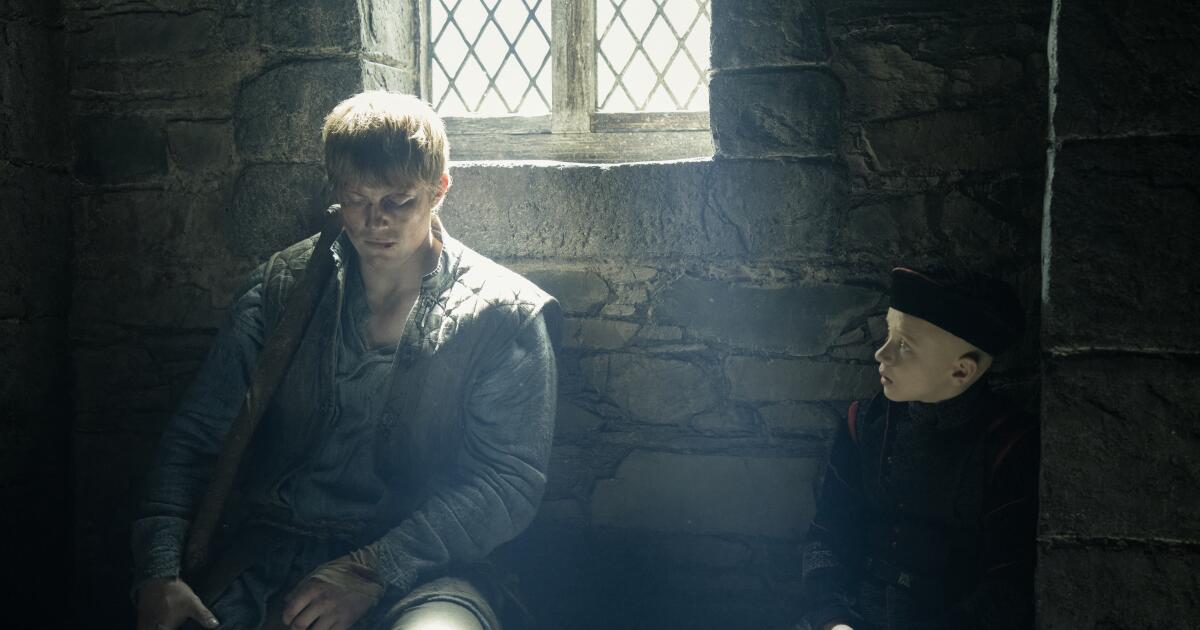
This story contains spoilers for Episode 6 of “A Knight of the Seven Kingdoms.”
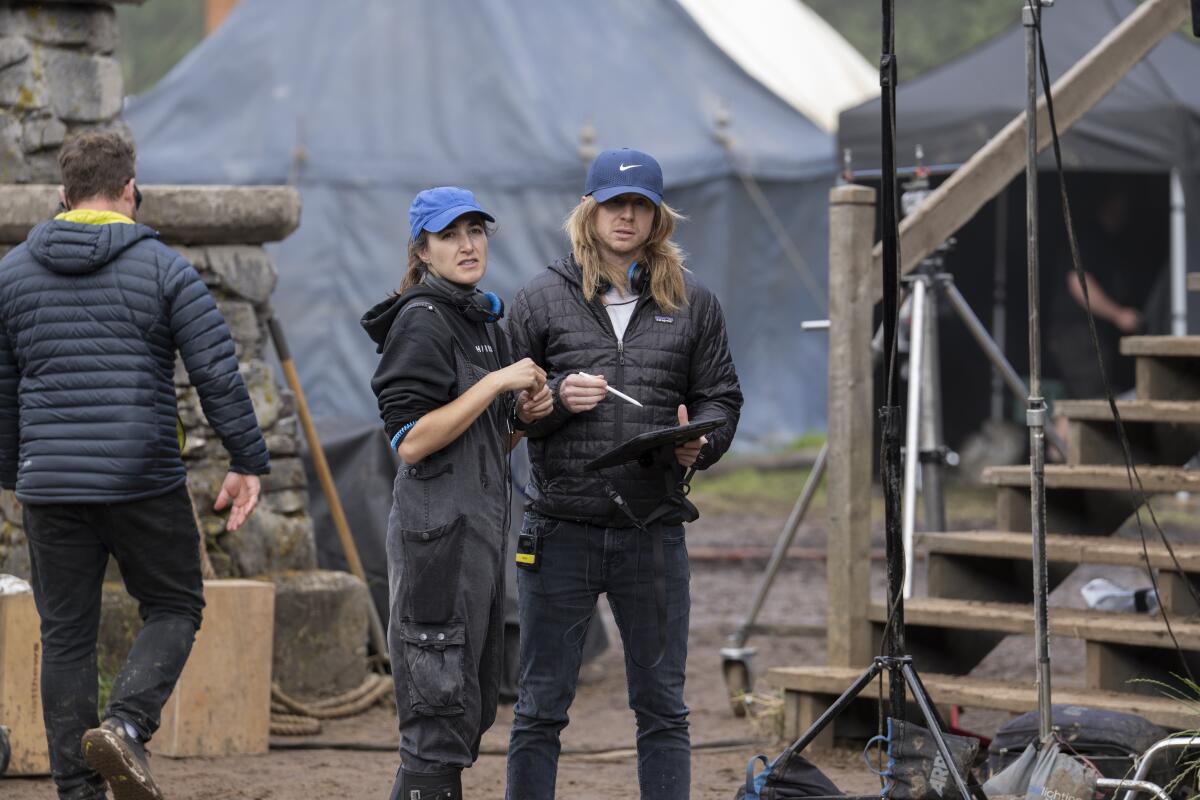
Ira Parker originally envisioned the final scene of “A Knight of the Seven Kingdoms,” Episode 6 (“The Morrow”), as simply a lighthearted moment.
The final episode of HBO’s fantasy series on Sunday concludes with all the main characters, including the Targaryen family, leaving Ashford following the trial and tournament. Right before the episode ends, Prince Maekar realizes his young son, Aegon, is missing again and urgently shouts, “Where is he?”
Honestly, the way the first season ended was originally kind of a playful idea. But it seems like a lot of people – my fellow writers, HBO, and viewers around the world – took it very seriously! Because of that, I’ve ended up having to address it more directly in Season 2 than I initially expected.
As a huge fan of the ‘Game of Thrones’ world, I’m really excited about ‘A Knight of the Seven Kingdoms’! It’s based on George R.R. Martin’s ‘Tales of Dunk and Egg’ – stories set about a century before everything we saw in ‘Game of Thrones’. Peter Claffey plays Ser Duncan the Tall, and Dexter Sol Ansell is Prince Aegon Targaryen. It’s fantastic to see Martin’s world expanded with these earlier adventures.
This scene might be particularly exciting for fans of George R.R. Martin’s stories. It doesn’t appear in the original novella, “The Hedge Knight,” which the first season of “A Knight of the Seven Kingdoms” adapts. The book leaves it somewhat unclear whether Egg had permission from Maekar to travel with Dunk as his squire, and the show seems to be exploring that ambiguity.

‘A Knight of the Seven Kingdoms,’ the latest ‘Thrones’ spinoff, is more muddy than magical
The new “Game of Thrones” prequel takes place a century before the original show and follows the adventures of a wandering knight, Dunk (played by Peter Claffey), and his young assistant.
According to Parker, although the young prince claims his father approved, this isn’t officially confirmed within the story itself. She doesn’t believe they’ve taken any major liberties with the character’s established traits. From a character standpoint, she finds it believable that he would act this way, pointing out he’s done similar things before – specifically, running away and being dishonest.
Without sharing any details, Parker teases the situation will be addressed again next season.

The showrunner, who also created the series alongside George R.R. Martin, says working on “The Morrow” episode was intimidating. Following the events of “Trial of Seven,” the episode required significant expansion and original content to cover the rest of the story from the books.
From the beginning, we decided to stick strictly to the original story of the novellas,” explains Parker, who also worked on “House of the Dragon.” “We weren’t going to add anything new to the plot. However, to expand the six 30-minute episodes by about 50%, we focused on developing the characters more fully.
The show has been focusing more on the likable duo of Dunk and Egg, giving viewers a chance to really get to know them. We’ve also seen more development of the supporting characters, like Lyonel Baratheon and Raymun Fossoway, who assist Dunk. This extra time with the characters and the world has allowed audiences to simply relax and immerse themselves in the story.

Television
Episode 2 of ‘A Knight of the Seven Kingdoms’ introduces the Targaryen family. This raises the question of how these Targaryens connect to the characters we’ve seen in ‘Game of Thrones’ and ‘House of the Dragon’.
Parker admits they weren’t sure everyone would embrace the idea at first – specifically, immersing audiences in the world of Westeros. This led to a somewhat slower beginning, but thankfully, people connected with the story. Ultimately, they hoped viewers would become invested in the characters and root for Dunk’s success.
Similar to the first episode, the season finale hints at Dunk and Egg’s future travels to Dorne. However, the showrunner has confirmed that Season 2 will be based on the story “The Sworn Sword,” which is set about a year and a half after the events of this season and takes place in a different region of the Reach.
He enjoys ‘The Sworn Sword’ because he finds it hilarious, and he believes the developing romantic tension between Dunk and Lady Rohanne is a compelling storyline. He also mentioned they thought about setting the second season in Dorne, but it would have required too much development even with George R.R. Martin’s guidance.
Parker described his work with Martin, explaining that the show was entirely inspired by Dunk and Egg’s story, “A Knight of the Nine Kingdoms.” This is based on a conversation that has been shortened and clarified for readability.

The show’s title is “A Knight of the Seven Kingdoms,” but in the last episode, a character named Egg corrects Dunk, stating there are nine kingdoms in Westeros. Could you discuss this detail and why the opening title card briefly showed a different name?
This episode is incredibly intense, especially after Baelor’s death and everything Egg has endured – we really see him grappling with it. Dunk’s decision to wander off alone adds to the emotional weight. It’s great to see them reconnect, but we needed to show the audience that, despite Egg now being a prince and after such a difficult event, the heart of their relationship hasn’t changed – the connection we’ve come to cherish is still there. That’s why their conversation was so important. It wasn’t about politics or kingdoms, but about Egg reassuring Dunk that he still values him. It’s also a nod to fans who’ve wondered about the show’s title – we’re not planning to change it.
The episode shows Egg dealing with a lot of anger towards his brother, Aerion. Can you talk about the decision to portray that conflict and what it reveals about Egg’s character?
I discussed Egg’s behavior with George, and he pointed out that children experience disappointment very intensely – it’s a significant factor. I don’t want to oversimplify things by attributing it solely to past trauma. Egg is a young boy who was experiencing good things and felt happy, but then those things were taken away. He’s now blaming others, believing he’s caused problems for them. When he can’t process these feelings, they build up into anger and resentment.
He believes Aerion is responsible for everything that’s happening. Aerion is so young he doesn’t know how to cope with these feelings. He has a father figure in Maekar, but ultimately, the episode focuses on his relationship with Dunk. The central question is whether Dunk will choose to help this troubled boy, who otherwise faces a difficult future. Children who learn to channel their frustrations and disappointments into positive outlets usually have better outcomes, and that’s what Dunk’s decision will determine.
I really want to emphasize how valuable having a mentor can be. Our story focuses a lot on father-son relationships, the bond between knights and their apprentices, and even brotherhood. But at its heart, it’s about the impact a teacher can have. Dunk learned from Ser Arlan, and now he’s returning the favor. Even though he owes this family nothing, he helps them because someone once helped him. He’s simply passing on that kindness and supporting the person beside him.

What really makes Dunk special is that he genuinely believes in doing good, and feels it’s his purpose in life. He’s one of the few people who truly feels that way.
Beyond that, Dunk is driven by a strong desire to live up to his mentor’s ideals and be a true knight. However, he quickly realizes the world doesn’t always reward honorable behavior. We’ve seen characters like Ned Stark suffer because they were too trusting, and Dunk seems to have an extra layer of self-preservation. Perhaps that’s just me seeing my own desire to protect myself in him, knowing that not everyone has good intentions. Dunk’s early experiences are all about learning that it’s hard to do good in a world that doesn’t always play fair.
I might be biased since I’m still thinking about the events in the second book, but it seems that aspect is even more prominent there. Still, he’ll never stop being optimistic – that’s just part of who he is.
You recently did a Q&A on Reddit, and someone asked about the show’s budget. You said everything about the show reflected the main character. Could you elaborate on that idea?
Initially, it’s daunting to focus on telling a story through a single character. But when you consider all the elements – the costumes, the way it’s filmed, the music – you realize you’re actually exploring many different layers of that one person and their connection to the world. Because of this, the experience needs to be completely captivating. Unlike a typical show, viewers can’t simply tune out if they aren’t enjoying a particular storyline. We aimed to make every episode feel immersive, so the audience genuinely connects with Dunk and his struggles, especially since things are about to get much more challenging for him. We hope fans who came to us for a lighter, more enjoyable take on the world of Westeros will stay with us as we delve into darker, more complex, and often grim territory – because that’s the reality of George R.R. Martin’s world, where danger is always present.
We wanted to be different from other shows, and this approach felt very natural. We’re not telling a story that happened before anything else; these are stories that have been around for decades. It feels more authentic. Instead of aiming for a huge, sweeping story, we focused on keeping things intimate, simple, and positive. Dunk is still young, really just a kid, and it’s essentially the story of two young people going on a lighthearted adventure. We wanted to capture a sense of fun and playfulness, which helped us develop our own unique style.

How is it like to work with George R.R. Martin?
Working with him has been incredibly collaborative – truly the most rewarding creative partnership of my career. So many people in this industry offer criticism without understanding the reasoning behind my choices. He’s different; he always gives me the benefit of the doubt and uses my ideas as a starting point for discussion. When he’d call about a new script, we’d really dig into my thought process and the reasons behind my creative decisions. Then, he’d share his own perspective or any concerns he had, leading to a really natural conversation. It feels like being in a writer’s room with a legend – one of the best writers working today. We both genuinely enjoy discussing the work and bouncing ideas off each other.
Can you describe your first discussions with him regarding “Dunk and Egg”? Did you have a vision for the show before you spoke with him?
When HBO first sent me the material, I was honestly a bit panicked. I’m used to “Game of Thrones” being ten hour-long episodes, and these were just three novellas! I needed to figure out what HBO envisioned, and more importantly, what George R.R. Martin wanted. I had some great conversations with George – we talked about what he loves about the story, why he chose to tell it entirely from Dunk’s perspective, and even why he never considered writing from Egg’s point of view. He has such a clear vision for this story, and those conversations really shaped how I approached adapting it.
Going into that initial meeting in Santa Fe, I was incredibly well-prepared. I’d thoroughly researched everything about the project and had plenty of ideas, but I didn’t immediately try to impress him with that knowledge. Instead, I focused on having a conversation, asking questions, and really listening to his perspective. After that, I went back, refined my approach, and wrote a pilot episode, which kicked things off quickly.

Having worked on “House of the Dragon,” which is quite distinct despite being set in the same universe, how did that experience shape your vision for this new show?
I really loved that room – it’s one of my favorites. Ryan Condal is a fantastic writer, and he clearly cares deeply about the worlds he creates. People often assume comedy writing rooms are constantly filled with laughter, and drama rooms are always serious, but it’s usually the other way around. In drama, writers joke around a lot because humor isn’t tied to the work itself. Ryan is incredibly funny, and we have a similar sense of humor. I believe he recommended me to HBO when they were searching for a writer for “Dunk and Egg,” and I’m very thankful for that.
Working on the “Knight of the Seven Kingdoms” series was a unique experience. We assembled a team of diverse drama writers, each with their own creative approach, and I truly felt like I was at the peak of my career. We only had 11 days in the writers’ room before the strike forced us to stop, but we anticipated it and worked as quickly as possible to outline as much of the story as we could. I even assigned scripts on the final day. Looking back, I think we unintentionally mapped out enough material for twenty seasons of the show in those short eleven days.
We were really enjoying the creative process while developing the first season, crafting everything for six episodes. When we returned after the strike, some of my writers questioned how we could realistically write full 35-minute episodes given the story structure we had planned. We significantly scaled back our ambitions, but generally, writers’ rooms are a collaborative and supportive environment – though it’s definitely challenging work at times.
2026-02-23 07:02