Author: Denis Avetisyan
Researchers have created a comprehensive dataset of hand gestures designed to enable intuitive control of robots assisting first responders in critical situations.
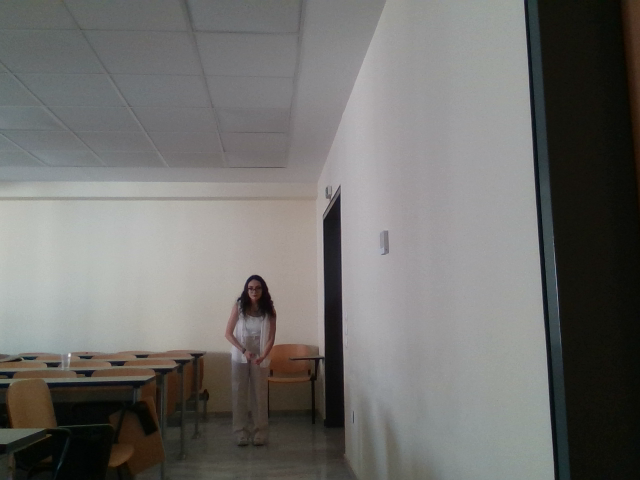
FR-GESTURE is an RGB-D dataset focused on gesture-based human-robot interaction for autonomous mobile robots operating in first responder scenarios.
The increasing complexity of disaster response operations often strains the capabilities of first responders, yet current human-robot interaction methods lack intuitive control paradigms. To address this, we introduce ‘FR-GESTURE: An RGBD Dataset For Gesture-based Human-Robot Interaction In First Responder Operations’, a novel dataset comprising [latex]3312[/latex] RGBD image pairs designed to facilitate gesture-based control of unmanned ground vehicles (UGVs) by first responders. This dataset-inspired by established tactical signals and refined with expert feedback-represents the first publicly available resource specifically tailored for this critical application. Will this resource enable the development of more effective and responsive robotic assistance in high-stakes emergency scenarios?
Intuitive Collaboration: Bridging the Gap Between Humans and Robots
The pursuit of truly collaborative robots demands communication methods that transcend the limitations of conventional interfaces like buttons and joysticks. These traditional approaches often require significant cognitive load and can feel unnatural, hindering seamless interaction. Effective human-robot collaboration necessitates intuitive modalities that align with how humans naturally communicate – through nuanced physical expression and implicit understanding. Researchers are increasingly focused on developing systems that can interpret a range of human signals, not just explicit commands, but also subtle cues like body language and gaze, to create a more fluid and responsive partnership. This shift towards intuitive communication promises to unlock the full potential of robotic assistance in complex and dynamic environments, moving beyond simple task execution to genuine collaboration.
The potential for seamless human-robot collaboration rests significantly on the development of intuitive control mechanisms, and gesture recognition emerges as a particularly promising approach. Unlike traditional interfaces requiring explicit commands, this technology allows users to interact with robots through natural, expressive body language. A simple hand wave could initiate a task, a precise finger movement could adjust a robotic arm’s trajectory, or even subtle shifts in posture could convey complex instructions. This modality bypasses the need for specialized training or cumbersome equipment, offering a level of efficiency and intuitiveness previously unattainable in robotic control. By interpreting nuanced movements, robots can respond to human intent with greater accuracy and speed, fostering a more collaborative and productive partnership.
Achieving truly dependable gesture recognition demands significant progress in both computer vision and machine learning techniques. Current systems often struggle with variations in lighting, background clutter, and the natural imprecision of human movement; therefore, researchers are actively developing more sophisticated algorithms capable of accurately identifying gestures regardless of these real-world conditions. This includes innovations in deep learning, particularly convolutional neural networks, to enhance the ability to extract meaningful features from visual data, and the implementation of robust training datasets that encompass a wide range of gesture executions and environmental factors. Furthermore, advancements in machine learning are focused on creating systems that can adapt and learn from new gestures and user behaviors, ultimately leading to more intuitive and reliable human-robot interactions.
Interpreting complex human gestures within real-world settings demands innovative methodologies that move beyond static, controlled environments. Current systems often struggle with variations in lighting, occlusions, and background clutter, hindering reliable performance. Researchers are actively developing techniques that combine advanced computer vision algorithms with machine learning models capable of discerning subtle nuances in movement and adapting to changing conditions. These approaches frequently leverage depth sensing, skeletal tracking, and temporal modeling to create a robust understanding of gesture dynamics, even amidst environmental complexity. The goal is to enable robots to not simply recognize a gesture, but to understand its intent within the broader context of the interaction, paving the way for truly seamless and intuitive human-robot collaboration.
Deep Learning: Extracting Meaning from Visual Data
Convolutional Neural Networks (CNNs) achieved a paradigm shift in Computer Vision by moving beyond handcrafted features to automatically learning relevant representations directly from image data. Prior to CNNs, image analysis relied heavily on algorithms designed to identify edges, corners, and textures, requiring significant domain expertise and manual tuning. CNNs, leveraging layers of convolutional filters, pooling operations, and non-linear activation functions, can effectively capture spatial hierarchies within images. This automated feature extraction process dramatically improved performance in tasks such as image classification – differentiating the content of images – and object detection – identifying and locating multiple objects within a single image. Benchmark datasets like ImageNet demonstrated substantial reductions in error rates as CNN architectures became more sophisticated, establishing CNNs as the dominant approach in computer vision.
ResNet, ResNeXt, and EfficientNet represent significant advancements in Convolutional Neural Network (CNN) architecture. ResNet introduced residual connections, enabling the training of significantly deeper networks by mitigating the vanishing gradient problem. ResNeXt builds upon this by incorporating grouped convolutions and cardinality, increasing the network’s ability to learn diverse features with reduced computational cost. EfficientNet employs a compound scaling method, uniformly scaling all dimensions of depth, width, and resolution with a set of fixed scaling coefficients, leading to improved efficiency and accuracy. These designs collectively address limitations of earlier CNNs, resulting in state-of-the-art performance on image recognition tasks and serving as foundational models for more complex computer vision applications.
Convolutional Neural Networks (CNNs) achieve robust gesture recognition by automatically learning hierarchical feature representations from visual data. Initial layers detect low-level features such as edges and corners. Subsequent layers combine these into more complex features like textures and parts of objects. Deeper layers then assemble these parts into complete object or gesture representations. This hierarchical approach allows the network to identify gestures regardless of variations in viewpoint, scale, or lighting conditions, as it learns increasingly abstract and invariant features. The ability to progressively extract and combine features is critical for handling the complexity and variability inherent in visual gesture data.
The FR-GESTURE Dataset, comprising 3312 annotated samples of hand gestures, serves as a foundational resource for pre-training Convolutional Neural Networks (CNNs) utilized in gesture recognition systems. Utilizing this dataset in a pre-training phase allows models to learn generalized feature representations from a relatively small, focused dataset before being fine-tuned on larger or more specific datasets. This approach demonstrably improves model generalization performance, particularly when labeled data is limited, and significantly reduces the amount of task-specific labeled data required to achieve high accuracy. The dataset’s contribution lies in providing a strong initial weight configuration for the CNN, enabling faster convergence during training and mitigating the risk of overfitting on smaller datasets.
Robust Evaluation: Measuring Performance in the Real World
Effective evaluation of gesture recognition systems requires methodologies that account for both algorithmic performance and the variability inherent in real-world application. Superficial assessments, lacking standardized protocols, can yield misleading results and hinder meaningful comparison between systems. Robust evaluation necessitates defining clear training and testing datasets, establishing consistent metrics for performance measurement – such as accuracy, precision, and recall – and employing protocols designed to mitigate biases stemming from dataset composition or individual user characteristics. Without these safeguards, identifying genuine improvements in gesture recognition technology and ensuring reliable performance in diverse scenarios becomes significantly more difficult.
The Uniform Evaluation Protocol establishes a standardized procedure for both training and testing gesture recognition models, ensuring consistency across different research efforts. This protocol typically involves a fixed training dataset and testing set, enabling direct performance comparisons. In contrast, the Subject-Independent Evaluation Protocol mitigates biases stemming from individual user characteristics, such as hand size, skin tone, or movement style. This is achieved by utilizing data collected from a diverse set of participants, with models trained on a subset of users and tested on a completely separate, unseen group. Consequently, performance metrics obtained through the Subject-Independent protocol provide a more realistic assessment of a model’s ability to generalize to new users, while the Uniform protocol facilitates rapid prototyping and benchmarking under controlled conditions.
The application of standardized evaluation protocols, such as the Uniform and Subject-Independent protocols, to Visual Hand Gesture Recognition facilitates objective performance comparisons between different algorithms. By controlling for variables like training data and user-specific biases, these protocols enable researchers to isolate the intrinsic capabilities of each algorithm and identify specific areas requiring further development. Quantitative metrics derived from these evaluations allow for a data-driven assessment of strengths and weaknesses, promoting reproducible research and accelerating progress in the field. The consistent application of these protocols ensures that performance gains are attributable to algorithmic improvements rather than variations in experimental setup or data characteristics.
Performance comparisons utilizing the Uniform Evaluation Protocol revealed that the EfficientNet model achieved higher accuracy than ResNet-18, ResNet-50, and ResNeXt-50 architectures. However, when subjected to the Subject-Independent Evaluation Protocol, EfficientNet experienced a substantial decrease in performance. This disparity indicates that while EfficientNet demonstrates strong performance on a standardized dataset, its ability to generalize to new, unseen users is limited, emphasizing the importance of subject-independent testing for assessing the real-world viability of gesture recognition systems.
From Recognition to Action: Enabling Intelligent Robotic Systems
Autonomous Mobile Robots (AMRs) are rapidly transitioning from research labs into practical applications across a widening spectrum of industries. Initially adopted within the structured environments of manufacturing and logistics to optimize material transport and streamline workflows, AMRs are now demonstrating significant potential in more dynamic and unpredictable settings. Healthcare facilities are leveraging these robots for tasks ranging from delivering medications and supplies to assisting with patient rehabilitation, while the agricultural sector is exploring their use in precision farming and crop monitoring. This increasing deployment is fueled by advancements in robotic navigation, sensor technology, and artificial intelligence, enabling AMRs to operate safely and efficiently alongside humans in complex and often crowded environments. The versatility of these systems suggests a future where AMRs become integral components of daily life, transforming how work is performed and services are delivered.
The convergence of gesture recognition and autonomous mobile robots (AMRs) promises a paradigm shift in human-robot interaction, moving beyond traditional interfaces like joysticks or voice commands. By interpreting natural hand movements, AMRs can respond to intuitive cues, allowing operators to direct robots with a simple wave, point, or other pre-defined gesture. This approach dramatically enhances usability, particularly in complex or time-critical scenarios where precise control is paramount. Furthermore, gesture control contributes significantly to safety; an operator can remotely adjust an AMR’s path or halt its operation with a non-verbal signal, minimizing the risk of collisions or hazardous situations – a critical advantage in environments like warehouses, hospitals, or disaster response zones where maintaining situational awareness is essential.
The development of truly intuitive robotic interfaces hinges on datasets that specifically address the nuances of human-robot interaction, and the FR-GESTURE Dataset answers that need for Autonomous Mobile Robots. This resource comprises over three thousand gesture samples, carefully curated to represent twelve distinct commands relevant to First Responder scenarios-allowing researchers to move beyond generic gesture recognition and focus on practical AMR control. By providing a standardized and comprehensive collection of gestures – including actions like ‘follow’, ‘stop’, and ‘investigate’ – the FR-GESTURE Dataset doesn’t simply enable the creation of gesture-based interfaces, but also provides a benchmark for rigorous evaluation, accelerating progress toward safer, more efficient, and more user-friendly robotic systems in critical real-world applications.
A newly compiled resource, the FR-GESTURE Dataset, offers a significant advancement in human-robot interaction for challenging real-world scenarios. This dataset comprises 3312 labeled samples representing twelve distinct gestures specifically designed to facilitate communication between First Responders and Autonomous Mobile Robots (AMRs). These gestures encompass commands crucial for emergency response, such as directing AMR navigation, requesting specific equipment, or signaling for assistance. By providing a substantial and targeted collection of gesture data, the FR-GESTURE Dataset empowers researchers and developers to create robust and intuitive gesture-controlled interfaces, ultimately enhancing the safety and effectiveness of AMRs deployed in critical situations and accelerating progress in the field of robotic control.
The creation of FR-GESTURE underscores a fundamental principle of system design: structure dictates behavior. This dataset isn’t merely a collection of images; it’s a carefully constructed interface between humans and robots, specifically tailored for the high-stakes environment of first responder operations. As Barbara Liskov notes, “Programs must be correct and useful.” FR-GESTURE strives for both, offering a means to reliably control robots through intuitive gestures. The dataset’s focus on practical gestures-those easily performed under stress-demonstrates an understanding that even the most sophisticated algorithms are useless if the input is unclear or difficult to provide. The entire system-from gesture capture to robot action-must function as a cohesive unit, exhibiting resilience through clearly defined boundaries and a well-considered architecture.
The Road Ahead
The creation of FR-GESTURE represents a necessary, though hardly sufficient, step toward genuinely useful human-robot collaboration in high-stress environments. Existing datasets, largely focused on static or laboratory-controlled gestures, fail to account for the noise, occlusion, and dynamism inherent in first responder operations. This new resource acknowledges that complexity, but the true challenge lies not simply in recognizing a gesture, but in interpreting its intent within a chaotic situation. A raised hand could signal ‘stop’, ‘assistance needed’, or simply a reaction to debris; disambiguation requires a more holistic understanding of context, and the integration of multimodal data beyond visual input.
Future work must address the limitations of gesture alone. The reliance on hand movements, while intuitive, creates a potential bottleneck in situations demanding rapid response or when a responder’s hands are occupied. Research should explore alternative input modalities – voice control, gaze tracking, even subtle physiological signals – and, crucially, investigate methods for seamlessly fusing these streams into a cohesive control system. The system must anticipate needs, not merely react to commands, demanding a shift toward proactive, rather than reactive, interaction paradigms.
It remains a persistent irony that the pursuit of increasingly sophisticated robotic systems often neglects the simplicity of direct human communication. Good architecture is invisible until it breaks, and only then is the true cost of decisions visible.
Original article: https://arxiv.org/pdf/2602.17573.pdf
Contact the author: https://www.linkedin.com/in/avetisyan/
2026-02-21 03:26