 1
1
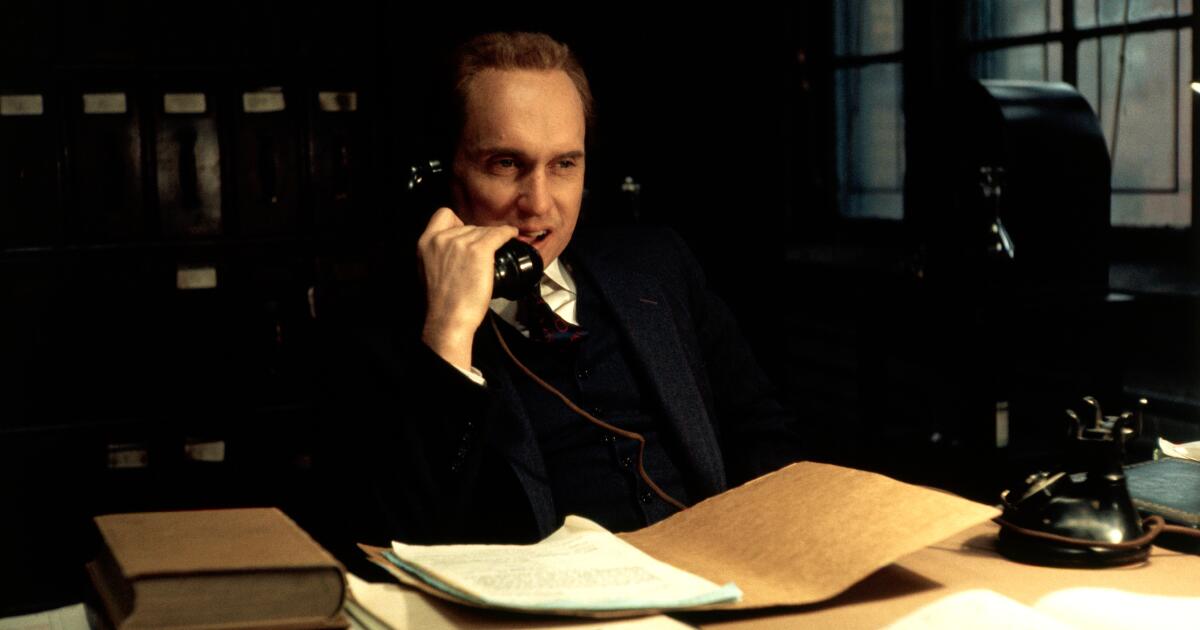
Robert Duvall, who passed away on Sunday at the age of 95, was an actor of incredible range – equally comfortable delivering quiet, impactful moments and portraying larger-than-life characters. His death marks the end of an era for character actors who revolutionized film in the 1960s and 70s. While it’s impossible to cover all of his impressive work, here are 10 of our favorite performances, listed in order of release.

Obituaries
Robert Duvall wasn’t known for conventional good looks. Instead, he captivated audiences with the powerful and nuanced performances he delivered in films like “The Godfather” and “Apocalypse Now.”
‘To Kill a Mockingbird’ (1962)

Robert Duvall’s first film role was a remarkable one: the mysterious Boo Radley in the 1962 film “To Kill a Mockingbird.” Despite having no lines, it was a perfect introduction for a new actor. The script constantly talked about Boo, building his legend, without actually showing him until the very end. To the young character Scout, Boo was a frightening figure rumored to have stabbed his father and lived secluded for years. Her first real look at him reveals him defending himself, and then, finally, Duvall appears as Boo – pale, blonde, and understandably afraid of attention. Duvall’s performance is incredibly restrained; Boo barely moves. Yet, even in those few moments, we see hints of the qualities that would define Duvall’s career: a compelling mix of danger, vulnerability, and a larger-than-life presence. He’s captivating to watch. — Amy Nicholson
‘The Godfather’ (1972) and ‘The Godfather Part II’ (1974)

“The Godfather Part III” faced several issues. The script felt hurried and the storyline became overly complicated. The characters beyond the main ones weren’t memorable, and Sofia Coppola, who stepped in unexpectedly to replace Winona Ryder, struggled with her performance.
The most significant issue with “The Godfather Part III” was the absence of Robert Duvall. Replacing him with George Hamilton, instead of successfully negotiating Duvall’s return as Tom Hagen – the calm and dependable advisor to the Corleone family – essentially sealed the film’s fate before filming began. Duvall’s subtle but powerful performance was crucial to the success of the first two movies. As the adopted, non-Sicilian son of Vito Corleone, he provided a necessary level-headedness, contrasting with Sonny’s more impulsive and aggressive approach to the conflict with the other families.
Robert Duvall is flawless in these films, especially in scenes where his character, Tom, subtly convinces people to cooperate with the family’s plans. Sometimes, he achieves this with ease, like when he discusses Roman history with a witness in “The Godfather Part II,” reassuring him his family would be provided for. Other times, his persuasion fails dramatically – and the consequences are shockingly brutal. That contrast is the essence of how Tom operates. As he famously states, “This is business, not personal,” and Duvall delivers the line with such authority that it’s impossible to disagree. — Glenn Whipp
‘Network’ (1976)

This sharply satirical film, written by Paddy Chayefsky and directed by Sidney Lumet, is famous for Peter Finch’s explosive on-air outbursts and Faye Dunaway’s desperate chase for higher ratings – roles that won them both Academy Awards. However, Robert Duvall delivers a particularly chilling performance, portraying the network’s cold, calculating executive, Frank Hackett. He relentlessly pushes his team, prioritizing profit over ethics, seeing morality as simply a business expense. While others express passionate opinions, Hackett consistently focuses on what will attract viewers and maximize revenue. Even the possibility of firing a troubled anchor is treated by him not as a moral dilemma, but as a strategic programming choice. Looking back, Duvall’s performance feels eerily accurate, offering a disturbing insight into the management style that would later transform American media into a constant battle for attention. — Josh Rottenberg
‘Apocalypse Now’ (1979)

Robert Duvall’s performance as Lieutenant Colonel Kilgore in Apocalypse Now is just… unforgettable. It’s amazing how much impact he makes with relatively little screen time. He is American imperialism, practically radiating it with his posture – that chest, that rigid back. The scene where he’s casually playing guitar during a cookout, miles from anywhere, perfectly captures his fearless, almost unsettling confidence and friendly, yet heavily armed, demeanor. It’s a character unlike any other – he reminds me more of something out of a Joseph Heller novel, like Catch-22. The image of him leading his troops into battle with Wagner blasting while sipping coffee is iconic, but it’s the surfing scene that really solidifies the film’s bizarre and unsettling portrayal of war. Every line he delivers is quotable, but it’s his final, quietly haunting remark – “Some day this war’s going to end” – and his subsequent, nonchalant walk away, that really stays with you. It’s darkly funny and deeply unsettling all at once.
‘The Great Santini’ (1979)

For many who came of age in the 1970s and early 80s, “The Great Santini” was the first time they truly felt the power of Robert Duvall’s acting. Based on Pat Conroy’s personal story and set in 1962, the film stars Duvall as Lt. Col. Wilbur “Bull” Meechum, a passionate but unpredictable Marine fighter pilot. He treats his family in South Carolina much like a military unit, ruling his home with a strong hand. Meechum is a complex character – both proud and insecure – who turns everyday activities, like basketball, into competitions and often pushes his son, Ben (Michael O’Keefe), to his breaking point. He uses the nickname “the Great Santini” as both a display of confidence and a way to protect himself. Coming just two months after his iconic role as Kilgore in “Apocalypse Now,” Duvall delivered a similar but more personal portrayal of a military man – a soldier facing battles at home rather than in war. While the film struggled to attract audiences – the studio worried the title sounded like a lighthearted circus movie – Duvall’s performance earned him his third Oscar nomination and proved his ability to lead a film with his compelling mix of charisma and threat.
‘Tender Mercies’ (1983)

As a film lover, I always come back to Robert Duvall’s performance in “Tender Mercies.” He rightfully won his Oscar for playing a country singer trying to piece his life back together after battling alcoholism and falling out of the spotlight. The script, by Horton Foote – who’d actually worked with Duvall since “To Kill a Mockingbird” – is beautifully simple and direct. It doesn’t rely on big, showy moments; instead, it lets the quiet, complex emotions really breathe. Unlike some of Duvall’s more explosive roles, this one is all about a man struggling with internal turmoil, trying to keep it under control. There’s a scene that always gets to me – Duvall sings a hymn as a lullaby, but with his back to the camera. He conveys a lifetime of regret with just his voice and the way he carries himself, drawing you in completely. It’s a masterclass in subtle, powerful acting.
‘Falling Down’ (1993)
The idea of a retiring cop is a well-worn movie cliché, and it’s hard to beat Robert Duvall’s performance in “Falling Down.” Michael Douglas plays the more outwardly dramatic role of a man on the edge, unleashing his frustrations through destruction in Los Angeles. We initially find ourselves almost cheering him on, but Duvall’s character, Sgt. Martin Prendergast, grounds the film in reality and prevents us from seeing Douglas’ character, “D-Fens,” as a hero. Prendergast consistently reminds us that D-Fens is the villain, even acknowledging the system’s failings and sharing some of D-Fens’ frustrations with authority. In a pivotal moment, he exclaims, “They lie to everybody — they lie to the fish!” – highlighting the pervasive dishonesty at play. (Amy Nicholson)
‘The Apostle’ (1997)

Robert Duvall delivers a truly captivating performance in this film, arguably one of his finest. He fully immersed himself in the passionate style of Pentecostal preaching to bring his character, Sonny, a flawed Texas evangelist, to life. The film subtly reveals the pain in Sonny’s marriage through small details, like his wife’s reaction to his presence. However, the story is more complex than a simple tale of redemption; Duvall portrays Sonny’s escape from the law as a journey fueled by wounded pride and profound questions. What makes this independent film so special is its depiction of faith as a constantly renewing force, even between people who don’t know each other. It’s a universally relatable story about the power of religion. And knowing that Duvall wrote and directed the film only highlights the depth of his talent. —Joshua Rothkopf
‘The Judge’ (2014)

Robert Duvall has been nominated for an Academy Award seven times, most recently for his role in the 2014 film “The Judge.” While it might not be considered one of his best movies, it’s the one that brought me to a screening with him and Robert Downey Jr. for a post-film Q&A – and Duvall was hilariously blunt! “The Judge” is a complex film, tackling a strained father-son relationship, a criminal case, a courtroom drama, and even a sweet romance, with a quirky nod to Bit-O-Honey candy. It’s a bit messy and flawed, but the performances from Duvall and Downey are truly excellent. Downey, who also produced the film, admitted to watching it around 20 times and crying each time. When asked if he’d cried, Duvall said he hadn’t, but that he had been moved, calling it “the same thing.” Downey jokingly claimed he’d cried enough for both of them. Duvall simply smiled and quipped, “I cried when I got paid,” perfectly capturing the spirit of a seasoned professional actor. – Glenn Whipp
‘Widows’ (2018)

Robert Duvall continued acting well into his 80s and 90s, and even in smaller roles, he could portray characters with rich, full lives. In Steve McQueen’s thrilling crime film, he plays a Chicago politician deeply entrenched in the city’s power structure, trying to pass things on to his son. Though clearly not a good person – displaying casual racism and disdain for those he represents – Duvall manages to make him surprisingly compelling, a man who sees himself as defending the old ways against a changing world. In a scene with Colin Farrell, playing his son, Duvall is dismayed by how things are going. He erupts in a remarkable string of curses, threatening violence and declaring, “And I can still do it, believe me.” And the audience instantly believes him.
2026-02-18 01:02