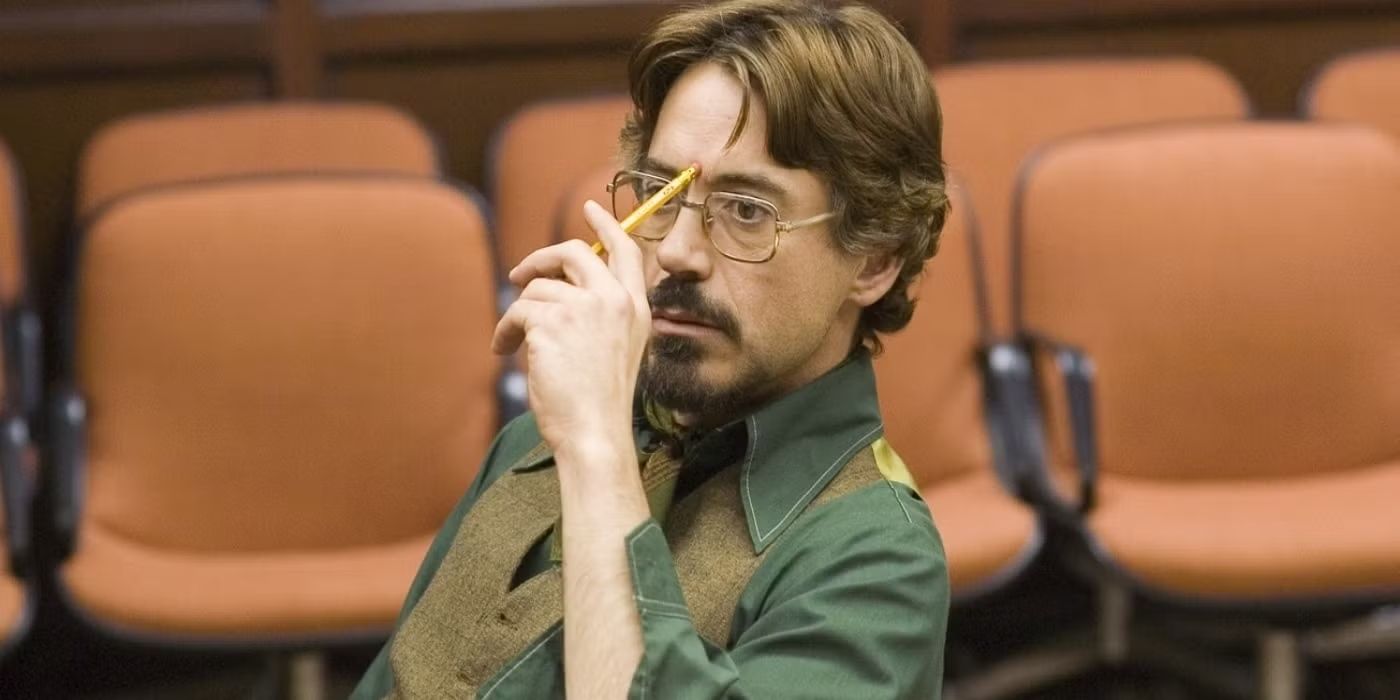
Since its debut in 2007, the true-crime genre has become incredibly popular in movies and on streaming services. However, few productions have captured the same unsettling feeling and distinctive, eerie mood that director Fincher achieved.
With a 90% fresh rating on Rotten Tomatoes and a 7.7 on IMDb, David Fincher’s Zodiac is a remarkably realistic film. It moved beyond the typical thriller format, exploring the difficulty of truly knowing the truth in a serial killer case. Rather than simply recounting the events, Zodiac fundamentally changed the way true crime stories could be presented on film.
Zodiac Is a Thriller That Thrives on Simplicity Not Complexity
The story’s strength lies in how it subtly portrays the killer – he’s present, but not the main focus. Instead, the narrative centers on the conversations happening around the investigation. Ultimately, it’s a story about a specific period in American history, when the intense search for this dangerous individual consumed the lives of those trying to identify and capture him.
Fincher and James Vanderbilt broke from typical Hollywood thrillers by focusing not on dramatic events, but on the painstaking details of the investigation. Instead of seeing this as a slow part between action scenes, the film makes the everyday work of investigating the central focus. This creates a disorienting effect on time, as the story moves forward steadily without using flashbacks. Instead, simple title cards indicate the passage of time, showing intervals ranging from an hour to eight months.
This approach emphasizes the burden of time and experience. The story unfolds slowly, with dead ends and no easy answers. It portrays the intense, fast-paced thinking of those involved, ultimately leading to a disturbing and quiet conclusion.
Fincher also wanted a lot of information packed into every scene, almost to the point of being overwhelming. To deliver all the necessary details, he directed the actors to speak very quickly, creating a rapid-fire rhythm. This fast pace mirrored the hectic energy of a newsroom or police station, and it helped the audience feel the immense pressure of the evidence. Ultimately, this technique aimed to make the investigative process seem credible, even if the truth remained hard to find.
Understanding Fincher’s later work is easier if you consider his earlier films. Fight Club presents chaos as an appealing path to freedom for men, while Zodiac intentionally dismantles that idea and similar illusions.
Unlike many thriller villains, this killer isn’t brilliant or cunning. He’s a pathetic individual desperate for attention, and likely doesn’t present himself well. The violence he commits isn’t slick or dramatic; it’s awkward, unrefined, and chaotic.
What makes the film Zodiac stand out is its refusal to rely on a complicated, twisty plot to create suspense. It recognizes that real fear comes from everyday vulnerability – like being alone in a car or encountering a stranger. The movie avoids typical cinematic exaggeration, leaving viewers with a raw and deeply unsettling sense of terror.
Obsession Is the Real Villain in Fincher’s Zodiac
Although a crime sparks the plot, the film ultimately explores how obsession is the true enemy. As the investigators become increasingly consumed by the unsolved case, the movie transforms from a simple mystery into a chilling look at mental and emotional breakdown. Director David Fincher has often shown an interest in obsessive characters—like the detectives in Mindhunter and the protagonist in Fight Club. However, in Zodiac, obsession isn’t just a character trait—it’s a destructive force.
Fincher’s film explores how a strong desire for the truth can become a damaging obsession. This fixation actually harms the main characters more than the killer himself. The story begins with Robert Graysmith, who acts as our guide. Initially portrayed as innocent and eager – a cartoonist and former Eagle Scout – Graysmith embodies the determined amateur who continues investigating long after the authorities have stopped.
The intense focus on the Zodiac killer deeply affected everyone involved, but Robert Graysmith’s experience was particularly devastating. He quickly went from simply being interested in the case to becoming completely consumed by it, withdrawing from his family. He ended up in a lonely and desperate state, similar to the killer himself, driven by a need to solve the mystery as a way to find peace of mind.
The movie highlights this by showing what happens to Paul Avery. Initially a hardened and skeptical journalist, Avery ultimately becomes the killer’s main target, suffering devastating psychological attacks. His decline is complete and heartbreaking, as he spirals into alcoholism and fades into obscurity.
As a huge film buff, I’ve always been struck by Mark Ruffalo’s portrayal of Inspector Dave Toschi. He really embodies the weight of the unsolved Zodiac case – it’s like an open, festering wound for him. He’s a man who truly believes in doing things by the book, but the Zodiac killer throws all that order into complete chaos, and it’s incredibly frustrating to watch. That feeling of desperation and obsession reaches its peak in, well, you know… that infamous scene.
Graysmith meets someone who says they possess film posters created by the Zodiac Killer, but the meeting quickly turns unsettling when they’re led into a creepy basement. The film itself then shifts into a more terrifying and suspenseful style, relying heavily on mood, music, and strong acting to build tension.
The suspense in this scene hinges on the simple idea that basements are rare in California. It feels like a complete, chilling short story within the bigger plot. The fear comes from understanding Graysmith knowingly walked into danger, driven by his curiosity more than self-preservation. The fact he managed to get out was incredibly stressful for viewers, and continues to be so.
Modern True Crime Still Can’t Catch Up With Zodiac
What makes the movie Zodiac so compelling is its subtle approach, something you don’t often see in today’s true crime stories. The Zodiac Killer case has become a cultural obsession, attracting conspiracy theorists and true crime enthusiasts – much like other famous unsolved mysteries. Director David Fincher understood this fascination and crafted the film accordingly.
Despite ongoing online speculation and theories trying to unmask him, the identity of this person remains a mystery. This is precisely the point Fincher aimed to make: exploring what people think they know, while ultimately leaving him as an anonymous, unknown figure.
Despite dealing with a disturbing subject, the film Zodiac avoids typical thriller tactics like shocking twists, suspenseful cliffhangers, or emotional manipulation. Director Fincher intentionally steers clear of sensationalism, especially the common ‘slice-and-dice’ approach to crime films. The violence in Zodiac is concentrated in the first half hour, with the rest of the movie focusing on conversations and the painstaking process of investigation. The film also avoids glorifying the killer or presenting the story from his perspective.
The film’s refusal to offer easy answers actually makes it feel like a prediction of our digital world. The characters’ difficulty dealing with piles of confusing information reflects how we feel when overwhelmed by the endless data on our computers. We’re surrounded by information today, but it often leaves us feeling more confused than informed.
The book Zodiac foresaw our current tendency to dismiss facts, arguing that simply having information doesn’t guarantee finding the truth. While it builds a strong, though not conclusive, case against suspect Arthur Leigh Allen, it honestly admits the evidence isn’t completely definitive.
The film leaves you feeling unsettled, like the mystery might never truly be solved, and hints that even with all the evidence, the full truth can remain hidden. Unlike many similar stories that have been forgotten, Zodiac stays with you long after you’ve seen it.
If you’re hoping to watch the movie Zodiac on Netflix, you’ll need to do so before February 17, 2026, as it will no longer be available after that date. The critically-acclaimed thriller, directed by David Fincher, is leaving the Netflix streaming library in the US.
Found an error? Send it so it can be corrected.
2026-02-14 16:09