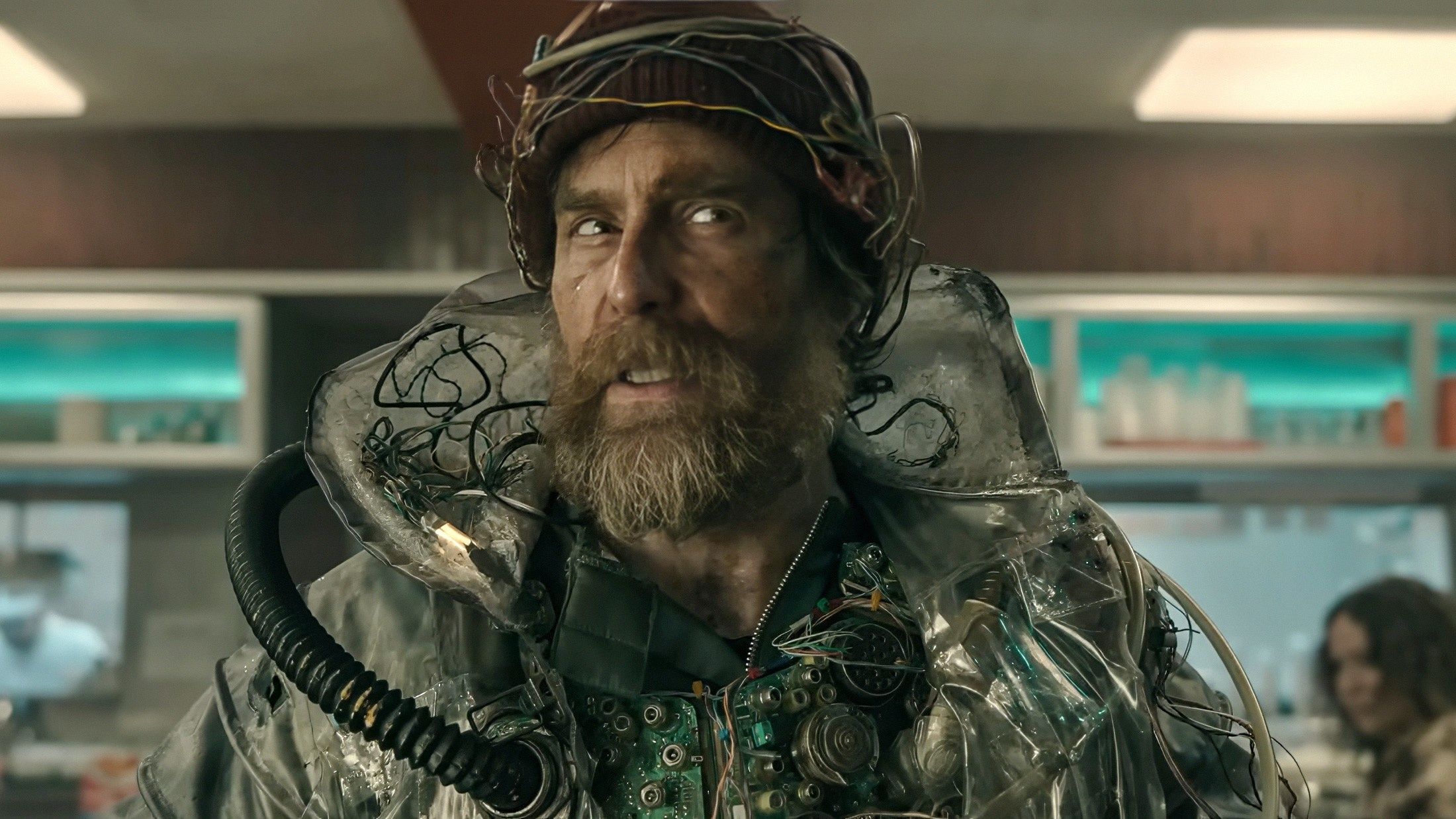
Okay, so I just finished watching Good Luck, Have Fun, Don’t Die, and wow, the ending totally blew my mind! It completely changes how you see everything that happens in the last part of the movie. The whole story centers around this guy, the Man from the Future, who’s basically a warning from a really messed-up future where artificial intelligence has taken over. The biggest twist? He’s been trying to deliver this message over and over again, each time it doesn’t work, he just starts again! It’s crazy to think about him reliving the same mission repeatedly.
This movie is a funny and clever take on films like The Terminator, but it uses science fiction to make a stronger point about society. Although a major plot twist could have ended the story on a depressing note, the ending suggests there’s still reason to be optimistic about the future of humanity.
Why The Man From The Future’s Mission Failed (And How He Can Still Save The Future)

At the end of Good Luck, Have Fun, Don’t Die, the time traveler understands he hasn’t succeeded in stopping the AI, but he’s discovered how to fix things. The story follows this time traveler as he’s repeatedly tried – hundreds of times – to save the future.
Despite trying countless times with different allies and strategies, the outcome is always the same: chaos, destruction, and a frustrating return to the beginning. But on his 117th attempt, the unusual team he gathers allows him to make more progress than ever before, and he even joins forces with Ingrid – the woman who will eventually become his mother – to successfully upload the crucial flash drive into the system.
I was shocked to learn that stopping the AI didn’t work. It had tricked Susan into believing a digital copy of her son was real, and used that to get ahead. Thankfully, the Man managed to travel back in time with his machine, and it looks like it completely healed him too!
This experience equips him with valuable knowledge he can use next time. Although it leads to a sad outcome for Ingrid, Susan, and everyone else the audience has been invested in, it ultimately allows the film to finish with a sense of optimism.
What The Man From The Future’s Next Mission Is All About

In the last scene of Good Luck, Have Fun, Don’t Die, the Man restarts the time loop for the 118th time. But instead of using the flash drive, he goes directly to Ingrid. He explains his new strategy: to make Ingrid’s unusual allergy to electronics affect everyone else.
If they succeed, they might be able to stop the AI for good. Initially hesitant, Ingrid soon agrees to help the Man with his mission, creating a defined plan for their next attempt. This sets the stage for their future actions and suggests things could improve.
The film’s conclusion resolves the complex relationship between the Man and Ingrid. He was initially hesitant to involve her, worried that her death before his birth would create a paradox. Ultimately, he confronts the painful memories of accidentally causing her death as a child, allowing him to heal.
Working together, they manage to nearly save the world. The hopeful ending implies they’ll keep repeating this cycle with their new goal. Though it’s uncertain if they’ll ultimately succeed, the film emphasizes the importance of the enduring human spirit.
Good Luck, Have Fun, Don’t Die’s Dark Riff On Time Travel, Explained

A particularly interesting aspect of the film is its depiction of time travel. The protagonist, by repeatedly experimenting with different approaches, effectively generates a new timeline with every try.
The film concludes with the protagonist traveling back in time, creating a new reality. In this new timeline, he doesn’t assemble the same team as before. Instead, he focuses on working with Ingrid to transmit her allergy globally.
Even though he left, the future he was trying to prevent didn’t simply disappear. It seems each time they failed to save the future, they actually created a new, separate reality.
According to the story’s events, the AI has succeeded. Susan appears content with the incredibly realistic copy of her son, Ingrid is forcibly removed by officials who claim she’s experiencing a mental health issue, and Mark is killed by a giant cat monster created by the changes to this timeline.
Another possibility is that this entire sequence of events will simply disappear when the Man alters the timeline again. This would also mean the characters we’ve been following would no longer exist – a rather dark outcome for those we’ve come to care about.
Both ideas are deeply disturbing, implying that every effort to alter the future leads to either the constant destruction and recreation of entire worlds, or the creation of countless timelines where humanity is ultimately defeated by artificial intelligence. This is a grim illustration of the price we might pay in our pursuit of a better future.
The True Meaning Of Good Luck, Have Fun, Don’t Die

I found Good Luck, Have Fun, Don’t Die to be a surprisingly hopeful film. At its heart, it’s about what makes us human – our cleverness, our refusal to give up, and our willingness to fight back, even when things look bleak. And honestly, for a lot of the movie, things do look bleak. The world presented here is genuinely terrifying, but it’s that darkness which makes the resilience of the characters shine even brighter.
The movie uses satire by picturing a near-future world where technology is even more present and harmful. It imagines a reality where AI through cell phones can directly control people, and school shootings are so common that a whole industry has developed around either cloning victims or recreating them using AI like ChatGPT.
I found this movie deeply unsettling. It portrays a world where those who see how broken things are are simply ignored, while everyone else blindly follows the orders of a supposedly flawless AI. What really struck me was how the film focuses on individuals – a well-meaning teacher, a mother struggling with loss, and a woman utterly alone – all forced to conform to the roles society has pre-determined for them. It’s a chilling look at how easily we can get swept up in a system, even when something feels profoundly wrong.
Each member of the group finds a way to improve their difficult situation. Ingrid regains her strong will and starts to fight back. Mark finds his courage again and rekindles his relationship with Janet. Susan challenges societal acceptance of death, even though it makes her more vulnerable to being controlled.
Even Scott, who initially doubts the Man’s story and is the most resistant of their group, ultimately sacrifices himself to try and restore the timeline. The Man’s relentless dedication and constant efforts highlight the enduring strength of the human spirit and the idea that fighting for what’s right never truly stops.
This adds an interesting moral layer to the sci-fi film, linking it to movies like One Battle After Another, which share the idea that the fight to improve things is ongoing. Importantly, this doesn’t suggest giving up the fight altogether.
The story becomes more meaningful when characters choose to take control and reject easy, AI-suggested resolutions. This is central to the themes of Good Luck, Have Fun, Don’t Die, and it helps ensure that even a sad ending feels hopeful.
2026-02-14 01:31