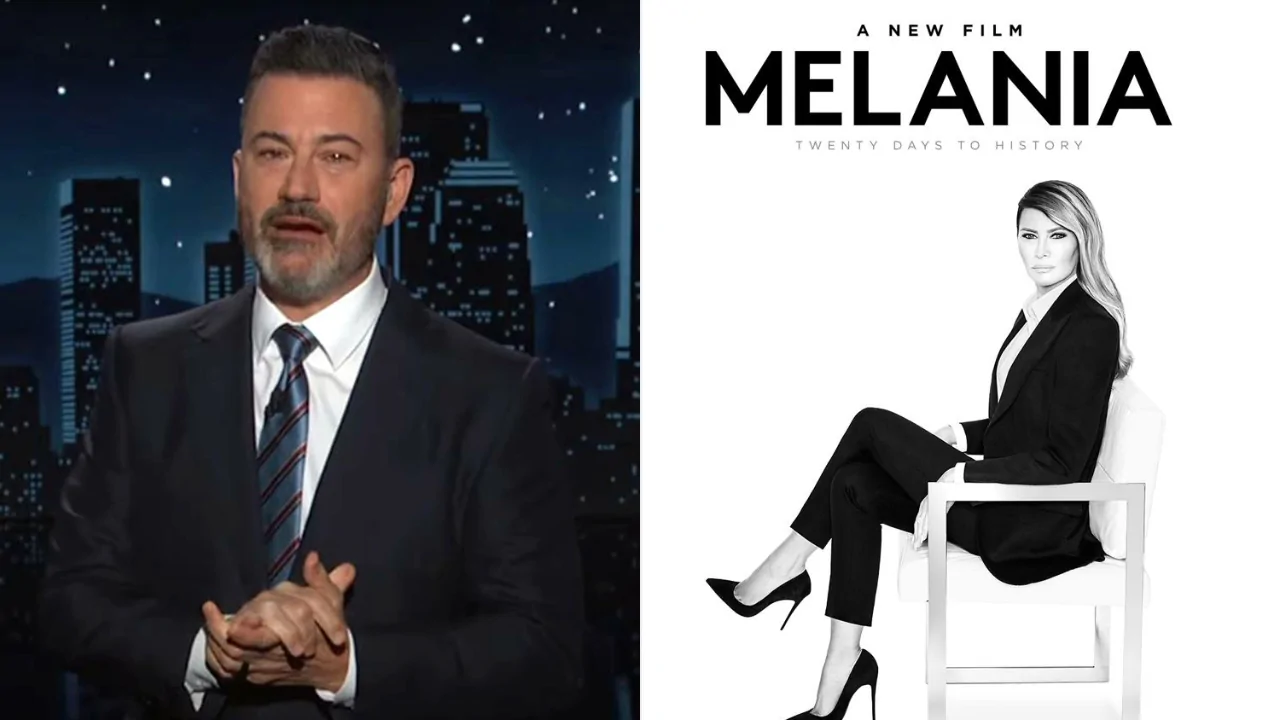
Jimmy Kimmel recently tried to suggest the audience score for the documentary Melania was artificially inflated, but his claims were quickly debunked – and the proof came directly from Rotten Tomatoes itself.
The leader of the company that owns Rotten Tomatoes has denied claims that the movie’s extremely high audience score was faked using bots, political manipulation, or other artificial methods, according to a recent report.
In short: the people praising the film are real — and they bought tickets.
This raises a growing and awkward question about Kimmel’s jokes: if the audience is genuinely reacting as he claims, then what is he actually downplaying or ignoring?
Rotten Tomatoes: Melania Reviews Are Verified, Not Rigged
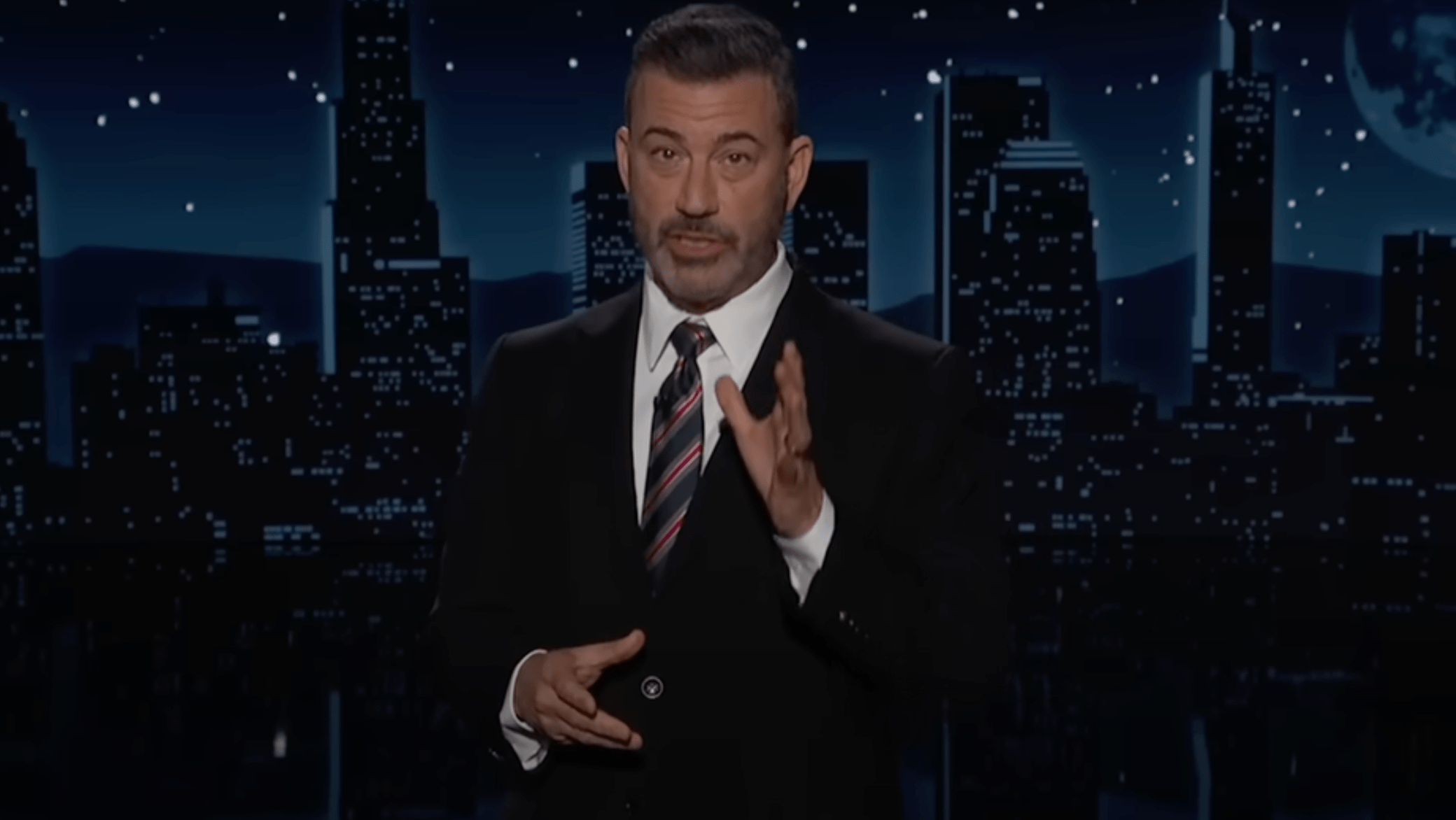
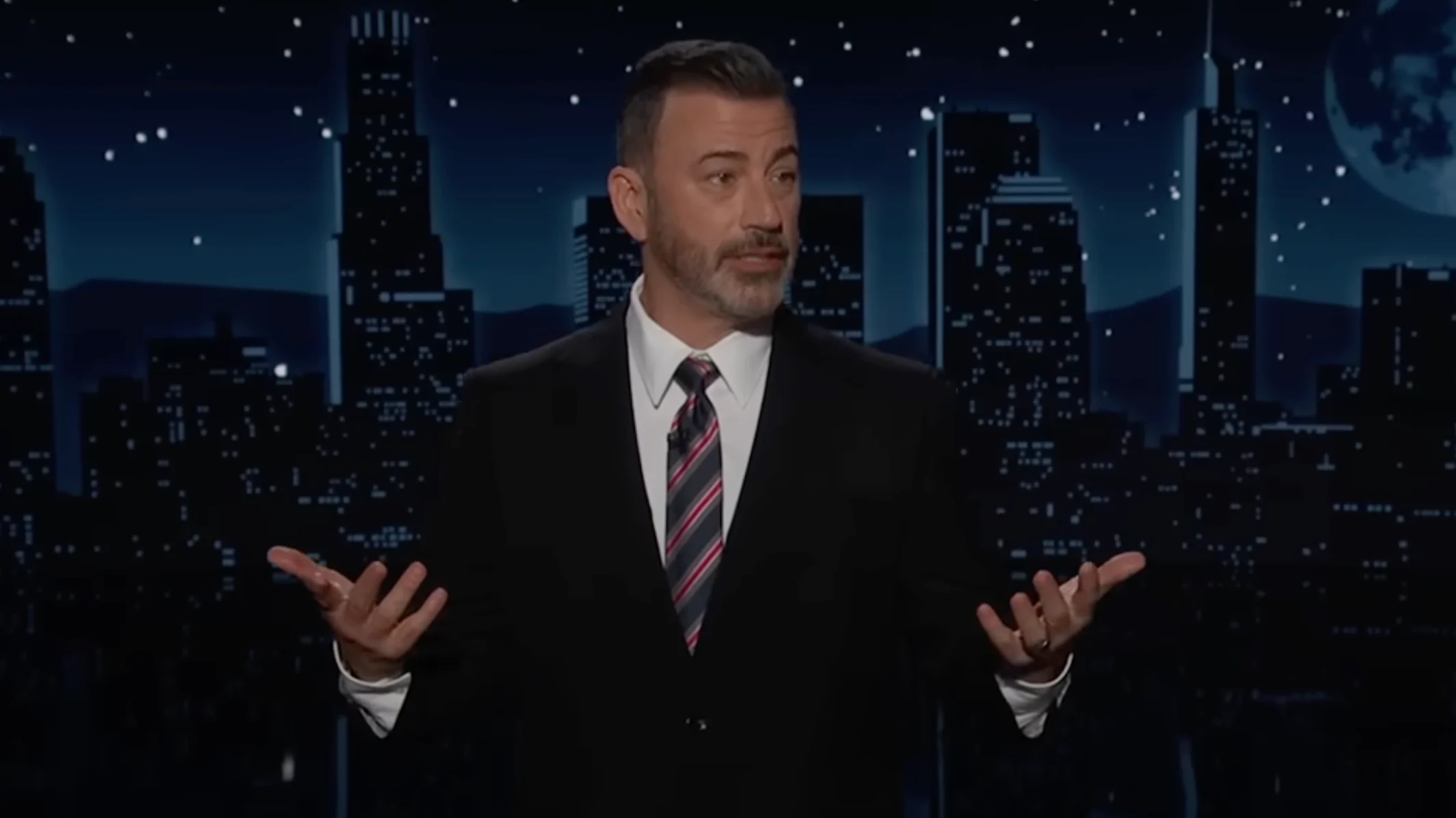
The issue started when Kimmel made fun of the documentary’s box office results and positive reviews, implying its success seemed unusual given the high audience scores.
Jimmy Kimmel pointed out that the critics on Rotten Tomatoes gave the documentary Melania a very low score of just 5%. However, the audience loved it, giving it a 99% positive rating – even higher than The Godfather. Kimmel jokingly suggested that Donald Trump didn’t influence that audience score at all.
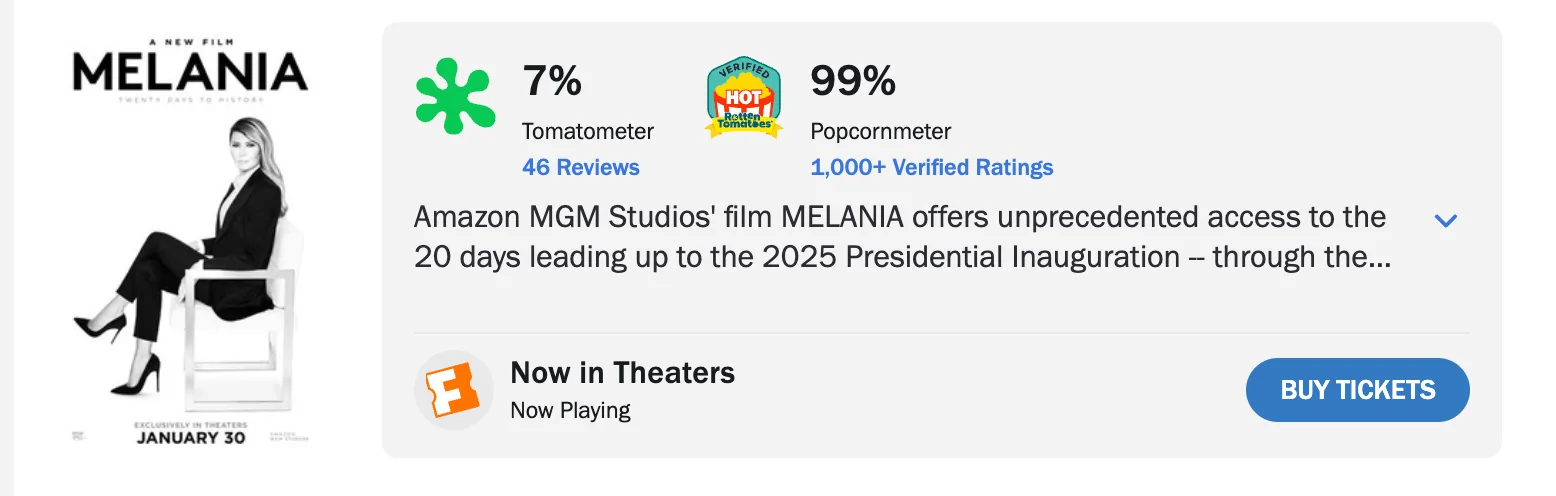
But Rotten Tomatoes’ ownership group moved quickly to shut down the narrative.
Versant, the company behind the documentary Melania, stated that the audience reviews haven’t been artificially inflated by bots. They confirmed that all reviews shown on the Popcornmeter are from verified ticket buyers, ensuring authenticity.
In other words, users didn’t just log on and click a rating.
They actually saw the movie.
Verified vs. Unverified — And a Massive Gap
People who actually bought tickets to see Melania overwhelmingly loved it, giving the film a remarkable 99% positive audience score.
However, the overall score, which counts opinions from all online users (even those not verified), is much lower.
That disparity tells its own story.
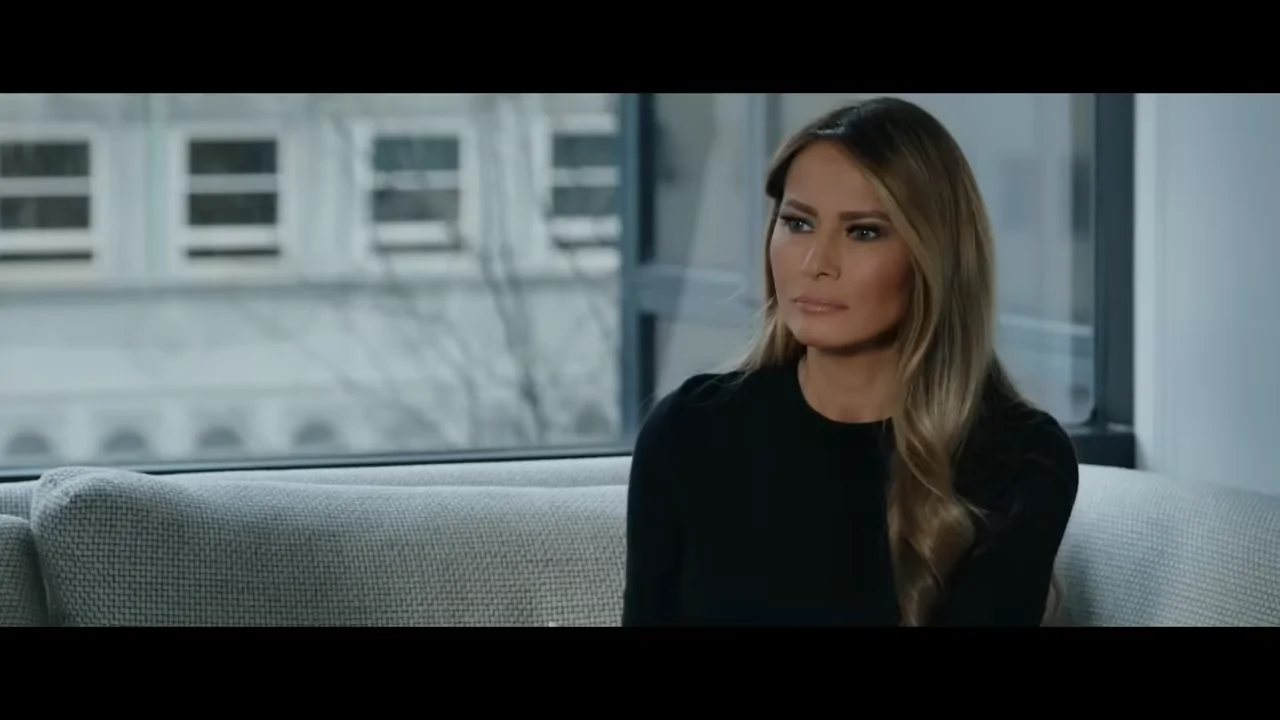
People who bought tickets and actually went to the screenings gave very positive feedback.
The unverified internet audience, by contrast, registered far more hostility.
This suggests that people who actually saw the documentary generally enjoyed it, while many of the most negative reviews might be from people who didn’t even watch it. This is somewhat ironic, considering how quickly the media often accuses audiences of “review bombing” when films with progressive messages receive negative feedback.
Kimmel’s Narrative Meets an Inconvenient Fact Pattern
Kimmel believed the movie’s popularity wasn’t genuine. He suggested that ticket sales were boosted by artificial means, reviews were faked, and attendance numbers were inflated to make it seem more successful than it actually was.
He even escalated the bit theatrically.
Kimmel made a joke, suggesting a thorough investigation. He playfully called for Tulsi Gabbard and the FBI to examine everything at movie theaters across the country – ticket machines, popcorn buckets, and even sales records – to get to the truth.

But the Rotten Tomatoes verification system undercuts that premise entirely.
It’s impossible to artificially increase verified scores without buying a large number of tickets, and that kind of activity would be easily detected through box office reports, distributor data, and theater analytics.
No such evidence has surfaced.
Critics vs. Audiences — Credibility in Question
If Kimmel’s doubts were shared by critics with a solid, widely-respected basis for their opinions, his argument would be more convincing.
But the credibility gap cuts the other direction.
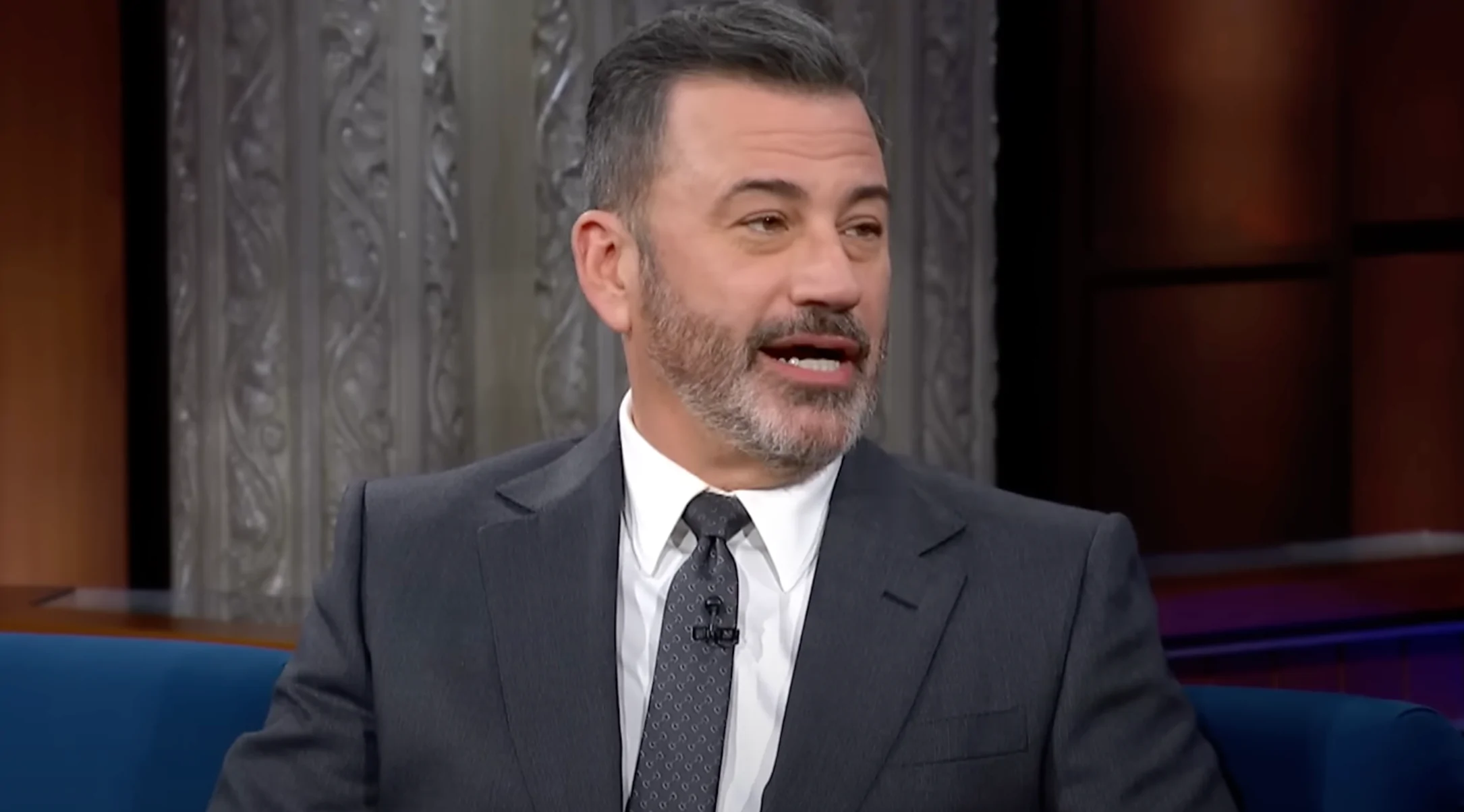
Several reviewers who initially gave the documentary Melania negative reviews later admitted they hadn’t seen it before sharing their opinions. This raises questions about the validity of some of the criticism the film has received.
That reality reframes the legitimacy debate entirely.
On one side: Verified ticket buyers who saw the film and rated it positively.
On the other: Industry critics — some of whom condemned the documentary without viewing it.
Which side, then, is operating from a position of evidentiary legitimacy?
Hollywood’s Review Bombing Double Standard
The reaction to Melania also exposes a broader pattern in entertainment media discourse.
When movies or TV shows with strong political or social messages get bad reviews, people in the entertainment industry often blame “review bombing”—claiming the negative feedback comes from online trolls, troublemakers, or groups trying to sabotage the project because of its ideas.
However, the story changes when a project with conservative or right-leaning views receives strong, confirmed support. Suddenly, the way it’s talked about shifts.
Now the suspicion becomes reverse manipulation, score inflation, and artificial turnout.
Anything but organic support.
The main reason Hollywood often misses the mark is simple: a lot of people want to watch stories that don’t align with the usual political beliefs seen in most movies and shows. There’s a large audience for different perspectives.
And when that audience shows up — and verifies its attendance — the data reflects it.
The Collapse of Kimmel’s Narrative
Now that Rotten Tomatoes has confirmed the reviews about Melania were real, the main basis for Kimmel’s theory is much less convincing.
The audience score wasn’t bot-driven, nor was it algorithmically gamed.
It came from ticket-buying viewers who chose to rate the film positively after seeing it.
Pointing out flaws in the documentary’s message, political stance, or how it was made is still valid. However, it proves wrong the idea that people’s reactions to it are fake.
When Expectation Collides With Reality
The real issue with the Melania controversy isn’t about how Rotten Tomatoes works or how they confirm tickets.
It’s about expectation collapse.
Some in the media seem surprised – and perhaps even bothered – that a documentary about someone from the Trump administration could be popular and well-received.
So the response becomes suspicion.

If audiences liked it, the thinking goes, something must be wrong with the audience.
But the verified data says otherwise.
People bought tickets. They watched the film, and they rated it overwhelmingly well.
This raises a troubling possibility for Jimmy Kimmel and others who claim the audience was manipulated:
The scores are real. The views are real. And the enthusiasm is real, too.
2026-02-06 20:00