- Bank of Korea’s CBDC pilot relied mainly on internal security assessments before launch.
- No independent audit reviewed Project Hangang during or after real-world testing.
- Oversight concerns grow as South Korea expands CBDC and deposit token initiatives.
South Korea’s central bank is under fire because its initial test of a digital currency didn’t include a check from an outside security firm. Documents show the project mostly depended on security checks done by the banks involved, rather than independent review, which is causing concerns about openness and whether the public can trust the system.
Bank of Korea Defends Security Review Process
A recent report in the Maeil Business Newspaper, a South Korean business publication, details that the Bank of Korea’s initial test of a central bank digital currency, called Project Hangang, took place from April to June 2025. The pilot program was designed to evaluate how a digital currency would function in everyday transactions.
The test program included banks creating digital tokens representing deposits, and these tokens were supported by the central bank’s new digital currency system.
According to documents provided by the Financial Supervisory Service to lawmaker Lee Heon-seung, there was no separate government security check of the system either during or after its testing phase. Banks involved instead conducted their own initial security reviews before the trial program began.
Before its official release, the system underwent security checks for weaknesses, performed with help from the Financial Security Institute and the cybersecurity firm SK Shields. Even though Woori Bank and NongHyup Bank were already involved in initial testing, they also conducted their own separate internal reviews.
Some experts have pointed out that this system lacked strong independent checks because the same organizations responsible for testing it were also in charge of judging their own security. This raised questions about whether the evaluations were truly unbiased.
The Bank of Korea responded to worries about security in its initial test findings. The bank explained that the digital tokens used for deposits were safe from cyberattacks, as thorough security checks were done before starting the project.
However, experts pointed out that these conclusions came from the central bank’s own evaluation, not a review by an outside auditor. There’s also no sign that financial officials checked the system’s security after the trial period ended.
Oversight Questions Grow as Digital Currency Plans Expand
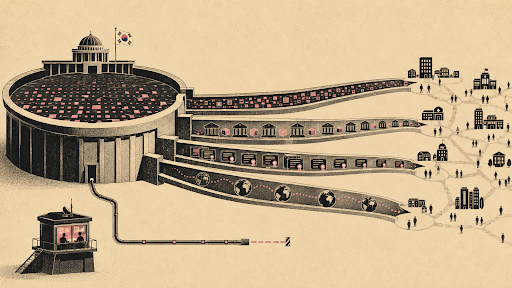
The report also noted a lack of communication between financial regulators and banks as South Korea developed its central bank digital currency (CBDC). Documents show there was only one official discussion about deposit tokens in the last three years.
The discussion included Shinhan Bank and an insurance product connected to deposit tokens. Currently, however, banks haven’t created specific teams to oversee either central bank digital currencies (CBDCs) or these kinds of deposit tokens.
The Bank of Korea explained that further checks weren’t needed, as they’d already done thorough security assessments before beginning the trial program.
According to officials, the process followed all required guidelines set by the financial regulator, the Financial Supervisory Service.
People working in the payments industry believe it’s still crucial to have independent checks on new digital payment systems. They suggest that having outside experts test and audit these systems after they’re used by real customers would build trust and make them more reliable.
This increased attention follows South Korea’s progress in developing rules for digital assets. This includes plans to create stablecoins linked to the Korean won currency and expand its central bank digital currency (CBDC) efforts. The country is also planning more test programs, such as tokenized government bonds, smart deposit tokens, and international payment systems through Project Agora with the Bank for International Settlements.
2026-07-21 22:36