Stories often portray soldiers finding redemption after being damaged by war. On Cybertron, many individuals – scientists, prisoners, and those cast aside – ended up fighting on the losing side due to their traumatic experiences, not through any deliberate choice of their own.
Many villains in Transformers stories—whether through brainwashing, imprisonment, or being built as weapons—hinted at a moral side that was never fully explored. These characters deserved better endings than they received, and it’s interesting to consider how their complex experiences were ultimately overlooked.
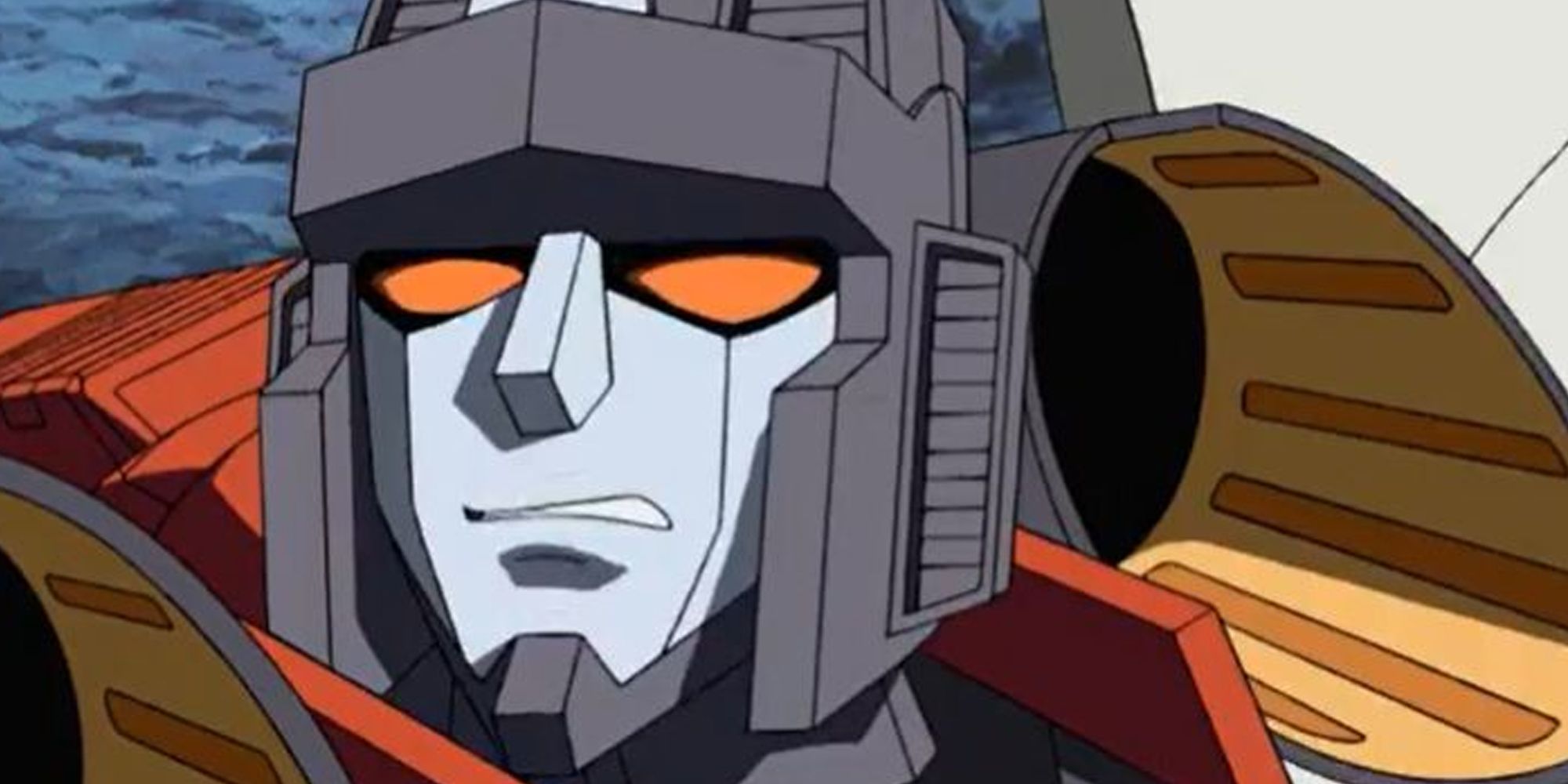
Starscream Buried His Inner Scientist Under a Soldier’s Ambition
Starscream began his life on Cybertron as a scientist, working alongside his friend Skyfire. They were separated by an old Earth storm, and Starscream was unable to find Skyfire again. Rather than deal with this loss, he gave up science and joined the war academy, using combat to fill the void left by his missing friend. It appears this wasn’t about discovering a new path, but simply avoiding the pain of his unresolved grief.
After repeatedly trying and failing to overthrow Megatron, Starscream’s actions seemed driven by simple envy. However, The Transformers doesn’t explain why he craved leadership by linking it to his past – specifically, when he gave up science for a life of combat. Knowing his history makes his cowardly behavior during these power grabs more understandable.
Soundwave’s Values Never Got to Outlive His Loyalty
Soundwave felt like an outsider growing up on Cybertron, and this loneliness led him to join Megatron – not because he was malicious, but because Megatron offered him a sense of belonging and value. The Transformers comics consistently show that Soundwave was drawn to what he believed was a worthwhile cause.
Megatron ultimately ended the war, but Soundwave remained loyal, continuing to fight for a cause even its leader had given up on. Unicron forced Soundwave to sacrifice himself against the Chaos Bringer, and this act of selflessness was his only chance at finding meaning. It’s unfortunate that Soundwave never got the opportunity to explore who he could be once free from Megatron’s influence.
Shockwave Paid for Kindness Before He Turned Cold
Shockwave was a senator who led Cybertron’s top tech school. Before becoming Megatron’s cold and calculating strategist, he used his influence to protect weaker robots from the harsh realities of their world. He quietly enhanced several bots so they could withstand the power of the Matrix chambers, which drew unwanted attention from Cybertron’s leaders – but for genuinely good reasons.
I’ve always been fascinated by Shockwave’s backstory! It’s tragic, really. He wasn’t born the cold, logical being we know from The Transformers comics. He was someone else, and the ruling class of Cybertron brutally punished him with a procedure called empurata – it warped his face, hands, and even his personality. But what’s really interesting is that the comics don’t portray his emotionless logic as caused by that trauma. Instead, it’s presented as just who he is, even though he originally acted to protect those who couldn’t protect themselves. It’s a really compelling character detail, showing how much of his identity was lost – or maybe, always existed – beneath the surface.
Waspinator Quit Being Evil and Nobody Noticed
Throughout the three seasons of Beast Wars: Transformers, Waspinator constantly suffered damage – getting blown up and losing body parts – and was treated as a disposable character, often for comedic effect. By the end of Season 3, he finally reached his breaking point, angrily confronted Megatron and the Predacons, and announced he was abandoning his life of villainy.
The series Beast Wars unfortunately didn’t explore Waspinator’s brief moment of wanting to be good. He never joined the Maximals permanently, his change of heart wasn’t truly acknowledged, and he quickly went back to being a funny character as if he hadn’t expressed any desire for redemption. He actively tried to turn away from villainy – more than some characters who did become Maximals – but the show treated him like a joke instead of giving him a meaningful story arc.
Lugnut’s Loyalty Functioned Because Of Faith Not Hatred
Lugnut, from Transformers: Animated, was defined by his extreme loyalty to Megatron. This wasn’t just obedience, but a near-religious devotion. He followed Megatron’s commands without question, like sacred teachings, and patiently awaited his return, acting more like a faithful follower than a soldier. He never showed any desire for power himself or acted cruelly just for the sake of it.
This sets Lugnut apart from most Decepticons because his evil actions don’t seem to be driven by personal gain like power or revenge. Transformers: Animated plays up this unwavering loyalty for laughs, portraying it as a naive and childlike faith—the show focuses on the humor of it rather than exploring what would happen if Lugnut ever doubted Megatron.
Maximals Engineered Rampage Before He Ever Chose Cruelty
Maximal researchers created Rampage hoping to replicate Starscream’s unique life force, and though they succeeded, it shattered his mind. Rampage didn’t choose to be a weapon, and the series Beast Wars: Transformers highlights that the very group who criticizes his aggression is responsible for making him in the first place.
Even though Rampage was mistreated, he showed kindness by protecting another outcast named Transmutate, shielding them from the Predacons’ rage, and deeply mourning when Transmutate sacrificed themselves to save him. This connection proves Rampage is capable of loyalty and empathy—qualities the show unfortunately didn’t explore further after that moment.
Sunstorm Never Got to Live By His Own Beliefs
I’m absolutely fascinated by Sunstorm’s origin! Shockwave created him purely as a copy of Starscream, initially intending him to just hold a solar reactor – nothing more. But then, something incredible happened. A freak data surge flooded his system with pieces of Vector Sigma, and it completely rewired his thinking! Instead of forming his own opinions, he became intensely devoted to a mission he believed came directly from the Oracle – it’s like he was programmed with a divine purpose!
Sunstorm dedicated his life to convincing Starscream to support an idea no one else grasped, driven by convictions he didn’t create and couldn’t challenge. In the Dreamwave Transformers comic series, he dies when his internal power source explodes, with neither Autobots nor Decepticons attempting to dissuade him from his beliefs.
Blitzwing’s Split Mind Came From an Experiment, Not Evil
Blitzwing didn’t start out with multiple personalities. According to Transformers: Animated, he was experimented on by Blackarachnia after the Great War. She rebuilt his body so he could transform into three different modes, but this process fractured his mind, creating the personas Icy, Hothead, and Random. Blitzwing never wanted these separate identities and struggles to fully control them.
The show treats Blitzwing’s personality disorder as a joke, featuring sudden bursts of laughter and childlike rhymes even during fights – ignoring the fact that it was caused by unwilling experimentation. Interestingly, all three of Blitzwing’s faces share one common trait: they are equally afraid of Megatron, hinting at a consistent underlying personality despite his fractured state.
Onslaught Traded One Cage for Another
Before becoming the leader of the Combaticons, Onslaught was a Decepticon prisoner. He and four others were imprisoned after a failed attempt to overthrow Megatron, which resulted in them losing their original bodies. Starscream released Onslaught, but only to use him in a plot against Megatron. Instead of giving them back what Megatron had taken, Starscream put them into old military vehicles found in Guadalcanal.
Starscream cleverly kept essential energy-collecting parts from the Combaticons, making them rely on him for power and turning their thanks into obedience. Onslaught’s dedication to the team he eventually led stemmed from being imprisoned first by Megatron, and then by Starscream, but the story of how he came to lead was never explored beyond those beginnings in The Transformers.
Nickel Found the Only Family a Death Squad Could Offer
Nickel was the sole survivor from Prion, a Cybertronian colony that had been destroyed. Instead of finding help, she was discovered by the Decepticon Justice Division. She didn’t join them because she enjoyed violence; as an orphan, they were the first to offer her shelter and a purpose. For years, Nickel worked to keep this feared group operational and running smoothly.
After Nickel joined Krok’s Scavengers, leaving the DJD, she became fiercely loyal, offering comfort to a teammate who was hurting and even helping to rehabilitate a severely injured Grimlock. This capacity for compassion was always within Nickel, but it had been hidden by her harsh environment. The Transformers comics often portray this change as simple niceness towards others, failing to recognize it as a significant personal transformation.
2026-07-21 17:47