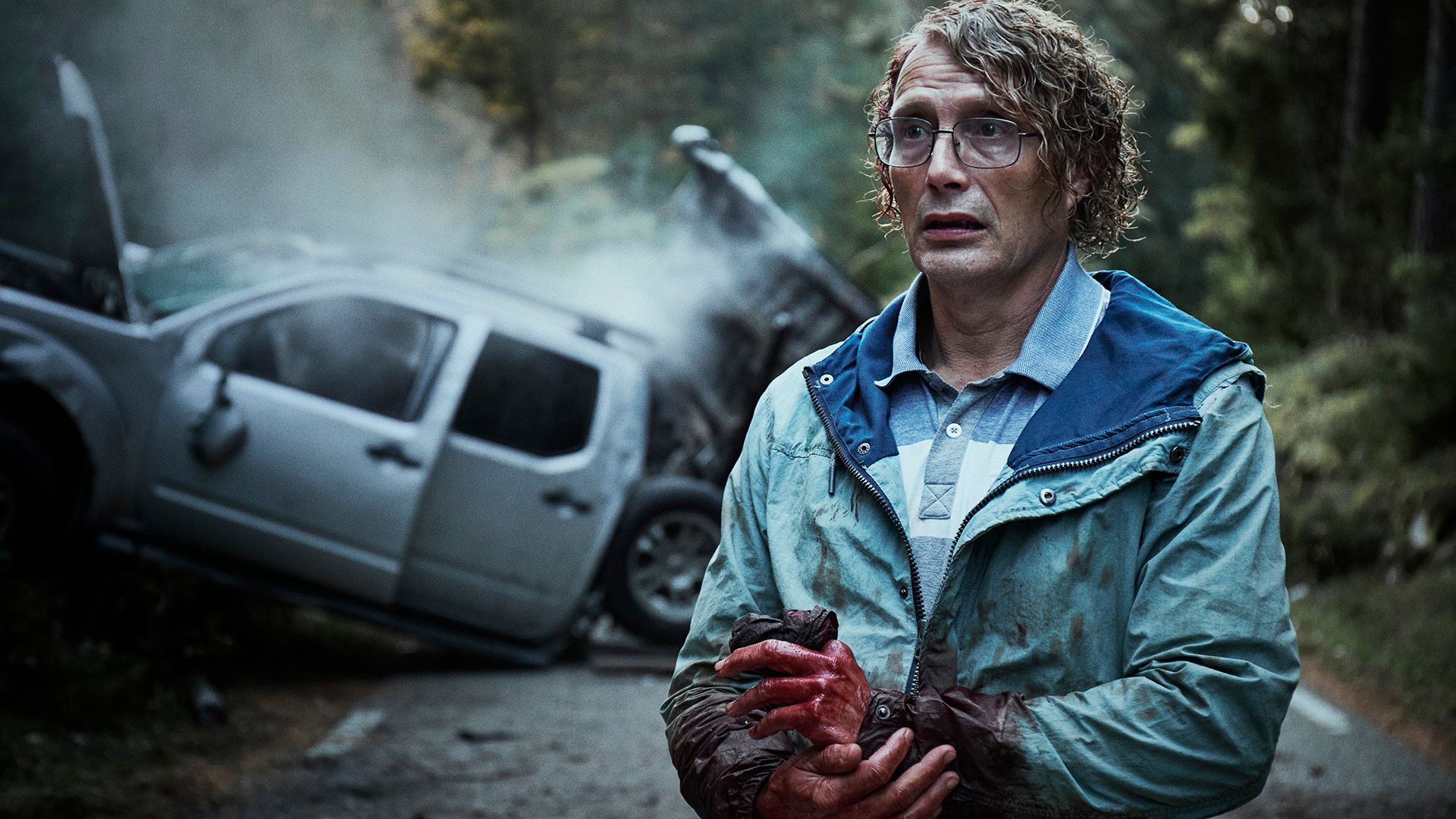
Mads Mikkelsen’s latest film, The Last Viking, is a surprisingly funny dark comedy, especially for audiences used to his intense, dramatic roles. While he’s known for serious characters in shows like Hannibal and blockbuster movies like Doctor Strange and Rogue One, this new movie showcases a different side of the actor. Working with director Anders Thomas Jensen and co-star Nikolaj Lie Kaas allows Mikkelsen to reveal a more playful and unexpected range.
I’ve become a real fan of Gabriel Jensen’s films – this is his sixth, and incredibly, Mads Mikkelsen and Nikolaj Kaas have been in every single one! He’s built this amazing world filled with really dark, quirky humor, but it always feels deeply human and incredibly well-made. His newest, The Last Viking, is no exception. It centers around Anker (Kaas), who’s just gotten out of prison and desperately needs help from his unpredictable brother, Manfred (Mikkelsen), to get back the money he stole from a bank. It’s a wild ride, but like all of Jensen’s films, it really gets under your skin.
Mads Mikkelsen discussed his approach to blending comedy and emotional depth in The Last Viking with ScreenRant. He also talked about why he enjoys working with director Anders Walter Jensen and gave an update on the potential for more Hannibal.
Diving Deeper Into The World Of The Last Viking

You’ve worked with Anders Thomas Jensen and Nikolaj Lie Kaas on multiple projects. What is it about collaborating with them that keeps you coming back?
Working with this team is just fantastic. I’ve known many of them for years, and that definitely plays a part. But beyond friendship, they’re truly some of Denmark’s most talented actors. And Anders Thomas is a really special director – he tackles these huge, universal themes, like life, death, good versus evil, and he does it with such a unique vision. It’s inspiring to be a part of.
What I love about this director is that he doesn’t just present problems head-on. He throws everything into this beautiful, chaotic madness, and lets it play out on screen. The characters are often caught up in that same whirlwind, but underneath it all, there’s a really poetic core to his work. It feels like he has something genuinely beautiful to say, and his approach to filmmaking is just so unique – I find it incredibly engaging.
The movie blends dark humor with a really energetic feel, but your character, Manfred, is also someone who’s been through a lot and struggles with a serious health issue every day. Can you talk about how you balanced those contrasting elements in your performance?
I’ve always felt that Mads Mikkelsen’s character, like his brother, carried a deep, underlying trauma. It’s just that their lives took such different turns because of it. Thinking about it, it seems likely his character, Manfred, has dealt with some kind of condition since childhood – something that really shaped who he became.
As a child, he dreamed of being a Viking – a metaphor for a life he ultimately couldn’t have. His current state isn’t a result of trauma changing him, but rather the suppression of his true self. Becoming a Viking feels impossible, so he chooses a different role model: John Lennon. It’s a safer path, as John is universally loved, and he hopes it will win back the affection of his brother, who he desperately needs in his life. For him, it’s a simple calculation: choosing someone everyone loves increases the chance his brother will stay.
Regarding your brother’s character, how was it exploring that relationship, considering all the shared history we don’t see in the show? Did your existing connection with the actor who played him make it easier to portray that closeness?
From the very beginning, when we started the first film 27 years ago, maintaining a balance between humor and depth has always been central to how we work. We recognize the films are often outlandish, but we appreciate the comedic elements. More importantly, there’s a real beauty and meaning underlying everything, and we’ve consistently made sure each new script reflects that.
We approached this project like we always do, jumping right in. We were confident we could make it funny, but first, we wanted to find the core emotional truth of the film. It was crucial – both for us and for Anders Thomas – to include small, tender moments between the brothers. These weren’t just about their conflicts; they were glimpses of affection, like one brother secretly watching the other and feeling a little warmth. These quiet moments were essential to making the film’s ending feel genuine and earned.
ScreenRant asked about the dynamic between Manfred and his sister, Freja, especially considering he also wanted his brother to remain close. They were curious about how that relationship differed and what it was like working with actress Bodil Jørgensen to portray it.
Mads Mikkelsen describes his family dynamic, explaining that his sister, Freja, is the oldest and seems resigned to her responsibilities, almost like a weary grandmother. He’s the middle child, and Anker is the youngest. Mads feels a strong bond with his brother, who has always been protective and supportive. He describes their relationship as a lifelong partnership against the world, with the two of them always having each other’s backs.
As Anker grows up and becomes a teenager, it’s totally understandable why he needs to distance himself from everyone back home after everything they’ve all been through. Honestly, the guy just needs to break free, and that’s what leads him to jail. Then he’s stuck trying to get out, needing money and a fresh start, and I completely get it. My character… well, let’s just say he’s adorable but incredibly difficult. Living with him would drive anyone crazy! So I really don’t blame Anker for wanting out.
ScreenRant asked if any particular scene in the movie – with all its crazy moments – was especially difficult or fun to film, whether it involved a stunt like falling out of a car, or portraying John Lennon and performing with the band.
Playing the character of John is always enjoyable for me because the character himself doesn’t really know who John is. He just chose the name because he knew people liked it. It was fun to play someone who didn’t bother to imitate John’s appearance or skills. He picks up a guitar and is really anxious about performing, but he ends up connecting with a group of eccentric and wild individuals, which was a great experience.
I really enjoy the scenes with a lot going on, where everyone’s kind of doing their own thing and reacting to each other. It’s a fun challenge to make those chaotic moments feel smooth and understandable. Plus, my brother’s character is often just watching all this craziness unfold, and he has to deal with the fallout – that’s always a great source of comedy. Finding the balance between showing what’s happening and hinting at the consequences, all within the same scene, is something I find particularly rewarding.
ScreenRant asked me about Manfred’s wish to be a Viking, saying it seemed symbolic. They wanted to know what that desire means in the story, and if I have anything in my own life that feels similar.
Mads Mikkelsen suggests the film is meant to make viewers think and consider what they’d change about the story. He explains it’s open to interpretation, serving as a metaphor that reflects different perspectives and the values of the society we live in.
Growing up in the early 1970s, the characters had a somewhat free-spirited father. The story isn’t about typical taboos like sexuality. Instead, the central conflict revolves around the father’s strong reaction to his son identifying as a Viking – that’s the core issue for him, and it’s more important than exploring any other specific forbidden subject.
What’s Next For Mads Mikkelsen

You’ve worked together six times now! What’s next? Are you already planning your seventh project?
Mads Mikkelsen believes the writer is constantly thinking about doing a serious drama, moving away from his usual comedic style. He suspects the writer often considers, ‘I want to create a real drama, not another comedy,’ but Mikkelsen doubts he ever will. While the writer is capable of writing dramas for others, Mikkelsen will only believe it when he actually writes one for himself. He’s confident the writer has ideas, and he’d happily participate if asked.
I recently got to work with Brian Fuller again on Dust Bunny, and he’s mentioned wanting to revisit the world of Hannibal with more stories. As a fan, I’d absolutely be open to that! There’s so much of Hannibal’s story and those characters that I’d love to explore further if the opportunity came up.
Mads Mikkelsen feels Bryan Fuller’s Hannibal is best suited for television. While Fuller could convince him to do a movie, Mikkelsen believes the depth of the characters and storytelling really shine with the longer format of a 13- or 14-episode series.
Most people would probably jump at the chance to revisit the past, but time is passing quickly. It’s been about ten years, or maybe even longer, and while we try to stay young, we eventually reach a point where it’s just not realistic. So, we should do it soon – I think everyone would really enjoy it.
You’ve played many different roles and worked with a wide range of directors on various types of films. Is there a particular genre or subject matter you haven’t explored yet that you’d be interested in tackling in the future?
I’ve done action roles before, but not in big, explosive action movies. I’m fine with having done enough action, but I’ve never really done a classic horror film. While ‘Hannibal’ had some scary elements, it was more focused on style and psychological thrills. I’d be interested in doing a straightforward horror movie now.
While that genre has its share of poorly made examples, there are also some truly great ones. Adding a zombie to the mix would definitely make me happy.
2026-05-29 18:43