This article contains spoilers for the series finale of “Hacks.”
After five seasons and 12 Emmy awards, the show “Hacks” has finished its run. The series followed the unlikely partnership between Deborah Vance, a veteran comedian in her 70s, and Ava Daniels, a young, sharp-tongued comedy writer, as they worked to revive their careers. Their journey was full of clashes between generations, successes, failures, tough moments, personal development, and plenty of laughs.
Deborah thinks Ava is arrogant and judgmental, while Ava views Deborah as outdated and dull. Despite their initial impressions, they eventually discover they have a lot in common and are actually a very effective team.
In Season 5, Deborah tries to revive her career. After quitting her talk show to protect Ava, she’s determined to prove everyone wrong by performing at Madison Square Garden. When that plan falls through, she struggles—and provides plenty of laughs, including a memorable stand-up routine by Laurie Metcalf’s character, Weed—to organize a concert in Central Park. There, she finally gets the triumphant moment she deserves, enjoying the cheers of a huge crowd.

Commentary: In ‘Hacks,’ Deborah finally achieves her dream. But like reality, late-night is in trouble
Jean Smart plays Deborah Vance, who’s achieved her dream of hosting a late-night show. However, like many shows in the current TV landscape – even newer, unconventional ones like “Everybody’s Live With John Mulaney” – ratings are a challenge.
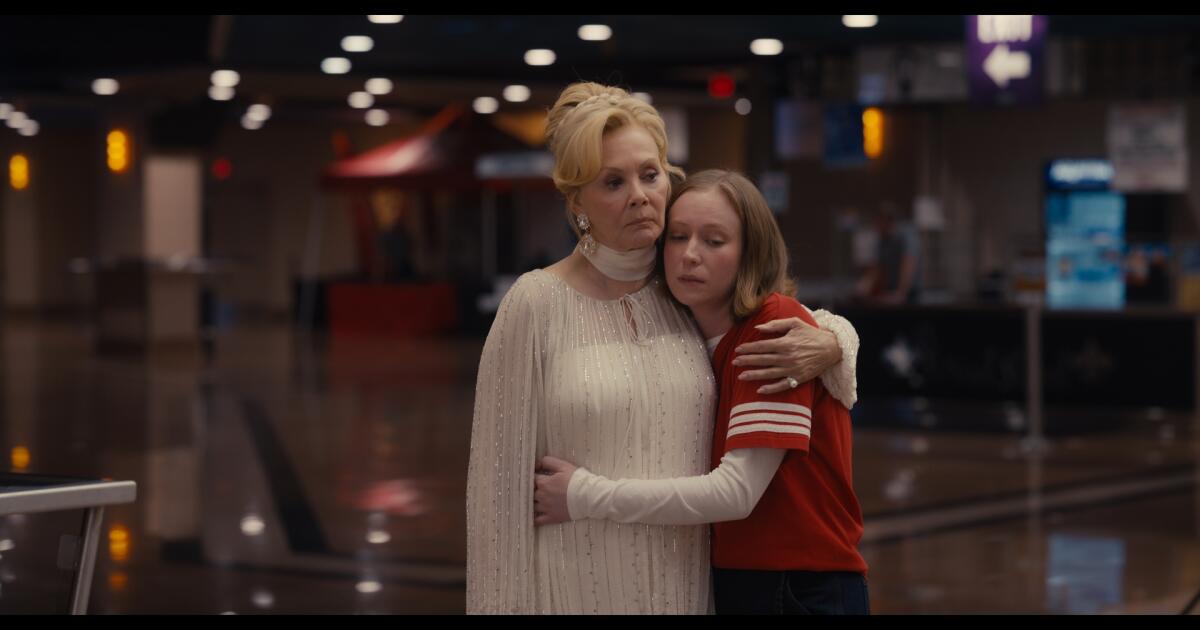
The final episode of “Hacks” takes a surprising turn when Deborah reveals she has cancer and chooses to end her life on her own terms at a clinic in Zurich. She asks Ava to join her, first on a trip to Paris, and then to help her prepare a final show. Ava reluctantly agrees, hoping to convince Deborah to get treatment. While Ava can’t change Deborah’s mind completely, Deborah ultimately decides to continue because she finds humor in the situation and wants to write jokes about her own mortality. The series concludes with Deborah and Ava working together, side-by-side in Paris and Las Vegas, on what will be Deborah Vance’s last performance.
Robert Lloyd and Mary McNamara, TV and culture critics for the Los Angeles Times, share their thoughts on the finale and overall impact of the show “Hacks.”

Hey Robert, I’m really bummed that “Hacks” is over! The only good news is that the creators – Lucia Aniello, Paul W. Downs, and Jen Statsky – are releasing a DVD box set. And maybe, just maybe, there will be a movie! I’d love to see what happens with Deborah Vance next, especially knowing she’s a survivor.
It’s truly sad to think “Hacks” is over, but I’m so glad the show ended so well. Season finales are always risky, and this one perfectly balanced character development and a satisfying resolution without becoming overly sentimental. I loved that everyone, even Marty, got a happy ending! Even the unexpected twists – Deborah’s cancer diagnosis, her choice to consider assisted suicide, and the sudden trip to Paris – worked because they ultimately motivated her decision to embrace life and keep performing. The line, “I may not have 30 years, but I do have one more hour,” might be the best final line in television history.
We often assume people like Deborah return to their careers seeking attention, approval, or financial gain, instead of because they genuinely love what they do. Her decision to continue treatment so she could create one last, brilliant performance felt like the perfect, final act – a powerful and fitting end.
What did you think?
In my review of the first season finale, I described “Hacks” as a romantic comedy at its core. While the show tackled relevant issues like artificial intelligence, the state of late-night TV, and the problematic behavior of powerful media figures – particularly highlighted by Deborah’s public resignation and criticism of her network boss – it ultimately returned to being a love story. Previous seasons relied on conflict between Deborah and Ava, but this season focused on their harmony, with Deborah’s late-season decision to end her life being their main challenge. Thankfully, she changed her mind, avoiding a tragic ending, though it still brought tears to my eyes. The fifth and final season was intentionally uplifting – even more so than “Ted Lasso.” It felt like a fairy tale, complete with happy endings and seemingly magical plot twists. It was occasionally predictable and relied on last-minute saves, but I thoroughly enjoyed every moment.

The show tackled many relevant issues, including the powerful people who often pull the strings behind the scenes, which feels especially resonant today. What I really liked was that while highlighting the challenges Deborah and Ava faced, the writers also showed how their own decisions and justifications played a role in their circumstances. Jean Smart’s incredible performance was a huge asset – she brought depth to Deborah, even when she was acting outrageously. The series didn’t avoid addressing the obvious sexism female comedians experience, and it effectively contrasted that with how younger women, like Ava, are often more aware of that injustice.
The show felt more like a funny romantic story than a serious moral lesson, and like many stories of that kind, it explored how misunderstandings often come down to pride and prejudice. While it cleverly pointed out how different generations struggle to understand each other, the show’s core message was about the value of listening and learning from people with very different backgrounds – a message that feels particularly relevant right now. It also showed a deep respect for the hard work and dedication that goes into creative endeavors. What drove all the characters – Deborah, Ava, Jimmy, Kayla, Randi, and Deborah’s team – was a belief in the importance, and the challenges, of creating something new. The show made it clear that creativity is rarely a solo effort, as Deborah realizes when she opens the Diva casino, and as Laurie Metcalf’s character hilariously explains before their performance in Central Park.
1

2

The show highlights that creativity is a collaborative effort, as seen with Damien, Marcus, and Deborah working on the casino project. It also showcases Deborah’s team during her Central Park show. (HBO Max)
Deborah’s speech felt like a perfect ending to the season, which was essentially a celebration of the show and everyone involved. It was like a big party with almost all the main and supporting characters making an appearance, including familiar faces like Richard Metcalf, Mary McDonald, Luenell as Miss Loretta, Poppy Liu as Kiki, Jane Adams as Nina, J. Smith-Cameron as Kathy, and Kaitlin Olson as DJ. DJ finally convinced her mother to team up with her on “The Amazing Race” and even got to sell her earrings on QVC!
The show offered many heartfelt moments of resolution, including a previously unreleased interview with Deborah’s late husband and co-star, Frank. In it, he acknowledged Deborah’s crucial role in their success – something he’d previously taken sole credit for – finally resolving a long-standing conflict. These acts of kindness were meant for both the characters and the audience, who had come to see them as family. Love and affection were expressed freely, not just between Deborah and Ava, but throughout the show, allowing viewers to connect with the characters’ emotions and feel what they felt. (This year, Einbinder delivered some incredibly touching performances, particularly in the quiet way she looked at Deborah – moments that were truly remarkable.) That’s what makes saying goodbye to a show like this so difficult, even when you know it’s the right time. Every story has its limits, and eventually, it has to come to an end.
McNamara: You’re right, of course. But I still want to see the “Hacks” movie.
2026-05-29 13:33