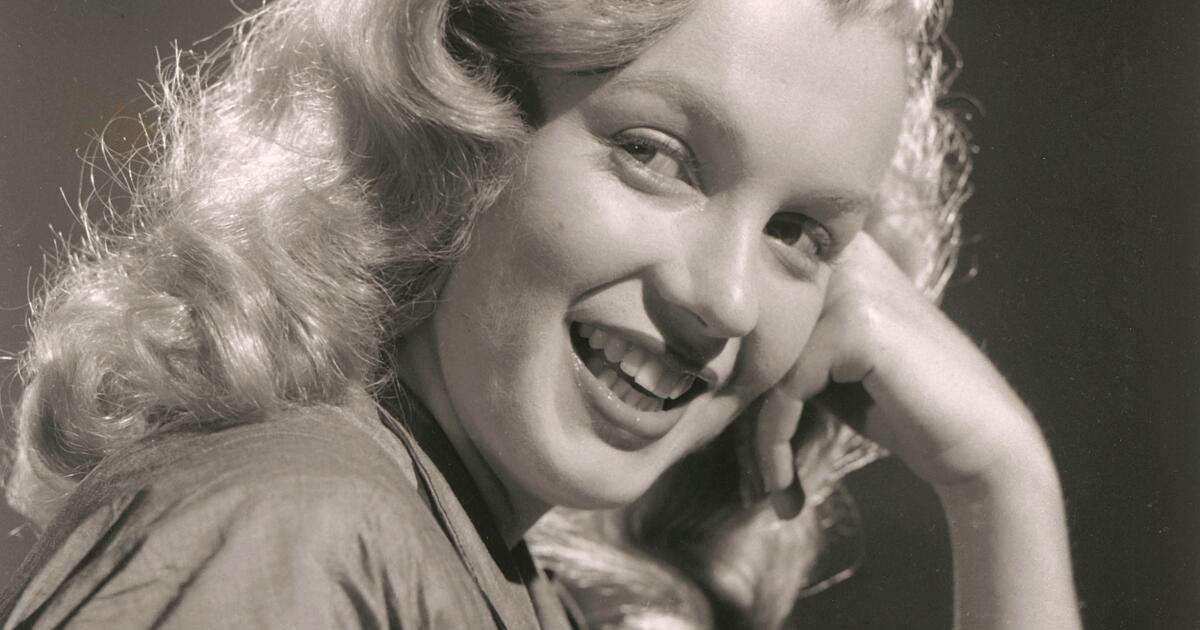
I remember hearing the story about how, back in the summer of ’49, a young photographer named John Ahlhauser, just starting out with the Milwaukee Journal Sentinel, got assigned a pretty simple job. He was supposed to take some portraits of this actor, who wasn’t really known yet, as part of a promotional tour. Apparently, he spent about half an hour with the actor and took seven photos. One of them ended up in the paper, but John kept the other six for himself. It’s amazing to think about who that actor was and what happened to those photos!
That unknown actor was Marilyn Monroe (although her legal name was still Norma Jeane Mortenson).
To mark Marilyn Monroe’s 100th birthday on June 1st, five photos from a photoshoot are being auctioned. Bidding is open online now and will continue until Tuesday morning, when a live auction takes place. The photos were taken to promote Monroe’s small part in the Marx Brothers’ last movie, “Love Happy.” According to the daughter of the photographer, Mame O’Meara, these pictures show a more natural and candid side of the iconic actress.
According to experts on ‘Antiques Roadshow,’ these photos were taken before Marilyn Monroe had cosmetic surgery or bleached her hair. They also noted a change in her expression starting in January 1950, suggesting it created a noticeable distance between her and others. O’Meara explained that the experts called these seven small photos ‘windows into her soul.’
California
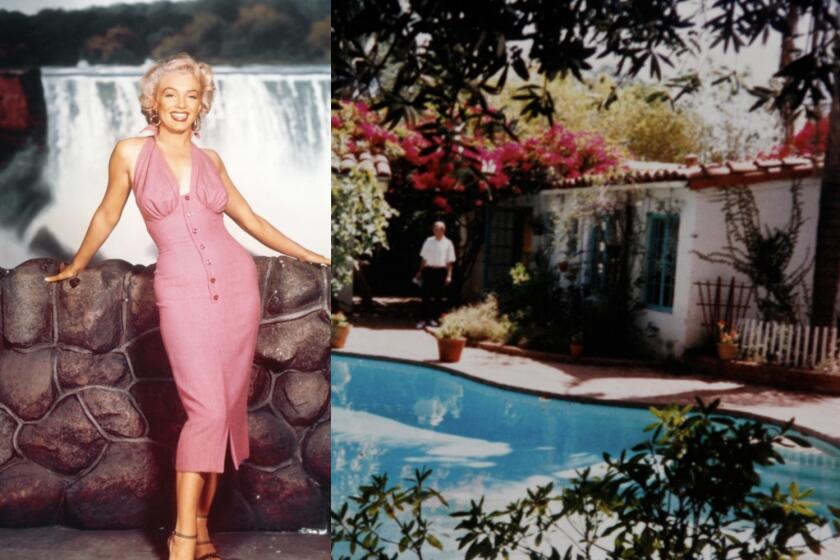
The current owners of the house where Marilyn Monroe died in 1962 are taking legal action against the city of Los Angeles and Mayor Karen Bass, hoping to gain permission to tear down the building.
A photo by Ahlhauser appeared in the Milwaukee Journal Sentinel in 1949, and another was featured in Gloria Steinem’s 1988 book, “Marilyn: Norma Jeane.” In 2011, all of his work, including the Monroe photos, was put into a trust.
Since 1982, after the death of Lee Strasberg, Monroe’s estate has been managed by his second wife, Anna Strasberg, who was also a close friend and acting coach to Monroe. According to O’Meara, the release of photos taken of Monroe by Ahlahauser was delayed due to a dispute over who controlled the rights to Monroe’s image, as Anna Strasberg held ownership. She passed away in 2024.
O’Meara explained that Strasberg was involved in a legal battle to control all the photos of Marilyn, so they created a trust and intentionally kept the images private at the time.
When my dad, Ahlhauser, passed away in March 2016, my five siblings and I were left with what felt like a lifetime of his work: hundreds of yellow Kodak boxes filled with photos. It turned out most of them were of Marilyn Monroe! He was really organized, too – each set of photos was in dated sleeves, and he’d written the details of each photoshoot right on the outside of the package. It was like uncovering a hidden part of his life.
O’Meara explained she was eager to examine all of her father’s artwork. Fortunately, her siblings were kind enough to let her, and for the past six years, she’s been carefully reviewing every print he created. Now, she’s begun working through his original negatives.

Entertainment & Arts
I’ve always been fascinated by Marilyn Monroe. Even now, decades after her death, the questions surrounding her life and art remain a captivating puzzle. It’s incredible to think about the legacy she left behind – a mystery that continues to draw us in.
Despite selling most of the photos, O’Meara and her siblings aren’t ready to part with all of them. They’ve decided to keep two photos for themselves while auctioning off the other five.
O’Meara explained they’re selling five of the artworks, giving buyers full ownership rights to use them however they like – whether that’s on merchandise like mugs, or even in an AI-generated film. They’re keeping the two pieces the artist was most proud of as part of his collection, but may offer prints for sale later on.
Although Ahlhauser’s photo of Marilyn Monroe might be his most famous work, the photoshoot itself didn’t stand out to him at the time. He considered his coverage of the 1968 Democratic National Convention and the civil rights movement in the 1960s more significant. However, O’Meara believes that’s what makes these photos special.
O’Meara explained that both subjects were ordinary people simply performing their roles. However, he felt the photos captured a deeper quality because each person seemed to allow themselves to be truly vulnerable in front of the camera, and that, to him, is what made the images artful.
2026-05-29 13:34