
In spring 2023, I started getting texts from friends sharing a video of Vice President Kamala Harris at a record store in Washington, D.C. She was wearing a navy suit and surrounded by her Secret Service detail. As she walked toward a group of reporters, one excitedly asked her, “What did you buy?”
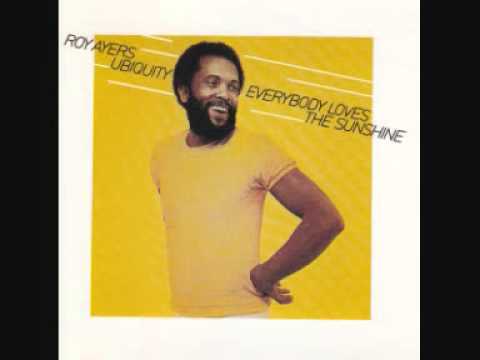
Harris asked if I knew music, and as she spoke, she shuffled a large paper bag. She then briefly explained who Charles Mingus was before pulling out a record album with a picture on the cover: a confident man with a beard and afro, wearing a bright yellow t-shirt.
The Vice President shared one of her all-time favorite albums, holding up the record with a smile. ‘Roy Ayers, ‘Everybody Loves the Sunshine,’’ she said, looking directly at the audience. ‘Do you know it? It’s fantastic – a true classic!’
Roy Ayers Ubiquity’s 1976 album, “Everybody Loves the Sunshine,” is widely considered a classic, even though it wasn’t a huge commercial success at the time – it reached number 51 on the Billboard charts despite getting airplay on R&B and jazz stations. However, the title track has become incredibly enduring. With its calming, mesmerizing vibe, smooth synthesizer, and undeniably catchy chorus – “My life, my life, my life, my life in the sunshine / Everybody loves the sunshine” – the song has surpassed typical music industry trends and remained popular for over fifty years.
I remember the day everything changed, but it wasn’t because of some old favorite tune. It was because I found out Roy Ayers – you know, the vibraphonist with the amazing afro on his album covers – was my dad. We only had a few meetings over the years, between my birth in 1972 and when he passed away in 2025. But his song, “Everybody Loves the Sunshine,” has been a constant in my life, always there.
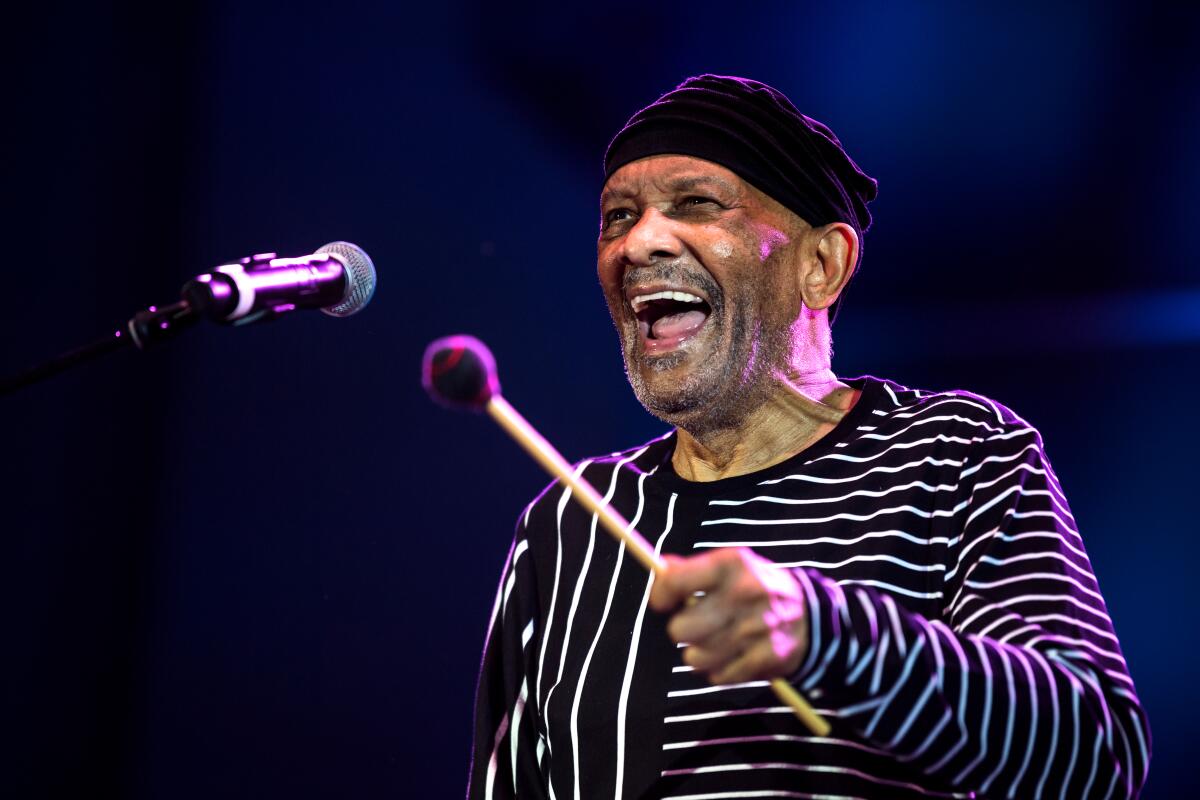
Certain songs become so ingrained in our lives that they feel like a part of who we are, connecting to our feelings and memories. A single lyric or tune can instantly remind us of important moments or simply lift our spirits.
As a total movie and music buff, there are just some songs that feel…everywhere, you know? Roy Ayers’ “Everybody Loves the Sunshine” is definitely one of those. It’s amazing how many times it’s been used – sampled, covered, reimagined – that it feels like it exists in a million different versions. The original came out 50 years ago, but it still sounds fresh, especially in the summer – it’s just the perfect summer vibe. Seriously, every year brings new ways to hear it. I’ve seen it sampled almost 200 times! Everyone from D’Angelo to this Brazilian artist Seu Jorge has covered it. It’s so versatile – it could be in a commercial for Apple or Coors, playing softly in a fancy hotel, or blasting from a car cruising down my street in Brooklyn, which happens all the time. It just gets around!
For half a century, people have kept listening to this song. What makes it so enduringly popular?
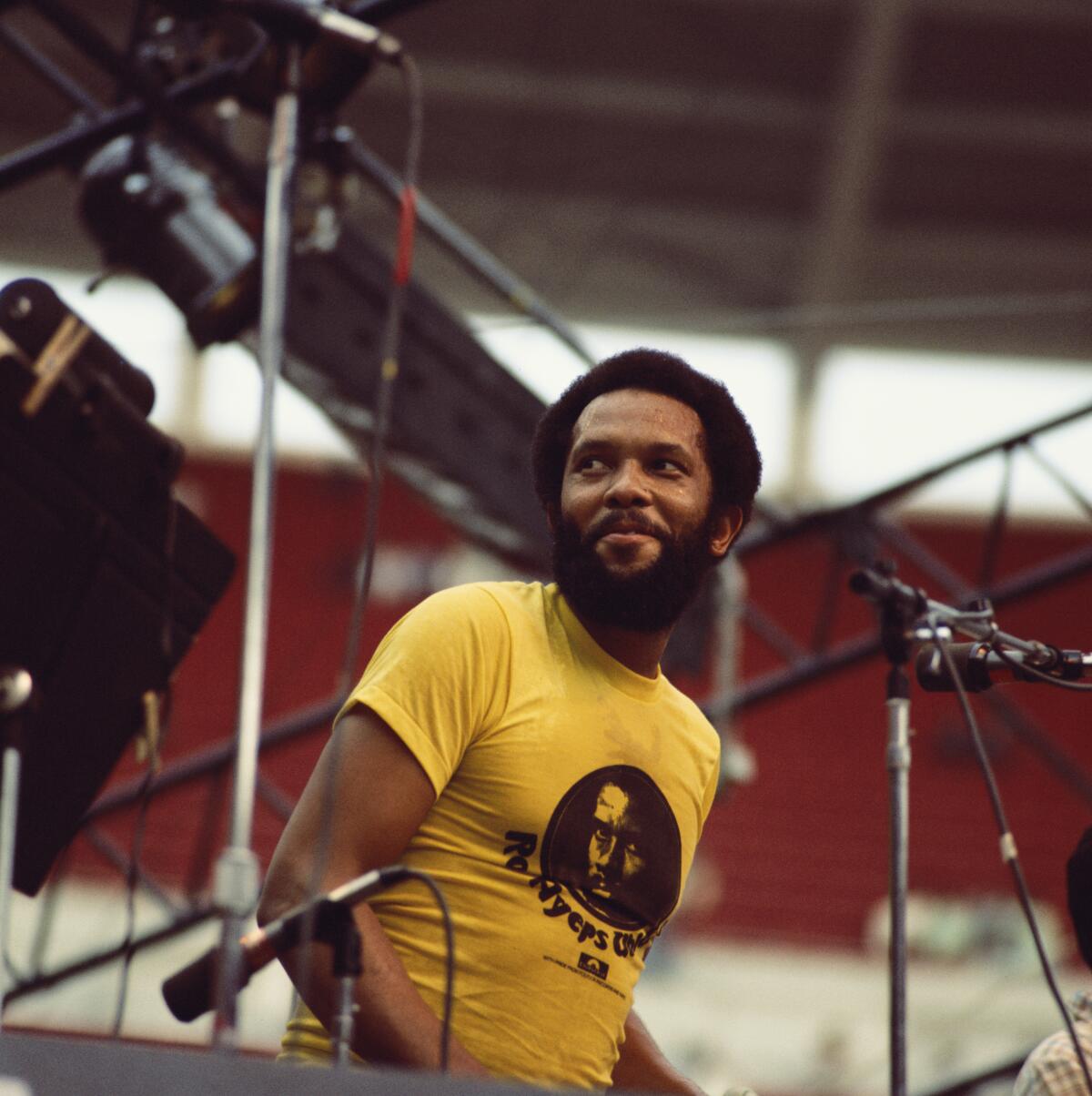
Let’s start at the beginning: Roy Ayers was born in Los Angeles in 1940 and quickly became a popular vibraphonist, playing with many different artists by the time he was in his mid-20s. After releasing four jazz albums on his own, he moved to New York in 1970 and formed the band Roy Ayers Ubiquity – a name meant to suggest his desire to be involved in everything. In the early 1970s, while still influenced by jazz, his music began to incorporate more funk and soul elements, featuring strong rhythms and powerful vocals. Songs like “We Live in Brooklyn Baby” and “Coffy Is the Color,” from the soundtrack to the film “Coffy,” showcase this shift.
He then created the song he’d become most famous for. As he explained to The Guardian in 2017, it started on a beautiful, sunny day. The phrase “Everybody loves the sunshine” popped into his head, and he began to sing, “Feel what I feel, when I feel what I feel, what I’m feeling.” From there, he quickly added summery images – people enjoying the sun, getting tanned, bees, flowers, and other things – all in a burst of spontaneous creativity that felt fantastic.
 ×
× The song “Sunshine” now brings me joy, but that wasn’t always the case. As a child, I was proud to see my father perform it, and later, hopeful when we reconnected as adults and felt a strong bond. But after he stopped responding to my calls, the song brought pain and sadness. Eventually, I processed our complicated relationship, and sharing the story in my 2022 memoir, “My Life in the Sunshine,” allowed me to heal. Now, I can simply appreciate the song as a beautiful piece of music, just like everyone else.
I’m completely lost in this track’s smooth, jazzy vibe. It’s got this really cool, laid-back groove with these bright, shimmering synth melodies. It’s a fascinating mix – it feels both sunny and relaxed like California, but also has this raw, energetic edge that reminds me of 1970s New York. When the chorus hits, it just feels good. It’s the kind of song that makes you want to close your eyes, smile, and just move – like you’re reaching for the warmth of the sun.
Roy Ayers Ubiquity first appeared on “Soul Train” in 1977, performing their song “Sunshine,” which helped introduce it to a wider audience. Over the next ten years, Ayers kept releasing successful albums, and “Sunshine” continued to gain popularity. Interestingly, many of those inspired by the song were musicians themselves, and they found a unique way to show their appreciation. In 1990, the hip-hop group Brand Nubian from New Jersey used a faster-paced sample of “Sunshine’s” vocals and piano in their song “Wake Up (Reprise in the Sunrise).” As sampling became more common, even more artists incorporated elements of “Sunshine” into their music, creating new songs that, while different, all shared a connection to the original.

Some musicians, particularly those who have been performing for a long time, dislike having their work sampled. But Roy Ayers wasn’t one of them. In a 1990s interview with Sonya Saul, he explained that he hadn’t anticipated being sampled back in the 1970s. However, when it started happening on a large scale, he was thrilled and felt honored that artists were choosing his music.
In 1994, Mary J. Blige, known as the “Queen of Hip-Hop Soul,” released the song “My Life,” inspired by a phrase from a Roy Ayers song. The song’s opening 32 seconds closely mirrored Ayers’ “Sunshine.” Both the song and the album it appeared on, also titled “My Life,” became huge successes around the world. In her 2021 documentary, Blige described the impact of “Sunshine,” saying, “There was something in that record that just unlocked everything inside me.”
With the arrival of the new millennium, digital technology once again boosted the song’s popularity. Platforms like Napster, iTunes, and YouTube, along with the later rise of music streaming, exposed many more people to both classic and current music. It became incredibly easy to access music – whether by buying, streaming, or downloading it – and this opened up opportunities for musicians to create and share their work.

Numerous musicians have performed their own versions of “Sunshine.” Both famous artists like Dr. Dre and Takuya Kuroda, and less well-known musicians, have offered their unique takes on the song, ranging from mellow to upbeat. A live performance from 2010 by Grammy winner Robert Glasper is especially noteworthy. The audience immediately reacts with excitement when they recognize the song’s famous piano intro, proving just how enduring “Sunshine” is.
Roy Ayers’ song “Everybody Loves the Sunshine” is incredibly popular and played everywhere. However, being well-known doesn’t automatically make a song a classic. Ultimately, a song needs to truly resonate with listeners – people need to feel a personal connection to it that goes beyond just enjoying the melody.
“This is really moving,” said Diallo, co-host of the “One Song” podcast, while discussing each song on “Sunshine” in an episode from April 2025. “I feel a strong link to both the past and the future. It’s amazing how deeply this connects with me.”
I have to say, the first few chords of this song just get to me. They’re so warm and relaxed, with that beautiful, soft piano sound. It’s like being invited in, a gentle call that really draws you in.
Philip Woo, the original keyboardist for “Everybody Loves the Sunshine,” explains that the song features three simple minor ninth chords moving together, creating a feeling of momentum. Roy Ayers, the song’s creator, liked to create music with a lot of energy, where different musical ideas playfully interacted with each other, almost like a conversation.
Very few songs create a feeling so instantly. From the very beginning, and throughout the entire song, you don’t just hear what Roy Ayers was feeling that bright, sunny day in the 70s—you truly feel it too.
The documentary “Sunshine” truly evokes a strong emotional response. Musician and director Ahmir “Questlove” Thompson explains it’s an experience that immediately connects to the senses – synesthesia. He describes feeling blues and greens, picturing a bird’s-eye view of a park with lush grass and a bright blue sky around 11 a.m.
Despite its seemingly simple and polished sound, the song’s structure is surprisingly unconventional. It begins with the chorus, and the verses are minimal – the first one just repeats the line, “Just bees and things and flowers.” The powerful voice of Chi’cas Reid, a soprano, takes center stage, while Roy Ayers provides a softer, supporting vocal. Interestingly, the track doesn’t heavily feature the vibraphone – the instrument Ayers was famous for. So, his biggest hit doesn’t showcase his voice or signature instrument prominently. This makes you consider whether his true talent wasn’t just playing music, but his ability to inspire and collaborate with others, creating something special that originated with him, involved those around him, yet wasn’t solely his own creation.
Perhaps the song “Sunshine” resonates so strongly because it doesn’t have a dominant lead singer. This openness allows both listeners and musicians to connect with it personally and interpret it in their own way. That might be why I find it so captivating and can easily relate to it, even with my own complicated emotions. Although it never became a major radio hit, and hasn’t had the boost of a music video or viral trend, “Everybody Loves the Sunshine” feels consistently present in a genuine, personal way – and that’s likely why it’s quietly become so successful. People feel a sense of ownership because they discover it organically. While my connection to the song is unique, I share in that feeling of ownership as a devoted fan.
Questlove draws parallels between the song’s lyrics and the inclusive message of Sly and the Family Stone’s “Everyday People,” and its sound to the dreamy quality of the Beatles’ “Lucy in the Sky With Diamonds.” He even points to the catchy synths in “Sunshine” as a precursor to Afro-futurist music. But when it comes down to it, he admits that words can’t fully capture the song’s appeal. “I don’t know,” he says, “It just… feels good.”

As a critic, I’ve always felt lyrics can sometimes outshine the music, and that’s definitely the case when it comes to songs about sunshine. It’s a theme that just keeps coming back, isn’t it? Think about it – “You Are My Sunshine” from 1939 is a classic, covered by literally hundreds of artists. Then you jump to the 60s with Cream’s psychedelic hit “Sunshine of Your Love” and The Fifth Dimension’s uplifting medley, both huge successes. And who could forget Stevie Wonder or John Denver in the 70s? Both topped the charts with songs directly referencing sunshine and its power to bring joy. What strikes me most is how consistently these songs tap into that feeling of warmth, happiness, and the almost primal connection we have to the sun itself. It’s a simple idea, but clearly, a powerful one.
It’s no surprise that “Everybody Loves the Sunshine” became popular during difficult periods like 1939, the late 1960s, and the early 1970s. In 1976, America was facing economic hardship after the Nixon era and the Vietnam War, with rising crime and unemployment. People were looking for something to lift their spirits, and the song provided that. It resonated then, and it did again recently during the pandemic, when many desperately needed a little sunshine in their lives. This is similar to how “Happy Days Are Here Again” became a hit during the Great Depression and was used in Franklin D. Roosevelt’s 1932 campaign. Remarkably, that song saw a resurgence nearly 90 years later as the COVID-19 pandemic began to ease and hope returned.
As “Everybody Loves the Sunshine” celebrates its 50th anniversary this summer, the song’s message still resonates deeply with listeners, proving its timeless appeal.
On July 21st, Joe Biden ended his campaign for president. Immediately after, Kamala Harris announced she would be running. This brought renewed attention to an old video of her from a year ago, taken at a record store, and my phone quickly filled with messages about it. The video, nicknamed “Sunshine,” seemed to inspire optimism. It was summertime, and the video felt like a yearly invitation to enjoy life, soak up the sun, and connect with the joyful feeling Roy Ayers evokes in his music.
For fifty years, I’ve reflected on my father’s song, “Everybody Loves the Sunshine.” I’ve processed my complicated feelings about him through his music, and I still get a happy surprise every time I hear it. It’s wonderful to see others connect with the song’s comforting melody and lyrics, knowing I share that experience. After my father passed away, I found peace in knowing his music would live on – for me, and for everyone.
2026-05-19 13:36