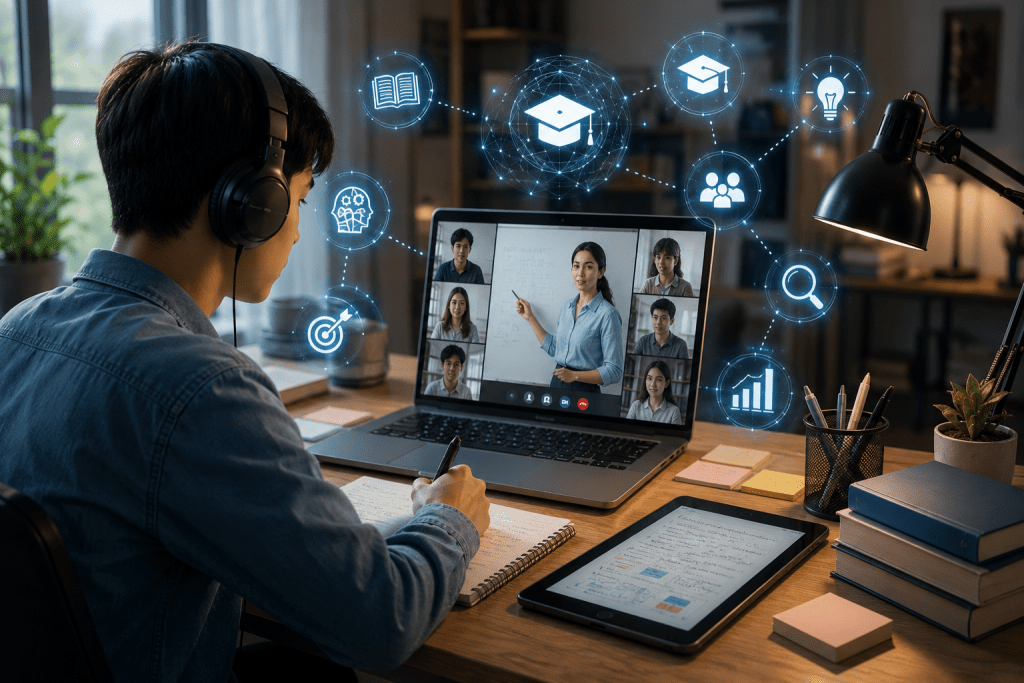
Education has transformed significantly in the last ten years. Traditional classrooms with desks, chalkboards, and textbooks are being replaced by online learning. Students now learn through video lectures, submit work online, participate in virtual discussions, and use digital tools for everything from research to editing. While this offers more flexibility, it also means students and teachers have new roles and responsibilities.
Digital learning isn’t just about putting old lessons online. It demands new skills, like being more self-directed and knowing how to use technology effectively. While students now have access to a wealth of information, the real skill is learning how to make sense of it all and actually gain knowledge.
Learning Beyond the Physical Classroom
As a student, I really appreciate how digital learning lets me learn pretty much anywhere! I can watch lectures whenever it fits my schedule, like at night, or even join classes if I’m traveling. Plus, it’s awesome that I can easily find extra materials to help me understand things better. It’s a huge help for people like me who are juggling work, family, or just learn at a different pace. It makes education so much more accessible!
While learning needs to be adaptable, students also need self-control. Traditional classrooms naturally offer structure with schedules, teachers, and limited distractions. But when learning from home, students are often responsible for creating that structure themselves – managing their time, minimizing interruptions, and staying focused without someone constantly overseeing them.
Being able to learn independently is now a crucial skill for students. Those who can manage their work, seek help when needed, and regularly review what they’ve learned tend to do better in today’s online learning environments.
The Importance of Original Thinking
In today’s world of endless online information, creating original work is more crucial than ever. Students have instant access to articles, videos, summaries, and even example responses. While these resources can be helpful, they shouldn’t be used as a substitute for thinking for yourself.
Original thought isn’t about inventing completely new ideas. It’s about taking information, thinking critically about it, relating it to what you already know, and then explaining it in your own words. Good work demonstrates that a student understands the material, not just repeats it.
Teachers can foster original thought by posing questions that encourage students to think deeply, make connections, and apply what they’ve learned. Rather than simply asking for definitions, teachers can ask students to explain how concepts work in the real world, why those concepts are important, or what the drawbacks of those concepts might be. This approach discourages simple copying and motivates students to truly think for themselves.
Technology as a Support, Not a Shortcut
Technology can really improve learning when used thoughtfully. Students can benefit from apps that help them stay organized, online platforms for teamwork, and reliable research databases. Tools that check for plagiarism can also help students make sure their work is original and properly cited.
Technology should be a tool to help us learn, not take the place of actual learning. Just like a calculator doesn’t make understanding math unnecessary, or a research tool doesn’t remove the need to check information, technology shouldn’t replace the skills of writing, reading, and problem-solving either.
As a student, I think it’s super important to learn when and why we use different tech tools, not just how to use them. It’s about becoming digitally literate – basically, learning to think for ourselves online. If we just blindly follow instructions, we’re not really learning. But if we understand why a tool is helpful, we can really take control of our education and be active learners, not just passive ones.
Building Trust Between Teachers and Students
Trust is key for successful learning. It can be more challenging to build trust in online classes, since teachers aren’t physically present to observe students. This can raise questions about whether students are being honest, actively participating, and putting in their best effort.
Simply having tougher rules isn’t the answer. While rules are important, building a culture of trust is even more so. Instead of just telling students what will happen if they cheat, teachers can explain why academic honesty is crucial. When students understand that integrity safeguards the worth of their learning, they’re more likely to do the right thing.
Setting clear guidelines is also important. If teachers explain how to properly credit sources, what kind of teamwork is okay, and how students can use technology, it reduces confusion. Students can learn more honestly and easily when the rules are fair and easy to understand.
Preparing for a Changing Workplace
Digital learning helps students succeed in today’s job market. Many careers now depend on skills like working remotely, doing online research, collaborating digitally, and solving problems on your own. By practicing these skills in school, students gain a valuable advantage when they enter the workforce.
Today’s employers are looking for people who can quickly pick up new technologies, communicate effectively online, and work independently. Fortunately, these are exactly the skills students build in a well-designed digital learning environment.
Education is more than just getting good grades; it’s about equipping people with the ability to think critically, adjust to new situations, and make meaningful contributions to society. Effective digital learning can help achieve this by providing students with both information and valuable, real-world skills.
A Smarter Way to Learn
Education is evolving to blend traditional classrooms with online learning and self-directed study. Students who can navigate these different learning environments effectively will likely thrive.
Online learning offers students a lot of independence, but it’s most effective when combined with clear goals. Students need to develop skills in time management, critical thinking, using technology effectively, and honest communication. Educators, in turn, should provide guidance, ensure clarity, and create lessons that truly measure comprehension.
Online learning isn’t simply a less effective version of traditional classrooms. It’s a unique learning environment with its own advantages and disadvantages. When students and teachers are committed and engaged, it can be a truly effective place to learn and grow.
2026-05-18 15:36