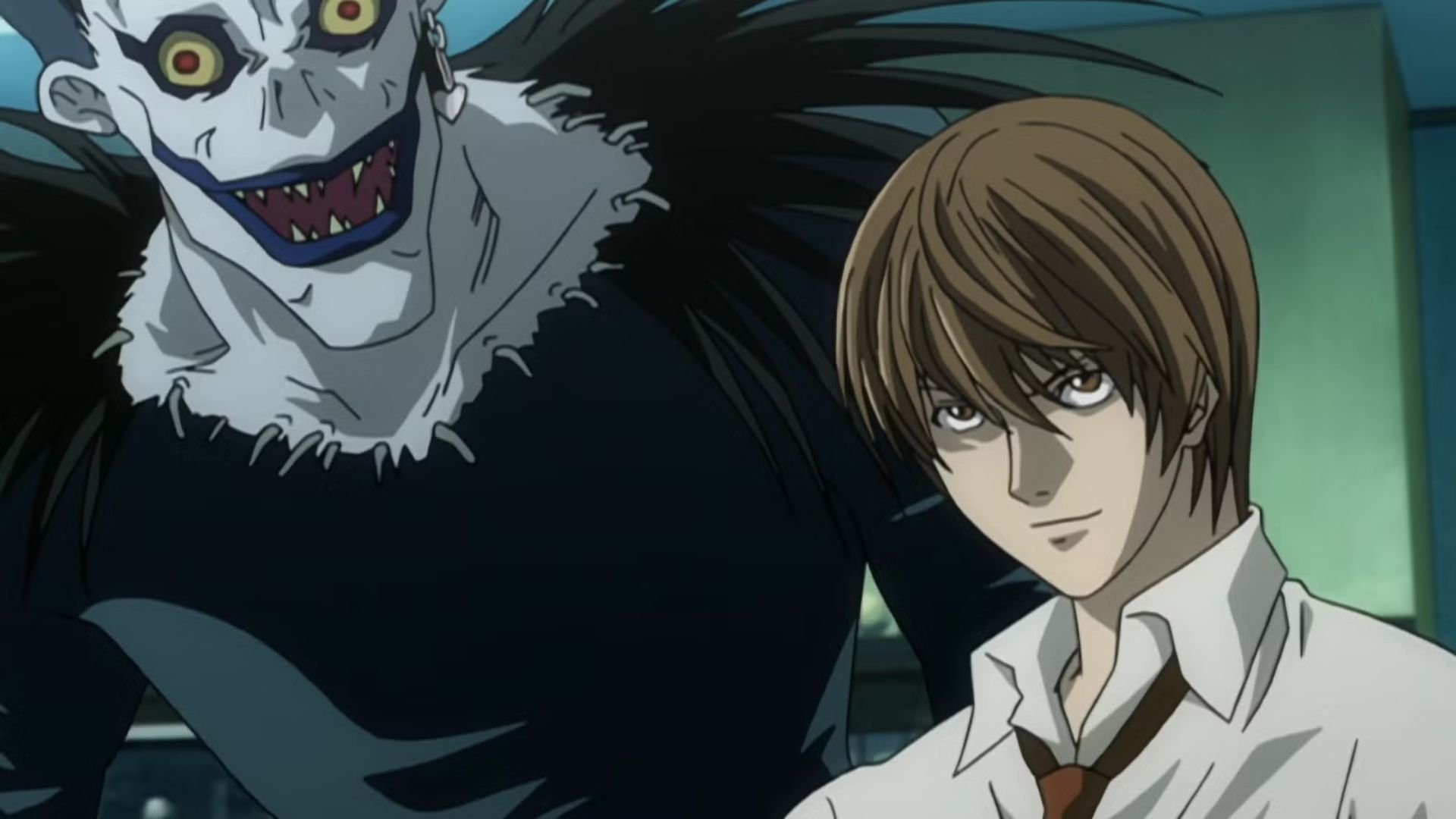
Many anime series quickly become popular thanks to captivating and unique ideas. This one is no different, telling the story of Light Yagami, a brilliant but conceited high schooler who finds a mysterious notebook with a deadly power: anyone whose name he writes in it will die.
The main source of suspense in Death Note is the intense battle of wits between Light and L, a highly skilled detective who’s determined to catch him as he starts killing people. While Death Note has a lot going for it, and its strengths outweigh its weaknesses, it isn’t necessarily the greatest thriller anime ever made. Several other dark and suspenseful anime series feature even stronger writing.
Monster Delivers Peak Suspense As A Guilt-Ridden Surgeon Hunts Down A Serial Killer
Both Monster and Death Note are gripping thrillers that explore themes of power, control, and the burdens of responsibility. They both feature intense violence and a high number of deaths, and keep you on the edge of your seat with a suspenseful game of cat and mouse.
Both Death Note and Monster explore the consequences of power and justice, but in contrasting ways. Death Note shows how power corrupts Light Yagami, leading him to pursue a flawed vision of utopia. In contrast, Monster focuses on Dr. Kenzo Tenma, who is haunted by guilt as he desperately tries to stop Johan Liebert, a serial killer whose actions deeply affect Tenma.
Liebert is a man whose life was saved by Dr. Tenma through a remarkable surgery. While Tenma initially acted to save Liebert’s life, upholding his medical oath, he now feels responsible for stopping Liebert’s destructive actions. He believes Liebert’s current behavior exists because of the surgery he performed. The complex relationship between Tenma and Liebert is even more captivating than the famous rivalries seen in the Death Note series, such as those between Light and L, Near, and Mello.
I think Monster is an even more compelling story than Death Note. While Death Note kept things concise with 37 episodes, Monster runs for 74, but surprisingly, it doesn’t feel drawn out or lose focus at any point. It’s a longer show, but it earns every minute.
So far, Monster has impressive scenes and ambitious concepts, but it remains believable. It’s a classic, carefully unfolding thriller, while Death Note is more visually exciting, widely appealing, and fits the typical action-oriented style of Japanese manga.
Paranoia Agent Is A Stunning, Suspenseful & Surreal Deconstruction Of Mass Delusion
Both Death Note and Paranoia Agent are popular anime thrillers from the 2000s, but they approach the themes of crime and corruption in distinct ways. Paranoia Agent is a tightly-focused and intricate story about a mysterious attacker nicknamed Lil’ Slugger, who is terrorizing a small town, and the detectives trying to solve the case.
What truly sets Paranoia Agent apart is its focus on the psychological wounds, widespread panic, and shared illusions that fuel the attacks, rather than on the attacker themselves. The result is a complex, non-traditional story that cleverly uses the format of a 13-episode series to examine the same social issue through multiple viewpoints.
With each new story, the character Lil’ Slugger transforms and develops, revealing that he’s far more than a typical criminal. He’s essentially a master of psychological thrillers, the same creative force behind acclaimed anime films like Perfect Blue and Paprika.
While Death Note explores the dangers of power, Paranoia Agent offers a more profound look at themes like identity, escaping reality, and the impact of deception. Paranoia Agent also stands out with its dreamlike and unsettling visuals, making it a truly frightening and disturbing thriller.
Paranoia Agent wraps up its 13 episodes in a way that feels complete and satisfying. In contrast, the second half of Death Note feels hurried compared to its strong beginning. Paranoia Agent builds a more compelling mystery by sticking to its initial storyline instead of adding a second arc that simply rehashes the same concept from a new perspective.
Terror In Resonance Is A Stark Look At Appropriated Power Through Intimidating Terrorism
Shinichiro Watanabe is a celebrated anime director famous for groundbreaking series like Cowboy Bebop, Samurai Champloo, Space Dandy, and Carole & Tuesday. He’s also created another fantastic show that many people, even his biggest fans, might have missed.
This 11-episode thriller follows the police as they race against time to decipher riddles left by a terrorist group before bombs go off across Tokyo. Like the popular series Death Note, Terror in Resonance is essentially a story about the classic battle between good and evil, with a cat-and-mouse chase at its core.
Both Terror in Resonance and Death Note feature characters trying to radically change a flawed system, fueled by a belief they are justified in doing so. However, Death Note presents this conflict in an over-the-top, almost unbelievable way, while Terror in Resonance portrays a disturbingly realistic form of terrorism that feels particularly relevant and impactful today.
While some of the plans in Terror in Resonance can seem confusing at times, they fit the overall story. The series creates a truly unsettling atmosphere, leaving viewers constantly worried about what will happen. Importantly, the antagonists aren’t simply portrayed as villains; the show explores the reasons behind their actions, revealing their pain and motivations.
MAPPA’s animation in Terror in Resonance is notably understated but effective, fitting the story’s atmosphere perfectly. The music, composed by Yoko Kanno with strong influences from Icelandic sounds, is among her best work and powerfully enhances the anime’s themes and overall mood.
Psycho-Pass Is A Poignant Psychological Thriller That’s Set In A Crumbling Cyberpunk World
Psycho-Pass is a highly acclaimed series from Production I.G. It’s often compared to the film Minority Report and is the kind of thought-provoking story that Philip K. Dick would likely have enjoyed.
This anime takes place in the near future, where the police use a system to measure how likely people are to commit crimes – called their Crime Coefficient – and try to stop them before they act. Like Death Note, Psycho-Pass examines the dangers of preemptive judgment and suggests that those in power can be just as flawed, or even more so, than the people they judge.
Psycho-Pass really uses its futuristic world to create a dark and unsettling atmosphere, exploring how society becomes increasingly out of sync and dependent on technology – something you don’t see as much in Death Note. The show’s idea of using potentially harmful computer programs to fix problems feels even more relevant and impactful now than when it first came out in 2012.
Beyond its initial premise, Psycho-Pass really expands its world over multiple seasons, giving Akane a compelling character arc and featuring villains who are just as complex and threatening as Light from Death Note.
Many fans consider the first season of Psycho-Pass to be its best, but the later seasons are also worth watching. What makes the series compelling is its thoughtful exploration of crime – it tries to understand why people commit crimes, instead of simply judging them.
Read More
- Total Football free codes and how to redeem them (March 2026)
- Pixel Brave: Idle RPG redeem codes and how to use them (May 2026)
- Clash of Clans May 2026: List of Weekly Events, Challenges, and Rewards
- Last Furry: Survival redeem codes and how to use them (April 2026)
- COD Mobile Season 4 2026 – Eternal Prison brings Rebirth Island, Mythic DP27, and Godzilla x Kong collaboration
- Top 5 Best New Mobile Games to play in May 2026
- Light and Night brings its beloved otome romance experience to SEA region with a closed beta test starting May 20, 2026
- Gold Rate Forecast
- Gear Defenders redeem codes and how to use them (April 2026)
- Painful truth about Alexa Demie after she vanished… then emerged with drastic new look: Insiders spill on Sydney Sweeney feud and Euphoria star’s plan for revenge
2026-05-14 17:42