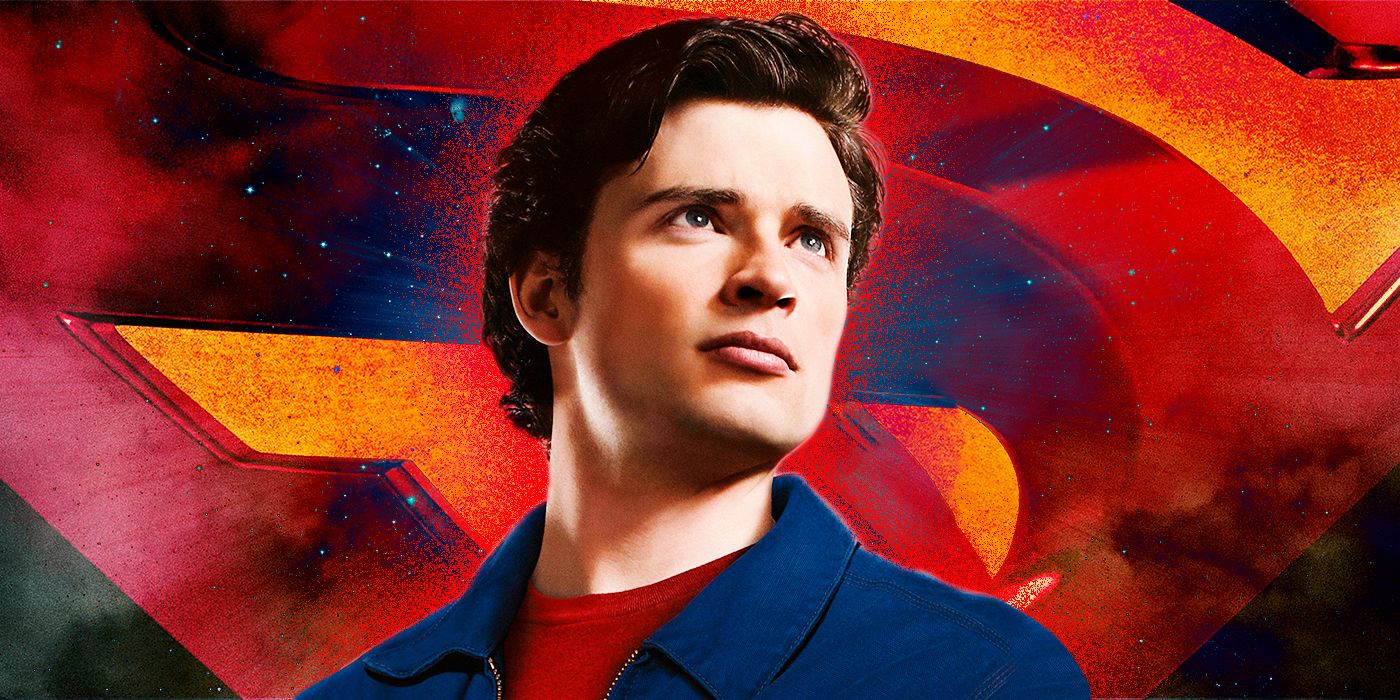
This popular series successfully reintroduced Superman to a new audience. Focusing on Clark Kent’s formative years, it was the dominant superhero show on television well before the Arrowverse came along on the same network. The show’s impact continued even after it finished airing, shaping future programming on The WB and The CW and solidifying its legacy in TV history.
Season 11 of Smallville continued the story as a comic book series after the TV show ended. It showed Clark Kent fully embracing his identity as Superman, which allowed for the introduction of other major DC heroes who fought alongside him. However, because it continued in comic form, many fans didn’t see what was originally intended as the show’s final ending.
Smallville Season 11 Continued the TV Series’ Story
Published between 2012 and 2014, Smallville: Season 11 was unusual because the comic book continued the story of the TV show immediately after the series finale. Other TV shows, like the Adam West Batman and Lynda Carter Wonder Woman, also had comic book continuations, but those comics were released many years after the original shows ended.
Despite the show ending just a year after the finale of the CW series, it continued the story shortly after the previous season left off. It depicted Clark fully embracing and settling into his role as Superman, following the events of the Smallville finale.
Lois Lane, Green Arrow, Chloe Sullivan, and Tess Mercer joined the adventure. The main enemy continued to be a problem, but Lex Luthor was becoming a more complex character than ever before. He was evolving into the manipulative villain from the comics, and the show explored his humanity through a new character, Otis Berg, inspired by the Otis from the classic Superman: The Movie. In many ways, this season felt like the culmination of everything Smallville had been working towards.
Despite initial ideas, the show couldn’t fully explore grand, expansive stories because of its focus on grounded adventures and avoidance of overly fantastical elements. While the Legion of Superheroes did return, the series also showcased heroes who weren’t part of the original TV show, benefiting from the freedom to tell stories without big-budget special effects requirements.
Smallville’s True Last Season Introduced Batman and Wonder Woman
During the run of the TV show Smallville, many viewers speculated about whether a young Batman would ever appear. This would have allowed both Batman and Superman to appear in live-action on television, something that hadn’t yet happened in movies. Unfortunately, it never came to fruition because of restrictions on using the Batman character.
One supposed concern of DC and Warner Bros. was and its two sequels.
Originally, the character Adam Knight was planned to be the show’s version of Batman. This is clear from his name, which was a nod to Adam West, the actor who played Batman in the 1960s. The character also fit the Batman mold – he was a wealthy orphan skilled in both technology and martial arts.
Unlike some other DC adaptations, Green Arrow played a role in the Arrowverse series. The digital continuation of Smallville, Season 11, brought together Superman and Batman, alongside other DC heroes. Notably, this version featured a Nightwing character instead of Batgirl or Oracle.
Batman was initially wary of Superman, but they quickly became close allies. This also happened with John Stewart, who had just joined the Green Lantern Corps. A remarkable version of Wonder Woman from the show Smallville also became part of the story. She helped Superman locate his mother, Hippolyta, and defeat Hades – who was mistakenly used as the villain instead of the traditional enemy, Ares.
Following this, the comic book Justice League really came together, along with a revamped Justice Society (who made a quick appearance in the show) and even a take on the Teen Titans. All of this led to the series’ final story arc, which was based on a .
The Ending of Smallville Adapted Crisis on Infinite Earths
The final story arc of Smallville Season 11 definitively ended the series, and it was much more ambitious than anything viewers saw on television. The comic book format allowed for bolder ideas and characters, free from the limitations of budget and legal concerns that the CW series faced.
The series touched on the concept of alternate universes, where parallel worlds were being destroyed by the Monitors. This storyline, called “Crisis,” was a major event for fans and became established as part of the official story in the 1980s.
The way Smallville ended felt like a departure from everything the show had established. The final season and its conclusion really went against the principles the series had always followed. Plus, since it started as a less popular comic book, not a big TV show or movie, fewer people were watching compared to other finales.
The show’s cancellation left fans without a traditional finale, but the continuation in comic book form offered a conclusion, especially for longtime viewers. After years of wanting to see the full story, the comics finally allowed Smallville to reach its potential. While fans appreciated seeing Tom Welling reprise his role as Clark Kent, the comic books arguably provided the definitive ending to his journey.
Read More
- Total Football free codes and how to redeem them (March 2026)
- Pixel Brave: Idle RPG redeem codes and how to use them (May 2026)
- Clash of Clans May 2026: List of Weekly Events, Challenges, and Rewards
- Last Furry: Survival redeem codes and how to use them (April 2026)
- COD Mobile Season 4 2026 – Eternal Prison brings Rebirth Island, Mythic DP27, and Godzilla x Kong collaboration
- Gold Rate Forecast
- Top 5 Best New Mobile Games to play in May 2026
- Farming Simulator 26 arrives May 19, 2026 with immersive farming and new challenges on mobile and Switch
- Gear Defenders redeem codes and how to use them (April 2026)
- Painful truth about Alexa Demie after she vanished… then emerged with drastic new look: Insiders spill on Sydney Sweeney feud and Euphoria star’s plan for revenge
2026-05-14 03:38