
Like every year, the Grammys will likely see the biggest awards go to artists in popular genres like pop, rap, country, and rock. However, the most interesting competitions often happen in less well-known categories. For example, the award for Best Jazz Vocal Album is a tight race between Samara Joy, Dee Dee Bridgewater and Bill Charlap, Michael Mayo, Terri Lyne Carrington and Christie Dashiell, and Nicole Zuraitis.
This exceptional ensemble showcases the exciting current state of jazz, with both established and rising musicians attracting a new wave of listeners. The Times recently gathered 26-year-old Joy and 75-year-old Bridgewater for a discussion, which led to a fascinating conversation about politics, race, equality, and their shared appreciation for each other’s work.

You both have had Grammy success. But is it still just as thrilling to be nominated?
Dee Dee Bridgewater explained that it feels great to be nominated for a Grammy again after many years. She feels honored that her peers recognize her work as worthy of the award. Unlike some younger artists who seem to create music specifically to chase nominations, Dee Dee focuses on creating art that documents her experiences. This nomination feels like a special bonus, especially considering her ongoing collaboration with Bill over the past few years – it’s a wonderful surprise and a lovely reward.
I truly am grateful to be here and able to talk about this. When I create music, the goal isn’t awards – it’s simply making the music I love with people I love. It’s humbling when young fans say I’ve inspired them to win a Grammy, but I always tell them to focus on the music itself, not just the accolades. Recognition from fellow musicians is wonderful, and I’m thankful for it. But the real joy comes from the day-to-day work – the touring, performing, and constantly learning and growing as an artist. I appreciate being part of this conversation, and I use it as a chance to thank everyone who supports us – the listeners and concertgoers. The fact that people connect with my music enough to give it such high praise is incredible, but my love for the music itself will always be the most important thing.
I completely agree, Samara. I see myself as an artist who quietly tries to bring happiness to people through my music. I like to create projects that reflect what’s happening in the world and express my feelings about society, hoping to connect with listeners and give voice to their unspoken thoughts. Right now, I’m especially focused on highlighting women in jazz. For the past few years, I’ve been working with a band called We Exist!, creating music with a social message, including protest songs, and sharing it globally. People often tell me they appreciate me voicing what they’re feeling. As I get older, I’m increasingly concerned about the state of the world and the current political climate. I want to address these issues through my music in a way that resonates with people without feeling overly political. I believe our democracy is at risk, and that’s what drives me. It also feels like my responsibility, as someone with experience, to champion women in jazz and provide them with more visibility. Many women have expressed their gratitude for my efforts, and that’s what I’m focused on right now.
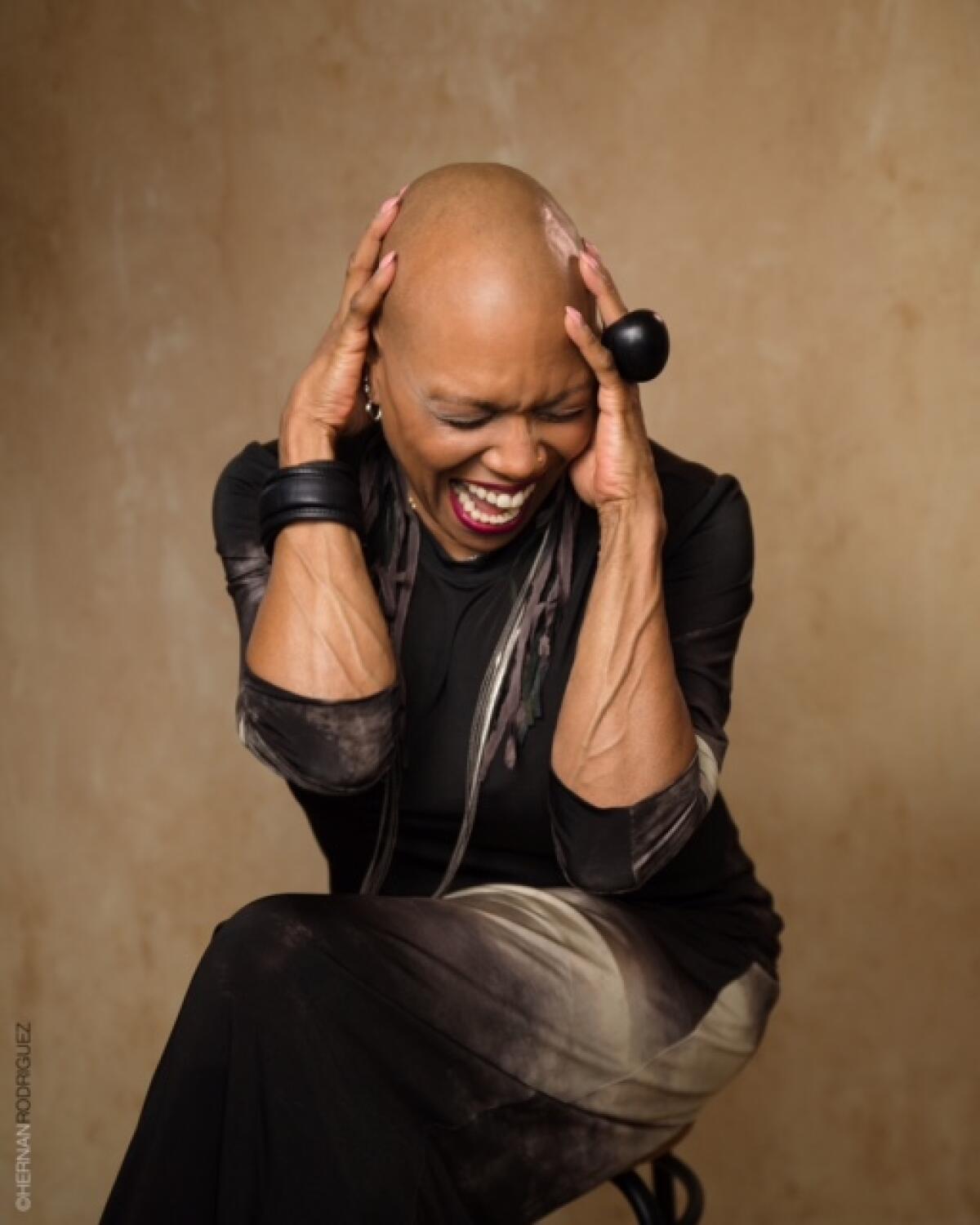
How exciting is it to see that, of the jazz vocal nominees, four of the five are women?
It’s amazing to see women thrive in jazz, especially vocalists, as this space has historically allowed them to shine. For a long time, it was the only place where they truly got that opportunity. While Terri Lyne Carrington broke through as a drummer at a time when it was difficult for women, she was given a platform by artists like Herbie Hancock and Wayne Shorter – something many women don’t receive. Of course, talent is essential, and Terri Lyne is incredibly gifted. But the key is that she had the chance to succeed and now she’s helping others. Seeing instrumentalists like Lakecia Benjamin, a fantastic alto saxophonist, gain recognition with Grammy nominations is incredibly inspiring to me.
Samara, could you describe what you’re observing in the scene today, particularly regarding gender balance and the general atmosphere?
I’ve been lucky enough to play with some fantastic musicians lately. A few weeks ago, I played at the Vanguard with Christian McBride and Savannah Harris on drums. I also played with Alexandra Ridout, a really talented trumpet player. I recognize I’m in a fortunate position right now, seeing so many women in the jazz scene. It’s hard for me to imagine what it was like when there weren’t as many women around. I can read about how certain instruments, like the saxophone, used to be favored over vocals, or how each era has its own focus. But I’m really proud to see so many talented women composers and instrumentalists getting the recognition they deserve today.

You both create music that’s incredibly inspiring, which is especially important right now. Music has a way of boosting people’s spirits and connecting us all. Could you each talk about how you aim to uplift listeners through your music, especially considering the many wonderful jazz standards designed to do just that?
I’m currently performing at Birdland with Bill Charlap, focusing on classic American songs and the music of Duke Ellington. It’s a welcome escape from current political events. Our first show last night was a big success, and it’s wonderful to see people lose themselves in the music for a while. I’ve generally stayed out of politics, but recent events – particularly the Trump administrations and the war in Gaza, along with other global issues – have pushed me to speak out.
When I perform songs with a social message, I often hear from audience members who say they needed to hear those words, that they needed someone to say them. I always remind people that we, the citizens, have the power to create change and protect our democracy, which feels threatened around the world. Having grown up during segregation, experiencing discrimination firsthand as a young Black girl, gives me a different perspective. I feel a real urgency, a sense of alarm.
Switching between performing these weighty, conscious songs and more lighthearted, innocent tunes with Bill can be challenging. It’s hard to fully connect with those sweeter songs when I’m still carrying the weight of something like Nina Simone’s ‘Mississippi Goddam.’ Finding that artistic balance has been interesting. Samara, you approach these beautiful songs with such a stunning voice, and your perspective, growing up in a different time, is completely valid.

I’m realizing, for the first time, how much is happening in the world and feeling a real need to do something about it. It’s a bit overwhelming, but I feel a responsibility as an adult to act now and think about future generations. It’s scary, honestly. It feels easier for me to speak up now than it must have been for artists like Abbey Lincoln or Nina Simone. I have the privilege of not being alone in speaking out, and that’s thanks to the women who came before me and fought for change without getting the recognition they deserved. They created a space where I can actually have a voice and try to make a difference, or at least share a message, so we can build a better world for those who come next. It’s not just about me; everything is connected. It’s a heavy feeling, and I’m still figuring out how to best use my voice.
Look, I understand where you’re coming from. When I was your age, I wasn’t focused on politics at all. I was much more concerned with being Black, because growing up, the terms used to describe us kept changing – from ‘colored’ to ‘Negro’ to ‘Black.’ I even felt frustrated with the term ‘Black’ because our skin is brown, not black! But times are different now, and you’re just starting to figure things out. You’ll go through a similar process of understanding all of this, just like I did. My advice is to focus on your art, on what truly speaks to you, and don’t feel pressured to address everything happening around you. Stay true to yourself – and you’ve been doing a great job of that. I’m older now, 75, and I’m at a point where I’m ready to speak my mind. I’m so proud of you, Samara, and the voice you’ve been given. It’s a blessing. Being at the Grammys with you was a joy. I want you to know that those of us who came before you not only love you, but we also rely on you. You’ve been able to bring jazz to a wider audience in a way we couldn’t, and that means a lot.
I love you too. I was just remembering when I first saw you perform at the Blue Note – I was with my professor, and I was so nervous! It means so much to me to know you. I’ve admired you for a long time, and now I’m so happy to be able to show you how much I care and give you the same love and appreciation you’ve always given me.
If you were going to do one song together at the Grammys, what would you want to do?
Joy: “I Wish I Knew How it Would Feel to be Free,” [Nina Simone].
I’m definitely up for that, Samara! Sounds fantastic, and I think we’d do a really great job together.
2026-01-30 01:32