Paramount launched its streaming service with a big bet: a new show starring a well-known actor returning to a popular role. This show was considered their most promising and reliable offering, especially after the character’s previous storyline ended somewhat abruptly.
From the very beginning, Picard faced criticism from its own fanbase. Changes like the controversial reimagining of the Borg in season two, and what some saw as a departure from the show’s original principles, damaged the connection fans felt to the vision of Gene Roddenberry. Interestingly, the show’s most memorable villains were initially created to strengthen those very principles.
Gene Roddenberry Didn’t Build Star Trek’s Key Values In a Day, and He Didn’t Do It Alone
Before Star Trek became famous, Gene Roddenberry created a show called The Lieutenant, a military drama. An episode titled “To Set It Right” marked Nichelle Nichols’s first appearance on screen, but the episode is remembered for more than just that.
As a huge fan of classic sci-fi, I was really fascinated to learn about this behind-the-scenes struggle. Apparently, one episode tackled a pretty tough subject – the dangers of prejudice – and even showed Marines spouting racist views. The Department of Defense wasn’t happy with these scenes and asked them to be cut, but Gene Roddenberry, the show’s creator, stood his ground and refused to compromise his vision. It’s amazing to see how he fought to tell a meaningful story, even when facing pushback.
NBC showed the episode in only a few areas, but the Department of Defense ended its relationship with the show, leading to its cancellation. Roddenberry often explained that he chose to express his social and political views through the guise of science fiction. This approach gave him more creative freedom than other shows of the time, allowing him to criticize societal problems by setting his stories in a hopeful, futuristic world.
Okay, so this ship… it’s not your typical warship, despite sharing a name with some famous ones. What really struck me was the world it left behind – a truly utopian place, practically free of all the problems we deal with here. Imagine a society without poverty, crime, or prejudice, and a dramatically different economic system! And the crew? Forget rigid hierarchies. They weren’t warriors, they were pioneers – a genuinely diverse team working together, not as soldiers, but as explorers venturing into the unknown. It’s a refreshing change of pace, honestly.
They always preferred understanding to fighting, approaching the unknown with empathy and a desire to learn. They weren’t afraid of different cultures; they actively looked for them. And the alien worlds they visited weren’t just about bizarre creatures or futuristic glamour – they presented challenges that mirrored problems we face here on Earth.
Unlike people in the late 1960s, the crew of the Starship Enterprise, led by Captain Kirk, offered solutions to complex problems. Star Trek became a platform for Roddenberry to share his optimistic vision for the future of humanity. Although Roddenberry was the driving force behind the show’s progressive ideas, many others contributed to its development, shaping concepts like the Prime Directive – which discourages interference with other cultures – and the Klingons, who represented a stand-in for Cold War adversaries.
Writers such as Dorothy Fontana began establishing the show’s core story and themes—what writers considered official canon—to maintain consistency in both plot and message. Later, she also dedicated the same level of care to The Animated Series, even though it was a shorter, animated show for children. The actors also played a role in shaping the show’s direction behind the scenes.
Nichelle Nichols decided to stay on the show after Martin Luther King, Jr. personally asked her not to leave. William Shatner intentionally made sure a director didn’t cut a groundbreaking kiss between Captain Kirk and Uhura. George Takei’s character, Sulu, openly represented his heritage and challenged expectations through his mannerisms and by choosing a fencing sword over a traditional katana in one episode. Leonard Nimoy played a key role in developing Spock as a unique and seemingly emotionless character who nonetheless captured the hearts of viewers.
This story is different: the heroes didn’t defeat the villain with force, but by understanding their motivations. Even when the villain escalated their actions, the heroes focused on comprehension. Initially, the creator aimed to completely distance the new work from The Original Series, wanting a fresh look and feel in everything from the visuals to the characters.
He unexpectedly decided to include a Klingon, Worf, among the crew of the Enterprise-D. Initially, Worf stood out as someone bridging two worlds – his proud warrior background and the peaceful, diplomatic values of Starfleet. He represented a turning point for Gene Roddenberry’s vision of a better future, proving that even former enemies could become allies, ultimately leading to a more complete and unified vision of humanity’s potential.
Star Trek Introduced the Borg as an End-Run Around the Roddenberry Philosophy
The creator of Star Trek was a visionary who thought far beyond his time, but he was also a complicated person with many struggles. The show faced numerous challenges, especially keeping talented writers who could bring his ambitious ideas to life. Experienced television writer Maurice Hurley stepped in as head writer and helped make The Next Generation a more efficient and successful production.
Honestly, the funny thing was, he privately thought Roddenberry’s core beliefs were a little crazy – he actually called them ‘wacky doodle’ in his memoir, Chaos on the Bridge. But he was a pro, and took it on himself to make sure every single line of dialogue reflected those ideals, even if he didn’t personally agree with them. It led to some pretty heated arguments with the other writers, with him constantly defending Roddenberry’s vision, sometimes even against Roddenberry himself! He was really the one holding the line on those principles.
One of the most challenging rules for the show’s writers was the idea that, by the 24th century, Starfleet officers had evolved beyond personal conflict. Even characters like Worf, who was supposed to be naturally prone to anger, rarely showed it. This lack of drama – no arguments, rivalries, or romantic complications – ultimately felt limiting and stifled the writers, creating a creative block.
Like the heroes mentioned before, these characters prioritized peaceful resolutions and compromises over fighting. Hurley was talented at bringing scripts to life within the limitations of the production process. While he appreciated his supervisor’s overall ideas, his own lack of belief in them often prevented the shows from reaching their full potential, like what The Next Generation could have been. To address this, he tried to introduce the type of conflict he was familiar with from his experience working on police dramas, and he realized they needed a compelling new villain.
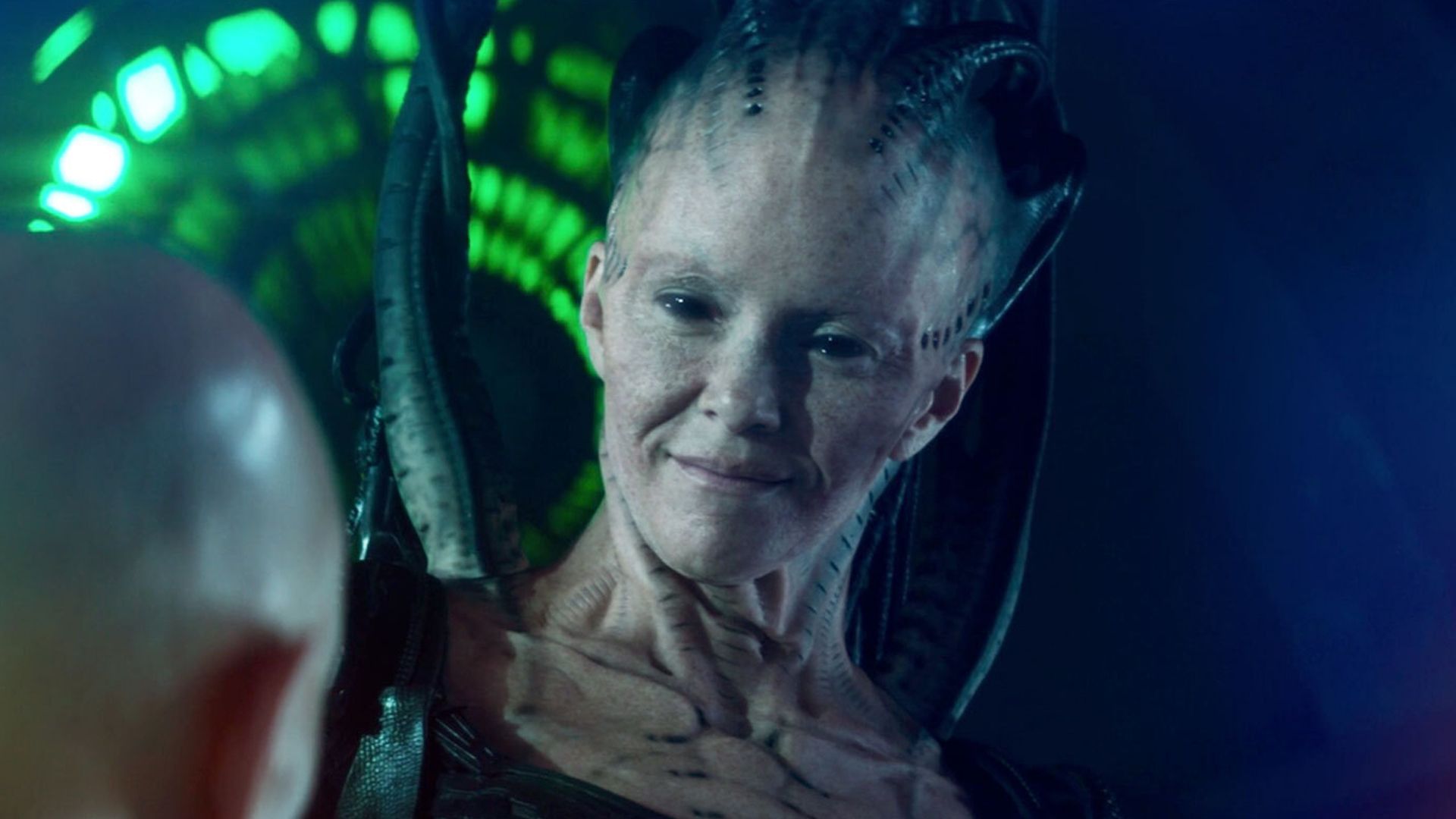
Maurice Hurley initially envisioned the Borg differently, trying to contradict the established philosophical themes of Star Trek. He originally conceived of them as a nearly insect-like collective intelligence, but the cost of bringing that vision to life proved too high. This led to the development of the pale, dark-clad mechanical beings that fans ultimately recognize.
As a huge sci-fi fan, I always felt that the idea of a shared consciousness on Lost just wouldn’t let things like negotiation, understanding, or even basic kindness really take root. When Hurley moved on after Season 2, Michael Piller stepped in, and honestly, it was a game-changer. He didn’t just like what Gene Roddenberry was trying to do with Star Trek; he got it. Roddenberry’s core principles – those ‘boxes’ everyone talked about – weren’t limitations at all. When used right, they were the perfect base for building a really compelling and surprisingly moral universe, even if that morality was a little… unusual.
As a big sci-fi fan, I always found the Borg particularly chilling. They didn’t just destroy people, they absorbed them, stripping away everything that made them individuals. But honestly, I think the villains who really stuck with Roddenberry’s original hopeful, yet complex, ideas – even after he was gone – were the most powerful. They felt like a true continuation of what Star Trek was all about.
As a longtime fan, I always felt the final Star Trek: The Original Series film held a special resonance. It wasn’t just a space adventure; it felt like a cinematic echo of the end of the Cold War. Seeing Kirk on his last voyage, striving to transform sworn enemies – the Klingons – into allies was incredibly powerful. And Spock? He wasn’t just the ship’s science officer; he was a beacon of logic, desperately trying to bridge the divide and reunite the Romulans with their Vulcan heritage. It was a beautiful, hopeful message for its time, and honestly, still feels relevant today.
The Ferengi, initially portrayed as villains in The Next Generation, became beloved characters on Deep Space Nine. The conflict with the Dominion brought the Klingons, Romulans, and Federation together as allies. Starfleet Academy saw the first Jem’Hadar join Starfleet. Later, Discovery featured a Federation president with a unique heritage – half Bajoran and half Cardassian.
Perhaps the most impactful of Gene Roddenberry’s many forward-thinking concepts is this: rather than simply defeating their opponents, the heroes of Star Trek consistently find ways to earn their respect and bring them to their side.
A Dual, Definitive Ending for the Borg Achieved the Ultimate Roddenberry Vision
Following Admiral Janeway’s actions in the past which weakened the Borg, a key focus became helping former drones regain their individuality, much like Seven of Nine. However, the Borg Queen attempted to survive by absorbing the remaining members of the collective. Season 3 of the show was particularly challenging to produce, facing difficulties like the pandemic and numerous script changes requested by the studio.
One of the most debated decisions in the show involved the destruction of a Borg Queen from another timeline. Dr. Agnes Jurati is a particularly complex character, known for her difficult choices. While she committed murder – killing Bruce Maddox – she remained a crucial ally to Picard in the final episode. Despite forming connections with both Maddox and the captain of La Sirenna, Chris Rios, Jurati ultimately struggled with deep loneliness.
During the second season, Agnes struggled against the Borg Queen’s efforts to absorb her, but ultimately yielded. In the second-to-last episode, she gave a memorable *Star Trekstyle speech about the importance of empathy, dedication, and the power of unity. She persuaded the Queen to help create a more evolved Borg Collective. Agnes then remained unseen until the season finale, where she, as part of a group of willing individuals who retain their individuality, played a crucial role in saving billions of lives.
She offers to act as a first line of defense and asks for temporary membership in the Federation. It’s hard to tell a story that’s both strange in content and strangely told. Presenting a story in ten-minute segments, split between episodes, punctuated by action sequences, and spanning decades within the show’s timeline, is a particularly unusual approach.
The idea of a Borg Queen disappearing for four centuries to build a group of volunteers dedicated to helping others is particularly strange – a collective where individuals both share a single consciousness and maintain their own identities. Maurice Huley, the original creator of the Borg, would likely find it quite bizarre, considering he designed them specifically to be resistant to the kind of optimistic, unified future envisioned by Gene Roddenberry.
Maurice Hurley attempted something surprising: making the Borg invulnerable to the very thing that usually defeated them in Star Trek. The Borg represented a unique challenge to the show’s hopeful vision of morality – they were an unyielding obstacle. The idea was even explored of a Borg drone becoming the captain of the USS Enterprise-G.
Ultimately, the character of Jurati, as assimilated into the Borg Collective, embodies the show’s hopeful outlook, contrasting with Hurley’s more pessimistic view. Hurley presented the Borg as the opposite of everything Starfleet and the Federation stand for. However, Picard demonstrated that a shared consciousness, combined with individual choice and diversity, could actually strengthen those ideals.
You can now buy Star Trek: Picard on DVD and Blu-ray, or watch it digitally. It’s also available to stream alongside other Star Trek shows and movies.
Found an error? Send it so it can be corrected.
Read More
- Annulus redeem codes and how to use them (April 2026)
- Gear Defenders redeem codes and how to use them (April 2026)
- Genshin Impact Nicole Pre-Farm Guide: Details about Ascension and Talent Materials
- Last Furry: Survival redeem codes and how to use them (April 2026)
- Robots Get a Finer Touch: Modeling Movement for Smarter Manipulation
- CookieRun: Kingdom x KPop Demon Hunters collab brings new HUNTR/X Cookies, story, mini-game, rewards, and more
- Clash Royale’s New Arena: A Floating Delight That’s Hard to Beat!
- 2 Episodes In, The Boys Season 5 Completes Butcher’s Transformation Into Homelander
- All 6 Viltrumite Villains In Invincible Season 4
- Total Football free codes and how to redeem them (March 2026)
2026-04-19 20:40