
People of Note is a turn-based RPG that’s been gaining attention for its unique approach. It aims to create a world deeply rooted in music, complete with fully performed songs and strategic gameplay reminiscent of classic Final Fantasy titles. It’s a very ambitious game, but does it live up to its promises? The answer is complex – it excels in many areas, shines brilliantly at times, and its flaws are particularly noticeable because of how good it could be. This review will detail what People of Note does well, where it struggles, and ultimately, whether it’s worth playing.
What Is People of Note? The Premise Explained
People of Note is a role-playing game where you take turns battling in a world completely built around music. The game takes place in Accordia, a land with cities inspired by different music genres like rock and rap. You play as Cadence, a determined hero who wants to win Notovision, a famous music contest, even though it seems impossible. She’s up against Coals, a dominant boy band that has won the contest nine times in a row, and faces a lot of opposition along the way. The pressure is on!
The game immediately stands out from other RPGs, and its marketing emphasizes this uniqueness. With so many fantasy games relying on the same old ideas and gameplay – similar to the constant stream of identical offers when looking at online casino promotions – being original is a major advantage. People of Note embraces this originality, offering a distinctly different experience.
If you enjoy story-focused, turn-based games and want something with a unique look and feel, this game sounds promising. However, whether the gameplay lives up to that potential is a different story – and it’s where things become tricky.
Stunning Visuals and World-Building That Actually Delivers
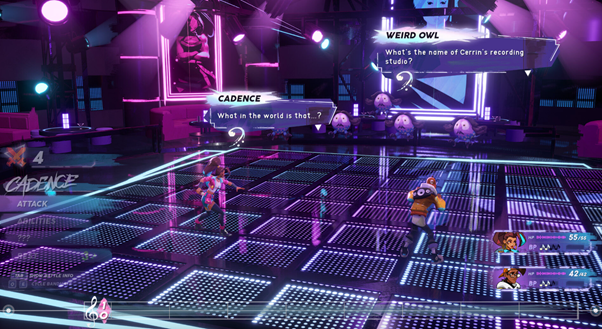
Let’s start with the highlights: People of Note is a beautiful game. Each city is thoughtfully designed to reflect its unique musical style. For example, Hardis feels like a classic American Western with its broad streets and familiar architecture. Lumnia creates a moody and immersive atmosphere with its rain-soaked streets and detailed reflections. And Piros is truly stunning – a place so captivating that players will want to take their time and explore instead of rushing through the game.
The detailed environment isn’t just for show; it proves the developers truly cared about the game’s core idea and created a world that feels realistic and lived-in. Exploring is genuinely fun, and RPG players who love getting lost in a game’s world will find a lot to appreciate here. People of Note consistently excels at creating a believable and immersive setting.
Voice Acting That Carries the Narrative
The voice acting in People of Note is truly outstanding. The large cast of characters – from the main hero to their friends and enemies – are brought to life with performances that are warm, detailed, and unique. This is especially important in a long RPG, where strong voice work can really keep players invested. It helps maintain the story’s pace during quieter moments, makes the characters feel real, and keeps you caring about a story that, at its core, follows a familiar pattern.
We’ve seen stories about unlikely heroes, powerful and dishonest institutions, and teams brought together from all corners of the world before. What makes this story special is how new and exciting it feels, and that really makes the long story worthwhile.
The Musical Sequences: People of Note at Its Absolute Best
People of Note truly delivers on its promise with impressive musical numbers. These fully animated, two-to-three minute songs aren’t just entertaining – they’re how the story unfolds. Characters are introduced, key emotional moments happen, and even the villains’ reasons for acting are revealed, all through song, dance, and visually striking scenes inspired by classic stage musicals.
As a fan, I’m completely blown away by these performances! The songs aren’t just good, they’re really good – catchy melodies, meaningful lyrics, and each one feels like a unique moment, not just another song in the show. Honestly, the way it’s all put together – the visuals, the staging – it’s like watching a high-quality animated musical, and I mean that as a huge compliment! It’s clear this team gets how music and storytelling should work together, and they’ve totally nailed it.
These sequences are so good that many players will feel the game is worth the cost. They’re some of the best ever seen in music games and raise the bar for future titles in the genre.
Where People of Note Loses the Beat: Combat and Puzzles
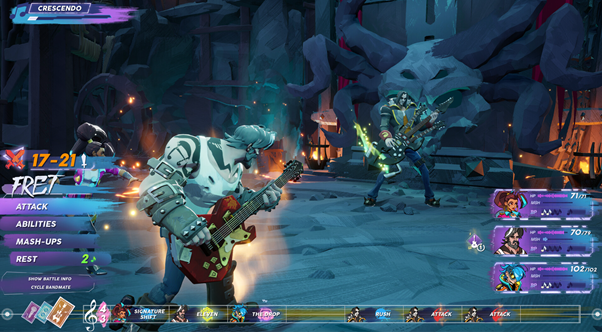
The combat in People of Note is disappointing. While it uses musical terms like ‘stanzas’ for turns and displays a time signature, the actual fighting feels completely unrelated to music. Every attack, no matter the character or ability, boils down to the same simple button-press when two circles align. A guitarist’s powerful move and a DJ’s special attack feel exactly the same to play.
This is a significant issue for a game where a character’s musical style defines them. The core problem is a lack of variety: all characters control the same way, with no unique rhythms or tonal differences reflecting their musical background. Surprisingly, even games without a musical focus offer more diverse and engaging action sequences than People of Note does.
The game’s puzzles fall into the same trap: despite featuring environmental challenges, music is rarely used as a solution or even a key element. It’s odd, considering the world is built around sound – players almost never need to listen carefully, react to rhythms, or interact with music in a meaningful way. The potential is there in nearly every area, but it’s consistently missed.
The difference between what this book is and what it could have been is significant and disappointing.
The Gem System: Genuine Strategic Depth
What makes the game People of Note truly stand out is its equipment system, which is more engaging than the actual fighting. Characters can equip gems in two types of slots: Melocstones determine a character’s core skills, while Remix Stones change those skills based on what’s happening in battle.
The most interesting strategies in Remix Stone come from how abilities interact with each other. Some abilities are stronger when your Beat Gauge is low, while others reward you for letting a character act last. The real challenge – and where the game gets really deep – is building a team where one character’s actions create opportunities for another to deal extra damage or gain other benefits. This encourages players to try different combinations and carefully plan their moves.
The game’s enemy design complements its systems nicely. As you progress, you’ll face opponents that require more than just simple attacks – some dodge at the start of each turn, bosses get stronger as a fight goes on, and certain battles demand quick, well-timed attacks. Players who take the time to understand their gear will discover a surprisingly deep and strategic gameplay experience.
People of Note vs. Other Musical RPGs: How Does It Stack Up?
Musical games have become increasingly popular, with many rhythm-based and story-driven titles vying for players’ attention. People of Note stands out because it blends elements from different genres: it prioritizes storytelling and RPG-style progression more than typical rhythm games, offers deeper gameplay than interactive stories, and boasts impressive visuals that surpass most games in the genre.
This game is most similar to others that build their worlds and stories around music, rather than just using music as a game mechanic. While it excels in how it presents its musical world – ranking among the best in that area – the actual gameplay is fairly average. Whether that matters depends on what a player values most.
Final Verdict: Should You Play People of Note?
People of Note is a game well worth your time. It features a gorgeous world, truly memorable music, likable and well-acted characters, and a deep equipment system that keeps the gameplay interesting even during a long playthrough.
It’s understandable to get frustrated at times, but the game also delivers some truly impressive moments. Because it succeeds so well in these areas, it deserves a fair assessment, even when it doesn’t quite hit the mark. If it had featured combat tied to different musical styles, puzzles that required attentive listening, and gameplay where music felt integral, it could have been a masterpiece. As it stands, it’s a very enjoyable game that hints at its potential to be something truly special.
Read More
- Gear Defenders redeem codes and how to use them (April 2026)
- Annulus redeem codes and how to use them (April 2026)
- Genshin Impact Nicole Pre-Farm Guide: Details about Ascension and Talent Materials
- Robots Get a Finer Touch: Modeling Movement for Smarter Manipulation
- Last Furry: Survival redeem codes and how to use them (April 2026)
- CookieRun: Kingdom x KPop Demon Hunters collab brings new HUNTR/X Cookies, story, mini-game, rewards, and more
- 2 Episodes In, The Boys Season 5 Completes Butcher’s Transformation Into Homelander
- Total Football free codes and how to redeem them (March 2026)
- All Mobile Games (Android and iOS) releasing in April 2026
- Vans Reimagines the Classic Slip-On With the OTW 98 “Knot Vibram” Pack
2026-04-19 16:09