
Classic rock is facing tough times. The musicians who made some of the most beloved and influential music of all time are no longer as prominent – many have faded from public view or passed away.
Eddie Van Halen, a groundbreaking guitarist known for his innovative two-handed tapping technique, lost his battle with cancer in 2020. Gregg Allman, the distinctive singer of hits like “Whipping Post” and “Midnight Rider,” died in 2017, just three years after the Allman Brothers Band disbanded. Last year saw the passing of musical icons Brian Wilson of The Beach Boys, Sly Stone, and Ozzy Osbourne.
Things aren’t what they used to be, even for the artists who are still performing. This summer’s Lynyrd Skynyrd tour won’t feature any of the band’s original members, as they have all passed away. While Paul McCartney, at 83, continues to fill stadiums and captivate fans with his personality and extensive catalog of songs, his voice now shows the effects of age. As Mick Jagger famously sang, time affects everyone, even iconic bands like the Rolling Stones, who lost their drummer Charlie Watts in 2021.
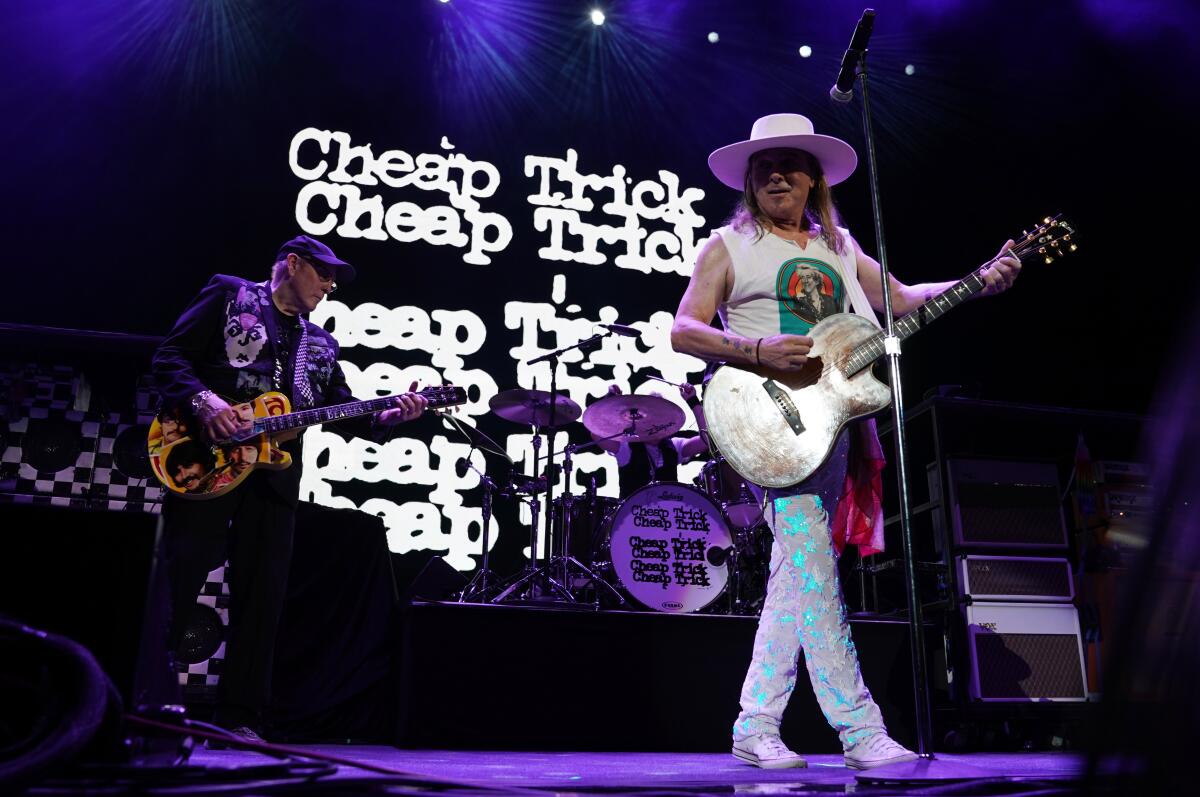
Then there’s Cheap Trick, the iconic power-pop band known for their Beatles-inspired sound and energetic performances. Originally from Rockford, Illinois, the band still includes three founding members: Robin Zander, with his distinctive vocals, age 73; Tom Petersson, 75, a groundbreaking 12-string bass player; and the energetic lead guitarist Rick Nielsen, 77, who wrote or co-wrote many of their hits like “I Want You to Want Me,” “Surrender,” and “Dream Police.” They’re now joined by drummer Daxx Nielsen, Rick’s son, who took over for the long-time drummer Bun E. Carlos in 2010. Cheap Trick continues to release strong albums, and their concerts still capture the excitement of their legendary 1978 performance at Budokan.
Bassist Petersson explained that they share similar musical preferences and have known each other for a long time, which creates a natural synergy. “It just works,” he said.
You’re right, it does! Their 21st studio album, “All Washed Up,” released in November, is full of energy. The title track has a playful, confident vibe, and “The Riff That Won’t Quit” truly delivers on its promise. According to Zander, it has a sound reminiscent of early Cheap Trick.
Cheap Trick, the Rock & Roll Hall of Famers with over 20 million albums sold and numerous gold and platinum records worldwide, will perform at Bridges Auditorium in Claremont on April 21st. The concert will feature a blend of their classic hits and lesser-known favorites.
Keeping it fresh
After more than 50 years together, how has this band continued to create new music instead of fading away, breaking up, or simply becoming a nostalgia act playing the hits?
Zander believes their continued success comes from staying passionate and enthusiastic. They create music both for recording and for live performances, always striving to keep things fresh and avoid monotony.
The band varies their performances each night for this very reason. It also clarifies why, despite the current popularity of country, hip-hop, and pop in streaming, Cheap Trick continues to record rock music, even though fewer and fewer people are listening.
“We enjoy making albums,” Petersson explained. “We’ve collected so many song ideas over the years, and we’re always working on new material. The fact that we know we have another record to make motivates us to keep creating.”
So does staying healthy.
Back in the late 1970s and early 1980s, Cheap Trick was known for playing around 250 concerts each year. Now, they typically perform about 75 shows annually. The band also schedules shows further apart to give themselves time to rest and recover from touring.
Zander takes care of his voice by warming up for thirty minutes before each performance, which helps him maintain his impressive high notes. He’s also made some lifestyle changes, admitting he no longer pulls all-nighters and drinks for days on end. As he puts it, ‘We’re not young anymore!’
Surprisingly, Zander and Petersson argue that focusing on professional connections, rather than close friendships, has helped their band avoid the typical conflicts that tear apart groups of close friends – like the famous disagreements between John Lennon and Paul McCartney.
We always focused on the music, both when creating it and performing,” Zander explained. “After recording or shows, we’d all return home to sleep in our own beds – we maintained our personal boundaries and didn’t intrude on each other’s private lives.

The cult band that could
Cheap Trick formed in Rockford, Illinois, in 1973, and Robin Zander joined the following year, completing the band’s well-known lineup. They tirelessly toured the Midwest, often playing five sets a night, six days a week. Despite limited funds, Cheap Trick repeatedly traveled to Los Angeles to perform at the Starwood club, hoping to get signed to a record label. While they didn’t immediately succeed, they gained fans in the band Sparks and influential KROQ DJ Rodney Bingenheimer, which was enough of a win for them, according to band member Tom Petersson.
Aerosmith producer Jack Douglas discovered Cheap Trick while they were playing a gig at a bowling alley in Waukesha, Wisconsin. He was so impressed with their performance that he offered to help launch their career. According to bassist Tom Petersson, Douglas was a highly sought-after producer at the time. Simply having him on board – telling record labels that Jack Douglas was producing them – instantly changed their prospects and made them a band to watch.
The band promptly signed a record deal with Epic Records. Over a little more than a year, they released three critically acclaimed albums: “Cheap Trick” (produced by Douglas), followed by “In Color” and “Heaven Tonight” (both produced by Tom Werman). Despite the quality of the music, however, most people didn’t buy the albums.
Cheap Trick initially seemed like they would only appeal to a dedicated fanbase. However, the release of their live album, “At Budokan,” changed everything. Though first intended for release only in Japan, high demand for imported copies led their record label to release it in the United States, where it became a massive success, selling three times platinum. The following year, their album “Dream Police” also became a hit, and Cheap Trick looked poised to become major superstars.
For their next album, the band brought in George Martin, the producer famous for The Beatles, and engineer Geoff Emerick. Many people anticipated a follow-up similar to the groundbreaking “Sgt. Pepper’s,” but instead, they released the more experimental “All Shook Up.” Though it was initially criticized, the album has since gained appreciation. The band’s peak popularity had faded, and bassist Petersson left shortly before the album’s release, citing disagreements about the band’s musical direction. He acknowledged that preferences evolve, saying, “Tastes change.”
Looking back at Cheap Trick in the ’80s, it feels like they were often following the music scene instead of leading it. They had a little burst of success with 1988’s “Lap of Luxury,” especially with the return of Tom Petersson and their only number-one hit, “The Flame” – a pretty good power ballad, though it wasn’t one they wrote themselves. But honestly, the album just didn’t have that same spark, those instantly memorable melodies, or the raw energy of their earlier stuff. It was a flash in the pan, and things quickly faded from there.
The 1990s saw a surprising shift in music. Bands like Nirvana, Smashing Pumpkins, and Green Day started to sound similar to Cheap Trick, using catchy melodies and powerful guitar riffs. This brought renewed attention and popularity to Cheap Trick, making them relevant to a new generation.
The band saw a creative and critical comeback in the mid-2000s, beginning with the often-overlooked album “Rockford” in 2006, and that success has continued to this day. Their 2021 release, “In Another World,” reached the top spot on the Billboard Rock Chart – a first for the group after 53 years together.
“We’re not washed up,” Zander quipped.

On top of the world
Cheap Trick was finally inducted into the Rock & Roll Hall of Fame on April 8, 2016, after being eligible for many years. They celebrated with a powerful performance, reuniting with their original drummer, Carlos, which thrilled the audience. Billy Corgan of Smashing Pumpkins praised the induction online, saying Cheap Trick’s legendary status and lasting impact were undeniable.
For Cheap Trick, it was sweet vindication.
Zander said they worked incredibly hard on their submission, and being accepted was a wonderful surprise. He described the acceptance as a rewarding acknowledgment that he’s really proud of.
It’s been ten years since that amazing career moment for Cheap Trick, but honestly, they show no signs of slowing down! And why would they? They’ve still got the energy to create new music and, more importantly, they clearly love playing for their fans. It’s great to see a band with so much passion after all this time.
Zander expressed a desire for his band to be considered among the greatest rock groups of all time. He noted that while rock and roll was originally intended to be timeless, it’s recently become less prominent, overshadowed by other genres. He hopes rock music doesn’t disappear and feels his band is doing its part to keep it alive.
David Ballon, who previously worked as a reporter for publications like The Times, Forbes, and Inc. Magazine, now teaches advanced writing at USC. He currently resides in Fullerton.
Read More
- Annulus redeem codes and how to use them (April 2026)
- Gear Defenders redeem codes and how to use them (April 2026)
- Kagurabachi Chapter 118 Release Date, Time & Where to Read Manga
- Last Furry: Survival redeem codes and how to use them (April 2026)
- The Division Resurgence Best Weapon Guide: Tier List, Gear Breakdown, and Farming Guide
- Silver Rate Forecast
- Gold Rate Forecast
- Total Football free codes and how to redeem them (March 2026)
- All Mobile Games (Android and iOS) releasing in April 2026
- Rolling Stones drop new song under a different name – Hearing it isn’t easy
2026-04-17 13:38