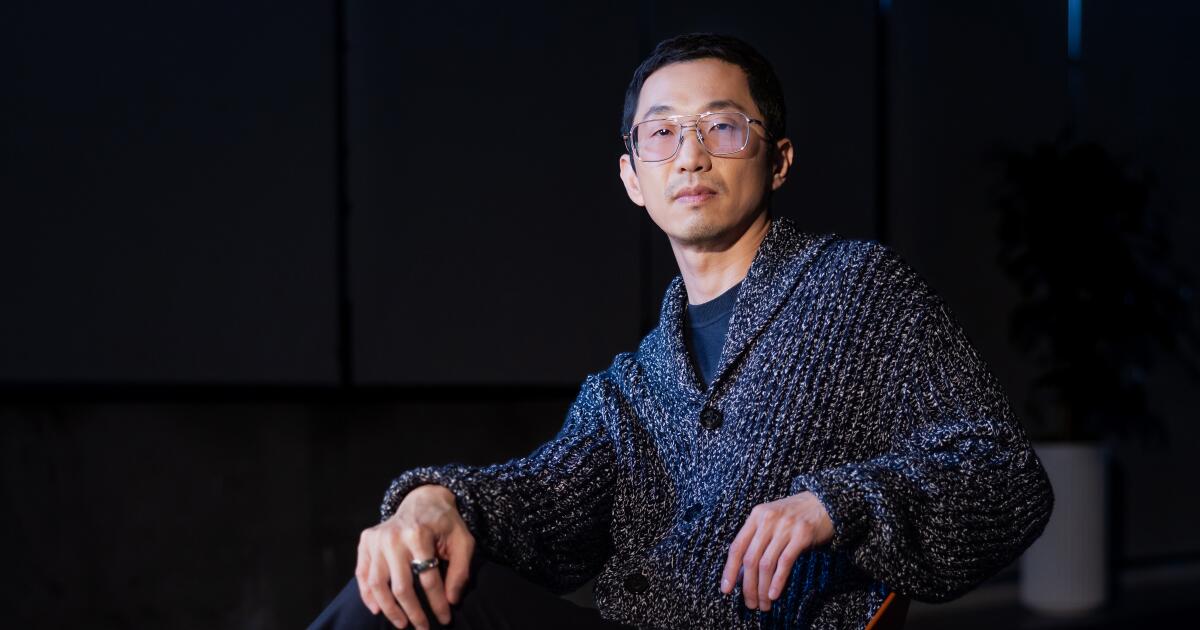
There’s a couple somewhere in Los Angeles who unknowingly inspired the second season of “Beef.”
Lee Sung Jin, the mind behind Netflix’s dramatic series exploring themes of social inequality, bitterness, and life’s unpredictable nature, often draws inspiration from real-life events. A few years ago, a simple road rage incident in Hollywood – caused by Lee being slow to react to a green light – sparked the idea for the show’s first season. He initially considered a story about a failing tennis partnership, but abandoned that plan after a similar movie, “Challengers,” was released. Instead, a loud argument he overheard from a neighbor’s house gave him the new idea he needed to begin a new story.
He shared the story, and it caused some talk around the neighborhood. What really struck him was how differently people reacted. Younger people immediately asked if he’d called the police or checked on those involved, showing a strong belief in how relationships should be. But older friends and couples generally responded with, ‘We’ve all been there.’ He felt this contrast between different generations and their perspectives was a compelling idea to explore.
The overheard in L.A. moment inspired the eight-episode season,

This darkly funny and suspenseful thriller begins with Ashley and Austin, a young couple working at a country club, witnessing a violent fight between their boss, Josh, and his wife, Lindsay, an interior designer. The incident happens just before the club is bought by Chairwoman Park, a wealthy Korean businesswoman, who is also dealing with personal problems – her husband, a doctor, is struggling with health issues that impact his patients. As both couples face increasing difficulties, they become entangled in a complex situation involving favors and pressure, revealing a story about flawed systems and how far people will go to achieve their desires.
He thought exploring repeating patterns was a compelling idea. Many shows and movies focus on a single couple’s marriage, but he wanted to show how different generations experience marriage side-by-side.
Speaking from his Hollywood office, Lee talked about the show’s Montecito location, the characters’ financial worries which are central to the plot, and the adorable animal actor who’s become a fan favorite. What follows is a slightly edited version of our conversation, and it contains major spoilers.

Feuding couples and class clashes fuel climactic Season 2 of ‘Beef’
The latest season of the Netflix anthology series stars Oscar Isaac and Carey Mulligan as a couple facing difficulties, who unexpectedly become involved with a young couple also struggling with their own problems.
Why did you want to set this season in Montecito?
I’m simply writing about things I’ve experienced. My goddaughters’ parents are my closest friends, and they live in Montecito. The father, actually my oldest friend in Los Angeles, has a membership at the Montecito Club. We used it as a filming location for our show’s exterior scenes. I was house-sitting for him while writing, and he generously let me use the membership. I initially remember being shocked by the membership fee – it seemed incredibly high! But once you start using it, you quickly get used to the comfort. It made me think about how people adapt to new luxuries. I noticed the club members were mostly older generations – Baby Boomers and the Silent Generation – while the staff were almost entirely Gen Z and Millennials. It struck me as a really powerful metaphor for what’s happening in society today. It feels like the younger generations work incredibly hard, but they’re unlikely to achieve the same level of comfort and privilege because, as someone pointed out, all the opportunities were taken by those who came before them. That observation is what ultimately inspired me to set the story at a Montecito country club.


Season two of “Beef” centers on two California couples – Josh and Lindsay Martin (Oscar Isaac and Carey Mulligan) and Ashley Miller and Austin Davis (Cailee Spaeny and Charles Melton). Despite coming from different financial backgrounds, both couples are facing challenges, and their lives become entangled in an escalating and intense conflict. (Netflix)
This season is heavily shaped by feelings of struggling to get by, bitterness, and a sense of deserving more. While characters talk about love, themes of money and economic hardship are constantly present, reflecting the widespread financial worries of today.
We didn’t intentionally create a season focused on capitalism. However, as writers striving for honesty, it’s hard to ignore its massive influence on everything today, especially in 2026. It affects even simple things, like the high cost of gas – nearly $7 a gallon, meaning a fill-up can easily cost $140! This financial pressure creates stress in relationships, making it hard for people to connect and enjoy each other when they’re just trying to stay afloat.
As we started crafting a season centered around marriage and love for these two couples, it quickly became clear that money had to be a huge part of their stories. It feels like so much is happening right now with the idea of the American dream slipping away – fewer people are having babies, and homeownership feels impossible for many. And on top of that, you keep hearing about scams and how hard it is to even shop without feeling like you’re being taken advantage of! It all felt connected, like this basic survival instinct, this desperation, is really starting to impact everyone. Honestly, I don’t see things getting any easier, especially with things like AI developing rapidly and a lack of strong leadership to keep things in check.
Ashley uses a video of Josh and Lindsay’s fight to try and get health insurance, hoping it will cover the cost of treatment for her endometriosis. Even when she’s in the emergency room, waiting for hours and ultimately needing urgent surgery after collapsing, her main worry is whether she’ll have to pay her insurance deductible.
I wrote that episode very quickly – in just one day – because it was based on a real experience I had with my daughter’s mother in the emergency room. She suddenly became ill, and we spent twelve hours there. Throughout the whole ordeal, I was taking notes on everything that happened. Almost everything in that episode is something that actually happened. It really highlighted how crazy our healthcare system is – it felt like a prime example of unchecked capitalism, and it ended up shaping a lot of what happened throughout the rest of the season.
Television
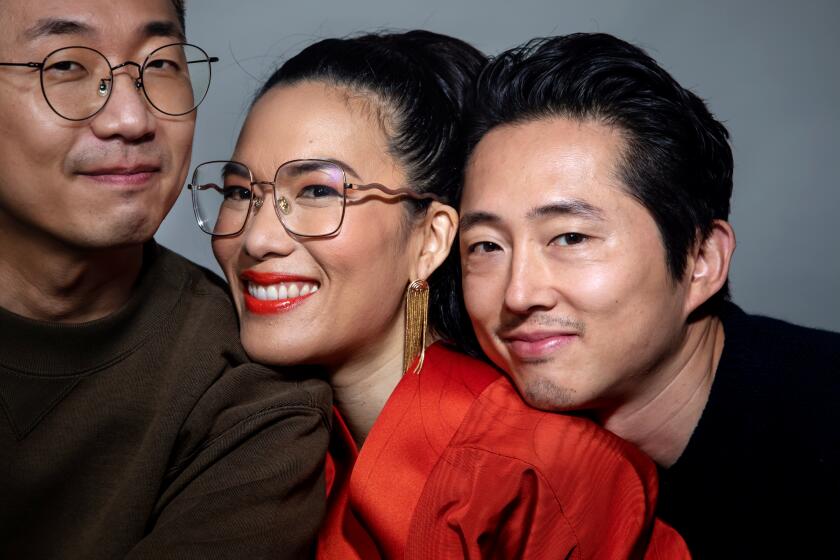
The Netflix series, from creator Lee Sung Jin and production company A24, centers around a simple road rage incident that quickly escalates into something much bigger and alters lives forever.
The story features a scene where Josh is forced to sell some of his most treasured items to pay off a gambling debt. It’s a relatable situation – have you ever had to sell belongings just to make ends meet?
I’ve definitely been in that tough spot as a writer. Even after I started writing professionally, I really struggled financially for a long time. It’s especially hard if you’re working with a writing partner or on a show staff – that’s actually what the writers guild is fighting for, trying to get longer, more stable jobs because often these positions only last eight to twelve weeks! If you’re splitting a salary with someone, and you haven’t even qualified for health insurance yet, it’s a real grind. I remember when I finally landed my first real writing gig on “Always Sunny in Philadelphia,” I was buried in debt – seriously, half of it was from parking tickets! I just couldn’t afford to pay them. I’ve had to sell things just to get by – I even sold my first guitar, a Fender Telecaster I bought after college for $1,200, for only $300! I’ve sold collectibles, anything with gold, just scraped together whatever I could because you get desperate when you’re trying to make it.

You directed this season. Is there a moment that stands out with this cast?
I often think about a moment while filming in Korea at the stunning Amorepacific building in Seoul – it was a real career highlight. I was directing a scene with Youn Yuh-jung and Song Kang-ho, two of my absolute favorite actors, and it was the first time they’d ever shared a scene together in a Korean film – even though they’d been in a movie together before, they hadn’t actually acted with each other. We were making history! And then, director Bong Joon-ho showed up on set, completely surprising us. He playfully questioned my camera angle, giving me a bit of stage fright, and then watched us film the scene. He was doubled over with laughter the entire time! It was surreal – here I was, in Korea, in a building I’d always dreamed of filming in, with two acting legends and a directing legend. It felt like being a kid again, and it transformed work into pure play.
How did you want race and identity to figure into this season, particularly through Austin?
Charles’s introduction was the starting point for a new storyline. After the first season, I traveled to Korea several times, even directing a music video for a BTS member. I was fascinated by the high-profile world of Korean entertainment, experiencing it through Austin’s character, and I wanted to bring that into the show. We discussed having a Korean American character drawn into this world, but we’d already explored that in Season 1. Instead, we decided to focus on the unique experience of being half-Korean, something we hadn’t touched on yet. Several of our writers share that background, and we wanted to create a character who is half-Korean and suddenly finds themself pulled toward Korea, especially as they’re about to become a parent.

As a big cinema fan, I have to say some of the revenge moments in this film are…intense. Specifically, there’s this really disturbing scene where Ashley puts her period blood in Josh and Lindsay’s orange juice, and then another equally shocking one on the plane where Lindsay smears something awful from the toilet seat onto the rim of Ashley’s cup. I’m really curious about the thought process behind these choices – what led the filmmakers to these particular acts? And were there even more extreme ideas that didn’t make the final cut? I’m fascinated to know what else was considered.
When I was writing Episode 4, I came up with a scene where Ashley was sneaking around Lindsay and Josh’s house. Originally, I had her causing minor mischief, like messing with a trophy and even putting something gross in Josh’s hair product. But then I had a better idea: she could get revenge by doing something shocking in the kitchen. I was worried about showing it to the writers, and Anna Moench, one of our lead writers, pointed out that the scene, as written, wouldn’t work. So we rewrote it, and that’s how the scene referencing the O.J. Simpson case came about. For Episode 7, we wanted another scene involving bodily fluids, but it was hard to come up with a way to get revenge on a plane. Since the O.J. scene involved a drink, we thought it would be clever to mirror that with Lindsay giving Ashley a drink on the plane, and the only place that made sense was the bathroom. We filmed it on a set with a fake toilet, and Carey, the actress, was really upset. Afterward, she told me it was the most disgusting thing she’d ever had to do in her entire career.
The series finale ends with a jump forward in time by eight years. Was it always your plan to include this time jump? And had you decided from the beginning that Ashley and Austin would end up repeating the same pattern?
I had a strong feeling that exploring the aftermath for Ashley and Austin would be rewarding, though I wasn’t sure how we’d get there – maybe with a time jump. There was a lot of discussion, and some writers really wanted to end the season on their kiss, feeling it was a sweet and satisfying moment. I considered it, but it reminded me too much of Season 1’s ending – two people connecting, but too late. I wanted something different. That’s when I started thinking about what happened after that connection. Life moves quickly. Josh is still in prison, and Lindsay needs to move forward. That idea led me to the idea of a coda that would really highlight the show’s themes of repeating patterns. We could show Ashley and Austin mirroring Josh and Lindsay’s situation, demonstrating that even finding a connection doesn’t guarantee a happy ending, and that people can still be haunted by the past. We also see Troy and Ava happily together – they’ve figured things out. And finally, we have the billionaire, who despite her wealth, is left with regret at the graveside of her first love. It really drove home the idea that even with everything, life comes full circle.
We didn’t see where Eunice (Seoyeon Jang) ends up.
I deliberately didn’t offer my own opinion because I’m really interested to hear what others think. She took a big risk by speaking up. Austin really hurt her feelings. I’m worried about Eunice and suspect things aren’t going well for her.

The music choices in “Beef” were incredibly impactful. I was completely captivated when Austin listened to Billie Eilish’s “What Was I Made For?” – that scene really got to me.
As a movie lover, I’m always thinking about the music. Usually, we pick out specific songs to use before we even start filming. But the music that’s actually happening in the scene – what we call source music – I often find during the editing process. There was one scene originally written with the character scrolling through Instagram, and the music was coming from a Reel like you’d normally hear. Honestly, it just didn’t land right. He was feeling pretty low, and I wanted something that felt more… impactful. So, I had this idea: what if we used Billie Eilish’s ‘What Was I Made For?’ I asked my editor to just temp it in, imagining him turning up the volume – actually trying to turn it down – as the door opened, mumbling ‘sh—… sh—…’ while fiddling with the controls. We quickly recorded the ADR for that little vocal moment on my phone, and I sent it to Finneas, Billie’s brother and our composer, asking if it was okay to use the song. He thought it was hilarious, and thankfully gave us the go-ahead. He even shows up in an episode, which is pretty cool!
Before the first season began, you shared “The Sopranos Sessions” with the writers and created a Letterboxd list of films to inspire them. What direction did you give them for the second season?
I just shared another movie playlist on Letterboxd. It includes films like “Handmaiden,” “Phantom Thread,” “Force Majeure,” “Eyes Wide Shut,” and “The Informant.” I also added “Margaret” by Kenneth Lonergan, along with “Michael Clayton,” “Who’s Afraid of Virginia Woolf?” and “Burn After Reading.” As a bit of a hidden gem, I included “Like Crazy” with Felicity Jones and Anton Yelchin.
Also, can we take a moment for Burberry’s acting?
Let me tell you, I’ve seen a lot of animal actors in my time, but Jones… Jones is something special. This was his first movie, and he was absolutely phenomenal! He nailed his cues, listened intently, and knew exactly where to look – total professional. And get this, A24 is already getting in on the hype with Burberry merchandise. Yes, you heard that right, a Burberry shirt tied to this film! It’s a whole moment.
Read More
- Annulus redeem codes and how to use them (April 2026)
- Gear Defenders redeem codes and how to use them (April 2026)
- Kagurabachi Chapter 118 Release Date, Time & Where to Read Manga
- Last Furry: Survival redeem codes and how to use them (April 2026)
- The Division Resurgence Best Weapon Guide: Tier List, Gear Breakdown, and Farming Guide
- Silver Rate Forecast
- Gold Rate Forecast
- Total Football free codes and how to redeem them (March 2026)
- All Mobile Games (Android and iOS) releasing in April 2026
- Rolling Stones drop new song under a different name – Hearing it isn’t easy
2026-04-17 13:35