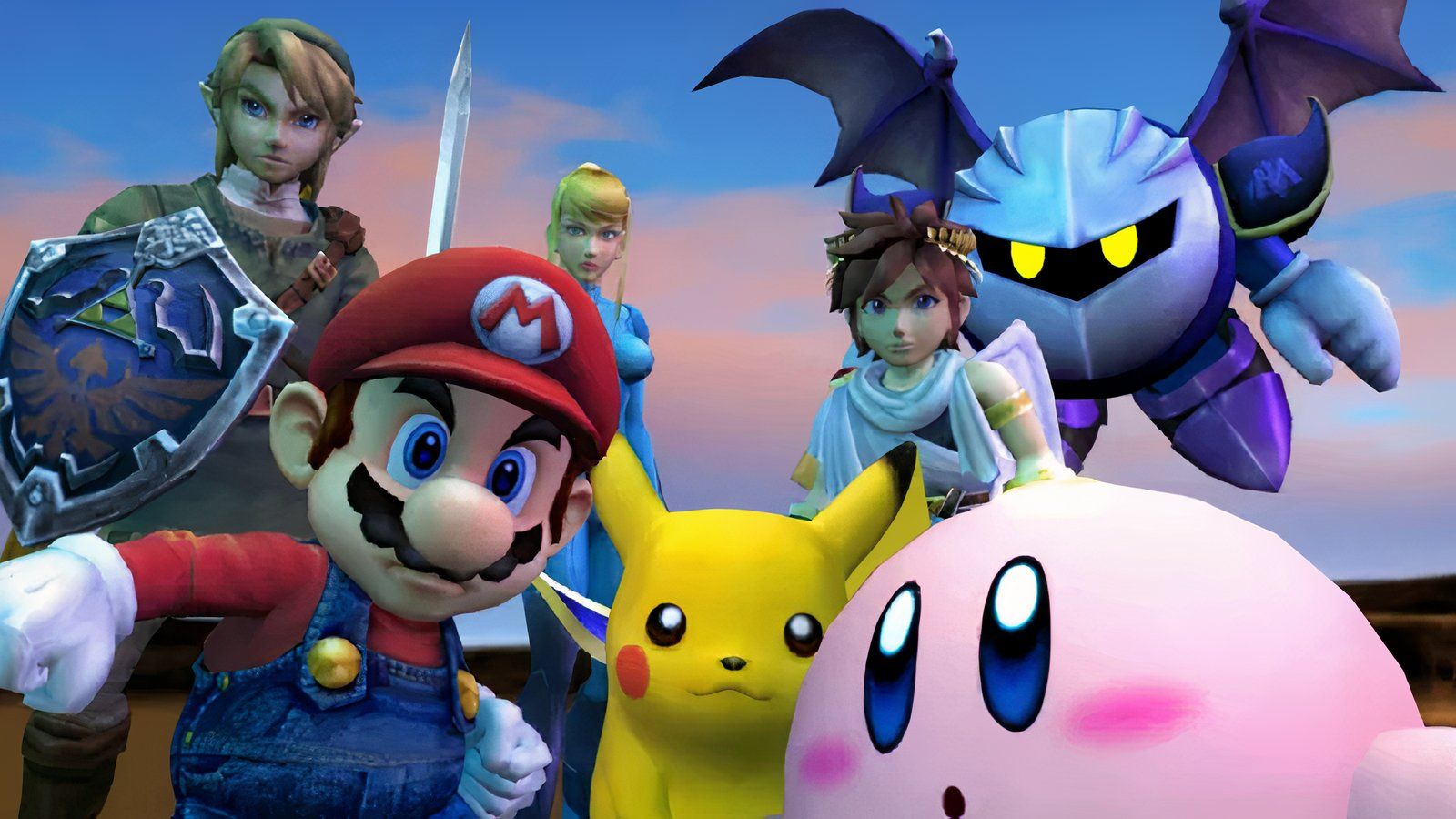
In 2026, it will be the 18th anniversary of Super Smash Bros. Brawl, a hugely influential installment in the series. Brawl was groundbreaking for its time, featuring guest characters from other popular franchises like Sonic the Hedgehog and Solid Snake, a massive soundtrack, and a story-driven single-player mode called The Subspace Emissary. Although later Super Smash Bros. games have included even more guest characters and music, they haven’t featured an adventure mode quite like The Subspace Emissary.
The Subspace Emissary stands out in the Super Smash Bros. series because of its cinematic storytelling, which truly made it feel like a crossover event—something the series hasn’t quite achieved since. It was a groundbreaking experience, and a bit of an oddity, within the Super Smash Bros. games, and it’s best understood by playing it yourself.
The Subspace Emissary is a Massive Improvement Over Melee’s Adventure Mode
This game marked the debut of Adventure Mode in the series. It featured platforming stages and traditional battles culminating in a boss fight. Each level was inspired by a different Nintendo game, and all characters experienced them identically. While there were a few cutscenes, the mode lacked a substantial story, and replaying it with different characters didn’t alter the fact that the levels were largely the same.
The Subspace Emissary tackles these complaints by delivering a story through stunning, fully animated cutscenes. It imagines a world where trophies become living fighters, and offers plenty of fun interactions between characters from different game series. The game features stages that are creatively designed for both platforming and fighting, and these stages even change as the story unfolds.
The game’s level design truly shines in the final area, The Great Maze. This complex labyrinth challenges you to revisit every previous level and rescue all the other characters you’ve met. It’s a fantastic way to reflect on your journey and the memorable characters you’ve gotten to know along the way.
A Large Variety of Enemies Makes for Excellent Gameplay in The Subspace Emissary
What makes The Subspace Emissary so memorable isn’t just its story scenes or level layouts. It’s how the mode transforms Super Smash Bros. from a fighting game into a classic side-scrolling action game. Each level lets you play as a different character, challenging you to defeat waves of enemies before facing a powerful boss. With almost the entire cast of characters playable and interacting with each other in battles, the mode perfectly captures the epic crossover experience that Super Smash Bros. is known for.
The game features a wide range of enemies, each with unique attacks that demand different tactics. Challenging and original boss battles add to the excitement. With a large cast of playable characters, the game offers excellent variety in gameplay, and replaying levels with different characters keeps things fresh and fun.
The culmination of the game’s adventure is the final boss battle against Tabuu, the god of Subspace. This challenging fight truly tests a player’s skill with the game’s combat system and their mastery of all the characters, as Tabuu is one of the most powerful and intimidating villains Nintendo has ever created.
Several Follow-Up Modes Have Failed to Live Up to The Subspace Emissary’s Legacy
Fans really loved The Subspace Emissary, the story mode in Super Smash Bros., but no subsequent game has offered a similar single-player experience. The director has mentioned that the characters unlocked through the story were deliberately made weak, which made earning them feel less satisfying. The reason we haven’t seen a direct sequel to Subspace Emissary is to avoid repeating that issue.
Following Brawl, the Subspace Emissary’s single-player story mode wasn’t included in later games. Super Smash Bros. for Wii U and Nintendo 3DS offered different ways to play alone. The 3DS version had Smash Run, where players improve their characters before tackling challenges. The Wii U version featured Smash Tour, a *Mario Partylike board game where players collect characters and power-ups leading to a final showdown.
Players had a somewhat positive reaction to these modes, enjoying them for short periods, but they didn’t compare to the popular The Subspace Emissary mode. Most fans weren’t disappointed when these modes weren’t included in Super Smash Bros. Ultimate.
World of Light, the Adventure Mode in Super Smash Bros. Ultimate, successfully built upon the foundation laid by Brawl. Like its predecessor, it’s a crossover story where the game’s characters team up to defeat a world-threatening deity. However, it streamlined the experience with fewer cutscenes and a simpler narrative. Instead of exploring a separate world, gameplay focused on battling and collecting Spirits on stages players already knew. Thankfully, challenging boss battles – including a final boss as difficult as Tabuu – made a comeback.
While World of Light isn’t quite as impactful as The Subspace Emissary, both single-player modes demonstrate that the Super Smash Bros. series excels at offering compelling experiences for solo players, just as much as it does with its amazing multiplayer. If a future Smash Bros. game is made, hopefully the next Adventure Mode will recapture the magic of The Subspace Emissary.
Read More
- Annulus redeem codes and how to use them (April 2026)
- Gear Defenders redeem codes and how to use them (April 2026)
- Kagurabachi Chapter 118 Release Date, Time & Where to Read Manga
- Last Furry: Survival redeem codes and how to use them (April 2026)
- Gold Rate Forecast
- The Division Resurgence Best Weapon Guide: Tier List, Gear Breakdown, and Farming Guide
- Silver Rate Forecast
- Total Football free codes and how to redeem them (March 2026)
- All Mobile Games (Android and iOS) releasing in April 2026
- Rolling Stones drop new song under a different name – Hearing it isn’t easy
2026-04-17 05:15