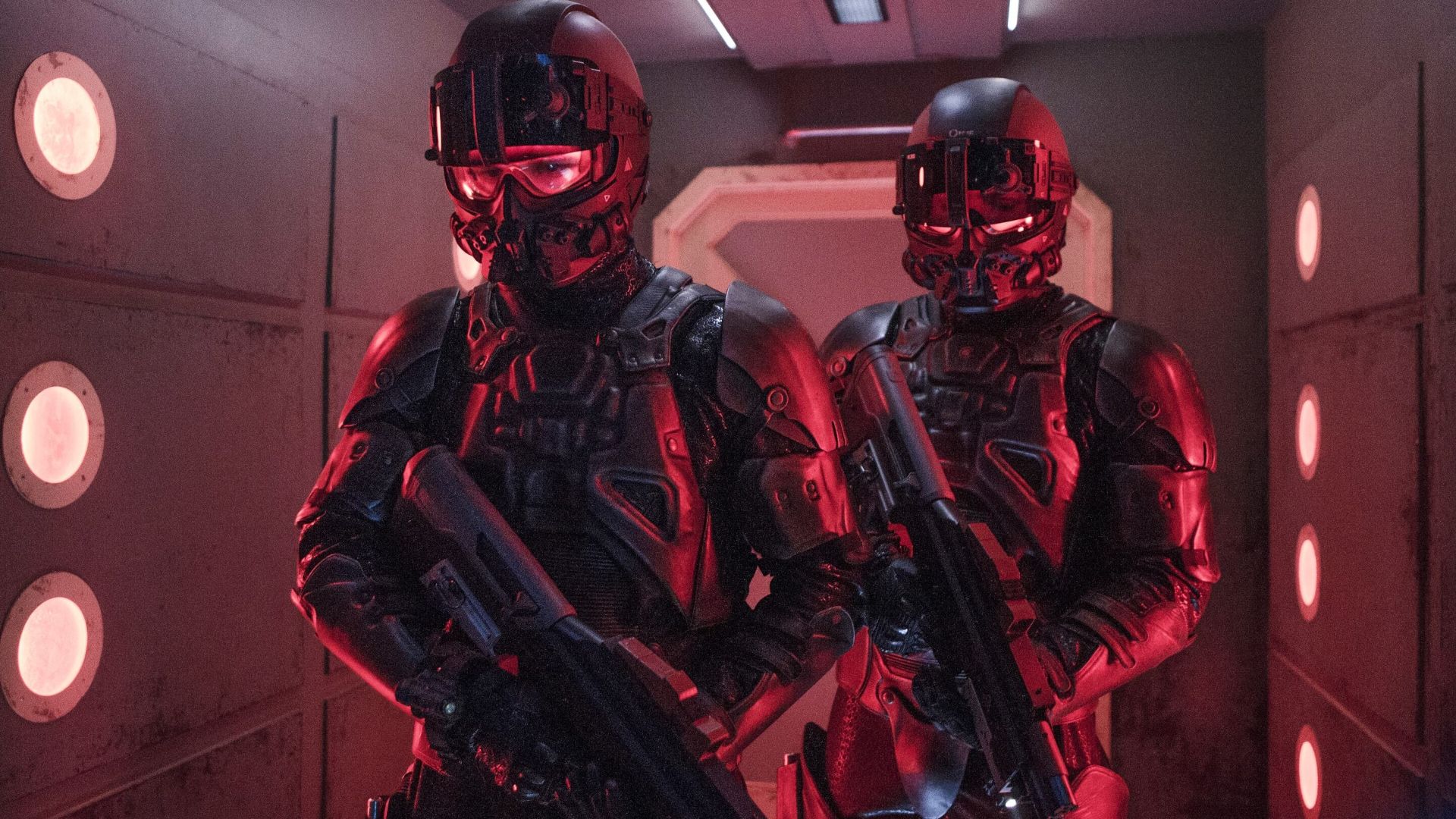
Science fiction is incredibly popular right now, dominating conversations in movies, TV shows, and even anime. At the forefront of this trend is The Expanse, a critically acclaimed series known for its realistic, complex portrayal of life and politics in space. While The Expanse is a standout show, it’s not the only one offering intelligent and detailed science fiction.
Many sci-fi shows focus on realism, scientific accuracy, and the complex effects of technology. From popular anime to hidden live-action treasures, they explore themes of space travel, artificial intelligence, and human vulnerability, often going even deeper than mainstream series. This approach creates shows that feel bolder, more believable, and more enjoyable. While The Expanse is often seen as the face of popular sci-fi, these 10 shows prove that truly thoughtful, ‘hard’ sci-fi is actually doing very well.
10
‘Stargate Universe’ (2009 – 2011)
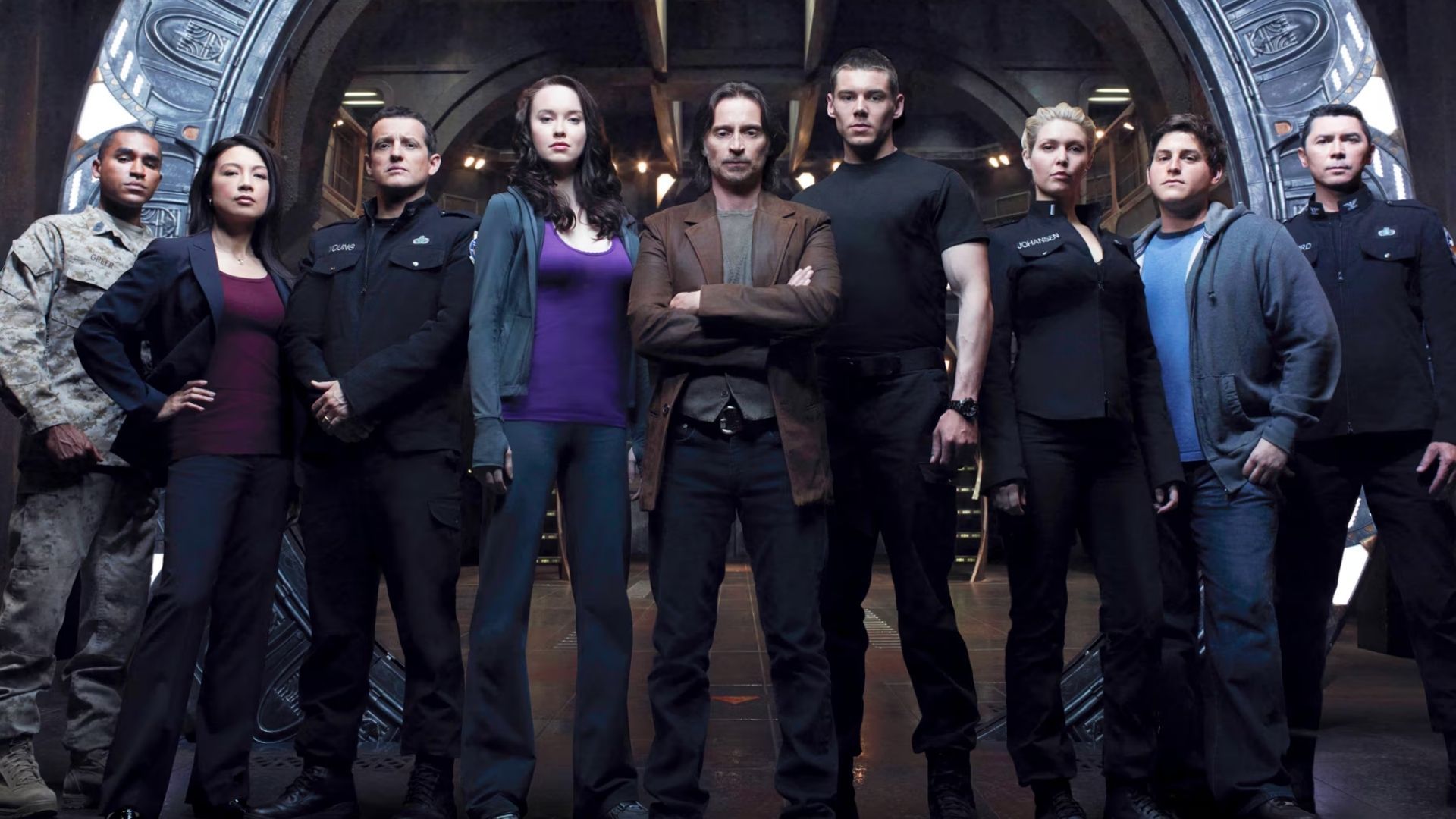
When the Stargate franchise was rebooted, fans didn’t expect a dark and realistic show. But Stargate Universe delivered just that, proving to be a surprisingly compelling experience. The premise is straightforward: a diverse group of people find themselves stranded on the ancient ship Destiny, incredibly far from Earth. Unlike the more action-packed SG-1 and Atlantis, Stargate Universe focuses on the intense pressure, struggle to survive, and emotional impact of being completely isolated from everything they know.
Okay, so The Expanse is fantastic, I totally get why it’s so popular and got those Emmy nods. But Stargate Universe… it really stuck with me. It takes sci-fi and just gets real. It’s not about flashy tech, it’s about the basics of survival. Think about it – their ship, the Destiny, has limited everything: power, air, food. They can’t just jump to wherever they want; they have to stop and recharge near stars, and then they only have a short time to scan for a habitable planet. It’s a really tense and unsettling premise, and it makes for incredibly compelling viewing, even if it only lasted two seasons.
9
‘Planetes’ (2003 – 2004)

Planetes stands out for its realistic portrayal of everyday life in space. The anime, set in 2075, centers on Ai Tanabe and her team who work in the Debris Section, clearing dangerous space junk. While the concept seems simple, the show evolves into a moving story about people, their aspirations, feelings of isolation, and the sacrifices they make pursuing their dreams within a large, corporate-controlled space industry.
Sunrise’s animation is powerfully emotional yet remarkably realistic. The story doesn’t avoid the everyday annoyances of ordinary jobs, but it manages to stay engaging. It also pays close attention to scientific accuracy and the realistic consequences of actions. Every spacewalk feels meticulously planned, and the anime consistently highlights the dangers of space. Unlike The Expanse, which focuses on large-scale interplanetary politics, Planetes concentrates on the daily challenges and routines of its characters.
8
‘Foundation’ (2021 – Present)
For years, Hollywood avoided adapting Isaac Asimov’s complex and expansive stories. But Apple TV+ took on the challenge, turning them into a visually stunning, large-scale space opera. The series, created by David S. Goyer and Josh Friedman, stars Jared Harris as Hari Seldon, a mathematician who foresees the collapse of the Galactic Empire. Lee Pace plays Brother Day, one of the Empire’s cloned emperors.
After three successful seasons and a renewal for a fourth, Foundation continues to thrive by focusing on the characters and building upon Isaac Asimov’s original concepts. The latest season, Season 3, has earned a 91% rating on Rotten Tomatoes. It introduces a new challenge – the Mule – which throws off the predictions made by Hari Seldon’s calculations. The show earns its ‘hard sci-fi’ label by exploring the idea that even mathematics can have tragic consequences, making it less about space battles and more about complex systems and the feeling of inescapable fate.
7
‘Firefly’ (2002 – 2003)
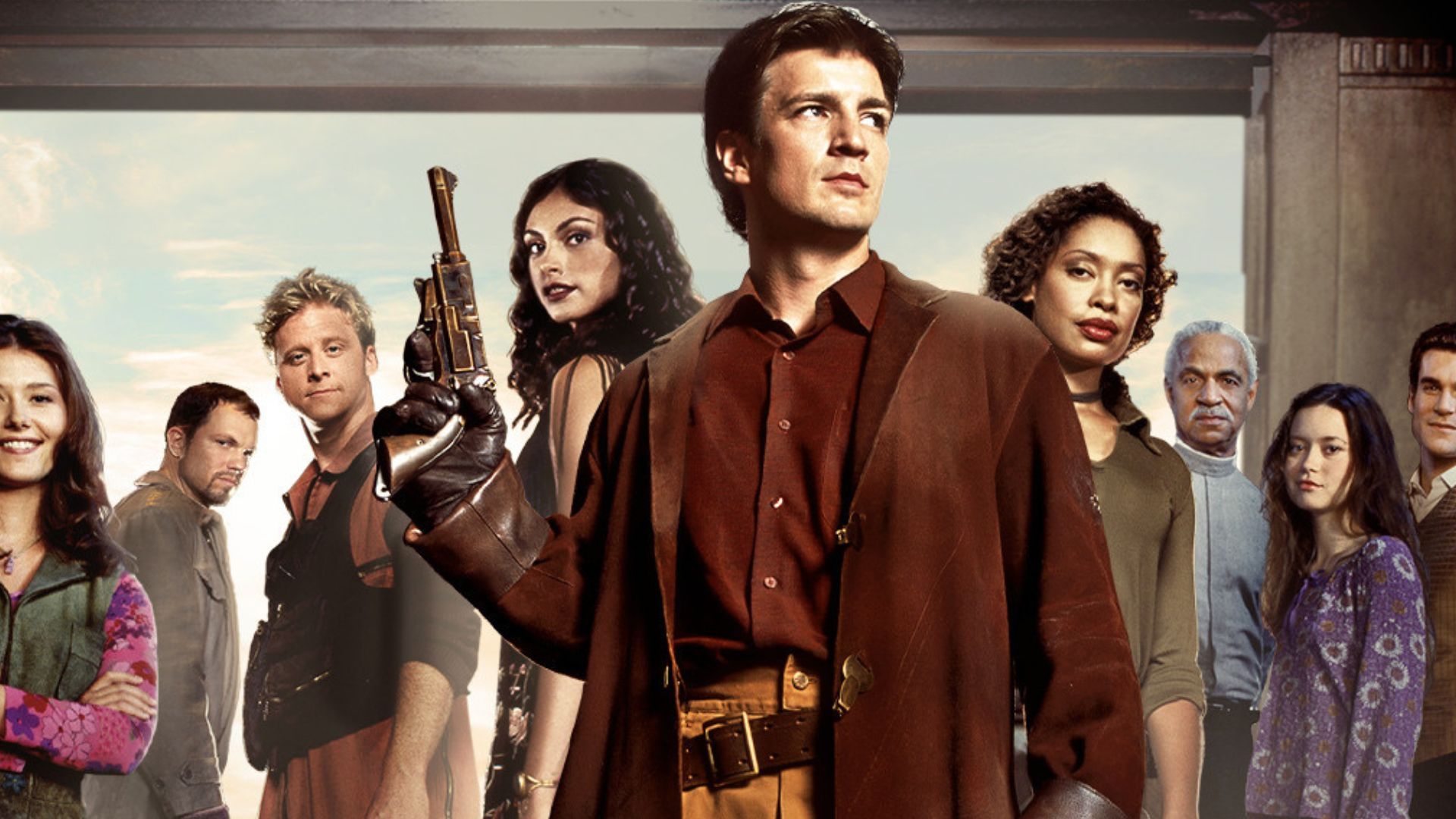
As a huge sci-fi fan, I’ve always loved the story of how Star Trek was originally pitched as ‘Wagon Train to the stars.’ Well, Joss Whedon really ran with that idea and gave us Firefly. It’s a show that immediately throws you into a really believable, gritty world. You follow this mismatched crew just trying to survive, taking whatever work they can get on the edge of a galaxy recovering from war. Nathan Fillion is fantastic as Malcolm Reynolds – he’s a captain who’s both hopeful and completely worn out – and their ship, Serenity, really feels like home, a shared headspace for everyone on board.
Firefly is a charming show – funny, heartfelt, and with a sense of a bigger story just beyond reach. It presents a down-to-earth take on science fiction, avoiding overly complicated explanations or futuristic conveniences. Space travel feels realistic with its limitations, and the technology on the ship Serenity suggests a future built on resourcefulness rather than excess. Unlike The Expanse, Firefly relies on subtlety and implication to build its world.
6
‘Travelers’ (2016 – 2018)

As a sci-fi fan, I was immediately intrigued by Travelers. It comes from Brad Wright, the mind behind Stargate, and it’s built around a really clever premise. Basically, the future is bleak, humanity is on the brink, and the last survivors find a way to send their consciousness back in time – not in bodies or spaceships, but directly into people who are about to die in our present day. The show centers around Grant MacLaren, played by Eric McCormack, and he’s juggling a lot – a regular FBI job, a marriage he needs to keep up appearances with, and this incredibly secret mission to save the future. It’s a compelling setup, and McCormack really carries it well.
In 2017, Travelers was a huge hit on Netflix, and its cancellation in 2019 left fans devastated after three seasons. While The Expanse is known for its realistic science and political intrigue, Travelers stands out for its clever and strict rules around time travel. Unlike many time travel stories, the characters can’t change the past – they can only learn about their hosts’ lives by studying records and social media. It’s a well-written, intelligent show that’s easy to get hooked on.
5
‘Dark’ (2017 – 2020)

Dark is a gripping German series that starts with the disappearance of a child in the town of Winden. It quickly becomes a complex story involving time travel, family secrets that span generations, and a struggle to control destiny. Over three seasons, creators Baran bo Odar and Jantje Friese build an incredibly intricate time-travel plot that jumps across five different eras and two alternate worlds, featuring around 60 characters—many of whom are versions of the same people from different timelines.
The Netflix series Dark has received high praise, earning a 95% score on Rotten Tomatoes. What sets it apart from many science fiction shows is its strong foundation in complex mathematics, particularly closed-loop temporal logic. The show cleverly uses the ‘bootstrap paradox’ – a time loop with no clear beginning – to delve into questions about free will. While The Expanse focuses on realistic physics, Dark feels more challenging and demanding for viewers.
4
‘Babylon 5’ (1993 – 1998)
Before shows like Lost and The Wire changed television, J. Michael Straczynski pitched a detailed five-year story arc to Warner Bros. He envisioned a single narrative unfolding over five seasons, with complex character development and political themes that couldn’t be contained in a movie or typical single-season show. Straczynski actually wrote the vast majority of the episodes himself – 92 out of the show’s 110 total, including every episode from Seasons 3 and 4.
Babylon 5 is renowned for having the most consistently developed storyline in science fiction history. The show, set in the 23rd century on a massive five-mile-long space station, centers on Commanders Jeffrey Sinclair and John Sheridan as they deal with galactic politics, warfare, and ancient prophecies. What sets it apart is its strong narrative structure – it tells a complete story with a defined beginning, middle, and end, and maintains a consistent approach to its sci-fi concepts.
3
‘For All Mankind’ (2019 – Present)
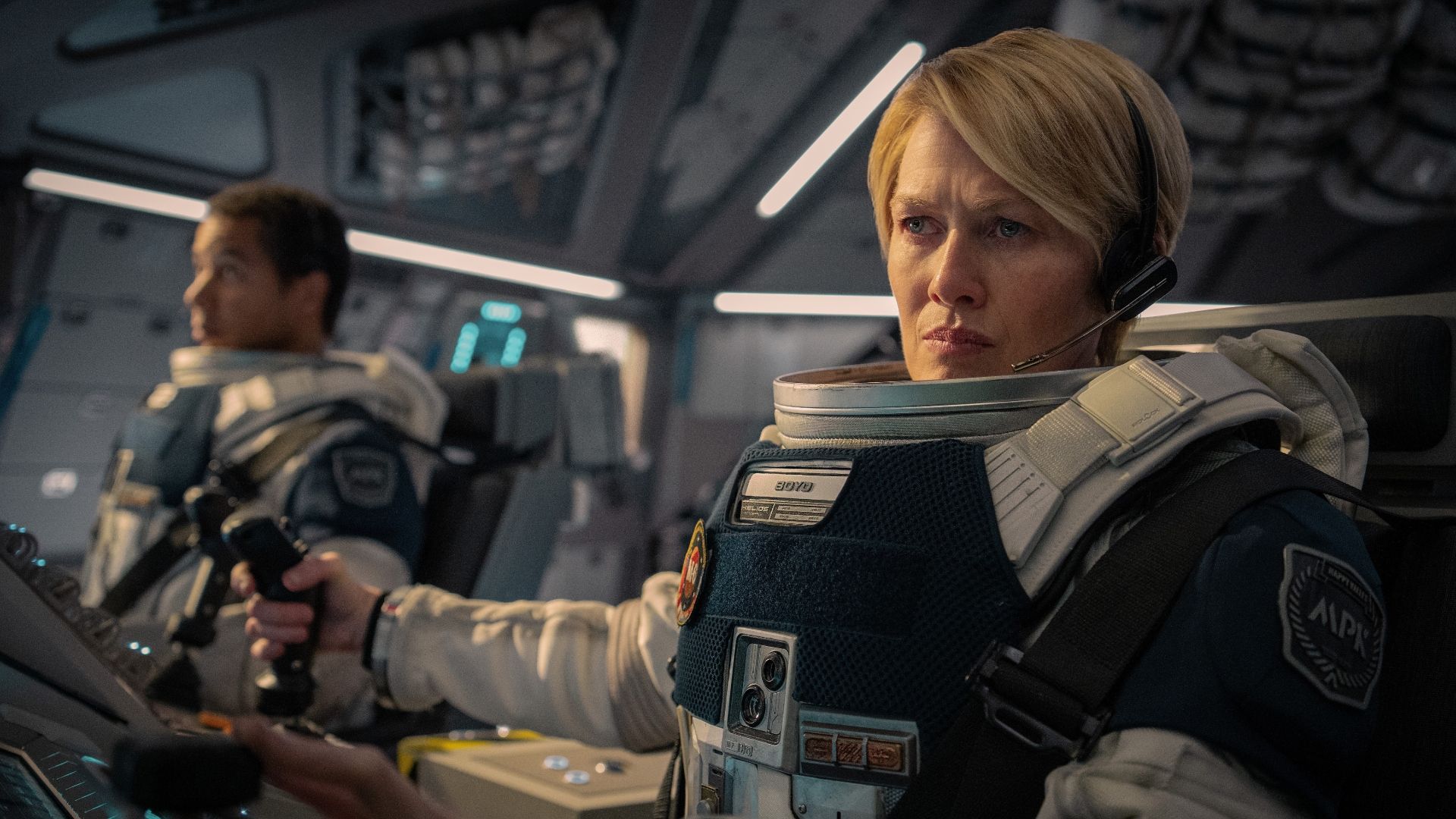
The series For All Mankind presents a fascinating ‘what if’ scenario: what if the Soviet Union had landed on the Moon before the United States in 1969? This seemingly small change dramatically alters history, leading to a space race that continues for decades. The show explores this alternate timeline, jumping forward to the 2010s and depicting a world where humans have established a significant presence on Mars, even undertaking ambitious feats like asteroid mining, and where tensions arise between Earth and its Martian settlements.
The show progresses with each season taking place about ten years after the last, following a group of characters as they grow older, and new characters take their place. The current fifth season has been well-received, particularly for focusing on young Alex Baldwin (played by Sean Kaufman) as the lead for the next generation. While The Expanse offers a realistic vision of our future in space, For All Mankind explores an alternate history of space exploration and how different choices might have changed individual lives.
2
‘Battlestar Galactica’ (2004 – 2009)
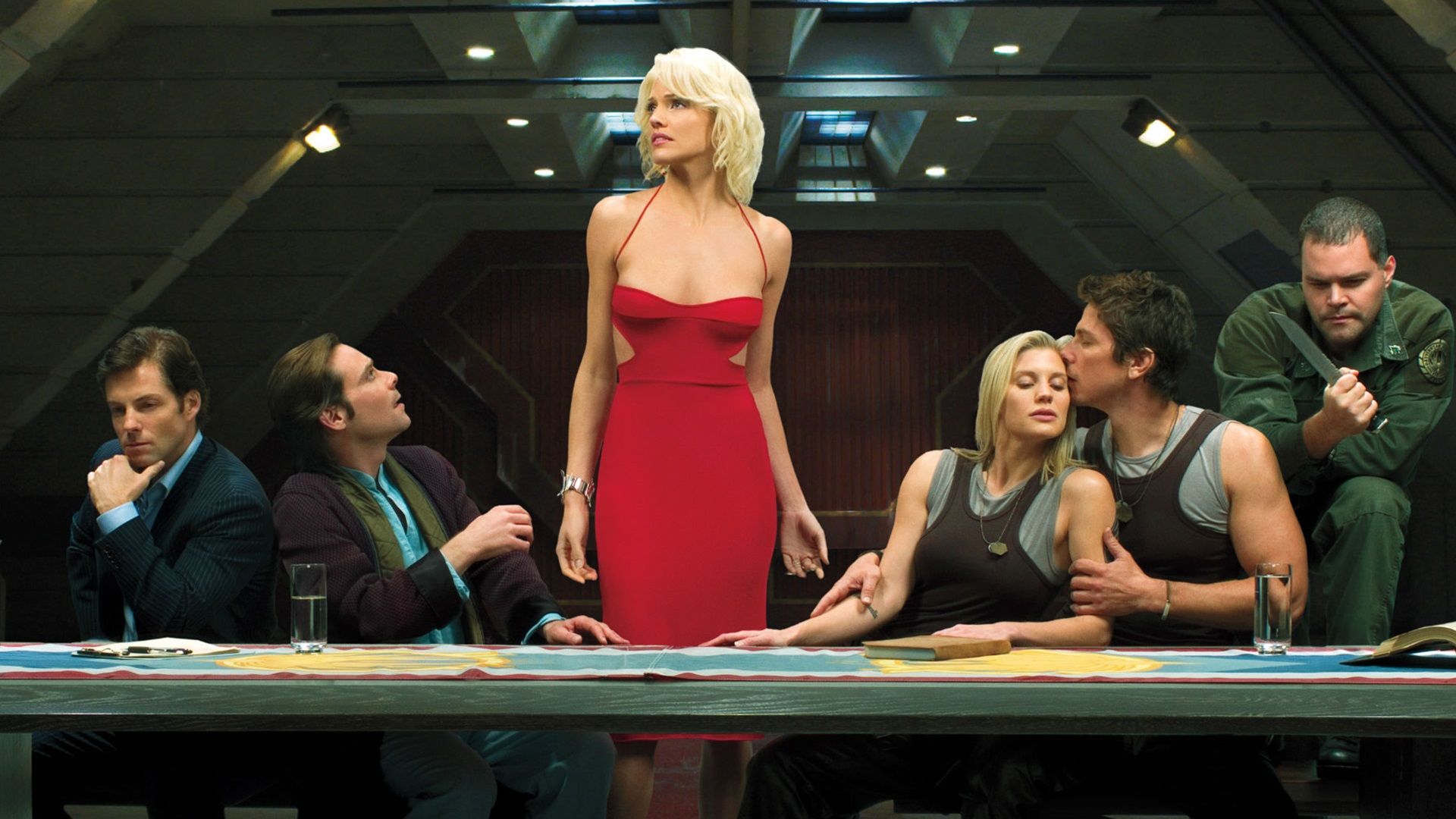
Battlestar Galactica is a groundbreaking science fiction show that has greatly influenced the genre. The story begins after a massive attack by the Cylons – intelligent machines – leaving the last of humanity on the run. They travel across the galaxy searching for a legendary home called Earth, and along the way, the characters must face their own biases and inner demons to survive.
As a huge fan, I have to say Edward James Olmos and Mary McDonnell were absolutely incredible as Adama and Roslin. And Katee Sackhoff was Starbuck – she really became a legend! What I loved about Battlestar Galactica is that it wasn’t just about big ideas, it felt incredibly real. They constantly showed how tough it would actually be to survive – worrying about fuel, food, and even just getting from place to place. It’s a much more emotional show than something like The Expanse, which feels very strategic. Battlestar really gets under your skin and makes you think about what it means to be human.
1
‘Severance’ (2022 – Present)
Severance is a unique and thrilling sci-fi series set within the enigmatic Lumon Industries. The show centers around employees who’ve undergone a procedure that divides their work and personal memories, effectively creating two separate lives. Led by Adam Scott, alongside strong performances from Patricia Clarkson and John Turturro, the series explores themes of corporate culture, identity, and what it means to be human in a thought-provoking and captivating way.
Though very different in scope, both The Expanse and Severance explore unsettling possibilities about human nature. The Expanse considers what we’d do with endless space, while Severance examines what we’d do with total obedience. What both shows reveal is deeply frightening. Severance stands out for its internally consistent technology – the rules of its world are always followed, making it a powerful statement about work and personal autonomy in today’s society. With Season 3 already announced and in development, now is a perfect time to start watching Severance if you haven’t already.
Read More
- Annulus redeem codes and how to use them (April 2026)
- Gear Defenders redeem codes and how to use them (April 2026)
- Kagurabachi Chapter 118 Release Date, Time & Where to Read Manga
- Last Furry: Survival redeem codes and how to use them (April 2026)
- Silver Rate Forecast
- Gold Rate Forecast
- The Division Resurgence Best Weapon Guide: Tier List, Gear Breakdown, and Farming Guide
- Total Football free codes and how to redeem them (March 2026)
- All Mobile Games (Android and iOS) releasing in April 2026
- Rolling Stones drop new song under a different name – Hearing it isn’t easy
2026-04-17 05:06