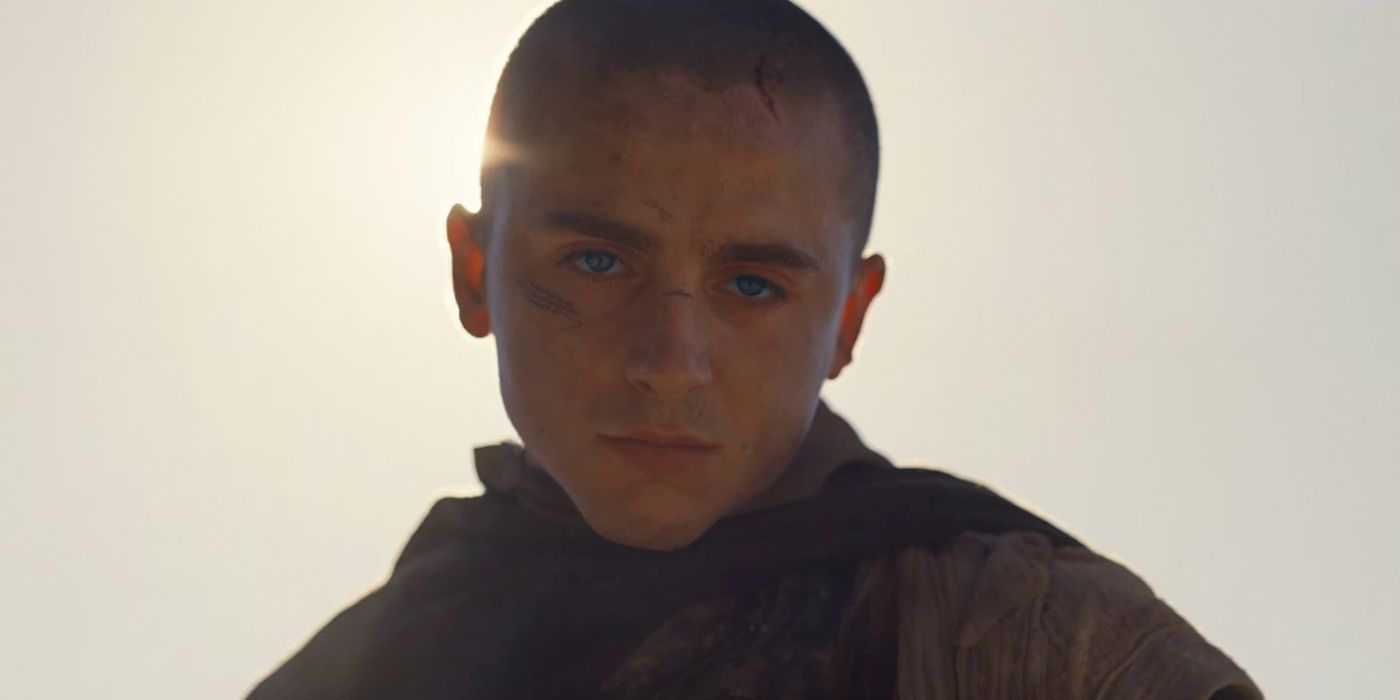
Denis Villeneuve’s films have revitalized the Dune franchise, leaving many science fiction fans excited for the third and final movie in his planned trilogy. Though he intends to finish his involvement with Dune after three films, Villeneuve has expressed willingness to see others continue the story. However, one specific novel within the series presents a significant challenge and may be extremely difficult to adapt for the screen.
With the first two Dune movies covering the first book, and the next film adapting Dune Messiah, there’s still a lot of story left to tell. Frank Herbert wrote six Dune novels, and his son, Brian Herbert, along with Kevin J. Anderson, continued the series with two more. Of these remaining books, God Emperor of Dune—the fourth novel—is considered the most challenging to adapt into a movie due to its complex and controversial themes.
God Emperor of Dune Replaces Almost the Entire Cast of Characters
The initial three Dune books follow a continuous storyline, with each one picking up shortly after the last. Dune Messiah begins after Paul Atreides conquers the desert planet Arrakis, becomes emperor, and inadvertently starts a massive religious war. This book primarily deals with the consequences of those actions and essentially finishes Paul’s story. Children of Dune then shifts focus to Paul’s children, starting when they are young. The third book ends with Paul’s son, Leto II, defeating his family’s rivals and taking control of the empire, just as his father did. The novel also shows the beginning of a dramatic transformation for Leto, one that will turn him into a monstrous being destined to live for millennia.
In Children of Dune, Leto II transforms himself by merging with sandtrout—the young form of sandworms—becoming a human-worm hybrid. This makes him virtually immortal, allowing him to guide his empire and enact a long-term plan for humanity over thousands of years. By the start of God Emperor of Dune, 3,500 years have passed, and everyone from Leto’s original life is gone. The only link to his past—and to the previous three novels—is Duncan Idaho, who is repeatedly cloned with his past memories restored.
God Emperor of Dune features a wealth of new characters, including Moneo and Siona Atreides—descendants of Paul Atreides who play crucial roles in Leto’s plans—and Anteac, a Bene Gesserit adept drawn into Leto’s machinations. While these complex figures would likely appeal to fans, adapting this book would create a significant disconnect from previous films. The story jumps far into the future with a completely new cast, which would be a jarring change for viewers. Frank Herbert had hundreds of pages to introduce this new era and its characters, but a film would only have a few hours to establish the setting, introduce everyone, and still tell a compelling story.
While fans loved Jason Momoa’s character in Dune Part One, his return in God Emperor of Dune presents a challenge. Because of his character’s long life and experiences, he’s essentially a different person now. This significant change between the third and fourth books creates an intriguing story, but it might be hard to adapt into a new movie.
God Emperor of Dune Features More Dialogue and Less Action
Beyond simply taking place far in the future, God Emperor of Dune tells a story very differently from the earlier books. The first three novels were filled with excitement, mystery, and thoughtful explorations of politics, religion, and society. This fourth installment, however, has much less action and political maneuvering. Although organizations like the Bene Gesserit and Landsraad still exist in the world of God Emperor of Dune, Leto II has significantly reduced their power and influence, making them much less formidable.
The God Emperor maintains absolute power over humanity, creating a peaceful but unchanging society where war is rare. Because he can foresee almost every danger, the story loses much of its suspense. Without these large-scale conflicts and looming threats, the narrative shifts to focus more on conversations between characters and the protagonist’s inner thoughts.
A large portion of God Emperor of Dune consists of conversations and arguments between Leto and those around him, both allies and enemies. Throughout the story, Leto tries to help Siona, the leader of a rebellion, understand his perspective. A scheme by the Ixians, one of the groups Leto allows to continue existing, involves making him fall in love with their new ambassador, Hwi Noree. This leads to a romantic relationship and even more discussion. While book fans often enjoy these character-driven scenes, viewers expecting the action of previous Dune films might find the focus on dialogue and debate unexpected.
It would be challenging for filmmakers to cut down on the dialogue, because these conversations are central to the novel’s themes and message. While all the Dune books explore complex ideas about society and humanity, God Emperor of Dune delves even further into these concepts, and is perhaps more focused on philosophical questions than the earlier installments.
God Emperor of Dune Is the Most Philosophical of the Series
The first three books in the Dune series explore the idea of heroes – and the risks they present. As shown in Denis Villeneuve’s films, the first book demonstrates how easily people look for saviors and willingly give up their own judgment to follow those who seem extraordinary. Dune Part II suggests, and the second book, Dune Messiah, confirms, that Paul’s rise to power, while appearing like a success story, ultimately leads to problems for humankind. God Emperor of Dune builds on these themes, delving deeper into questions about human nature and the recurring patterns in history.
Following the first three Dune novels, Frank Herbert began to examine the cycles of power – how dictators gain control and ultimately lose it. He was fascinated by the conflicting human needs for safety and stimulation, and how these often resulted in times of either peaceful but strict control, or chaotic conflict. In God Emperor of Dune, Leto II understands this pattern and attempts to break humanity of these ingrained behaviors, hoping to guide the species toward a new stage of development. His harsh rule is a key part of this plan, and much of his conversation is designed to teach others – and the reader – about his ultimate goal.
The ideas explored in God Emperor of Dune are really thought-provoking, and tackling big concepts is a hallmark of good science fiction. However, fitting all of that into a movie would be a tough task. While not impossible, it would require a talented director and writer to adapt the novel into a film that’s both easy to understand and enjoyable to watch.
Denis Villeneuve has proven his skill with the first two Dune films, successfully capturing the spirit of the novel while delivering exciting action and compelling characters. Fans are eagerly anticipating the next installment and hoping for a continuing series. However, adapting God Emperor of Dune might be a significant challenge. It’s a very different book, introducing new characters, focusing less on traditional conflict, and prioritizing philosophical themes, making it a departure from the previous stories.
Found an error? Send it so it can be corrected.
Read More
- Annulus redeem codes and how to use them (April 2026)
- Gear Defenders redeem codes and how to use them (April 2026)
- Kagurabachi Chapter 118 Release Date, Time & Where to Read Manga
- Last Furry: Survival redeem codes and how to use them (April 2026)
- Gold Rate Forecast
- The Division Resurgence Best Weapon Guide: Tier List, Gear Breakdown, and Farming Guide
- Silver Rate Forecast
- Total Football free codes and how to redeem them (March 2026)
- Rolling Stones drop new song under a different name – Hearing it isn’t easy
- All Mobile Games (Android and iOS) releasing in April 2026
2026-04-17 00:49