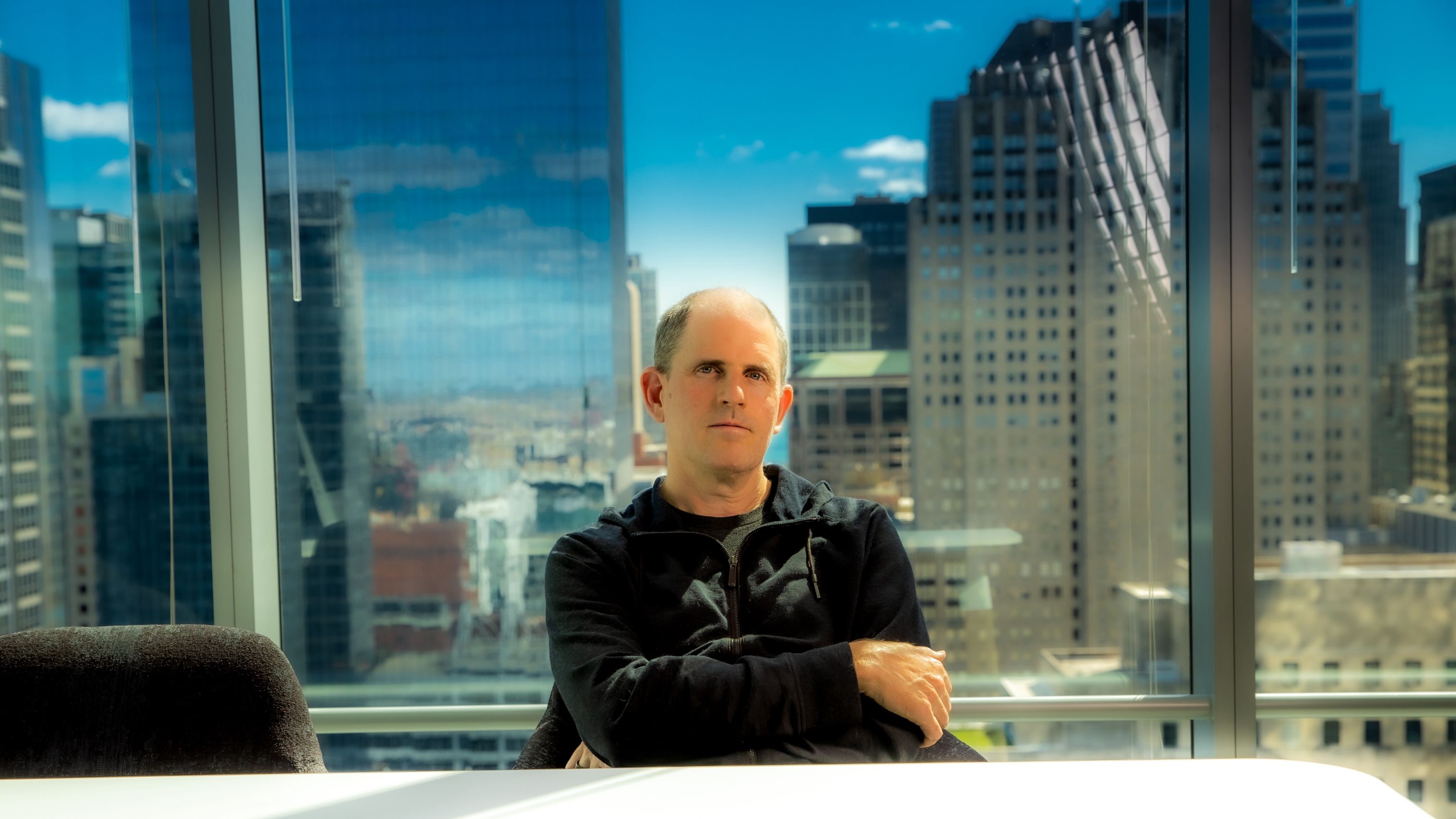
What to know:
- Don Wilson, founder and CEO of DRW, said Wall Street firms are unlikely to adopt fully transparent public blockchains because open ledgers conflict with how institutions manage risk and protect trading strategies.
- Publishing every institutional trade onchain would violate fiduciary duty by revealing large investors’ intentions, increasing price impact and enabling front-running, he said.
- While Wilson sees opportunities in tokenizing real-world assets, he expects institutions to favor private or permissioned blockchain systems that prioritize privacy, control over data and market-structure protections over the transparency of public chains like Ethereum.
In this article
 BTCBTC$68,862.70◢3.43%
While Wall Street firms are likely to adopt blockchain technology, they probably won’t use it as it currently exists. The idea of a completely open and public record of transactions clashes with how traditional financial companies operate, according to Don Wilson, CEO of the trading firm DRW, which has been involved with cryptocurrency for more than ten years.
Wilson stated at the Digital Asset Summit in New York on Thursday that traditional financial institutions will not publicly record all their trades on a blockchain. He explained that money managers would see this as a breach of their responsibility to clients, as it would reveal their trading strategies to the world.
Making every trade public clashes with how financial firms control risk and safeguard their investment strategies, according to Wilson. If a major investor begins selling shares, others can quickly spot the trend, causing the first trades to significantly affect the price of subsequent trades. Essentially, this level of transparency disadvantages the investor.
Wilson explained that the issue isn’t the technology, but rather how people are using it. He believes it’s a bad idea to store information on blockchains where everything is publicly visible.
Founded in 1992, DRW launched Cumberland in 2014, a pioneering crypto trading desk that emerged as bitcoin markets were just beginning to develop. This early involvement allowed the firm to closely observe the growth of digital assets, from small, specialized markets to the infrastructure that banks are now analyzing.
Wilson’s recent work shows this change in thinking. He’s been exploring ways to integrate established assets into blockchain technology, but cautioned against doing so on blockchains where all transactions are publicly visible.
For a long time, Ethereum has been seen as the blockchain with the greatest potential to connect with the financial world. This is largely due to its thriving decentralized finance (DeFi) applications and its early involvement in turning assets into digital tokens.
Similar to Bitcoin, every transaction on these networks is publicly viewable. However, major banks have chosen a different approach. Instead of using open systems, they’ve been developing or investing in private networks where access and data are carefully controlled to meet regulatory requirements. For example, JPMorgan Chase has built its own internal system, and other banks are supporting platforms that restrict who can view and confirm transactions.
Wilson believes systems should restrict who can see transaction details. He explained that privacy is a key requirement for widespread use by institutions. He also pointed out problems with how markets currently work, specifically the practice of front-running. He stated that allowing people to change the order of transactions is unacceptable for financial markets.
These statements follow a growing trend of ‘tokenization’ within the financial industry. Banks and investment firms are exploring how to use blockchain technology to trade stocks, bonds, and other investments. Wilson believes this presents a significant opportunity, particularly for widely held assets, but he anticipates that these new systems will be structured differently than the public blockchains we see today.
He believes it’s unlikely that organizations will ever fully embrace open and transparent systems. He admits many people disagree with his view, and while he acknowledges he could be mistaken, he says time will tell if he’s right.
2026-03-26 19:54