Even a fantastic movie can be spoiled by a poor ending. A truly great ending doesn’t just tie up loose ends – it changes how you understand the entire story, often making it even more impactful and emotionally resonant.
Science fiction excels at exploring profound questions – like those about time, what it means to be human, and our identities – because it isn’t bound by the rules of reality. Unlike realistic stories, it can approach these big ideas in imaginative ways. The eight films discussed here demonstrate this perfectly, with endings so thoughtfully crafted that they continue to resonate with audiences decades after their release.
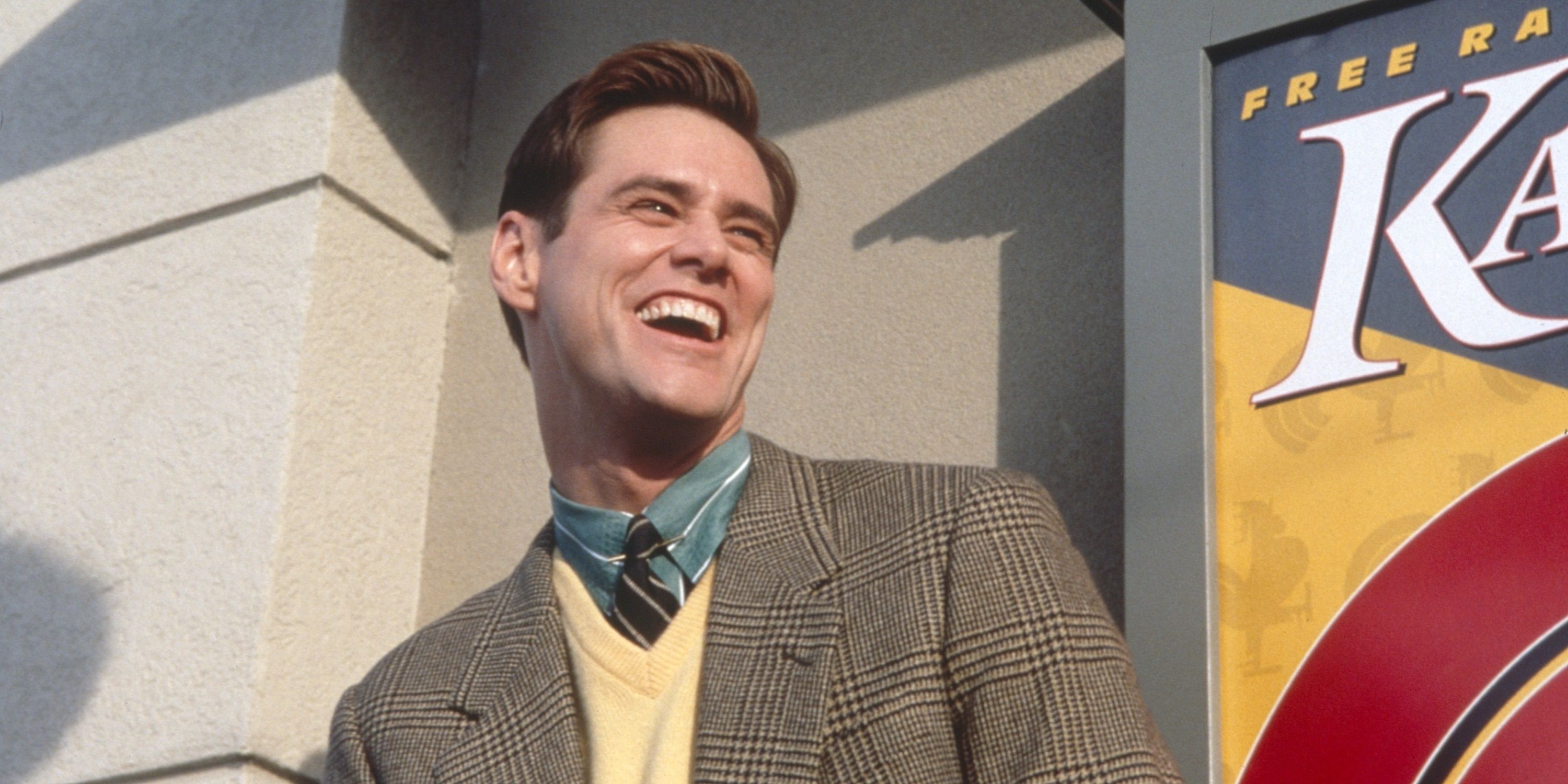
The Truman Show Was Both Bleak And Triumphant
The film concludes in the only way it realistically could – and the only way that truly feels impactful. Truman Burbank sails to the boundary of his world, his boat breaking through the artificial sky of the dome that has always held him captive. He discovers the exit, acknowledges the audience who have watched his entire life, and steps through the door to freedom.
The film’s brilliance lies in what happens right after Truman escapes. Just as viewers had watched his entire life, they quickly changed the channel, mirroring how the world moved on, and making his moment of freedom incredibly brief. Jim Carrey delivered a surprisingly serious performance, giving Truman a sense of dignity in the end that the film had previously stripped away from him.
Children of Men Shows A Heartwrenching Contrast In The End
Alfonso Cuarón’s film, Children of Men, doesn’t offer a neat ending; instead, it concludes with the hopeful sound of children’s voices. Theo, played by Clive Owen, successfully gets Kee and her newborn baby – the first birth in nearly two decades – onto a boat. He’s fatally wounded in the process, bleeding as the boat heads towards the ship that represents humanity’s last hope.
The only hint of hope in the film comes from the distant sound of children’s laughter, and director Cuarón deliberately waits over an hour and forty-nine minutes to reveal even this small moment. The ending makes clear that hope isn’t about triumph in such a damaged world – it’s frightening because it feels uncertain. The final shot lingers on water as archival recordings of children’s voices play during the credits, reminding us of a time when innocence still existed.
Inception Ends In Thoughtful Ambiguity
Christopher Nolan’s spinning top from the movie Inception has sparked countless debates – it’s become one of the most discussed images in modern film. The question of whether the top falls or continues spinning will likely remain unanswered, and that’s intentional. Nolan purposefully ended the film with that ambiguous shot, and it’s effective precisely because of its careful construction.
The movie reveals that Cobb’s spinning top isn’t a reliable way to tell what’s real. Instead, the film subtly shows us that his wedding ring is the true indicator – it’s always there when he’s awake and always missing when he’s dreaming. The ending doesn’t give us a definitive answer, but asks us to consider whether Cobb has simply stopped caring about distinguishing dreams from reality. Ultimately, the movie isn’t about the difference between the two, but about the point when someone chooses to stop questioning things.
The Thing’s Ending Leans Into The State Of Its World
The story concludes with bleak honesty, fitting for a tale about an alien that can perfectly imitate anyone. MacReady and Childs, the last two people left, are stranded in the destroyed Antarctic base, battling the cold and suspicion as they share a drink. They know one of them might be the creature, but it won’t matter soon – neither is likely to survive much longer.
Kurt Russell and Keith David both deliver incredibly subtle performances in the final scene, leaving the audience to wonder if their characters are simply worn out from surviving or if something else is going on. Director John Carpenter intentionally avoids giving any clues, and the film never provides a definitive answer—certainty is impossible in the world of The Thing. Ultimately, it’s a powerful exploration of paranoia, the difficulty of trusting others, and the boundaries of what we can truly know, making it unique within its genre.
Arrival’s Ending Is A Study In Grief and Acceptance
The film Arrival, directed by Denis Villeneuve and written by Eric Heisserer, is based on Ted Chiang’s short story “Story of Your Life.” The ending is particularly powerful because it reveals Louise Banks wasn’t simply recalling her daughter’s death—she was seeing it happen in the future. Through contact with alien life, she gained the ability to perceive time not as a linear progression, but all at once, much like the heptapods.
Louise is aware her daughter won’t live a long life, but she decides to have her anyway. The film’s ending is brilliant because it changes how you understand everything that came before. Actress Amy Adams portrays the final moments with heartfelt vulnerability, and the last shot of Louise making her choice is incredibly powerful and emotionally resonant – a truly moving scene for the science fiction genre.
2001: A Space Odyssey Is A Magnum Opus Till The End
The ending of Stanley Kubrick’s film is both stunning and difficult to put into words. We see Dave Bowman journey through a cosmic portal, rapidly experience his life from beginning to end within a single room, and ultimately transform into a new being – the Starchild – floating in space above Earth. The film offers no easy answers, because it’s spent its runtime showing us that human understanding simply isn’t equipped to grasp the larger processes at play.
The film’s conclusion is stunning – a beautiful and immersive experience through its visuals, music, and use of silence. It evokes a sense of mystery, representing everything beyond our understanding, which resonated deeply with audiences during the excitement surrounding the space race in 1968.
Blade Runner Had Layers In Its Shocking Conclusion
This speech is famous for being one of the most moving moments in science fiction films, and its impact comes from what’s happening around it. Batty, despite being incredibly powerful, chooses to save the man sent to destroy him, Deckard. In doing so, he makes a poignant statement about life, death, and who gets to decide how long someone lives.
Rutger Hauer made the iconic final line even more powerful by improvising and simplifying the original script. Director Ridley Scott filmed the scene at dawn in the rain, adding a beautiful touch with the release of a white dove as Batty dies – a poetic moment within the film’s gritty cyberpunk setting. The ending of Blade Runner also includes added scenes that leave viewers wondering if Deckard himself is human or a Replicant, enriching the complex world and its mysteries.
Planet of the Apes Explores the Present and the Future In Its Ending
The film Planet of the Apes, directed by Franklin J. Schaffner and written by Michael Wilson and Rod Serling (based on Pierre Boulle’s novel), features a shocking final scene considered one of the most impactful in science fiction history. Colonel Taylor, played by Charlton Heston, discovers he hasn’t been on another planet at all – he’s actually been on Earth the whole time, as revealed by the crumbling remains of the Statue of Liberty on a beach.
It turned out he had been at home all along, while the rest of the world had ended. The scene wasn’t just visually impressive; it was how Taylor reacted to the truth that made it powerful. He collapsed, horrified by what his species had done, and the ending became a profound warning about the future—and a truly shocking twist in film history.
2026-07-24 00:11