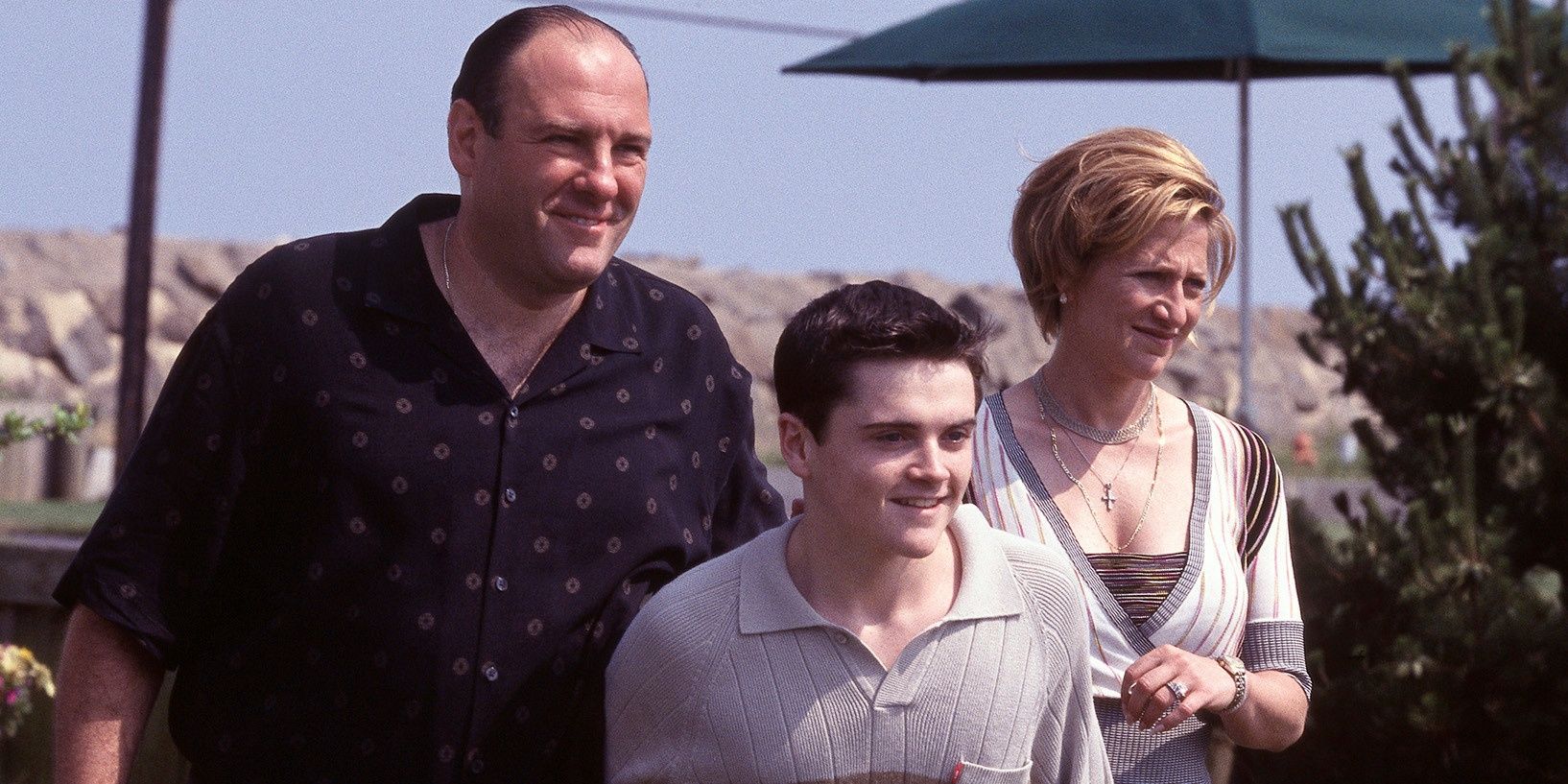
HBO’s series features deeply flawed criminals and the people caught in their worlds, all struggling with past trauma and complicated reasons for their actions. The show delves into complex psychological and philosophical themes, but despite being captivating and sometimes funny, the characters aren’t good people – and it’s hard to actually like them. Tony Soprano and those around him are, for the most part, morally questionable individuals.
It’s strange, but one of the most disliked characters on a show filled with criminals is Tony Soprano’s son, A.J. We see him as a boy and then watch him grow into a troubled young man over six seasons. By the end of the series, A.J. isn’t exactly likable – he’s often selfish, lazy, and not very bright, mirroring some of his father’s flaws. However, the amount of negativity directed at him still feels unfair.
A.J. Soprano Was Shaped by His Environment
A.J. Soprano ended up leading a flawed life, but considering his upbringing, it’s hard to see how he could have turned out differently. He was always around people involved in crime and never had good examples to follow, even if he didn’t fully realize it at the time.
Even when Tony tried to be present, he was often emotionally distant, prioritizing his business and the perks it offered. When he was around, he was prone to explosive outbursts, yelling and damaging property. As a result, A.J. grew up believing that anger and aggression were defining characteristics of manhood.
As A.J. got older, he began to understand what his father did for a living. Despite Tony’s claims that he shielded his children from his criminal activities, A.J. couldn’t help but notice the wrongdoing around him. He realized his father didn’t respect the law and didn’t care about the consequences of his actions. While his parents talked about values like respect and hard work, their own behavior showed something very different.
A.J. had a privileged upbringing and was essentially spoiled, which taught him to be selfish and prioritize getting what he wanted. To make matters worse, he lacked consistent guidance and discipline as a child. Although he projects an image of toughness and claims he wants to be a firm father, Tony doesn’t consistently enforce rules or follow through with consequences for A.J.’s behavior.
Tony would occasionally get upset and try to be strict for a short time, but he’d quickly lose focus and forget about it. He also never really enforced any meaningful consequences for A.J. A.J. always had money and freedom, allowing him to do whatever he wanted.
Honestly, Carmela wasn’t much better when it came to A.J. getting into trouble. I remember when he came home with a ripped shirt after a fight, and her first reaction wasn’t about whether he was okay or why he was fighting – she wanted to know how he was going to pay her back for the damage! It was always like that with her. She’d worry about how A.J. was turning out later on, but her solution was always just throwing money at whatever problem came up. She never really tried to fix anything, just cover it up.
A.J. spends his days relaxing and his nights out, but his mother continues to give him money, even funding a suit for job interviews. When he mentions joining the military, she uses her connections to get him a car and a job in the movies. Gradually, A.J. realizes – perhaps without even realizing it – that if he bothers his mother, he often ends up benefiting from it.
Tony and Carmela Soprano Discouraged Their Son’s Best Qualities
Not only did Tony and Carmela unintentionally highlight A.J.’s flaws, but they also frequently undermined his strengths. They consistently criticized him, yet treated their son with the opposite approach.
Although his parents often criticized his schoolwork, they dismissed his genuine interest in learning. Despite struggling academically, A.J. is frequently shown reading classic books throughout the show. For example, in Season 2 he reads Albert Camus’ The Stranger, and in the Season 4 episode “Christopher,” he’s reading Howard Zinn’s A People’s History of the United States.
Tony became upset when exploring philosophy challenged his beliefs and purpose in life, and Carmela accused him of abandoning their family’s Catholic traditions. Later, when their son A.J. started learning about history and questioned the ethics of colonialism, Tony flew into a rage, defending Christopher Columbus. Carmela, however, wasn’t interested in discussing it at all.
A.J.’s parents inadvertently discouraged his softer qualities. While his father, Tony, sometimes said it was good A.J. was “a nice guy,” his actions consistently showed that he believed kindness was a sign of weakness, and that true strength meant being tough and emotionless.
After A.J.’s breakup with Blanca, he became depressed. Tony attempted to cheer him up by encouraging him to go to strip clubs and spend time with college students involved in illegal gambling and violence. While Carmela expressed some disapproval of this approach, she didn’t suggest anything else or offer A.J. any emotional support during his difficult time.
Growing up, A.J. was taught to hide his emotions, not think independently, and numb his pain with substance abuse and reckless actions. As a result, he became a lost adult who didn’t prioritize others. His potential strengths were stifled, while his flaws became ways to get through life.
Fans might feel more sympathetic towards A.J., which could soften their dislike of his character. A.J.’s story isn’t just a side plot; it’s central to the show’s main ideas. His upbringing, his personality, and his relationship with Tony all highlight the show’s focus on how past trauma affects future generations. Ultimately, A.J.’s life is a product of this inherited trauma.
A.J. Soprano Reflects the Primary Theme of the Series
Ultimately, The Sopranos delved into the human mind and how past experiences affect us. The show, particularly through Tony’s therapy sessions, revealed that his upbringing and childhood traumas deeply influenced who he became, leaving lasting emotional wounds.
Tony was pulled into the mafia by his father, and this deeply affected his life. He battled depression as an adult, stemming from a difficult childhood. While he appears to gain some understanding of these issues by the series’ end, he still feels intense anger towards his parents. Unfortunately, he repeats the cycle, passing his own trauma onto his children.
Tony wasn’t the only one affected by this pattern. Right from the start of The Sopranos, A.J.’s grandmother, Livia, almost skipped his birthday party. Later, she told him life had no purpose, and those words stayed with A.J. for years – he even remembered them in the show’s final season. Sadly, this cycle of pain continued with future generations.
Tony’s difficult upbringing, marked by a violent father and an emotionally troubled mother, seemed to repeat itself in his own family. He passed on harmful ideas about what it means to be a man to his son, A.J., and created an emotionally unsafe home environment for his children, much like the one he experienced as a child. Though he didn’t make all the same mistakes his parents did, he unfortunately passed on many of their negative traits.
Although A.J. doesn’t repeat his father’s mistakes, he still struggles with deep unhappiness and carries on a pattern of pain from his family’s past. This history makes the negativity he receives seem unfair.
A.J. isn’t a particularly pleasant character, but his flaws are a result of his upbringing, and we should try to understand him. He’s actually a victim within the story of The Sopranos, and represents the show’s central theme. Because of this, fans should pay closer attention to his character.
Found an error? Send it so it can be corrected.
2026-04-15 23:40