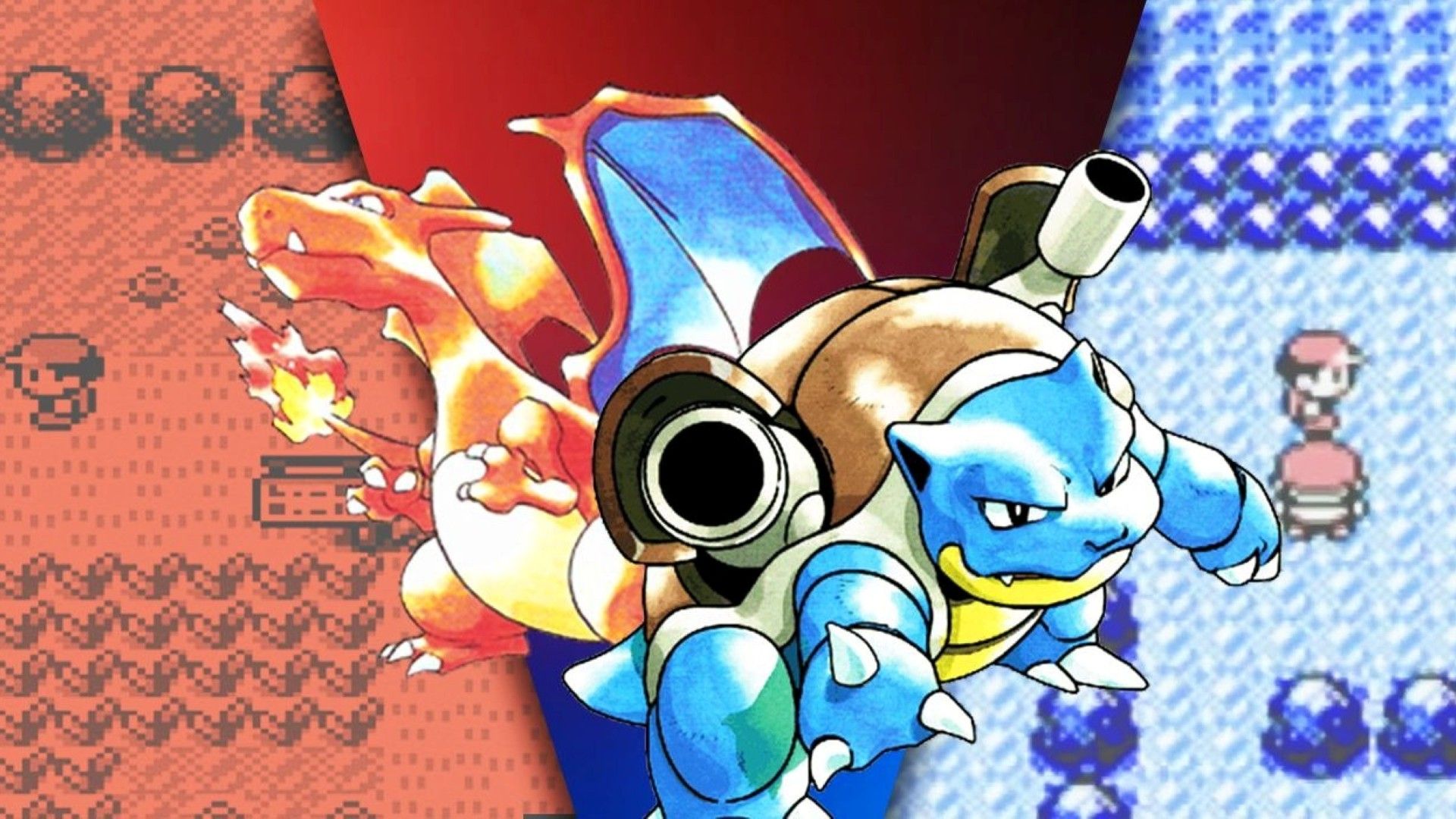
In the late 1990s and early 2000s, demand for Pokémon products was incredibly high. The original Pokémon Red and Blue games were huge hits, followed by the improved Pokémon Yellow Version: Special Pikachu Edition. Pokémon trading cards were constantly sold out, and the excitement surrounding them even caused disruptions in schools. The Pokémon animated series quickly became the most popular show for kids. This intense popularity, dubbed “Pokémon Mania,” seemed unstoppable.
The series initially gained popularity in Japan, and Nintendo hoped for similar success in America, though they likely didn’t anticipate such a massive cultural impact. To build on this success, they created spin-off games. One early spin-off, surprisingly, demonstrated that Pokémon wasn’t guaranteed to succeed with everything it tried, but it ultimately became very influential for future games.
Japan’s Original Pokémon Stadium Was a Dud
Pokémon Red and Green were very popular in Japan, even though they were made for the older Game Boy system. Just a few months after these games came out in February 1996, Nintendo launched the Nintendo 64, a much more powerful console that allowed for 3D graphics. Because Pokémon was so successful, Nintendo naturally wanted to bring it to the new system, and they did with the release of Pokémon Stadium in August.
For fans of Pokémon, the game initially looked fantastic. The biggest draw was finally being able to battle Pokémon in full 3D, a major improvement over the older 2D graphics on small, dimly lit screens. Players could even use their Pokémon from the original Red and Green games by connecting their Game Boy with the N64 Transfer Pak. While you could compete against friends, the game also offered plenty of computer-controlled trainers to battle in either free-for-all or tournament styles. It even let you play your Red or Green game on the TV, essentially offering a modern, Pokémon-focused experience similar to the Super Game Boy on the Super Nintendo.
Initially, the game seems promising, but it quickly becomes clear that it’s a limited experience. Players can only battle with about 25% of the 151 Pokémon that were available at the time. While 3D models of all the Pokémon exist within the game, you can’t actually use them all in battles. There were plans to add more Pokémon through an add-on device, but it was repeatedly delayed and ultimately canceled. Many game features also required a connection to an older Game Boy cartridge, making it feel more like an extension of those games rather than a complete game on its own. Due to these issues, the game was never released outside of Japan.
The Pokémon Stadium Sequel Was What the Original Should Have Been
The first Pokémon Stadium lacked depth, but Nintendo improved on it with Pokémon Stadium 2, released in Japan in 1999. While Gold and Silver weren’t available yet, Stadium 2 allowed players to battle with all 151 original Pokémon. A new feature, Gym Leader Castle, let players challenge the Gym Leaders from the Red and Green versions, as well as the Elite Four and Champion.
The game also received some visual polish, but the most significant update is the addition of nine new mini-games. “Clefairy Says” challenges players to memorize and repeat button combinations, “Rock Harden” requires precise timing to use the Harden move and dodge falling rocks, and “Sushi-Go-Round” focuses on quickly eating costly dishes to maximize a restaurant bill. All of these games are lighthearted and fast-paced, offering a fun diversion and a welcome break from the more strategic battles.
The first Stadium game felt incomplete and lacked detail. Stadium 2, however, was a major improvement, fixing the issues and delivering the experience players originally wanted. It was enjoyable even without needing the Red or Green versions of the game.
Stadium Hit North America at the Peak of Pokémon Mania
When Pokémon first came to America, it was a bit of a mystery which parts of the Japanese version we’d actually get. After Red and Blue came out, I remember reading a statement about Stadium and other games that hadn’t been released here yet. It basically said they didn’t have any plans to bring over more games unless Pokémon became as popular in the US as it was in Japan. It was exciting, but also a little nerve-wracking – we really hoped it would catch on!
The original Stadium game eventually came to the US, but its release history is a bit complicated. The first Stadium wasn’t released outside of Japan, but Stadium 2 was. However, when Stadium 2 was released internationally, it was simply called Pokémon Stadium – the “2” was dropped. Basically, the Japanese version of Pokémon Stadium 2 is the same game that players outside of Japan know as Pokémon Stadium.
The first release of the Stadium series had some issues in Japan, but Nintendo learned from those mistakes and delivered a much smoother experience in North America. They heavily promoted the game, even releasing a special edition Nintendo 64 bundle that included the console, two controllers, a Transfer Pak, and a copy of Pokémon Stadium, along with other extras. Nintendo also took the game on the road with the “Pokémon 2000 Stadium Tour,” letting people try it out at malls nationwide.
Stadium was released in March 2000 and quickly became a hit, selling a million copies in the US within a month. Over its lifetime, it sold more than 5 million copies, making it one of the most popular games for the Nintendo 64. It’s still the best-selling Pokémon spin-off game of all time.
The Impact of Stadium on the Pokémon Franchise Continues Today
Pokémon Stadium 2 (known as Pokémon Stadium G&S in Japan) launched in America after the release of the second generation games and included all 100 new Pokémon. Despite being almost 30 years old, both Pokémon Stadium games are now easily accessible, having been added to Nintendo Switch Online in 2023.
After the Nintendo 64, Nintendo continued to deliver engaging Pokémon games for home consoles with the GameCube. The first of these was Pokémon Colosseum, which, like the earlier Stadium games, featured 3D battles on the new console. However, Colosseum went much further, offering a complete RPG story and campaign to play through.
I always loved how Genius Sonority took a risk with Pokémon Colosseum. It was a really cool change of pace from the usual Pokémon games, going for a much darker story. They followed it up with Pokémon XD: Gale of Darkness, which is available on Nintendo Classics now – and thankfully, Colosseum is coming to the service soon too! It’s great news for fans like me.
After a mixed reception to Pokémon Battle Revolution on the Wii – which lacked a story mode compared to earlier console games like Colosseum and Gale of Darkness – the line between handheld and home console Pokémon games blurred with the release of the Nintendo Switch. This meant separate spin-off games for consoles were no longer needed. The Switch became the home for the core Pokémon RPGs, starting with the Let’s Go, Pikachu! and Let’s Go, Eevee! remakes in 2018. These were followed by Sword and Shield, Brilliant Diamond and Shining Pearl, Legends: Arceus, Scarlet and Violet, and most recently, Legends: Z-A.
The new Switch and Switch 2 (and upcoming mobile version) feel like a modern take on the original Stadium idea, and perhaps the closest we’ve seen in years. It demonstrates that the core concept of Stadium remains effective even now.
The game initially aimed to bring familiar characters to life with improved graphics. However, it quickly became clear that the Pokémon battles themselves were the most exciting part, and deserved to stand on their own. While there’s a lot to enjoy about Pokémon, at its heart, it’s the battling that truly shines.
Read More
- First Look at Bad Bunny’s Exclusive Zara x Benito Antonio Collection
- PUBG Mobile x Harley-Davidson Partnership to introduce new Motor Cruise event with rewards and Skins
- Total Football free codes and how to redeem them (March 2026)
- Farming Simulator 26 arrives May 19, 2026 with immersive farming and new challenges on mobile and Switch
- Honor of Kings x Attack on Titan Collab Skins: All Skins, Price, and Availability
- Honor of Kings April 2026 Free Skins Event: How to Get Legend and Rare Skins for Free
- Clash of Clans May 2026: List of Weekly Events, Challenges, and Rewards
- ALLfiring Companion Tier List
- Clash of Clans “Clash vs Skeleton” Event for May 2026: Details, How to Progress, Rewards and more
- Last Furry: Survival redeem codes and how to use them (April 2026)
2026-05-01 20:41