In the labyrinthine corridors of modern finance, where the clatter of coins and the whisper of ledgers echo through the halls of progress, SBI Remit and Tottori Bank have, with a flourish of quills and a sealing of wax, inaugurated their international money transfer services on the twentieth of April. This union, the twenty-sixth of its kind, extends what the zealous acolytes of XRP proclaim as Ripple’s ever-expanding dominion over Japan’s banking landscape. The partnership, like a meticulously crafted sonata, once again features Ripple’s distributed ledger technology as its leitmotif, though whether XRP itself shall dance in this ballet remains, for now, a matter of speculative choreography.
The Ripple narrative, ever the siren’s call to the XRP faithful, was amplified by the indefatigable Eri, who, with the fervor of a pamphleteer, proclaimed on the digital rostrum of X: “XRP Scoop: Tottori Bank & SBI Remit commence their international money transfer services on April 20. Behold, the twenty-sixth bank to join SBI Remit’s fold, where Ripple’s DLT is wielded with the precision of a surgeon’s scalpel for low-cost, round-the-clock remittances. In realms where XRP liquidity flows like a bountiful river, it may yet serve as a bridge-optional, yet tantalizing.”
XRP Scoop: Tottori Bank & @SBIRemit start international money transfer services, April 20. This marks the 26th Bank|FI SBI Remit partner, which actively uses @Ripple’s DLT for low-cost, 24/7 remittances. Where $XRP liquidity is ample, XRP can serve as an optional bridge.…
– Eri ~ Carpe Diem (@sentosumosaba) April 19, 2026
This framing, one might observe, stretches the canvas of SBI Remit’s own press release, which, while extolling Ripple’s technology with the reverence due a masterwork, stops short of declaring XRP’s role in this particular tableau. Yet, the company, in a gesture both pragmatic and poetic, affirms its commitment to the avant-garde of financial technology, Ripple’s distributed ledger among them, as it strives to offer remittances that are swift, secure, and economical.
In the practical realm, this alliance is directed at the burgeoning foreign workforce in Tottori Prefecture, a demographic whose financial needs are as diverse as they are pressing. SBI Remit, with the air of a benevolent patron, notes that both the number of foreign laborers and the enterprises employing them have ascended to unprecedented heights, rendering the need for reliable cross-border payments as urgent as it is inevitable. The market, it seems, demands not merely speed and convenience, but the perpetual availability of services-a digital agora that never sleeps.
“Foreign customers,” SBI Remit intones, “now require services that are as swift as the wind, as affordable as a loaf of bread, and as constant as the stars. They seek the ability to initiate transactions through apps, and to avail themselves of diversified receiving methods, such as the burgeoning e-wallets in their homelands.”
Meanwhile, the regional financial institutions, once the staid custodians of local commerce, find themselves besieged by requests from companies to open salary deposit accounts for their foreign employees. And with these accounts come new burdens-the tracking of residence permit expirations, the management of return information-tasks as tedious as they are necessary.
It is within this context that Ripple-linked infrastructure continues to proliferate through SBI-affiliated channels in Japan. The allure, one suspects, lies not in the mystique of cryptocurrency, but in the promise of unclogging the arteries of remittance and compliance, offering banks and their patrons a respite from the labyrinthine complexities of cross-border finance. SBI Remit, ever the innovator, now presents an integrated service that marries “remittances to hometown” with “salary deposit accounts” for foreign residents, all under the aegis of multilingual support in twelve tongues.
Eri, ever the astute observer, posits that the Tottori deal is but a single brushstroke in a larger mural-a regional-bank strategy within Japan. “No doubt,” she writes, with the confidence of one who has gazed long into the oracle’s mirror, “Japan’s 200+ banks, a tapestry of foreign institutions, trusts, and regional tiers, are dominated by the three mega banks and Japan Post. Yet, Mr. Kitao has set his sights on bringing the regional banks into the fold. And mark my words, you shall see this technology expand into South Korea, borne aloft by SBI’s initiatives.”
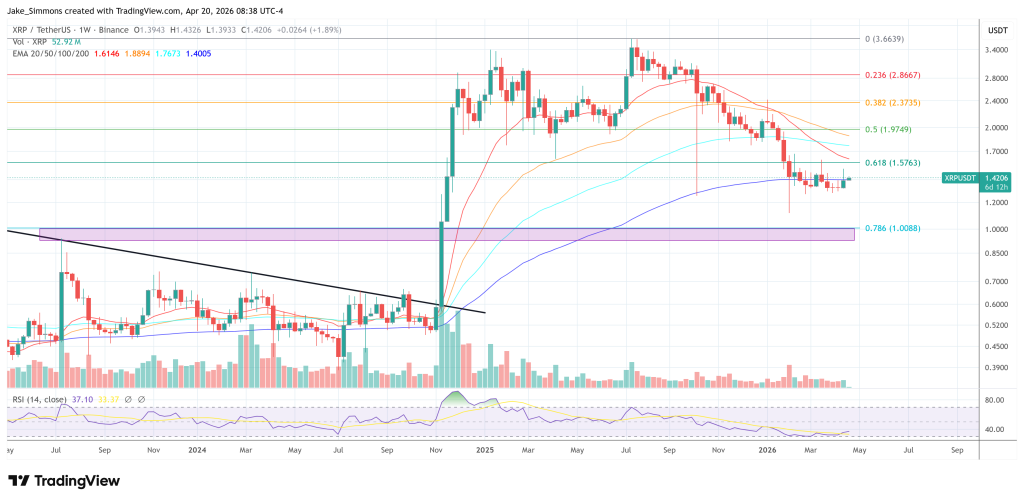
At the time of this chronicle, XRP traded at $1.42, a figure as fleeting as it is significant, a mere footnote in the grand narrative of financial evolution.
Read More
- Gold Rate Forecast
- These Cartoon Reboots Totally Missed the Point of the Originals (& Went Downhill Fast)
- Total Football free codes and how to redeem them (March 2026)
- Top 5 Best New Mobile Games to play in May 2026
- Netflix’s Best Stranger Things Replacement Officially Takes America By Storm
- Zenless Zone Zero version 2.8 ‘New: Eridan Sunset’ update will release on May 6, 2026
- 6 Animated Movie Trilogies Where Every Entry Is Near-Perfect
- Maggie Smith’s sons “deeply touched” by huge honour to the late “national treasure”
- Clash Royale May 2026 Update to bring Collection Levels, Mastery rework, and progression overhaul
- eFootball 2026 brings 9th Anniversary Campaign with Show Time Selection Contract, a new Show Time skill, Starter Set packs, and more
2026-04-21 04:56