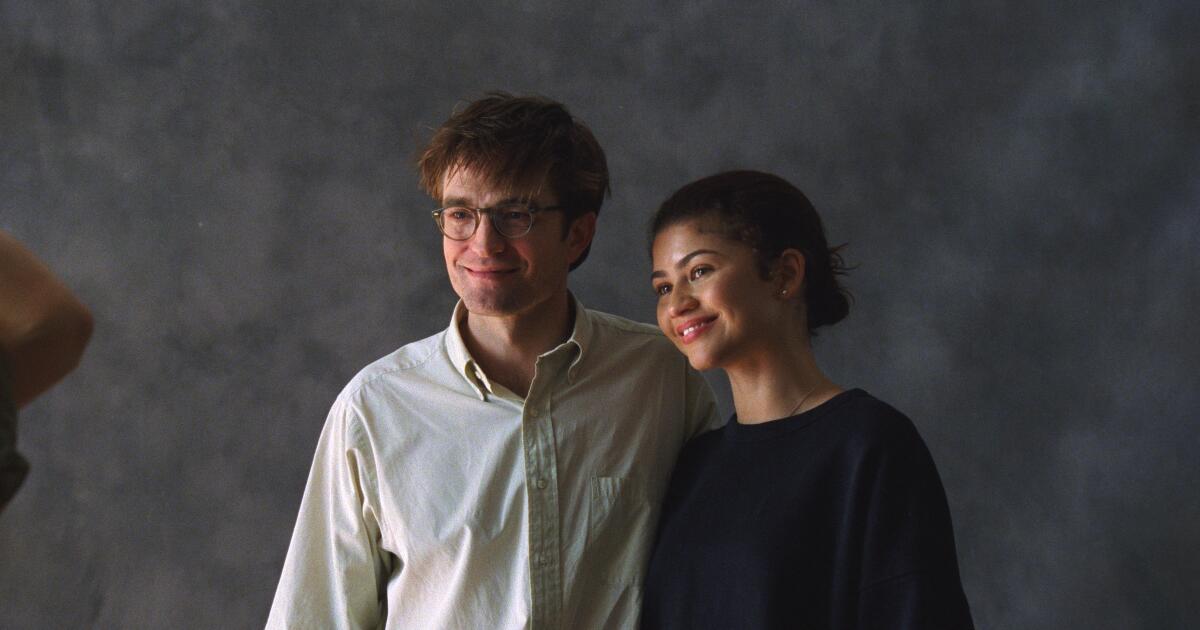
Filmmaker Kristoffer Borgli playfully explores our deepest anxieties, ultimately aiming to help us be kinder to ourselves.
Kristoffer Borgli’s new film, “The Drama,” follows engaged couple Emma and Charlie (Zendaya and Robert Pattinson) as their lives unravel after a seemingly harmless game. Similar to Borgli’s American debut, “Dream Scenario,” which explored the downsides of sudden fame for Nicolas Cage’s character, “The Drama” focuses on public humiliation. The film kicks off when their friends, Rachel and Mike (Alana Haim and Mamoudou Athie), insist they each reveal their most shameful act. A particularly tense and chaotic scene involves a drunken confession, expertly fueled by Alana Haim’s character, leading to an emotional outburst of tears and vomiting.
Emma’s confession about what she almost did is so shocking and unusual—it involves a rather aggressive, modern act—that I won’t go into detail. Surprisingly, the filmmaker, Borgli, doesn’t seem particularly focused on this sensational element. He uses shock value simply to get a reaction, much like a child carelessly disrupting something small. He probably wouldn’t mind if his lack of concern offended viewers. While I found the film coolly amusing, I appreciate what he was trying to achieve.
The story centers on the consequences of past actions. Pattinson’s character is worried his fiancé is unstable, constantly looking back at her history for warning signs. The bride, however, insists she’s changed since her troubled teenage years and feels helpless to prove it. While the film tries to show her difficult past, it struggles to overcome Zendaya’s naturally charming presence. Audiences quickly become frustrated with anyone who mistreats her. When she explains she was a social outcast in high school, her friends don’t believe her, and the scene quickly moves on, as if avoiding the topic.

Movies
The 27 best movie theaters in Los Angeles
We’ve created a guide to 27 fantastic movie theaters in Los Angeles, including iconic spots like the TCL Chinese and New Beverly, popular chains like Alamo Drafthouse, and the best AMC locations, such as the one in Burbank.
The film is deeply affected by memories of Emma, a young and fragile character brought to life by Jordyn Curet’s powerful performance. Through flashbacks and hallucinations, we see Pattinson’s character, Charlie, envisioning himself with Curet in their wedding photos. This single, striking image, captured by cinematographer Arseni Khachaturan, beautifully illustrates how marriage requires accepting and committing to a person completely – flaws and all.
Does it really matter if Emma and Charlie get married? We don’t know them well enough to form an opinion. A different filmmaker might have created a deeply personal and emotionally powerful story. However, Borgli presents their potential marriage as a detached problem: what happens after someone is publicly shamed, both to the person who did wrong and those who exposed them? That’s a crucial, unanswered question of our time. So, while the characters feel underdeveloped – almost like figures in a simple calculation – I can understand the filmmaker’s focus on this broader issue.
As Emma and Charlie’s wedding planning spirals out of control, others get caught up in the chaos. This includes a hilarious performance by Hailey Benton Gates, who plays those overly enthusiastic wedding vendors you really don’t need. Emma and Charlie feel overwhelmed by the whole wedding industry – the pushy florists, photographers, and dance instructors who act like their part of the event is the most important. I especially loved Jeremy Levick’s portrayal of the DJ, who rudely interrupts everything while complaining about his equipment. Surprisingly, his silly comments were funnier than a professional comedian’s routine.
Charlie seems to work as an art curator – the apartment is decorated like a miniature museum – and Emma has an office job. However, the real draw of the story is the connection between Robert Pattinson and Zendaya. Their chemistry is more compelling than the characters they play. They’re both strong and resilient, and they clash in a way that feels balanced and doesn’t force you to take sides.
Pattinson often shines when playing vulnerable characters who are overwhelmed by strong, complex women – as seen in last year’s “Die My Love” with Jennifer Lawrence. It’s also remarkable how naturally both he and his co-stars can portray awkwardness, despite being constantly in the public eye and photographed.
The editing is incredibly effective, almost like another main character. It jumps between time periods and then focuses on small, impactful moments. For example, when a character’s shirt tears during a workplace affair, the scene doesn’t immediately cut away. Instead, it shows them picking up the broken buttons, making you really feel their embarrassment and discomfort as they try to continue with their day.
Similar to Mike White, Borgli focuses on everyday people instead of celebrities, exploring the common fear that we all have secrets we’d prefer to keep hidden. In his work, people’s mistakes are revealed by chance encounters – a casual meeting on the street, a slip of the tongue from a partner, or a night of overindulgence. This feels like a cruel twist of fate, suggesting that anyone who feels morally righteous is simply waiting for their own flaws to be exposed. Interestingly, he also suggests that peer pressure isn’t always negative, a somewhat uncommon viewpoint.
Charlie makes such a mess of their first meeting that you’d think the story would declare their relationship hopeless. Surprisingly, it takes a more sensible route: Emma simply forgives him and moves forward. This is the film’s central message, presented casually. I appreciate the filmmaker because he avoids the cliché of believing everyone is inherently good. He suggests we all have flaws, but are still capable of kindness and forgiveness—a message that would be even more impactful if the film had fully explored the seriousness of Emma’s initial reaction.
The film’s ending is a bit unsatisfying. The director seems to intentionally hold back from delivering a truly emotional release. It feels awkward, and the movie would have been more impactful if we’d had a stronger connection to the characters Emma and Charlie – if we’d really been invested in whether they succeeded or failed. Ultimately, “The Drama” leaves things open-ended, trusting the audience to interpret its themes. I enjoyed the film’s energy and wit, so I’m choosing to focus on the positive, but it doesn’t fully deliver on its potential.
Read More
- ‘Project Hail Mary’s Unexpected Post-Credits Scene Is Worth Sticking Around
- Beyond Accuracy: Gauging Trust in Human-AI Teams
- Gold Rate Forecast
- Clash Royale Balance Changes March 2026 — All Buffs, Nerfs & Reworks
- The most surprising Hannah Montana cameos: From John Cena to Dwayne Johnson and even a Coronation Street soap star as show celebrates its 20th anniversary
- Genshin Impact Version 6.5 Leaks: List of Upcoming banners, Maps, Endgame updates and more
- eFootball 2026 is bringing the v5.3.1 update: What to expect and what’s coming
- Total Football free codes and how to redeem them (March 2026)
- Brawl Stars Brawl Cup Pro Pass arrives with the Dragon Crow skin and Chroma, unique cosmetics, and more rewards
- We talked to ‘Bachelorette’ Taylor Frankie Paul. Then reality hit pause on her TV career
2026-04-02 13:34