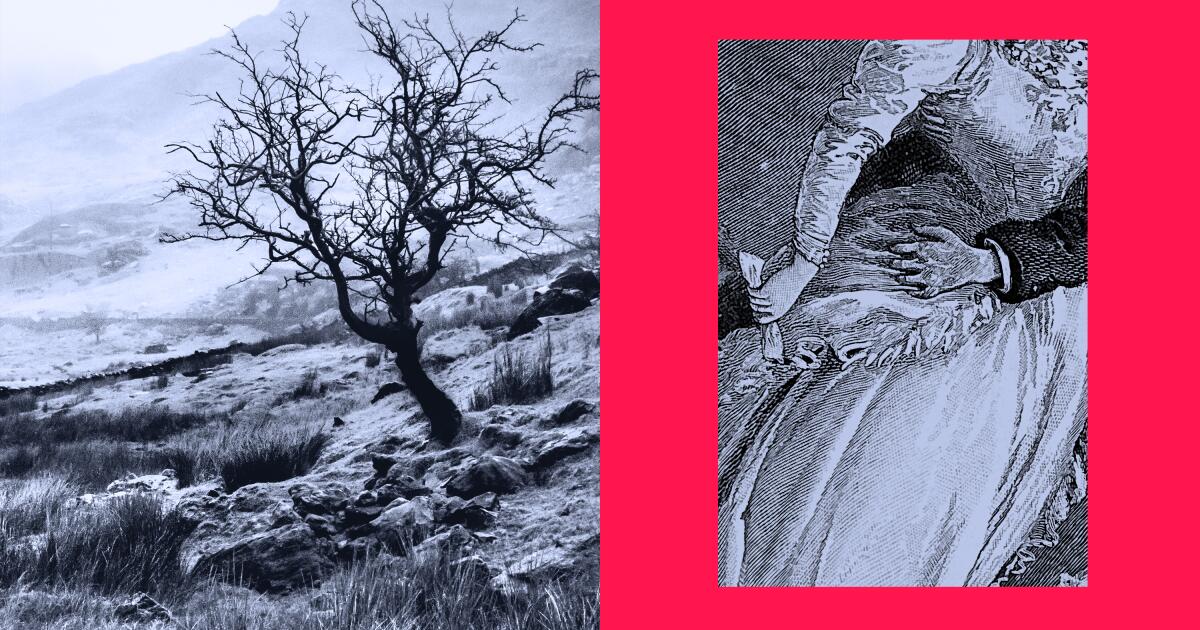
Just three weeks before Valentine’s Day, the popular Los Angeles bookstore Skylight Books had completely sold out of “Wuthering Heights.” At the same time, the Los Angeles Public Library had a waitlist of 146 people for the Penguin Classics version of the book.
The recent surge in popularity of Emily Brontë’s classic novel is likely due to the new film adaptation released on February 13th. It’s encouraging to see people turning back to reading, immersing themselves in the story of the Yorkshire moors and the lives of those who live there, instead of simply scrolling through screens.
The tragic love story of Catherine Earnshaw and Heathcliff is already well-known, and Emily Brontë’s exploration of themes like obsession, revenge, social status, and the supernatural continues to be studied today. While a high school student might focus on the writing style, someone who’s experienced the intensity of love and obsession firsthand might find a deeper connection to the novel, recognizing their own feelings reflected in its pages even after many years.
Movies
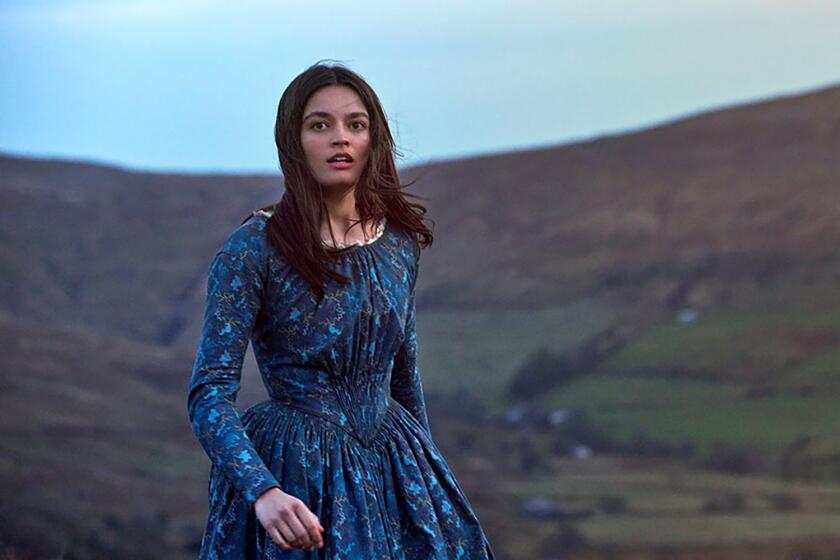
As a huge film fan, I found ‘Emily’ takes some liberties with the facts, but it works within the boundaries of what we actually know about Emily Brontë. And honestly, it’s great – it’s really got people talking about and revisiting ‘Wuthering Heights’ and the author herself, which is fantastic.
When Catherine says, “Whatever our souls are made of, his and mine are the same,” it’s a powerful statement that doesn’t need a movie to enhance it. It’s a line that stays with you, bringing people to mind and stirring your emotions.
Love is a powerful and often confusing emotion, and we often turn to books for insight. With “Wuthering Heights” remaining popular, six authors who have written about love share their personal connections to the novel and its enduring impact.
Allie Rowbottom, “Lovers XXX”

Tell me about your first experience reading “Wuthering Heights”:
My husband and I were both studying for our PhDs when we started preparing for the GRE. One of our study materials was “Wuthering Heights,” a book neither of us had read before. We turned it into a little book club, discussing it on weekends and even watching movie adaptations together. It’s a fond memory, even though the GRE was incredibly challenging – and they never even tested us on that book!
What do you find to be the most significant impact of “Wuthering Heights” on romance novels?
I’ve noticed a troubling trend in both culture and publishing: a preference for simple, straightforward opinions. This seems to be driven by the sheer amount of information we face daily. We’ve become accustomed to quick, satisfying experiences – like the dopamine rush from our phones – and now seek that same instant gratification in books. The romance novel “Wuthering Heights” stands out as something different; it’s complex and doesn’t offer that easy satisfaction.
Why do you think obsessive love still resonates with readers?
Obsessive love doesn’t often last, but it’s something many people go through.
Melissa Broder, “Death Valley”

Tell me about your first experience reading “Wuthering Heights”:
I first wrote this piece when I was in eighth grade, feeling stressed about a deadline. I’ve looked it over twice since then – once when I was in my twenties, and again while I was developing the themes of desire in my novel, “Milk Fed.”
What do you find to be the most significant impact of “Wuthering Heights” on romance novels?
I have to admit, I’m really drawn to Heathcliff – the way he’s an outsider, a bit of a rebel, just does it for me. Compared to Catherine, who always seemed to fit into what everyone expected, it’s a striking difference. And the way her heartbreak actually affected her physically? It’s such a strong and moving image the author created, it really stuck with me.
Why do you think obsessive love still resonates with readers?
Everyone reads differently, but we all share basic emotions. These feelings seem to connect us across time and cultures. There’s a deep-rooted part of the human mind that finds the idea of romantic fantasy particularly captivating.
Upasna Barath, “Comedic Timing”

Tell me about your first experience reading “Wuthering Heights”:
In my AP Literature class, I really got into reading. I used sticky notes and a pen to mark up the books as I went, and those notes actually helped me develop the main idea for my final paper. Eventually, it felt like more than just homework; I realized this book was truly shaping me as a writer, even though I hadn’t fully accepted that I wanted to be a professional.
What do you find to be the most significant impact of “Wuthering Heights” on romance novels?
This book is responsible for popularizing many common romance themes, like forbidden love and the journey from friendship to romance. It shaped how we understand love, demonstrating that it often exists in complex shades of gray – flawed, yet beautiful.
Why do you think obsessive love still resonates with readers?
Obsessive love isn’t healthy or reliable because it’s endless. It’s a constantly repeating pattern, a love that always wants more.
Erin La Rosa, “Not You Again”

Tell me about your first experience reading “Wuthering Heights”:
I first read “Wuthering Heights” at a young age, and I think that’s the perfect time to discover it. I vividly remember being captivated by the two deeply flawed main characters. I didn’t fully understand the book then, but it definitely made an impact – it left me feeling shaken and wondering what I had just experienced.
What do you find to be the most significant impact of “Wuthering Heights” on romance novels?
Many contemporary romance novels are dismissed as light and unserious, but authors like Abby Jimenez, Lauren Kung Jessen, and especially Rachel Reid with her popular book “Heated Rivalry,” actually deliver deeply emotional and passionate love stories. Readers continue to be drawn to the intense, all-consuming love found in classics like “Wuthering Heights.”
Why do you think obsessive love still resonates with readers?
The love between Heathcliff and Catherine is intensely disturbing, but I admit there’s a small part of me that finds it strangely appealing to imagine someone loving me so deeply they’d even want to be with my remains. It’s a bit of a dark fantasy, really – and that’s what it is, just a fantasy – to have someone utterly devoted to you.

Books
With romance novels consistently topping bestseller charts, a unique environment is blossoming at Black Cat Fables. It’s a place where steamy stories meet personal growth, helping to openly discuss and challenge traditional ideas about sex.
Sophia Benoit, “The Very Definition of Love”

Tell me about your first experience reading “Wuthering Heights”:
I didn’t like it at all when I first encountered it, both in high school and later on. I initially thought it was a disaster! But then my AP Literature teacher, Ms. Barker, helped me understand what Emily Brontë was aiming for: a commentary on classic gothic novels, tragic love stories, and issues of social class and race.
What do you find to be the most significant impact of “Wuthering Heights” on romance novels?
The intense emotions of Heathcliff and Cathy drive the story, and Brontë expertly builds tension through their passionate, yet flawed, relationship. Their individual weaknesses and desires create compelling characters. Heathcliff is often seen as an archetype of the brooding “bad boy,” though he’s a bit extreme for my taste. Ultimately, I believe modern romance could benefit from heroes and heroines who are less perfect and more realistically flawed.
Why do you think obsessive love still resonates with readers?
There’s something deeply satisfying about seeing this unfold – particularly when it’s so grand and emotional – and revisiting your own past experiences, even if they don’t directly compare. It’s almost enjoyable to confront difficult memories; there’s a strange comfort in acknowledging the pain.
Maurene Goo, “One & Only”

Tell me about your first experience reading “Wuthering Heights”:
I discovered Austen and the Brontës in high school, just for pleasure, and became completely absorbed in their novels. I was surprised by how different they felt from anything else I’d read. It seemed strangely dark and a little forbidden, even though I knew it was classic literature. Honestly, I didn’t fully grasp what I was reading at the time – I probably initially saw it as simply romantic and dramatic, much like my teenage crushes. It wasn’t until later that I understood the true impact of books like “Wuthering Heights” and how revolutionary they were for Victorian-era literature.
What do you find to be the most significant impact of “Wuthering Heights” on romance novels?
I believe Brontë essentially invented a character type we still see today – the intense, self-reliant, and often controlling man, like the love interest in so many CEO romances. But beyond that, “Wuthering Heights” also paved the way for more unconventional and passionate romances, allowing stories to explore the intense, almost primal feelings of first love.
Benson is an L.A. culture writer with a romance emphasis.
Read More
- The Division Resurgence Best Weapon Guide: Tier List, Gear Breakdown, and Farming Guide
- Kagurabachi Chapter 118 Release Date, Time & Where to Read Manga
- Last Furry: Survival redeem codes and how to use them (April 2026)
- Clash of Clans Sound of Clash Event for April 2026: Details, How to Progress, Rewards and more
- Annulus redeem codes and how to use them (April 2026)
- Gold Rate Forecast
- Silver Rate Forecast
- Gear Defenders redeem codes and how to use them (April 2026)
- All Mobile Games (Android and iOS) releasing in April 2026
- Top 5 Best New Mobile Games to play in April 2026
2026-02-10 14:05