
At 75, Tony Banks, the keyboardist for the legendary band Genesis, could be enjoying the lasting success of their work from the 1970s and 80s. During that time, Genesis redefined British progressive rock and sold over 100 million albums.
You’d expect someone like Banks, a veteran of the progressive rock scene, to be working on a new solo album, maybe with a tour to follow, and potentially featuring some old friends from his previous bands.
Despite his successful career, the man on the Zoom call didn’t seem entirely confident about continuing to create music. While discussing the re-release of Genesis’s acclaimed album “The Lamb Lies Down on Broadway,” he often sounded wistful and a little sad, much like the gentle, reflective piano melodies in songs like “Ripples” and “Carpet Crawlers.”
 ×
× He thinks he might have a few things that could work, but he’s hesitant. Getting everything set up again would be a lot of effort, and he’d rather be outside gardening when the weather is nice. He admits he’s not as young as he used to be, though he still has musical ideas. He doesn’t expect to collaborate with his former Genesis bandmates, Mike Rutherford or Phil Collins, anytime soon.
Genesis is best known for its captivating frontmen, Peter Gabriel and later Phil Collins. However, a little exploration of their 15 studio albums – recorded from 1969 to 1997 – reveals that keyboardist Tony Banks and guitarist-bassist Mike Rutherford were the primary architects of the band’s unique and impressive sound.
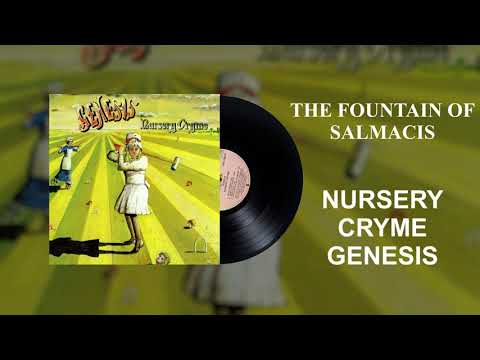
Genesis rose to prominence in the early 1970s alongside other groundbreaking bands like King Crimson, Pink Floyd, and Yes. Many consider them the most impressive of the group. Their 1971 album, “Nursery Cryme,” showcased a unique blend of dramatic classical influences and quirky folk-rock, all delivered with remarkable skill considering keyboardist Tony Banks was only 21. The album’s lyrics are poetic and explore themes ranging from social commentary to fantasy and the unsettling. It culminates in an eight-minute musical adaptation of the Greek myth of Salmacis and Hermaphroditus, filled with atmospheric sounds and emotional depth.
 ×
× Banks recalls a fortunate time for experimentation in music. While bands like King Crimson were already innovating, there was still plenty of room to explore new ideas. Back then, artists could take their time – telling a story over 10, 15, or even 25 minutes – and still hold an audience. He believes that level of patience wouldn’t exist today, and notes the common idea that a person’s most creative years tend to be before age 28.
Later Genesis albums seem to challenge that idea. After Peter Gabriel and Steve Hackett left the band in the 1980s, Tony Banks, Phil Collins, and Mike Rutherford continued as a three-piece group. They built their own studio, began writing music from the ground up, and generally focused on more concise songs. Live, they created an impressive sound by having Collins play drums alongside American drummer Chester Thompson during the long, complex instrumental sections that were a hallmark of progressive rock.
Tony Banks’ beautiful melodies and complex harmonies were essential to the band’s unique sound. His piano introduction to the 1973 song “Firth of Fifth,” influenced by Rachmaninoff, perfectly captured the spirit of Genesis and progressive rock as a whole – a genre that signaled a shift towards something more ambitious and emotional. He notes that many modern interpretations of the song online are too fast, losing the feeling of yearning and grandeur that defined the original (“a lot of people play it very well on YouTube, but they go too fast. If you play it fast it just sounds tricksy.”).
 ×
× Despite achieving mainstream success with popular songs like “Throwing It All Away” and “That’s All,” Banks didn’t simplify his music—he became more subtle. Their 1986 album, “Invisible Touch,” was a complex, progressive work disguised as a pop record. The album concluded with “The Brazilian,” an instrumental piece that hinted at experimental music through its repetitive, unusual melody, driven by energetic percussion and drumming. It was just as impressive as their earlier work from the 1970s.
He believes their most creative music wasn’t the songs released as singles, but the more experimental tracks. He deliberately steered clear of common chord progressions, finding them uninspired. He explains that much of today’s pop relies on the same few chords – C, A minor, F, and G – and he wanted to do something different. As a songwriter, he was always drawn to unusual and unconventional ideas.
Jack Hues, formerly of the band Wang Chung, says Tony Banks had a significant impact on him growing up. He recalls listening to the song ‘Watcher of the Skies’ every morning before school, playing it on his record player as a way to start his day. He described the opportunity to collaborate with Banks on his solo album, “Strictly Inc.,” as a wonderful experience.
Ray Wilson, the singer who joined Genesis for their final album, ‘Calling All Stations’ in 1997, felt closest to Tony Banks. He says he really trusted Tony, who he saw as the central figure holding the band together. Wilson describes Tony as strong-willed and opinionated, but ultimately a good person, and fondly remembers the special moments they shared onstage during Genesis tours.
 ×
× “Calling All Stations” marked the final studio album released by Genesis. Phil Collins rejoined the band for a successful 2007 tour, including memorable shows at the Hollywood Bowl, and later for a poignant farewell tour in 2021-2022 as his health declined. The band’s extended breaks between projects likely impacted Tony Banks’ self-assurance, which already seemed somewhat fragile.
Wilson remembers that Tony always had a small beer before each performance to settle his nerves. He insists it didn’t affect Tony’s incredible talent, but recalls a funny quirk: the intro to ‘The Lamb Lies Down on Broadway’ involved a tricky keyboard part. Tony would consistently mess it up, though occasionally he’d nail it. Wilson admits he’d always wonder if Tony would get it right during a show, and found it endearing and part of what made him so charming.
I’m not a technically skilled musician, to be honest,” Banks admits. “Because I always wrote music for my own enjoyment, I could simply skip over anything I couldn’t actually play. Someone like Rick Wakeman is far more technically gifted, but that’s never been my focus. I’ve always been more interested in what’s possible with the piano – how you use it and what sounds you create. Ultimately, I play what I enjoy.”
Collins and Rutherford used to tease Banks about his strong will. However, that same stubbornness likely helped him build a solo career known for its honesty and artistic quality – a career that, despite its merits, never quite got the recognition it deserved.
Collins first gained attention with his 1979 concept album, “A Curious Feeling.” Its moody, autumnal sound and detailed melodies were enhanced by a unique, somewhat muted production style. While the album did reasonably well, he didn’t achieve major success until a couple of years later with “In the Air Tonight.” Even after releasing four more albums, including “Strictly Inc.” – his final rock album released 30 years ago – widespread recognition remained out of reach.
 ×
× He confesses he doesn’t understand the purpose of releasing new music. His rock albums steadily sold fewer copies over time, and by the final album, ‘Strictly Inc.,’ he was left with all the unsold copies at his house. He acknowledges the project wasn’t successful, and you might even have a copy yourself, but it didn’t really take off.
According to Hues, Tony doesn’t waste time on people he considers unintelligent and avoids networking events focused on industry connections. While Tony wrote many of the songs that made Genesis successful, his own solo work isn’t considered very commercially viable. Phil and Mike’s music, however, more closely resembled the style of those Genesis hits.
 ×
× When asked about continuing a career similar to other progressive rock musicians – like his old bandmate Steve Hackett, who consistently releases new music and tours playing past hits – Banks didn’t seem very excited.
“It’s a much tougher world out there, and people just don’t care.
Peter and Phil can easily take on projects because they’re physically imposing and highly skilled. I, on the other hand, am a writer first and foremost. I didn’t aspire to be a performer; I only ended up playing music because no one else was willing to perform our songs.
Despite his other commitments, he hasn’t stopped being creative. Between 2004 and 2018, he released three albums of orchestral music that were well-received in England. He also continues to appreciate the positive response to Genesis’ final tour.
He was surprised to see continued interest in his work. He expected things to be difficult, but they managed to perform in large venues.
He pauses to reflect, then adds with a smile.
You know, I was really surprised by how long Genesis stayed popular! But that’s just how music is, isn’t it? It lives on, and people can discover it years later and actually enjoy it. It’s a really lovely feeling to know that something you created can still connect with people after all this time.
Read More
- The Division Resurgence Best Weapon Guide: Tier List, Gear Breakdown, and Farming Guide
- Kagurabachi Chapter 118 Release Date, Time & Where to Read Manga
- Last Furry: Survival redeem codes and how to use them (April 2026)
- Clash of Clans Sound of Clash Event for April 2026: Details, How to Progress, Rewards and more
- Annulus redeem codes and how to use them (April 2026)
- Gold Rate Forecast
- Silver Rate Forecast
- Gear Defenders redeem codes and how to use them (April 2026)
- All Mobile Games (Android and iOS) releasing in April 2026
- Top 5 Best New Mobile Games to play in April 2026
2026-02-10 14:02