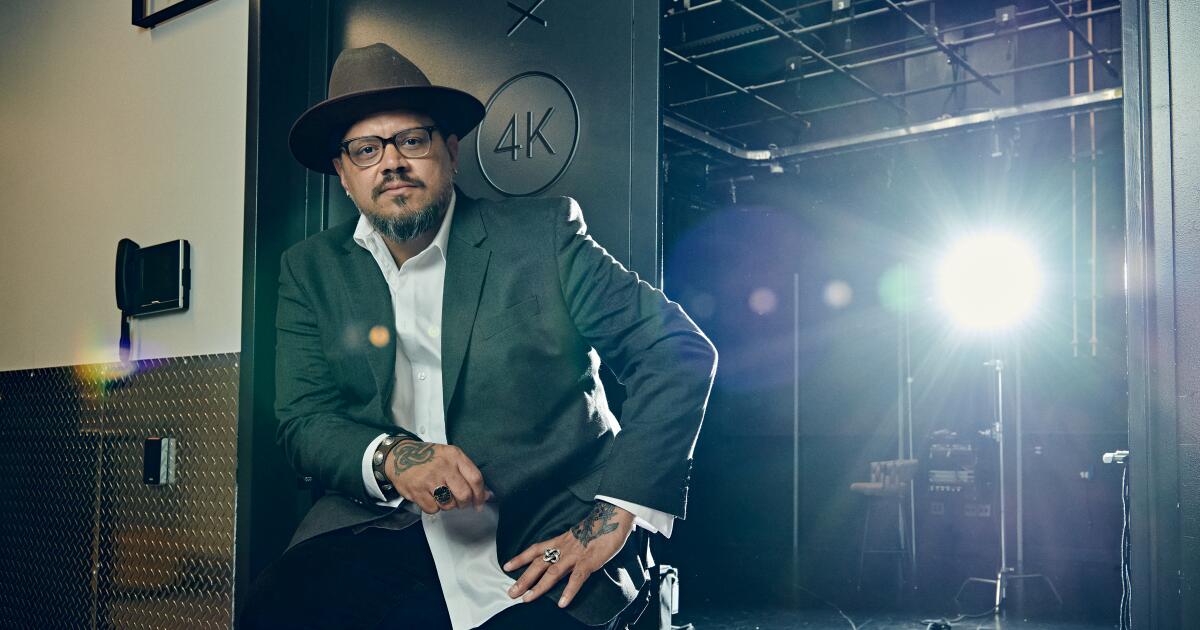
Sterlin Harjo mastered the skill of “the artful hang” through his collaboration in creating his debut TV series, “Reservation Dogs.” This FX drama centered around a gang of Native American teenagers residing in a fictional Oklahoma reservation, elevating their everyday lives into a form of high-quality art. It’s one of the top-tier television shows produced during the 2020s.
Currently, Harjo, aged 45, is delving into a new genre: crime. His upcoming series titled “The Lowdown,” set to debut on Sept 23 with two episodes on FX, portrays Lee Raybon (Ethan Hawke), who claims to be a truth-chronicler. This character embarks on an expedition to uncover hidden truths about Tulsa’s controversial past, while simultaneously exposing current corrupt practices. He is a disheveled individual who traverses the city in a shabby van and resides above a bookstore that he also owns. However, when his recent article for a local publication implicates a prominent Tulsa family, his investigation leads him down a perilous path from the city’s grimy underworld to its most influential governmental spheres.
Harjo, the producer, writer, and director of the new series, explains that “Rez Dogs” was his heartfelt tribute to rural Oklahoma, where he spent his childhood years. On the other hand, “The Lowdown” is his heartfelt ode to Tulsa, his current residence. He emphasizes that through this show, you can glimpse both the charm and the shadows, capturing everything in its entirety.
As a devoted fan, I’d describe this captivating eight-episode drama as my personal Oklahoma noir journey! Featuring local talents like Tim Blake Nelson, Jeanne Tripplehorn, Tracy Letts, and Keith David, it’s an authentic production that resonates deeply. The series also boasts appearances from actors hailing from the “Rez Dog” family, such as the mesmerizing Kaniehtiio Horn, known to many as the Deer Lady.
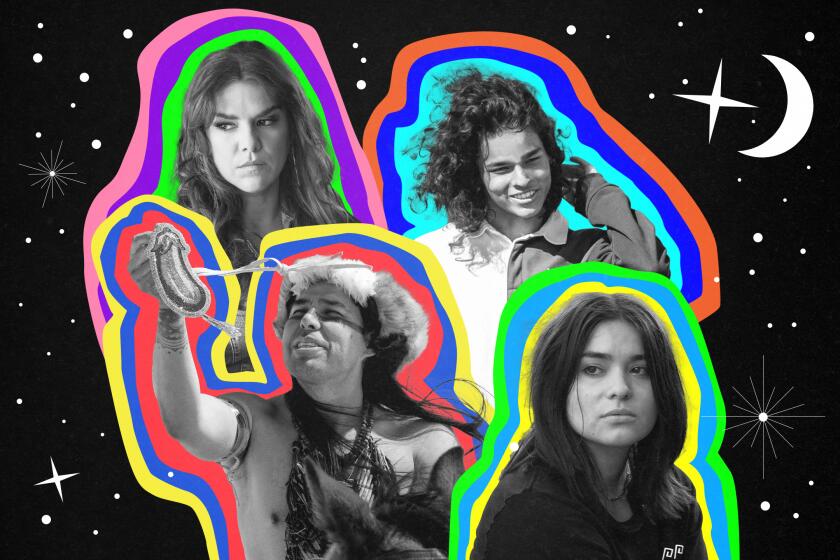
Commentary: Funny, sad, smart and human: ‘Reservation Dogs’ was an ode to individualism and communal life
In their reflections, Robert Lloyd and Lorraine Ali from the Los Angeles Times discuss the significance of the series “Reservation Dogs” and what made it so captivating as it concludes on Wednesday.
Harjo, a citizen of the Seminole Nation in Oklahoma and descendant of the Muscogee tribe, shared insights about his affinity for Oklahoma, the difficulties of succeeding a renowned series like “Reservation Dogs,” and how “The Lowdown” draws inspiration from his personal experiences collaborating with an underground journalist.
Was “The Lowdown” a challenge not to compare unfavorably with the outstanding success of “Rez Dogs” in all its four seasons, which received widespread critical praise?
In a different context, I’d express it as: Despite initial doubts and skepticism due to past experiences where my ideas were met with resistance, I decided to push forward anyway. Over time, my project found an appreciative audience. Initially, I had presented “Rez Dogs” multiple times but was often met with lukewarm responses since I was hesitant about potential rejection. However, with the support of my friend Taika Waititi and FX, they were intrigued by our unique storytelling approach, and they ultimately chose to bring it to life. While there have been numerous instances of rejections and raised eyebrows, they never outright refused.

In a simpler and more natural style, the question could be: “What inspired the creation of the character Lee Raybon in ‘The Lowdown’, portrayed by Hawke, who becomes so fixated on uncovering truths that he often overlooks other parts of his life?
Drawing inspiration from a remarkable individual I worked alongside named Lee Roy Chapman at This Land Press magazine, I found myself deeply entwined in crafting a fictional character who mirrored his unyielding commitment to unveiling truths. Riding shotgun with him, we embarked on an exciting journey, exploring and documenting the clandestine, untold narratives that lay hidden beneath Tulsa’s surface.
Our venture, “Tulsa Public Secrets,” was a daring, passionate endeavor, born from our shared desire to shed light on the truth and champion our community’s unique stories through documentaries. It represented a collective yearning for transparency in our city and served as a beacon of hope, helping us establish an identity and providing something tangible for both ourselves and Tulsa to hold onto.
“The Lowdown” unfolds at a really brisk pace, yet it also has the kick-back vibe of “Rez Dogs.”
In simpler terms, the “art of the hang” refers to movies or shows centered around people spending time together in a casual setting, like “Rez Dogs” or “Dazed and Confused.” Shows like these offer an authentic feel that makes it enjoyable to spend time with their characters. I believe “The Lowdown” strikes a nice balance between this casual atmosphere and an engaging storyline, allowing you to feel as if you’re simply hanging out with [Raybon] in his neighborhood. However, the unfolding narrative ensures that things remain interesting throughout.
Did the making of “The Lowdown” and “Rez Dogs” overlap?
Instead, the turning point came near the end of “Rez Dogs” where I rediscovered an old script from about a decade ago. Initially intended for a full-length feature film, I felt inspired to transform it into a one-hour crime series pilot, which eventually became known as “The Lowdown.
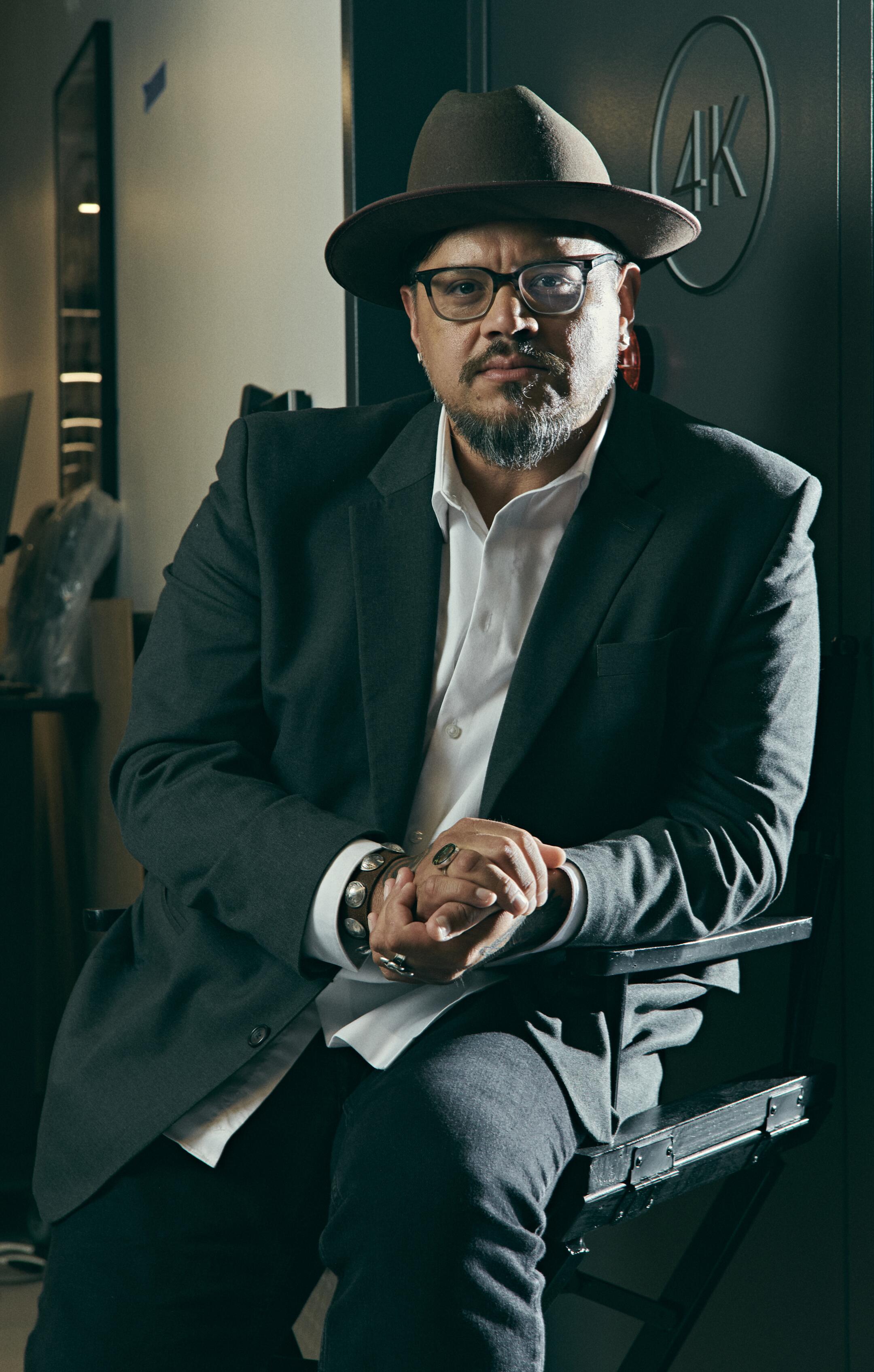
Ethan Hawke starred in the last season of “Rez Dogs.” Is that how you two connected?
As a passionate cinephile, I happened to cross paths with Ethan, a fellow storyteller, through our shared acquaintance. What drew us together was Ethan’s compelling graphic novel about the Apache Wars and Geronimo, a piece that had been previously rejected by Hollywood due to its unique perspective from the Native American side. Frustrated but determined, he transformed it into a graphic novel. Intrigued by this captivating tale, I proposed adapting it for television. We hit it off instantly, finding common ground in our shared vision. Our collaboration led to the birth of our friendship, and together we embarked on the creative journey. The result was “Rez Dogs”, a project Ethan greatly appreciated. He even mentioned that if I ever needed him for anything, he’d be there. Of course, I couldn’t resist the opportunity to collaborate further, so Ethan became Elora’s father in my subsequent works.
The production of ‘The Lowdown’ took place on-site in Tulsa. Notably, a significant portion of the crew from ‘Rez Dogs’ was retained for this project. Additionally, it is said that your own family participated, along with some former cast members from ‘Rez Dogs’.
In our current project, everyone, including myself and the team, have developed a strong sense of camaraderie, akin to being part of one large family. My brother is responsible for managing locations, while my children joined us on set. We’re filming on some of my personal property. My dad was brought on to prepare the land, and my mom is an extra in the movie. A few appearances from “Rez Dogs” are also included, and you’ll notice Willie Jack (Paulina Alexis) in the opening scenes. Graham Greene is featured in the film as well. However, I should be cautious about revealing too much detail just yet. Better not say too much… for now!
You started out as an indie filmmaker. Can you talk a little about that journey to series TV?
Over the years, I’ve often had the sensation of being on the fringes. As a local youth from a small town in rural Oklahoma, I’ve always found myself detached from this specific field. I’ve consistently pursued independent filmmaking and sometimes felt like I was up against overwhelming odds, as if there were scarcity of resources and my location in Tulsa, Oklahoma made it seem that the wider industry wasn’t interested in the work I produced.
Prior to creating “Rez Dogs”, my television and film work experience was non-existent, as I had never worked for anyone in the industry. My only formal training was through the Sundance Directors Lab, a platform offering unparalleled creative freedom for aspiring filmmakers. Subsequently, I found myself producing low-budget films, ensuring minimal risks since they were largely unseen by the public. If these projects received negative reviews, it wouldn’t be catastrophic for me.
How did your movies and earlier productions consistently reflect indigenous perspectives and experiences, given that these cultures are often poorly portrayed in American media? What inspired you to continue advocating for such narratives despite potential challenges?
In this situation, “I attribute that to not having anything to lose” can be rephrased as “I felt like I had nothing left to lose.” At the time of creating “Rez Dogs”, I was at a crossroads, considering starting a non-profit or finding my next career move. My freelance filmmaking career had become challenging financially, and I found it hard to make ends meet. Faced with this dilemma, I felt I could either play it safe or take a risk. I’d witnessed many opportunities pass me by, but I saw this chance as my shot and my one at-bat. I knew I had to seize the moment. Fortunately, FX gave me the opportunity to do so. And I did just that. Luckily, having made independent films for years allowed me to find my unique voice, making it easy to ground “Rez Dogs” in that style.

Were there outside influences that also helped you get there?
Exploring ‘Atlanta’ and ‘Louie’ opened my perspective on television, offering a unique insight. To authentically portray an Indigenous community in ‘Rez Dogs’, I needed to venture beyond the usual. If I had solely focused on the children’s stories, it would have been limited. I wanted to broaden the scope. So, I drew inspiration from ‘Atlanta’ by creating a relay, allowing different segments of the Indigenous community to take turns in telling their stories. ‘The Wire’ also served as an inspiration.
The tale of “Rez Dogs” was one I’ve long yearned to share. Taika and I often found common ground in our upbringings, discussing how much they mirrored each other. We aimed to encapsulate the essence of listening to our aunts, uncles, and other family members spin yarns, sometimes stretching the truth, weaving mythology, and sharing superstitions. This was something that resonated deeply with us as Indigenous individuals – a sense of belonging, a thirst for such stories.
The secret lay in focusing on the community, yet it held an element of deception, much like the mythical Trojan horse. It centered around adolescents grappling with life issues, a topic universally familiar to all. By starting with this relatable theme, you gradually gain support and then broaden the scope of your message.
Could the phrase you referred to earlier – “Nothing to lose” – still be relevant to your current situation, given your recent achievements? And if it is, what is it about this motto that continues to resonate with you?
It seems that your experiences involve a significant number of losses within your close-knit community and family at a young age, which often left you attending funerals. This experience has instilled in you a courage to take risks and seize opportunities. You’ve always been the type to leap before you look, almost as if you’re content with the possibility of failure. This may sound unconventional, but it feels like daring to jump off a cliff and pursue your dreams creates its own energy that ultimately leads to positive outcomes. As long as you continue to move forward, good things will emerge from your actions.
Read More
- Mobile Legends: Bang Bang (MLBB) Sora Guide: Best Build, Emblem and Gameplay Tips
- Brawl Stars December 2025 Brawl Talk: Two New Brawlers, Buffie, Vault, New Skins, Game Modes, and more
- Clash Royale Best Boss Bandit Champion decks
- Best Hero Card Decks in Clash Royale
- Call of Duty Mobile: DMZ Recon Guide: Overview, How to Play, Progression, and more
- Clash Royale December 2025: Events, Challenges, Tournaments, and Rewards
- Best Arena 9 Decks in Clast Royale
- Clash Royale Best Arena 14 Decks
- Clash Royale Witch Evolution best decks guide
- Brawl Stars December 2025 Brawl Talk: Two New Brawlers, Buffie, Vault, New Skins, Game Modes, and more
2025-08-21 13:32