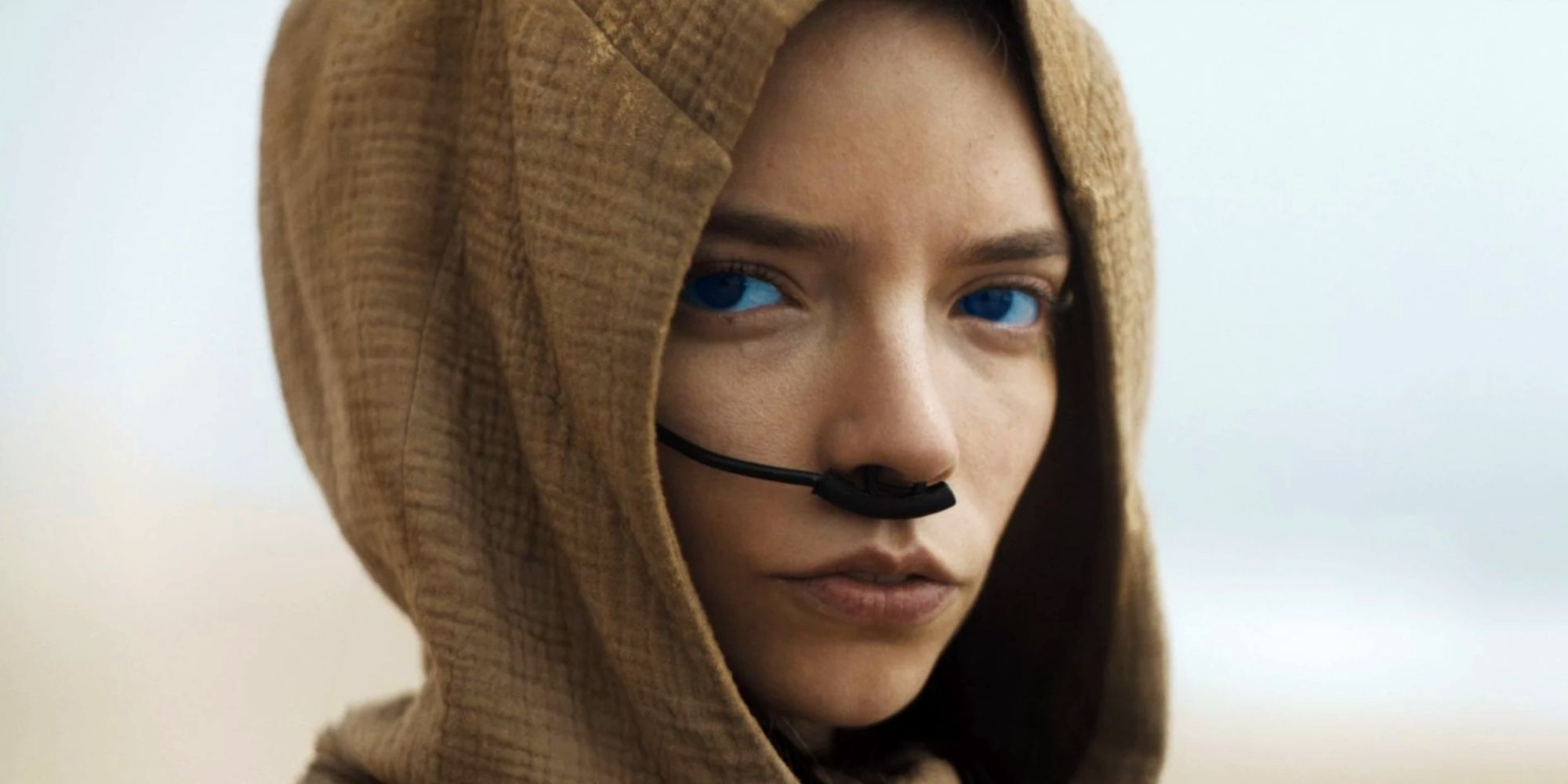
David Lynch’s 1984 film adaptation of Dune wasn’t perfect, but it excelled in one area: its portrayal of Lady Alia. Alia Atreides, Paul’s younger sister, was a uniquely strange character. Before her birth, their mother, Jessica, consumed the Water of Life, granting Alia access to the memories of her ancestors. This resulted in her being born with full self-awareness and the accumulated wisdom of countless generations.
In David Lynch’s Dune, Alia Atreides was born with extraordinary abilities and, by age four, served as an envoy for Paul. A major letdown for many fans of Dune: Part Two was the delay in showing Alia’s birth, which prevented her from killing her grandfather, Baron Harkonnen, as she does in the novel. However, the upcoming film may correct this by giving Anya Taylor-Joy, who plays Alia, a substantial role. Dune: Part Three will be set 17 years after Part Two—instead of the 12-year gap from the books—allowing Alia’s character to fully develop, even if it leads to the downfall of House Atreides.
Alia Will Be Even More of a Fearsome Figure in Dune: Part Three
From the very beginning, Alia’s life in the story of Dune was filled with hardship. She was born with the memories and abilities of many experienced Reverend Mothers, a gift she didn’t ask for. This meant she possessed advanced knowledge and the status of a Reverend Mother from a very young age, which caused others to view her with suspicion.
Even Jessica, who played a role in her daughter’s difficult situation, was surprised by Alia’s wisdom. By setting Dune: Part Three almost twenty years after Part Two, Anya Taylor-Joy was perfectly cast as the strange and otherworldly Alia. This time jump also gave Alia more independence and power within the story. Villeneuve smartly avoided showing Alia’s disturbing earlier stages and instead presented her as Paul’s equal.
In the upcoming film, Alia will be as formidable as Paul was in the first Dune. She possesses prophetic abilities comparable to his and is poised to become the leader of the Imperium. The story suggests Alia is a religious leader who sparked a galaxy-wide holy war, and Anya Taylor-Joy is perfectly cast to portray this complex character – a role that would likely be less convincing with a younger actress.
Okay, so Dune: Part Three really leans into the complexities of Alia. In the books, she’s a fascinating but troubled character, essentially haunted by the memories of her ancestors, and the film is finally giving that the weight it deserves. It was always a tragic arc – being flooded with lifetimes not your own would mess anyone up – and it was pushing her towards a really dangerous instability. The filmmakers made a smart move with the time jump and casting Anya Taylor-Joy; it allows them to portray that descent into darkness with a much more chilling and nuanced approach than we saw on the page.
After the trailer was released, director Villeneuve explained that Alia is a key character in the film. While the story will still heavily feature Paul and Chani, giving Alia a more prominent role will make her the emotional core of the narrative and give the actress more to work with. This time jump in the story could also suggest future plotlines that weren’t originally included in the novel Dune Messiah.
Dune: Part Three Could Include Aspects from Children of Dune
Adapting Dune: Messiah is challenging, and it’s not simply because of the troubled nature of its main character, Paul. While it’s a shorter novel than the original Dune, it’s filled with philosophical ideas and has a dramatic, explosive ending. Despite having a clear storyline, the book also leaves space for creative expansion.
As a huge fan of Villeneuve’s work, I’ve been following the plans for Dune: Part Three closely. He’s made it pretty clear he sees this as the end of the story, and that’s interesting because the scope of the narrative really broadened in Children of Dune. Knowing how Villeneuve likes to complete character arcs, I wouldn’t be surprised if he includes the more tragic elements of the story that really come to the forefront in the third book. It feels like the natural way to bring things full circle for certain characters.
Following her marriage to Hayt, who recovered his memories as Duncan Idaho, Alia struggled with the burden of being an Abomination. The flood of past lives overwhelmed her, ultimately leading to her mental breakdown and death. Despite being appointed to rule in Paul’s absence, she succumbed to madness.
Delaying the release of Part Three could give Anya Taylor-Joy time to take on the role of Alia. In the first Dune book, Alia is born and quickly ages to four. Dune: Messiah jumps forward twelve years, making her a teenager. While the ages of Alia in Dune: Messiah and the planned Dune: Part Three aren’t drastically different, extending the timeline would allow Taylor-Joy to portray a convincingly older character. Given her talent, she’s capable of handling all aspects of Alia’s story, even the more challenging and grown-up parts.
Exploring Alia’s mental decline would make her eventual actions more impactful and highlight the threat she poses. Anya Taylor-Joy described the character as both a blessing and a curse, and delving deeper into her backstory – as found in the books – would effectively illustrate this duality. Expanding her story would also allow for a more developed portrayal of her relationship with Hayt-Duncan, showcasing her growth and maturity. These adjustments would align with Denis Villeneuve’s established approach to character development, much like his handling of Princess Irulan. Ultimately, the director has consistently delivered compelling storytelling, suggesting a clear vision for Alia’s arc.
Read More
- The Division Resurgence Best Weapon Guide: Tier List, Gear Breakdown, and Farming Guide
- Last Furry: Survival redeem codes and how to use them (April 2026)
- GearPaw Defenders redeem codes and how to use them (April 2026)
- Clash of Clans Sound of Clash Event for April 2026: Details, How to Progress, Rewards and more
- Guild of Monster Girls redeem codes and how to use them (April 2026)
- eFootball 2026 “Countdown to 1 Billion Downloads” Campaign arrives with new Epics and player packs
- After THAT A Woman of Substance cliffhanger, here’s what will happen in a second season
- Gold Rate Forecast
- Wuthering Waves Hiyuki Build Guide: Why should you pull, pre-farm, best build, and more
- Genshin Impact Version 6.5 Leaks: List of Upcoming banners, Maps, Endgame updates and more
2026-03-20 00:08