
Thurston Moore is obsessed with jazz.
This isn’t the soft, relaxing music you often hear in places like elevators or waiting rooms.
Moore doesn’t shy away from complexity. His music features mournful saxophones, unsteady bass, and drums that feel completely unbound by traditional rhythm—almost like signals from another world. You could call it jazz from a different planet.
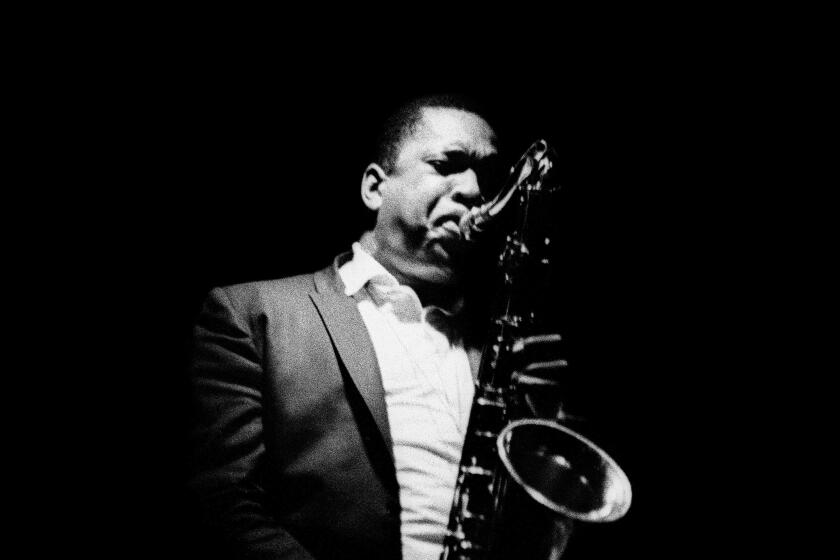
Free jazz was a bold musical experiment that emerged in the mid-20th century, attracting many leading jazz artists like Albert Ayler, Derek Bailey, and Ornette Coleman. It was all about improvisation and breaking traditional musical boundaries.
For the past six years, Moore has been working on a book called “Now Jazz Now,” which highlights 100 important free jazz and improvisation recordings from the 1960s and 80s. He wrote it with Byron Coley and Mats Gustafsson, and it was published by Ecstatic Peace Library, the publishing house he co-owns with Eva Moore. The book also includes contributions from Neneh Cherry and Joe McPhee.
It’s quite a twist: Thurston Moore, best known as the singer, songwriter, and guitarist for the influential experimental rock band Sonic Youth, now focuses on a quieter style of music – one not typically associated with the electric guitars he’s famous for. Sonic Youth bridged the gap between New York’s edgy ‘no wave’ scene and the rise of indie rock in the early nineties.
This new work differs from Moore’s personal memoir, “Sonic Life,” released in 2023, and contrasts with his approach to teaching writing at the Jack Kerouac School of Disembodied Poetics at Naropa University in Boulder, Colorado.
Despite being a comprehensive list, the book highlights what the author and his colleagues believe are the 100 most important jazz records, featuring both well-known and lesser-known artists. According to Moore, who spoke via Zoom from London, “Now Jazz Now” isn’t just a greatest hits compilation – it’s the result of a long-standing passion for free jazz shared by three dedicated record collectors.
This book’s origins trace back to the 1980s, when Coley, Gustafsson, and Moore began collecting unusual sound recordings. These records were rare and difficult to study at the time.
Moore admitted the subject matter wasn’t well-known, but they weren’t focused on its obscurity. They were drawn to the music and the people connected to it. As they learned more, their priority became collecting every available recording.
Moore recalls a time before the digital age, describing it as almost legendary. He explains, “It was a different world before the internet, online record stores like Discogs, or auction sites like eBay – everything felt much more mysterious and distant.”

When Moore was starting out as a musician, he wanted to understand jazz but found it confusing. He asked his friend Byron Cole for guidance. Cole had experience working at Rhino Records and later became the jazz editor for Forced Exposure, a hardcore zine. Moore thought this was a bold move, given the typically raw and unsophisticated nature of the hardcore scene.
Moore asked a friend to create a mixtape for him to listen to while on tour, hoping it would help him understand the jazz scene. The friend made him twenty tracks – a collection of essential modern jazz recordings. Moore spent the whole tour listening with headphones, discovering and becoming passionate about the music.
I remember when this musician used to obsessively hunt down new punk bands, scouring every zine he could find for info on their latest records. It was like a full-time job! Now, he’s completely fallen for jazz, and honestly, he approaches it with that same incredible energy and dedication. He’s just as passionate about finding obscure jazz artists as he was about those punk 7-inches.
Moore began collecting records while on tour, making a point to visit every record store he could find, specifically searching for albums by Sun Ra. Back then, Sun Ra records were very common and inexpensive—often only a dollar each, even in the early 1990s. Now, those original records can be worth thousands of dollars.
Rounding out the group is Gustafsson, a true jazz artist who plays the saxophone with incredible emotion and energy. He describes a performance by Eric Dolphy and Ron Carter like this: “It’s completely free-form. It’s beautiful. It’s even funny! It’s so wild, it’s mind-blowing! I need to get my thoughts back together!”
Moore admitted that everyone on the team writes a little differently, but accuracy was paramount. They’re meticulously checking the order of events and who participated in each one – it’s become a highly detailed process, almost like plotting a complex crime novel with many characters.
As a film buff, I find this really resonates with me. These early records weren’t made for huge crowds, so filmmakers often had to be incredibly resourceful and do everything themselves. Like Sonic Youth’s Thurston Moore said, it reminded him of the early days of punk – music created completely outside the traditional record industry. It was all about artists taking control and building a scene on their own terms, and that’s just incredibly inspiring to me.
The music was incredibly innovative, far beyond what most people were used to. It wasn’t just cutting-edge; it felt almost spiritual. Describing Peter Brötzmann’s “Machine Gun,” Moore said it hit like a powerful explosion from the very beginning – a raw saxophone blasting over a distorted drum sound. It was truly groundbreaking. While considered noise music, it was actually free jazz that didn’t adhere to traditional jazz structures, making it something completely unique.

Coley jokes that ‘Machine Gun’ is usually the first song he plays for people new to punk, to help them broaden their musical tastes.
The authors cared deeply about this project, and their biggest challenge wasn’t writing the book itself, but rather choosing which information to exclude.
Moore explained that they had to remove around 500 entries from their initial list. The team spent a lot of time discussing and debating which records to include in the final book, ultimately creating a separate “contenders list” they plan to publish online. This will allow people who enjoy the 100 featured records to discover an additional 500 songs they might also like.
Moore’s experiences with the music he heard on records and at Lower East Side clubs profoundly influenced his approach to improvisation. He described a pivotal moment of realization: “Once I understood how freeing and beautiful that kind of music could be, I was completely hooked. It dramatically changed my playing, giving me the confidence to express myself without any limitations.”
Does this mean that Moore has traded in his axe for a sax?
Far from being retired, Moore continues to create music and perform. He recently released a solo album, “Flow Critical Lucidity,” and a new single last summer. He’s also scheduled to perform at the Big Ears Festival in Knoxville, Tennessee, on March 28, 2026.
Moore describes themself as a songwriter who enjoys creating experimental pop music. While they perform at regular band shows, they much prefer collaborating with a free jazz drummer in a more intimate setting.
Ruland wrote the book “Corporate Rock Sucks: The Rise and Fall of SST Records.” He’s also releasing a new novel called “Mightier than the Sword” next year through Rare Bird publishing.
Read More
- Clash Royale Best Boss Bandit Champion decks
- Vampire’s Fall 2 redeem codes and how to use them (June 2025)
- Mobile Legends January 2026 Leaks: Upcoming new skins, heroes, events and more
- World Eternal Online promo codes and how to use them (September 2025)
- Clash Royale Season 79 “Fire and Ice” January 2026 Update and Balance Changes
- Best Arena 9 Decks in Clast Royale
- M7 Pass Event Guide: All you need to know
- Clash Royale Furnace Evolution best decks guide
- Best Hero Card Decks in Clash Royale
- How to find the Roaming Oak Tree in Heartopia
2025-12-16 14:02