
The recent changes to the Bandit character caused a huge uproar online, but it’s typical for any balance update in this game. Whenever Supercell adjusts gameplay, players immediately flood forums with complaints, YouTubers share their opinions, and debates erupt about whether the developers made the right choices. This pattern of initial anger, followed by discussion and eventual acceptance, is just part of the game’s culture. We’ll explore why these updates cause such strong reactions, how players express their opinions, and the difficult job developers have trying to satisfy such a large player base. It’s a look at the passion, frustration, and excitement that keep the game thriving.
Key Takeaways
- Understand the “Why” Behind a Nerf: A card that feels perfectly fair to you might be a problem on a global scale. Developers often make changes based on high usage rates—not just win rates—to keep the game from becoming stale, which explains why a reliable card might suddenly get nerfed.
- Treat Popularity as a Warning Sign: If a card is in every top deck, it’s likely on the chopping block, even if it doesn’t feel overpowered. Instead of over-investing in the most popular meta deck, diversify your strategies to avoid having your main playstyle dismantled by a single update.
- Use Patch Notes to Get Ahead of the Meta: Don’t just react to nerfs with frustration; read the patch notes proactively to predict what’s next. A nerf to a popular card creates a power vacuum, giving you the chance to identify which underused cards are about to become powerful before everyone else does.
What is a “Balanced” Card in Clash Royale?
You’ve probably noticed the word “balanced” used a lot in Clash Royale discussions, especially after updates. But what does that really mean? It sounds straightforward, but what players consider balanced can vary. Generally, a balanced card performs its role effectively without feeling unfair or overpowered. It’s a card you can consistently use that feels reasonable to play with and against. It should have noticeable strengths and weaknesses, and it shouldn’t disrupt the overall flow of the game.
Sometimes, what feels balanced in your own games doesn’t match up with what the overall game data shows. A card you think is fine might actually be appearing in too many winning decks, throwing off the game as a whole. This difference in how players experience the game versus how the developers see it is often the source of frustration. Players can feel upset when a card they enjoy gets weakened, believing the developers don’t understand. However, the developers are using data to try and maintain a healthy game for everyone. Recognizing this disconnect is key to understanding why a card might be changed.
How the Community Defines Balance
Players generally consider a card to be well-balanced if it has a specific purpose and understandable weaknesses. These cards are reliable and don’t cause issues. The real frustration comes when developers weaken cards that are already balanced, simply because they’re widely used. For example, if the Knight is popular because he’s effective in many situations, does that automatically mean he’s too strong? Most players would argue that it doesn’t.
Players get frustrated when developers seem to fix the wrong problem. Instead of nerfing the truly overpowered card causing issues, they often weaken a balanced card just to rein in a dominant deck. This feels like an easy, but unfair, solution that penalizes players for using cards as they were designed.
Why a Stable Meta Matters for Competition
If you’re dedicated to playing Clash Royale at a high level, having a consistent “meta” is crucial. The “meta” refers to the most effective decks and strategies being used. When the meta is stable, players can really showcase their skill and strategic thinking. They can learn how to beat different decks, improve their own, and trust that their efforts will be rewarded. But frequent, major changes disrupt all of that progress.
Players aren’t just asking for cards to be weakened; they also want Supercell to strengthen others, which would create more diverse strategies and keep the game fair. Big updates that change many important cards at once can quickly make established decks ineffective, frustrating players who enjoy them. That’s why it’s so important for the game to evolve in a balanced and predictable way to keep the competitive scene healthy.
The Bandit Nerf That Broke the Internet
Recently, there’s been a lot of discussion within the Clash Royale community about the Bandit character. Many players previously felt she was well-balanced – skillful to use, adaptable in different situations, and commonly seen in competitive play without being frustratingly strong. She was a dependable character, so when the game developers announced changes to her abilities, players reacted quickly and with strong opinions.
This wasn’t a minor adjustment – it felt like a complete misreading of how players understood the game. Players who had dedicated significant time to mastering decks featuring the Bandit felt blindsided. The change triggered a huge discussion, extending beyond just that one card, and sparked a broader debate about Supercell’s approach to game balance. Players questioned whether Supercell was adjusting cards based on actual strength or simply trying to disrupt the popular strategies. The situation with the Bandit perfectly illustrates what happens when the developers’ data doesn’t match what players are experiencing in the game.
How the Community Reacted on Reddit
If you check the Clash Royale subreddit, you’ll find a lot of players are frustrated. Many believe Supercell is weakening cards just because they’re popular, not because they’re actually too powerful. One player put it well, saying the developers seem to be nerfing cards that are well-used but fair. This has led to a worry that the game’s balance is being decided by stats and numbers, rather than how fun it is to play.
This leads to a frustrating situation for players. They often feel their suggestions aren’t considered, and then a card that seems well-balanced is unexpectedly weakened. This sparks disagreement within the player community, with many believing these adjustments unfairly penalize those who have become skilled at legitimate strategies.
When a “Good” Card Gets Nerfed Anyway
The recent changes to the Bandit card aren’t just frustrating because of the card itself – they highlight a larger issue with how the game is balanced. Players are seeing a pattern where cards that are already fair are weakened in an attempt to slow down a really strong deck. This feels awkward and unfair because it often unintentionally harms other decks that also happen to use that same card, even if those decks weren’t a problem to begin with.
When several powerful cards, like Goblin Drill and Bomber, are weakened at the same time, it can suddenly make certain ways of playing the game ineffective. Players have noted this in discussions about game balance, saying it makes the game less diverse. Rather than rewarding players for trying new strategies, it pushes everyone to use only the strongest decks, which makes the game feel less varied and matches predictable.
Why Do Devs Nerf Cards That Seem Fine?
Every Clash Royale player has felt that disappointment: logging in after an update only to find a beloved card has been weakened. It’s frustrating to see a card you enjoyed playing get changed, especially if you didn’t think it was overpowered. While it’s tempting to think the developers don’t understand the game, the reasons behind these changes are usually more complex. Keeping Clash Royale balanced isn’t just about win rates; it’s a careful process designed to ensure the game stays healthy and fun over time, and even seemingly random adjustments are often well-considered.
A card that seems well-balanced to us might actually worry the developers. They consider many factors beyond just a card’s win rate – things like how frequently it’s used, how it combines with other cards, and its impact on the overall game environment. Even a card with a 50% win rate can be problematic if it’s making gameplay predictable or reducing the variety of strategies players can use. To understand their reasoning, we need to think of the game as a complex system where even small changes can have significant consequences, rather than just focusing on how a card performs in our own decks.
Usage Rates vs. Win Rates
As a player, I’ve noticed something about how developers balance cards. It’s not just about whether a card wins a lot, but how often it’s being played. A card could technically have a 50/50 win rate, which sounds okay, but if it shows up in almost half of all decks, that’s a problem! That means it’s probably too strong or useful, and everyone feels like they have to include it. When the same cards are everywhere, the game gets stale and predictable. So, developers often weaken popular cards, not necessarily because they’re overpowered in terms of wins, but to get people to try out different strategies and make the game more diverse and interesting.
The Secret Data Behind Balance Changes
As players, we only get a limited view of how a game is truly balanced. We look at our own stats, watch skilled players, and check community websites for win rates. However, the game developers have access to a much more detailed picture. They can see exactly how well each element performs at all skill levels, how it interacts with other elements, and how it impacts overall win rates. This information can reveal that something that seems balanced might actually be causing hidden problems, like making certain strategies unviable or unexpectedly excelling in specific scenarios.
Is a Card Dominating the Meta?
Occasionally, a single card becomes so powerful that it dramatically changes how everyone plays the game. Even if the card itself doesn’t seem overwhelmingly strong, its impact can force all competitive players to either include it in their decks or build their decks specifically to beat it. These cards are called “meta-defining” or “centralizing” cards. When one card has this much control, it restricts creative deck-building and can make the game feel predictable. Game developers often weaken these cards – not to make them useless, but to reduce their dominance and allow a wider range of strategies and cards to be successful, creating a more varied and engaging experience for all players.
How Players Vent Their Frustration
When a popular card in a game is made weaker, players usually react quickly and strongly. It’s a common experience for gamers to see a favorite strategy become less effective. Players naturally want to discuss these changes, share their opinions, and sometimes, vent their frustrations. Whether it’s through lively discussions on social media or in-depth video breakdowns, the gaming community has many ways to voice their concerns when a game update shifts the balance of power.
From Reddit Rants to TikTok Debates
After a game update, many players immediately head to social media to share their thoughts. Platforms like Reddit become hubs for lively discussions, where players analyze every small change. Often, they debate whether developers are weakening popular cards just because they’re used a lot, and not because they’re actually too powerful. This kind of discussion quickly spreads to platforms like TikTok, giving players a place to instantly share their reactions – whether it’s excitement or disappointment.
When YouTube Creators Weigh In
YouTube creators quickly weigh in on game balance updates, and their opinions can significantly influence how players perceive those changes. They often explain the updates in a way that’s easy for the community to understand and predict how the game will be affected. Sometimes they voice player frustration with changes, and other times they offer a different viewpoint. Regardless, their videos always expand the conversation. When a well-known creator acknowledges how the community feels about a specific update, it confirms players’ opinions and draws more attention to the issue.
The Cycle of Outrage and Acceptance
Whenever a game element is weakened (nerfed), the response usually follows a familiar pattern: players initially get upset, then discuss the change, and eventually adjust. It’s rarely a unified reaction, though. You often see one group wanting something weakened because they find it frustrating, while another wants something strengthened that they feel is underpowered, creating division within the community regarding the game developers’ choices. For players whose favorite strategies are directly impacted, these changes can feel quite personal. Some might feel a nerf has made their entire strategy much less effective, seeing it as an overreaction instead of a necessary adjustment. This ongoing cycle of changes is a natural part of how the game evolves.
What Happens After a Big Balance Change?
The latest game update is here, bringing significant changes! Some strategies will be weaker, while others will become stronger. Now, the real challenge starts: figuring out how to win with these new changes. Successful players will need to quickly adapt and discover new ways to play, as the game’s meta has completely shifted and everyone is trying to find their place in it.
Rebuilding Your Deck for the New Meta
It’s incredibly frustrating to log in after a game update and discover your favorite deck no longer works as well. When developers weaken several important cards in a commonly used strategy, it can feel like your entire way of playing has been instantly undermined, and players understandably get upset when their established tactics become ineffective. While it’s normal for individual cards to be adjusted, a major overhaul forces you to completely rethink your approach. This is usually the hardest part of adapting to the new game environment. You need to carefully re-evaluate what’s still effective and be willing to discard what isn’t.
Find New Strategies When Your Main Gets Hit
After the initial surprise of any changes, players quickly start brainstorming new strategies. Instead of focusing on what was weakened, the conversation moves to what’s possible. This often sparks discussions about which cards could be improved to become strong choices. Players are always looking for an advantage, and major updates are a great time to try out cards that haven’t been used much. It’s common for the community to disagree on the best new options, which leads to lots of experimentation and discussion in the days following an update.
The Race to Discover the Next Big Combo
Whenever the game’s balance is adjusted, it opens up opportunities for new, powerful strategies to emerge. This creates a period of intense experimentation as players rush to find the next winning combination. It’s a competitive scramble where even a small discovery can significantly impact the game for a long time. This quick pace is also driven by discussions about what truly makes a card fair, with some players believing popular cards are sometimes weakened just because of their popularity, not because they’re actually too strong. Ultimately, this constant search for new strategies is what keeps the game exciting and ever-changing.
How Supercell Really Decides on Changes
Many players find Supercell’s game adjustments surprising, as they sometimes focus on cards that seem balanced while overlooking truly problematic ones. The reality is that deciding how to adjust the game is complicated. It’s not simply about which cards win the most; Supercell considers data, what’s popular with pro players, and what players are saying online.
As a player, it’s frustrating when what I’m experiencing in my daily matches doesn’t seem to match up with what the developers say is happening overall. Supercell sees the big picture – they’ve got tons of data from everything like Grand Challenges and win rates at different skill levels. It’s like they’re trying to solve a massive puzzle, while we’re all just focused on our own little part of it. This often creates a tension between what the community feels is right and what Supercell thinks the game needs to stay healthy in the long run.
Balancing Hard Data with Player Feedback
A major source of conflict between Supercell and its players centers on how much importance the developers place on game data compared to how players feel about the game. Many players believe Supercell is weakening cards that are actually fair, simply because they’re used often. While a card might not be too strong, its popularity can make the game feel predictable. Supercell argues that changing frequently used cards keeps things interesting and diverse. However, players often feel penalized for using cards they trust, even if those cards aren’t causing any real problems. This leads to frustration, as players suspect developers are weakening popular decks instead of addressing the core issues with specific cards.
Why Players and Devs See Things Differently
There’s a big difference in how players and developers see the game. Players tend to focus on their own decks and the specific cards they use, so changes to those cards can feel really frustrating. One player explained that when several important cards were weakened, it completely ruined their preferred way of playing. Developers, however, have to look at the game as a whole. They need to consider how even a small change can affect all levels of gameplay. Another user pointed out that weakening a few cards can sometimes kill off an entire deck, potentially leading to a new, even more annoying game environment.
The Impossible Task of Pleasing Everyone
Keeping a game balanced for millions of players is incredibly difficult and rarely appreciated. You’ll always find opposing viewpoints – some players want a card weakened, while others think it’s perfect or even needs to be strengthened. The player base is often divided on what changes are needed. One day, a card is considered overpowered, and the next, players are asking for other cards to be made stronger to compete. Adding to the challenge, players are always eager for new content. Some feel that spending time on rebalancing existing cards means fewer new cards are being created, and it’s been a while since we’ve seen truly original additions beyond evolutions or champions. It’s a never-ending balancing act with no easy answers.
When a Balance Change Goes Wrong
Games constantly need adjustments to stay interesting and balanced. These changes help keep the gameplay dynamic, prevent things from becoming predictable, and aim to create a fairer experience for all players. However, sometimes updates go too far. Instead of making small, precise improvements, they can cause bigger issues and create new problems. When developers misjudge these changes, it can start a frustrating pattern of overcorrection, damage trust with the player base, and leave the game unstable for a long time. This is hard for everyone, as players often see their preferred strategies suddenly become ineffective, forcing them to adapt to a new, and often less enjoyable, style of play. It’s not simply about one thing becoming weaker; it’s about the whole game feeling unbalanced.
The Overcorrection Pendulum Swing
A common mistake in game balancing is reacting too strongly to player choices. Developers often weaken cards not because they’re actually too powerful, but simply because many people are using them. As one player noted, sometimes cards are weakened just because they’re popular, even if they’re perfectly fair. This unfairly punishes players who’ve found effective strategies, and can make previously viable decks useless. It creates a frustrating experience, making players feel that developers aren’t focusing on what truly makes a game balanced, strategic, and enjoyable.
Damaging Trust with the Player Base
When game updates consistently and logically adjust strengths and weaknesses, it strengthens the relationship between players and developers. However, if changes feel arbitrary or disregard player feedback, that trust erodes. Players dedicate significant time and effort to learning and perfecting their strategies, so a sudden, severe weakening of a favored element can be incredibly frustrating. This is especially true when it feels like developers aren’t paying attention. One player described a common pattern: complaints from the community might take months, or even a year, to result in any changes – and even then, those changes aren’t guaranteed. This slow response time creates a feeling of disconnect, making players feel like the development team isn’t in tune with their daily experiences.
The Long Road Back to a Stable Meta
A badly executed game update can quickly throw the entire competitive scene into chaos. When several powerful cards are weakened simultaneously, it doesn’t just affect one specific deck – it can render months of dedicated strategy and practice useless. One player explained that recent changes have significantly weakened their deck and similar approaches to the game. This creates a period of uncertainty where players struggle to figure out what strategies are effective. While some enjoy experimenting with new options, many find it frustrating to have to completely rebuild their approach. Fixing these overcorrections often requires multiple further updates, leading to a long-lasting imbalance and a frustrating gameplay experience.
How to Read Patch Notes Like a Pro
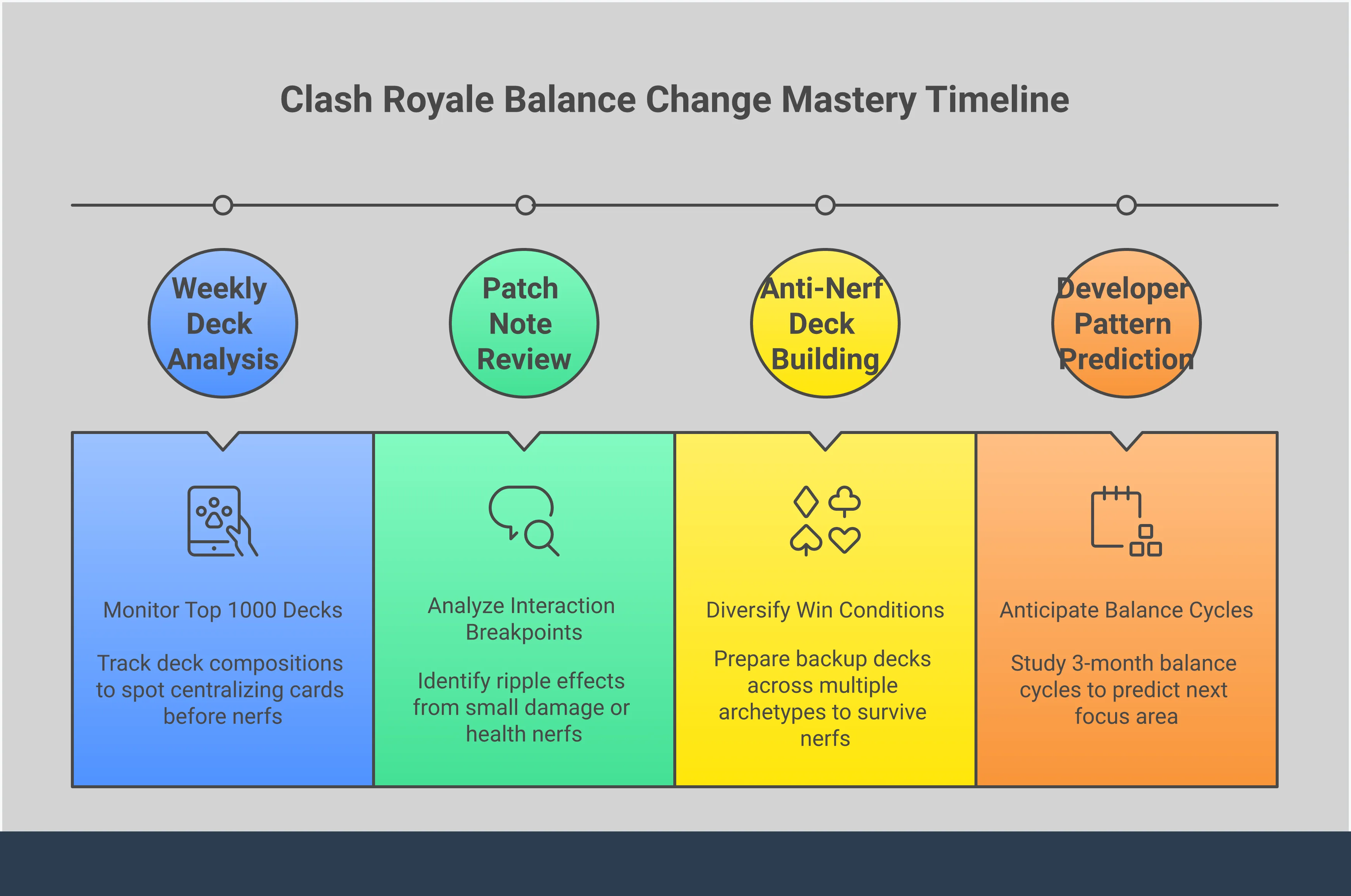
Okay, so when new patch notes come out, my first instinct is always to check if my favorite stuff got hit with a nerf. It’s super frustrating when it does, and I just want to quit! But I’m learning that actually reading those notes is a big deal. It’s not just about what changed, but why the developers made those changes, and what that’s going to mean for the whole game. If you can figure that out, you can really get ahead of the curve.
Patch notes aren’t just a list of updates – they’re a preview of how the game will be played in the future. Instead of waiting to see how changes affect the game, you can use them to plan ahead. Look beyond simple improvements and weakenings to understand the bigger shifts in strategy. Identifying these opportunities before others and adapting your approach is what helps dedicated players consistently improve and stay ahead of the curve.
See the Real Impact of Small Changes
As a player, I used to think a 4% damage reduction wasn’t a huge deal, but honestly, in this game, even that small change can be everything! What really matters is how these tweaks affect how cards work together. It’s like, when they slightly weaken one card, it can unexpectedly make other cards stronger because the counter is gone. I remember after the last update, someone pointed out that nerfing cards like the Goblin Drill and Bomber didn’t just hurt those cards – it made entire deck types much less effective. It wasn’t about any single change, it was how all the small nerfs added up. So when I read the patch notes now, I try not to look at each card individually. I think about how it’s used in popular decks and how it now interacts with everything else – that’s where you see the real impact.
Predict the Meta Before It Happens
Top players don’t just follow trends—they make them. Paying attention to game updates lets you guess which cards will become the most powerful. Developers often weaken cards that are used a lot, even if those cards aren’t actually unbalanced. This shows they want to mix things up and encourage players to try different strategies. So, when a popular card gets weakened, think about which card will now rise to the top. For example, if a card that’s strong against tanks gets nerfed, tanks will likely become much stronger. This is how you can start figuring out the best combinations before anyone else. Watch for opportunities created by these changes, and you’ll be ahead of the curve.
Adapt Your Playstyle to Any Update
It’s incredibly frustrating when you’ve worked hard on a strategy, and a game update suddenly makes it much weaker. It’s easy to feel like the developers are intentionally making things difficult. But instead of getting discouraged, try seeing these updates as a chance to improve. Each update that changes the game’s landscape is a new opportunity to be smarter than your opponents, try out different approaches, and become a more well-rounded player.
Don’t get frustrated by setbacks – learn to be flexible! The truly skilled players aren’t those who rely on one unbeatable strategy. They’re the ones who can adjust to any situation. This means creating decks that can handle different challenges and facing each new update with a positive attitude.
Build a Nerf-Proof Deck
Let’s face it: no deck can completely withstand changes to the game. However, you can build one that’s more adaptable. A common mistake players make is focusing solely on the most popular deck. When important cards, like the Goblin Drill and Bomber, are weakened at the same time, those decks quickly become ineffective. The best approach is to create a more varied deck.
Feel free to try out different ways to win and various cards to help your strategy. Being skilled with a couple of different approaches is useful because it gives you alternatives if your primary plan isn’t working. Also, keep in mind that when some cards get weaker, others often get stronger. Stay informed about these changes – they can indicate which cards are becoming powerful and worth using.
Stay Positive and Embrace the Change
Whenever updates are released, players immediately start arguing and sharing their opinions. It usually follows a pattern: first people are upset, then frustrated, and eventually they adjust. Instead of focusing on the negative reactions, try to understand the overall goal. These changes, even if they weaken a card you like, are meant to keep the game interesting and prevent it from becoming predictable. Sometimes a card is made weaker because it was being used too often, which was making the game feel the same every time.
Every game update is like a fresh challenge. Instead of getting frustrated by changes, try to see them as opportunities to discover strong new card combinations and rediscover cards that might be surprisingly effective. Being curious and adaptable isn’t just more enjoyable—it’ll also help you improve your skills in Clash Royale. Balance changes are a great way to practice and become a more flexible player.
Frequently Asked Questions
It’s frustrating when a card you like gets weakened, especially if it wasn’t overly powerful. However, the main reason developers make these changes often has to do with how often the card is used. If a card appears in a lot of different decks, it can make games feel predictable, even if its win rate is balanced. Developers might adjust these popular cards not because they’re too strong, but to encourage players to try new strategies and keep the game fresh.
Okay, so my deck just got nerfed… should I ditch it right away? Honestly, before I completely rebuild, I like to play a few games with it first. Sometimes nerfs seem way worse when you read about them than they actually are in a match. But if the change really messes up how my deck works, I see it as a good excuse to try something new. I’ve learned that being able to play a couple of different types of decks is super helpful, because if one gets hit hard by a balance change, I’m not totally stuck!
It often feels like Supercell ignores player suggestions, particularly when an unwanted game element remains powerful. However, they’re actually trying to balance what players say with a lot of behind-the-scenes data. They need to consider how any change will impact players of all skill levels, from beginners to experts. While player feedback is important, it’s just one factor; they also look at overall game trends to make informed decisions.
People often confuse “popular” cards with “overpowered” ones, but they’re different. An overpowered card is so strong it wins games unfairly often. A popular card is simply very consistent and works well in many different types of decks. Overpowered cards usually need to be significantly weakened, while popular cards might receive minor adjustments to make other options more attractive and balance the game.
Want to be ahead of the curve and discover the new winning strategies? Don’t just read patch notes and notice what changed – think about how those changes will affect the game. For example, if a card that’s really good at destroying tanks gets weaker, that likely means tank-focused decks will become more powerful. By predicting these shifts in power, you can start building successful decks before others even realize the old ones aren’t as effective anymore.
Read More
- Clash Royale Best Boss Bandit Champion decks
- Vampire’s Fall 2 redeem codes and how to use them (June 2025)
- World Eternal Online promo codes and how to use them (September 2025)
- How to find the Roaming Oak Tree in Heartopia
- Mobile Legends January 2026 Leaks: Upcoming new skins, heroes, events and more
- Best Arena 9 Decks in Clast Royale
- ATHENA: Blood Twins Hero Tier List
- Clash Royale Furnace Evolution best decks guide
- Brawl Stars December 2025 Brawl Talk: Two New Brawlers, Buffie, Vault, New Skins, Game Modes, and more
- How To Watch Tell Me Lies Season 3 Online And Stream The Hit Hulu Drama From Anywhere
2025-12-05 16:36