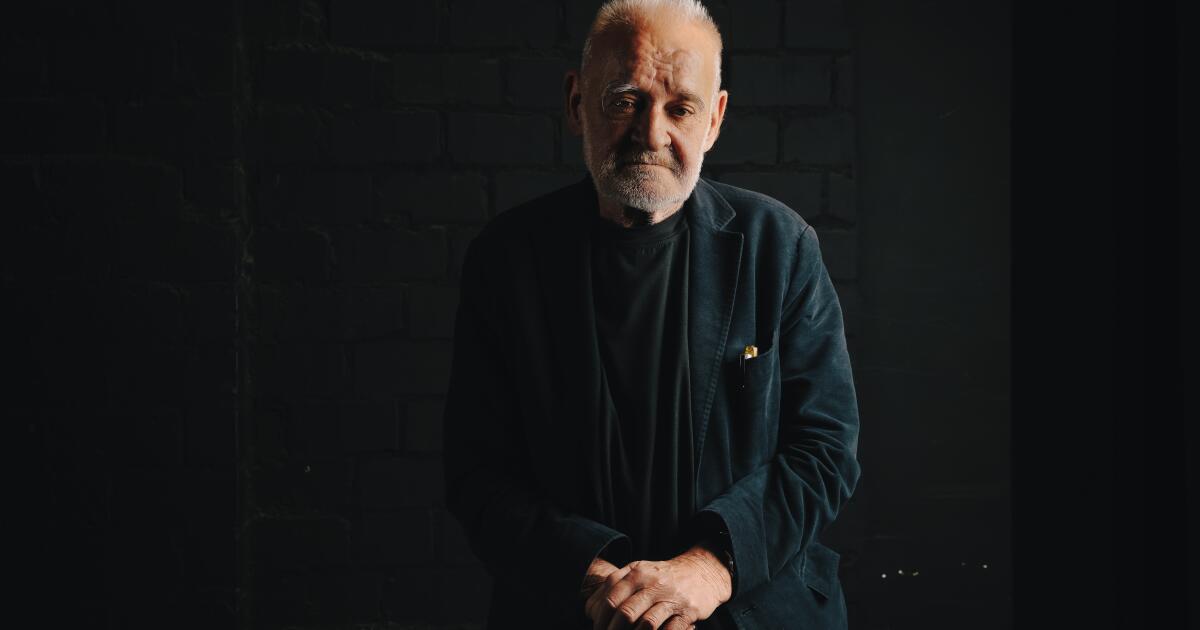
Béla Tarr’s films were stunningly beautiful and remarkably unique, often feeling as carefully crafted and artistic as a painting by a great master.
His films were known for striking black-and-white visuals, lengthy shots, and slow, deliberate camera movements. These techniques weren’t meant to be passively watched; instead, they encouraged viewers to truly look and observe, much like studying a painting by artists like Picasso or Bruegel.
Tarr’s innovative filmmaking style is deeply connected to his compassionate focus on people struggling with hardship. Though he only directed ten films in under four decades, he consistently portrayed the quiet strength and dignity of those on the margins of society, making his work resonate with audiences beyond just film enthusiasts.
The passing of this celebrated Hungarian artist on Tuesday at the age of 70 reminds us how deeply human his work is, and why it remains so important.
Tarr once told an interviewer he disliked stories because they create the illusion of events actually taking place. He believed that life isn’t about things happening, but rather a constant shift between different states of existence. According to Tarr, all stories have been told, becoming predictable and ultimately dissolving into the simple passage of time.

Entertainment & Arts
Béla Tarr, the acclaimed Hungarian director famous for thought-provoking films like “Sátántangó” and “The Turin Horse” that explored the human condition, has passed away at the age of 70.
You know, when I watch a Béla Tarr film, it’s not about what happens, it’s about how it happens. He wasn’t interested in telling you someone’s life story looking back – he wanted to show you life unfolding, messy and uncertain, one moment at a time. He’d capture all those little mistakes, silly things we do, and just the plain hardship of daily life. It reminds me a lot of Samuel Beckett – sometimes funny, sometimes devastating, but always treating the struggles of being human with incredible respect and a real sense of understanding. It’s a tough watch sometimes, but it’s also deeply moving and strangely beautiful.
Béla Tarr often creates powerful scenes by contrasting vast, desolate landscapes – frequently showing run-down towns in Hungary – with intimate close-ups of his characters’ faces. When film historian David Bordwell pointed this out, Tarr simply stated, “The face is the landscape.”
Tarr burst onto the scene in the late 1970s, determined to radically change contemporary filmmaking – and he succeeded in doing so multiple times.
He quickly gained recognition with three emotionally resonant films about everyday life: “Family Nest,” “The Outsider,” and “The Prefab People.” These films explored the frustrations and limitations faced by ordinary people in Hungary at the time, offering a stark contrast to the prevailing political climate. Visually, they were distinctive, employing shaky camera work and intimate close-ups to create a feeling of intense confinement, reminiscent of the raw, spontaneous style of director John Cassavetes.
Following his work on a television version of “Macbeth” in 1982 – notable for being filmed in just two long shots, one over an hour long – Tarr briefly experimented with vibrant colors in his 1984 film, “Almanac of Fall.” He then returned to the techniques he’d pioneered in “Macbeth,” establishing a distinct style that characterized his filmmaking for years to come.
The film Damnation (1988) begins with a long, sweeping shot of a network of towers and cables carrying mining materials across a barren landscape. The only sound is the harsh, grating noise of the cable system – a characteristic of Béla Tarr’s films where sound is as powerful as the visuals. The camera gradually moves back, revealing a window and then the back of a man’s head, establishing our main character as he observes this repetitive, bleak scene.
Movies
Returning to the city after eleven years, the renowned Hungarian golfer didn’t hold back, criticizing what he saw as excessive, artificial, and overly focused on celebrity culture.
Honestly, watching this movie felt like being right there with the main character, experiencing all the beauty and pain alongside him. I was completely drawn into his world, following his heartbreaking attempt to win over a woman who was already committed to someone else. It wasn’t a straightforward story, though. It felt more like a series of connected moments, almost like reading a collection of short stories that all fit together perfectly. It was a really unique way to tell a story, and it completely captivated me.
Tarr consistently collaborated with a small, dedicated group of filmmakers throughout his career. This included frequent partners like editor Ágnes Hranitzky, cinematographer Fred Kelemen, composer Mihály Víg, and a consistent ensemble of actors.
“Damnation” was the first of five films director Béla Tarr made with his friend, Hungarian novelist László Krasznahorkai, who would later win the Nobel Prize in Literature in 2025. Their creative partnership, lasting over 25 years, is often compared to the collaborations between Graham Greene and Carol Reed, but it remains truly unique in cinema.
Béla Tarr’s most celebrated films, “Sátántangó” (1994) and “Werckmeister Harmonies” (2000), were adapted from novels by László Krasznahorkai—the latter based on his book, “The Melancholy of Resistance.” These novels are central to Krasznahorkai’s Nobel Prize-winning body of work, and the films are considered landmark achievements in cinema, solidifying Tarr’s reputation as a major filmmaker.
“Sátántangó” is a remarkably long film – lasting over seven hours, roughly the equivalent of four full-length movies. Critic Susan Sontag described it as both deeply affecting and completely captivating throughout its entire runtime. It’s frequently cited by film critics as one of the best movies ever made.
The film centers around a group of flawed, small-time con artists and drinkers who are themselves taken advantage of by ruthless outsiders arriving in their decaying town. Director Tarr utilizes exceptionally long, unbroken shots, brilliantly playing with our perception of time and crafting some truly unforgettable moments in contemporary cinema.
Béla Tarr’s “Werckmeister Harmonies” features a newcomer arriving in a struggling town with a strange attraction – a preserved whale. The film powerfully portrays scenes of unrest, reminiscent of the worst violence from the 20th century. The climax shows a mob attacking a hospital and its patients, eventually confronting a vulnerable, naked elderly man in a bathtub. His unexpected appearance stops the attackers, creating one of the most emotionally devastating scenes in cinema.
Béla Tarr’s next film, “The Man From London,” was a fascinating collaboration with László Krasznahorkai. They took a novel by Georges Simenon and turned it into a really compelling story about a railway worker by the sea who finds himself caught up in a tricky moral dilemma – a murder, to be exact. It’s a slow burn, but it really gets under your skin.
Béla Tarr’s 2012 film, “The Turin Horse,” retells the story of an incident where a horse was whipped in Turin, Italy – an event believed to have contributed to philosopher Friedrich Nietzsche’s mental collapse. The film depicts the horse and its owner returning to their isolated farmhouse and focuses on their monotonous daily lives, which bear a resemblance to the style of Chantal Akerman’s film, “Jeanne Dielman, 23 quai du Commerce, 1080 Bruxelles.”
Following the release of what many consider his greatest film, Béla Tarr surprised everyone by declaring it would be his final feature. He was only 56 years old at the time.
He later established film.factory, an international film school in Sarajevo, Bosnia-Herzegovina, where he taught until 2017. He also produced several films throughout his career.
As a film lover, I always admired that Béla Tarr wasn’t afraid to speak his mind about politics. He consistently called out oppressive regimes – whether it was the old communist government in Hungary or the more recent nationalist turn under Viktor Orbán, and even figures like Marine Le Pen and Trump. He really stood up for the students at his old film school in Budapest when they protested Orbán’s policies back in 2020, and I found that incredibly inspiring.
In 2019, Tarr created an art installation called “Missing People” for the Vienna Festival. The project included a film showcasing the faces of around 270 people experiencing homelessness in Vienna.
This project emerged shortly after Hungary’s Prime Minister Orbán enacted a law effectively making it illegal to be homeless. It felt like a fitting conclusion to the powerful and often bleak artistic vision of Béla Tarr.
Read More
- Clash Royale Best Boss Bandit Champion decks
- Vampire’s Fall 2 redeem codes and how to use them (June 2025)
- Mobile Legends January 2026 Leaks: Upcoming new skins, heroes, events and more
- M7 Pass Event Guide: All you need to know
- Clash Royale Furnace Evolution best decks guide
- Clash Royale Season 79 “Fire and Ice” January 2026 Update and Balance Changes
- Best Arena 9 Decks in Clast Royale
- World Eternal Online promo codes and how to use them (September 2025)
- Clash of Clans January 2026: List of Weekly Events, Challenges, and Rewards
- Best Hero Card Decks in Clash Royale
2026-01-08 23:32