Author: Denis Avetisyan
New research reveals that even brief interactions with human tutors can dramatically improve student engagement during AI-powered learning experiences.
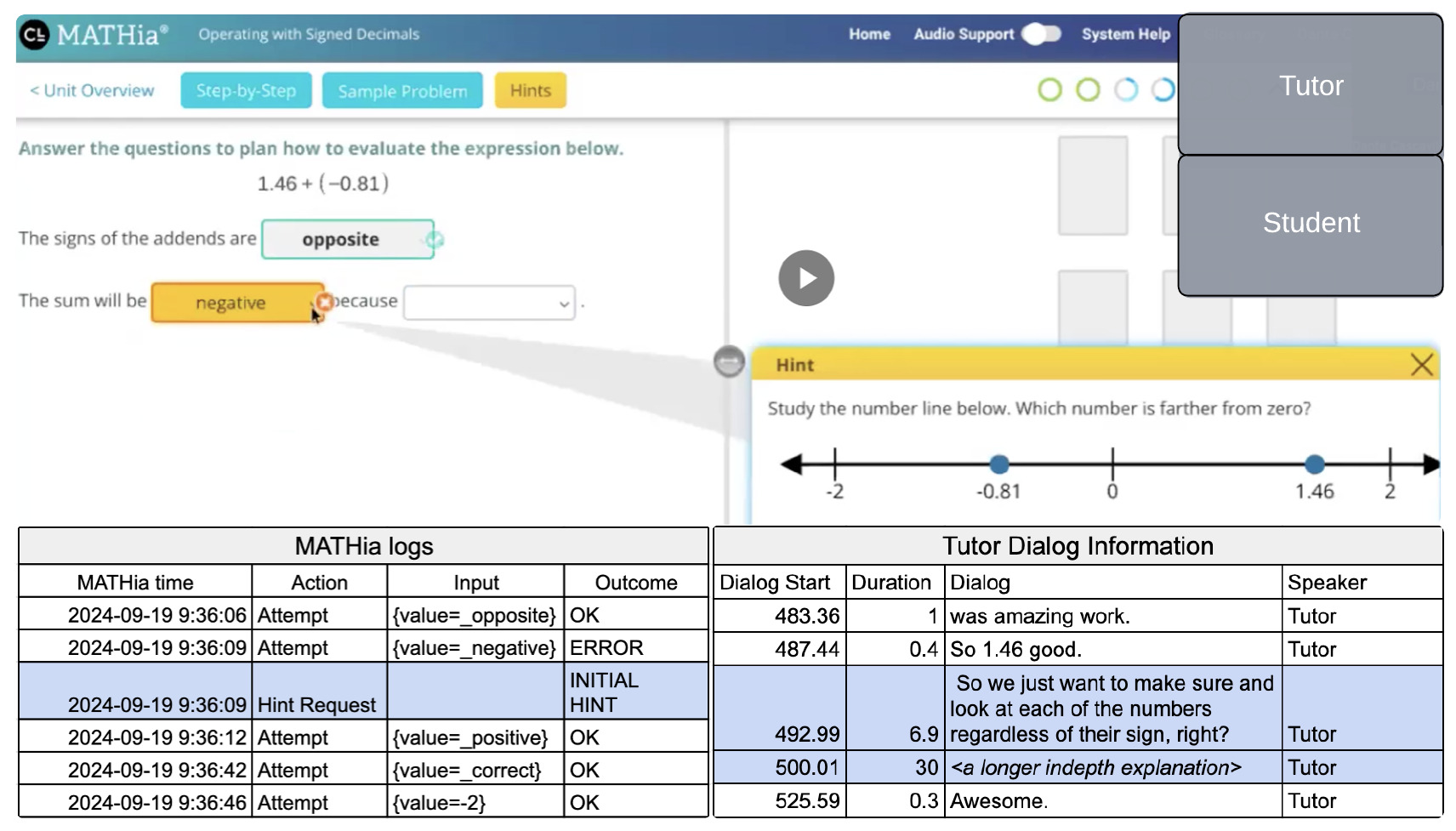
Strategically timed human tutor visits, particularly later in a learning session, significantly enhance engagement through concrete scaffolding and clear organization of learning tasks.
While artificial intelligence increasingly personalizes online learning, the crucial role of brief human interaction remains underexplored. This study, ‘Brief but Impactful: How Human Tutoring Interactions Shape Engagement in Online Learning’, investigates how short, targeted visits from human tutors impact student engagement during AI-driven math practice. Results demonstrate that even brief tutor interventions measurably boost student engagement-both during and immediately following the visit-with later check-ins proving particularly impactful, and effective tutoring centering on clear, stepwise scaffolding. How can these findings inform the strategic allocation of limited tutoring resources to maximize student success in hybrid learning environments?
Deconstructing the Ivory Tower: The Promise of Hybrid Tutoring
Historically, individualized tutoring has proven remarkably effective in boosting student achievement, yet its inherent limitations impede widespread access. The core issue resides in scalability; providing one-on-one attention is resource-intensive, making it financially prohibitive for many students and challenging for educational institutions to implement at a large scale. Furthermore, traditional methods often struggle with true personalization, frequently relying on a single teaching approach regardless of a student’s unique learning style, pace, or specific knowledge gaps. This can leave students feeling either overwhelmed or unchallenged, hindering their progress and diminishing the potential benefits of the tutoring experience. Consequently, while demonstrably successful when available, conventional tutoring frequently fails to adequately address the diverse needs of a broad student population.
Artificial intelligence has emerged as a potential solution to broaden access to personalized education, yet current AI tutoring systems often fall short of truly replicating the support provided by experienced human educators. While adept at delivering content and assessing knowledge through structured exercises, these systems frequently struggle with the subtleties of effective pedagogy – recognizing nuanced student misunderstandings, adapting to individual learning styles on the fly, and providing the motivational encouragement crucial for sustained engagement. The limitations stem from a difficulty in mirroring the complex cognitive and emotional intelligence a human tutor brings to each interaction, hindering their ability to offer the adaptive, holistic support that fosters genuine understanding and builds student confidence. This gap underscores the need for innovative approaches that leverage the strengths of both AI and human instruction.
Hybrid tutoring systems represent a significant advancement in personalized education by strategically integrating the capabilities of artificial intelligence with the essential support of human instructors. These systems don’t aim to replace teachers, but rather to augment their effectiveness; AI components can handle repetitive tasks like basic skill practice and knowledge assessment, providing students with immediate feedback and freeing up instructors to focus on higher-level cognitive skills – critical thinking, problem-solving, and nuanced conceptual understanding. This collaborative approach allows for a more dynamic learning experience, adapting to each student’s pace and learning style while still fostering the vital human connection and mentorship that are crucial for motivation and long-term academic success. Initial studies suggest that this blend yields demonstrably improved learning outcomes, increased student engagement, and a more efficient allocation of educational resources.
Mapping the Mind: Methods for Detailed Analysis
Minute-level trace alignment is a process of synchronizing system logs, which record all student actions and system events within an interactive tutoring system, with corresponding transcripts of the dialogue exchanged between the student and the tutor. This synchronization is achieved by referencing timestamps recorded in both data sources, allowing researchers to correlate specific dialogue turns with precise system states and student actions at a granularity of one minute or less. The resulting aligned dataset enables a detailed reconstruction of the tutoring session, facilitating the identification of relationships between pedagogical interventions, student responses, and system behavior. Accurate alignment is critical for subsequent analysis, as it ensures that observations regarding communication patterns or system effects are grounded in a verifiable temporal context.
Trace data, comprising comprehensive records of student interactions within an intelligent tutoring system, requires precise temporal alignment with corresponding dialogue to be effectively utilized for analysis. These records detail specific student actions – such as problem selections, answer attempts, and hint requests – along with system responses. Without accurate synchronization, attributing observed behaviors to specific conversational turns or system events becomes impossible. This alignment enables researchers to correlate student performance metrics with communication patterns, identify moments of confusion or frustration, and ultimately evaluate the effectiveness of the tutoring strategy in real-time. The resulting dataset then forms the basis for quantitative and qualitative analysis, allowing for the identification of actionable insights to improve the system’s responsiveness and pedagogical approach.
Dialogue analysis of tutoring session transcripts enables the identification of recurring linguistic patterns, including question types, response structures, and the use of specific keywords or prompts. These patterns are then correlated with student behavior, as captured in aligned trace data, to determine which communicative approaches are most effective in promoting learning or addressing student misconceptions. Analysis can quantify the frequency of clarifying questions, the length of tutor explanations, or the use of positive reinforcement, providing measurable data for iterative improvements to the tutoring system’s dialogue management. Furthermore, this technique facilitates the identification of instances where communication breakdowns occur, allowing developers to refine the system’s ability to detect and respond appropriately to student confusion or frustration, ultimately leading to more responsive and effective tutoring strategies.
Uncovering the Engine: Key Indicators and Relationships
Student engagement is a primary driver of learning outcomes, and is directly correlated with ‘Step Completion’, which serves as a quantifiable metric of academic progress. Analysis indicates that increases in student engagement are consistently associated with a corresponding increase in the number of steps successfully completed within a given learning session. This relationship suggests that interventions designed to boost engagement are likely to positively impact a student’s ability to progress through learning materials and achieve desired outcomes. The strength of this correlation supports the use of ‘Step Completion’ as a key indicator when evaluating the effectiveness of learning strategies and tutoring programs.
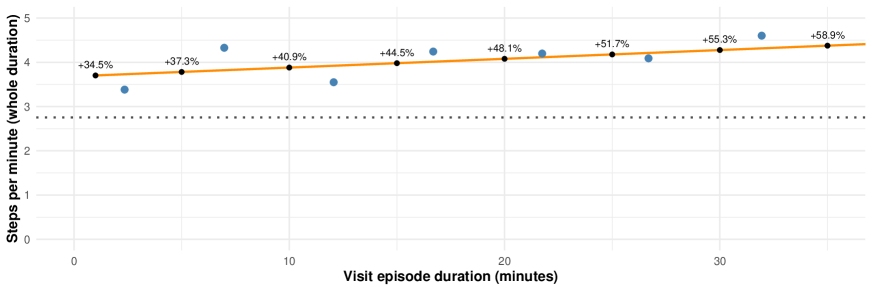
Analysis of student performance data indicates a substantial positive correlation between hybrid tutoring interventions and student engagement. Specifically, the study measured engagement as the number of successfully completed steps per minute, and observed a 61% increase during periods of active tutor interaction. This metric provides a quantifiable assessment of a student’s progress and active participation while utilizing the hybrid learning system, demonstrating the effectiveness of integrating human tutoring within a digital learning environment to promote accelerated learning and improved task completion rates.
Student engagement is negatively correlated with error rate during learning activities. Higher error rates indicate areas where a student is struggling, leading to decreased engagement. This demonstrates the necessity of adaptive support systems that can identify and address individual student difficulties in real-time. Such systems should dynamically adjust the difficulty or provide targeted assistance when errors occur, preventing frustration and maintaining student participation. Failure to address these errors can lead to disengagement and hinder learning progress, emphasizing the importance of personalized interventions based on performance data.
Student engagement extends beyond cognitive processes and is demonstrably affected by characteristics of human tutor interactions. Analysis indicates that both the duration of a tutoring visit and its timing relative to a student’s learning journey significantly influence active participation. Specifically, later visits within a learning sequence produced a greater immediate increase in student engagement compared to earlier sessions. Furthermore, the implementation of instructional scaffolding – providing temporary support structures to facilitate learning – is a key driver of engagement, suggesting that tailored assistance is crucial for maintaining student involvement.
The Intraclass Correlation Coefficient (ICC) of 0.37 indicates substantial between-student heterogeneity in response to the tutoring intervention. This value signifies that approximately 37% of the total variance in engagement metrics can be attributed to differences between individual students, while the remaining 63% is due to within-student variance or error. This relatively low ICC highlights that a one-size-fits-all approach to tutoring is unlikely to be effective, and supports the necessity of personalized learning strategies that account for each student’s unique learning profile and needs. The degree of variability suggests that factors beyond the core intervention – such as prior knowledge, learning styles, or motivation – play a significant role in determining individual outcomes.

Rewriting the Script: Proactive Adaptation
The hybrid learning system dynamically adjusts to each student’s needs through the implementation of ‘Adaptive Support’. By continuously monitoring real-time engagement data – encompassing metrics like response times, interaction frequency, and even subtle indicators of confusion – the system can proactively modify the instructional approach. This isn’t a one-size-fits-all solution; rather, the system identifies when a student is struggling and automatically provides targeted assistance, such as offering simplified explanations, suggesting alternative learning resources, or prompting further clarification. Conversely, when a student demonstrates mastery, the system can accelerate their progress by introducing more challenging material, effectively optimizing the learning pathway for maximum efficiency and fostering a personalized educational experience. This responsiveness aims to minimize frustration and maximize knowledge retention by delivering the right support, at the right time, for every learner.
Spatiotemporal analytics offers a novel approach to understanding the nuanced dynamics of student learning within hybrid environments. By meticulously analyzing patterns in student interactions – encompassing not just what is communicated, but when and how it occurs – researchers can identify subtle cues indicative of comprehension or frustration. This goes beyond simple performance metrics; the system observes the timing of responses, the frequency of pauses, and even the virtual ‘proximity’ between students and tutors to infer cognitive load and emotional state. These data points, when combined, create a rich behavioral signature, enabling the hybrid system to proactively adjust instructional strategies and offer targeted support before a student falls behind or disengages – effectively transforming the learning experience from reactive to anticipatory.
Recent analysis of student-tutor dialogues reveals predictable linguistic patterns associated with moments of significant learning gains – termed ‘high-uplift episodes’. Utilizing an Area Under the Curve (AUC) of 0.69, the system demonstrates a statistically significant ability to differentiate these productive exchanges from typical interactions, exceeding performance expected by chance. This capability stems from identifying specific features within the dialogue, such as question types, response length, and the use of clarifying statements. Consequently, the system can proactively flag instances where students might benefit from targeted support or further exploration of a concept, effectively creating a more responsive and personalized learning experience and maximizing the impact of each interaction.
The cultivation of ‘Accountable Talk’ within hybrid learning environments represents a significant advancement in pedagogical practice. This approach moves beyond simple question-and-answer exchanges, instead prioritizing collaborative discourse where both students and tutors are actively engaged in building upon each other’s ideas. Through carefully facilitated conversations, learners are encouraged to explain their reasoning, challenge assumptions, and justify their conclusions, while tutors provide scaffolding and guidance to deepen understanding. This iterative process not only solidifies knowledge retention but also fosters critical thinking skills and a more profound engagement with the subject matter, creating a dynamic learning experience that transcends the limitations of traditional instruction and encourages a community of shared inquiry.
The study’s findings regarding the timing of human intervention reveal a fascinating dynamic. It isn’t simply that a human tutor engages, but when. The increasing impact of later visits suggests a system subtly recalibrating itself – the AI identifying where a student truly needs a push. This echoes John McCarthy’s sentiment: “Every worthwhile problem is worth studying.” The researchers didn’t accept the initial assumption that early intervention was best; they actively tested that premise. The observed benefit of later, well-structured scaffolding-concrete assistance and clear organization-demonstrates that understanding how students learn requires a willingness to dismantle preconceived notions about optimal learning pathways, much like reverse-engineering a complex system to reveal its inner workings.
Beyond the Brief Visit
The apparent simplicity of augmenting AI tutoring with brief human intervention belies a far more complex underlying architecture. This work doesn’t merely confirm the value of ‘human touch’; it highlights how strategically timed disruption can restructure a student’s attentional landscape. The finding that later visits prove more impactful suggests a learning process less about immediate correction and more about establishing a framework for self-regulation – a scaffolding that, once understood, might be replicated, or even preempted, by a more nuanced AI. But what constitutes ‘effective’ scaffolding remains stubbornly opaque, a ghost in the dialogue analysis.
The study correctly frames the question of when to intervene, but begs the question of what interventions truly reshape cognitive architecture. Was it the concrete scaffolding itself, or the mere signaling of human presence – a reassurance that the system, for all its intelligence, isn’t a black box? The limitations of attention allocation as a proxy for deeper engagement warrant scrutiny; attention is a surface phenomenon, easily manipulated. A truly insightful next step involves reverse-engineering the cognitive shifts that follow effective tutoring, looking beyond behavioral metrics to the underlying neural choreography.
Ultimately, this research isn’t about perfecting hybrid learning systems; it’s about exposing the inherent fragility of ‘intelligence’ – both artificial and human. The system works not because it solves the problem of learning, but because it acknowledges, and momentarily repairs, the inevitable cracks in the cognitive edifice. The real challenge lies in understanding those cracks, not patching them.
Original article: https://arxiv.org/pdf/2601.09994.pdf
Contact the author: https://www.linkedin.com/in/avetisyan/
See also:
- Clash Royale Best Boss Bandit Champion decks
- Vampire’s Fall 2 redeem codes and how to use them (June 2025)
- World Eternal Online promo codes and how to use them (September 2025)
- Best Arena 9 Decks in Clast Royale
- Country star who vanished from the spotlight 25 years ago resurfaces with viral Jessie James Decker duet
- M7 Pass Event Guide: All you need to know
- Mobile Legends January 2026 Leaks: Upcoming new skins, heroes, events and more
- Kingdoms of Desire turns the Three Kingdoms era into an idle RPG power fantasy, now globally available
- Solo Leveling Season 3 release date and details: “It may continue or it may not. Personally, I really hope that it does.”
- JJK’s Worst Character Already Created 2026’s Most Viral Anime Moment, & McDonald’s Is Cashing In
2026-01-18 21:30