Author: Denis Avetisyan
A new assessment of the Atlantic Meridional Overturning Circulation leverages artificial intelligence to tackle critical uncertainties surrounding this key climate regulator.
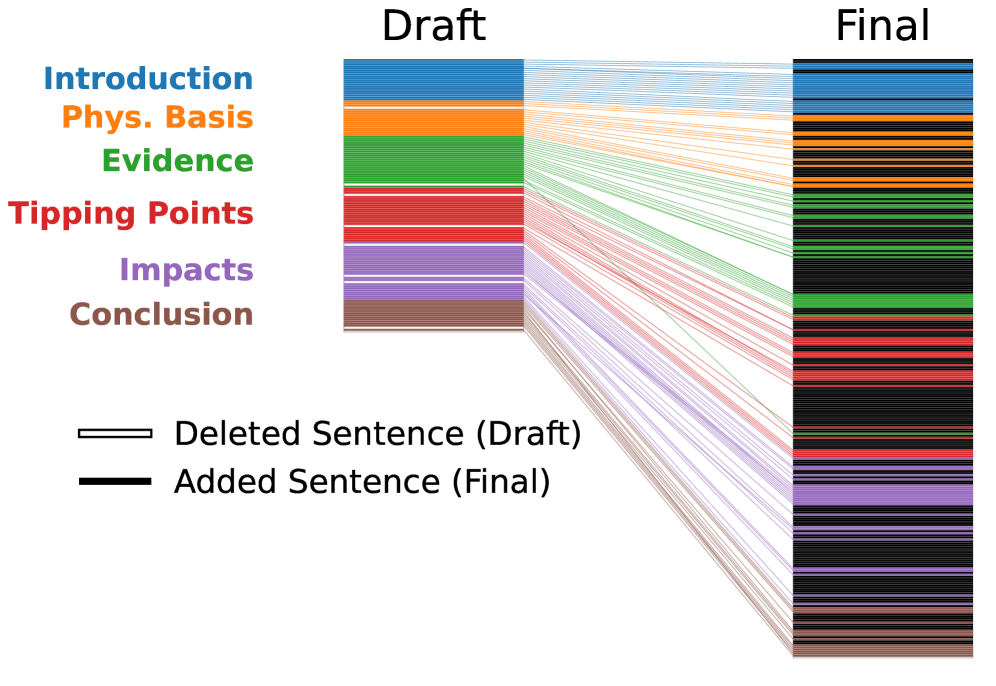
This review details a human-AI collaborative workflow for evaluating the stability of the AMOC and its potential to trigger climate tipping points.
While scientific assessment often relies on iterative verification, many critical questions-particularly those concerning complex Earth systems-demand synthesis from incomplete data and established theory. This challenge is addressed in ‘AI-Assisted Scientific Assessment: A Case Study on Climate Change’, which evaluates a Gemini-based AI environment designed to support collaborative analysis of the Atlantic Meridional Overturning Circulation (AMOC). Our results demonstrate that AI can accelerate scientific workflows, facilitating a comprehensive synthesis of 79 papers in just over 46 person-hours, though substantial expert oversight remains crucial for ensuring scientific rigor and completeness. As AI tools become increasingly integrated into scientific practice, how can we best leverage their potential while maintaining the essential role of human expertise in navigating complex, verification-poor problems?
The Ocean’s Engine: Unraveling the AMOC’s Secrets
The Atlantic Meridional Overturning Circulation, or AMOC, functions as a vast conveyor belt within the global ocean, playing a pivotal role in regulating climate by redistributing heat from the tropics towards the North Atlantic. This complex system isn’t simply about ocean currents; it’s a critical component of Earth’s climate engine, transporting warm surface waters northward and returning cold, deep waters southward. This process moderates temperatures, particularly in Western Europe and along the eastern coast of North America, creating milder winters and influencing precipitation patterns. Without the AMOC’s continuous circulation, these regions would experience significantly colder temperatures, and shifts in global weather systems would become more pronounced, affecting everything from monsoon seasons to hurricane intensity. The AMOC’s influence extends far beyond these immediate areas, impacting global sea levels and the distribution of marine ecosystems, highlighting its importance to the planet’s overall climate stability.
The Atlantic Meridional Overturning Circulation, or AMOC, functions as a massive conveyor belt in the ocean, powered by differences in water density – a process known as thermohaline circulation. This density is dictated by both temperature ([latex]thermo[/latex]) and salinity ([latex]haline[/latex]). Colder, saltier water is denser and sinks, driving deep-ocean currents, while warmer, fresher water is less dense and remains at the surface. However, this delicate balance is vulnerable to disruption by significant freshwater input – from melting glaciers, increased precipitation, or river runoff. This influx of less dense freshwater reduces the overall salinity and density of surface waters, hindering their ability to sink, effectively slowing down or even potentially stalling the AMOC and impacting global heat distribution.
A weakening or collapse of the Atlantic Meridional Overturning Circulation (AMOC) wouldn’t simply alter ocean currents; it holds the potential to reshape climates across vast distances. Europe, currently benefiting from relatively mild temperatures due to the AMOC’s heat transport, could experience significant cooling, alongside shifts in precipitation patterns and increased storminess. Simultaneously, tropical regions might face intensified droughts and disruptions to monsoon systems, impacting agriculture and water resources. Perhaps most concerning is the possibility of abrupt climate change – a scenario where the AMOC doesn’t decline gradually, but rather undergoes a rapid and dramatic shift, triggering cascading effects throughout the global climate system and potentially leading to unforeseen consequences for ecosystems and human societies. While the precise threshold for such a disruption remains a subject of ongoing research, the interconnectedness of the climate system suggests that even moderate changes to the AMOC could initiate a chain reaction with far-reaching and potentially irreversible effects.
Echoes of the Past: Reconstructing AMOC Behavior
Paleoclimate reconstructions, derived from sources like ice cores, sediment records, and tree rings, establish the historical behavior of the Atlantic Meridional Overturning Circulation (AMOC). These data indicate prolonged periods of relative AMOC stability spanning decades to centuries, punctuated by episodes of significant weakening or even complete shutdown occurring over years to decades. Evidence from the last glacial period demonstrates multiple AMOC slowdowns correlated with massive freshwater influx from melting ice sheets. Specifically, Heinrich events and Dansgaard-Oeschger oscillations are associated with substantial reductions in AMOC strength, as indicated by changes in North Atlantic Deep Water formation rates and shifts in isotopic ratios. Analysis of these past fluctuations provides a baseline for evaluating the current AMOC state and assessing the magnitude of recent changes.
Paleoclimate reconstructions, derived from sources like sediment cores and ice cores, indicate a strong correlation between freshwater influx – specifically from glacial melt and altered precipitation patterns – and changes in AMOC strength. These records demonstrate that substantial increases in freshwater input, particularly into the North Atlantic, can reduce surface water salinity and density, inhibiting deep water formation – a key driver of the AMOC. Analysis of past events, such as the 8.2 kiloyear event and the Younger Dryas, suggests the existence of thresholds beyond which relatively small increases in freshwater forcing can trigger significant and relatively rapid AMOC weakening, and potentially even temporary shutdown. These reconstructed events provide evidence that the AMOC is not linearly responsive to freshwater input, but rather exhibits non-linear behavior and potential for abrupt transitions.
Analysis of paleoclimate records, including ice cores, sediment cores, and tree rings, allows scientists to quantify the range of natural variability exhibited by the Atlantic Meridional Overturning Circulation (AMOC) over centuries and millennia. These reconstructions establish a baseline against which contemporary changes can be assessed; observed declines in AMOC strength that fall outside the bounds of natural variability – as determined from paleodata – can then be more confidently attributed to anthropogenic forcing, primarily through increased greenhouse gas concentrations and associated freshwater inputs from glacial melt. Specifically, paleoclimate data helps to identify the frequency and magnitude of past AMOC slowdowns or shifts, enabling researchers to determine whether current changes are unprecedented or fall within expected natural fluctuations, and to refine climate models by testing their ability to accurately reproduce past AMOC behavior.
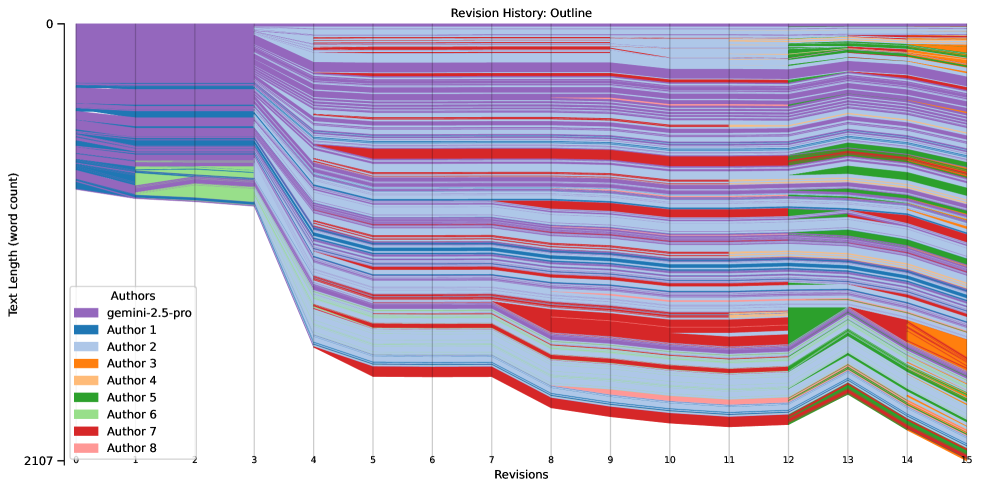
![Analysis of the AMOC report’s edit history, visualized as a history flow, reveals a complex interplay of AI and human contributions as the document evolved from an initial draft ([latex]0[/latex]) through multiple revisions.](https://arxiv.org/html/2602.09723v1/x1.png)
The Watchmen of the Ocean: Monitoring the AMOC in Real-Time
The Rapid Circulation Experiment (RAPID) and the Overturning in the Subpolar North Atlantic Program (OSNAP) utilize arrays of fixed moorings and autonomous gliders to directly measure the Atlantic Meridional Overturning Circulation (AMOC). These arrays span key sections of the Atlantic, providing continuous, high-resolution data on current velocity, temperature, and salinity. By quantifying the northward flow of warm, salty water and the southward return flow of cold, fresh water, RAPID and OSNAP determine the AMOC transport strength in Sverdrups (Sv). Prior to these deployments, AMOC strength was largely estimated through indirect methods; these direct measurements have revealed previously unknown variability, including seasonal and interannual fluctuations, and have improved understanding of the AMOC’s complex dynamics and spatial structure.
The integration of observational data from networks like RAPID and OSNAP with climate model simulations enables quantitative assessment of the Atlantic Meridional Overturning Circulation’s (AMOC) sensitivity to freshwater forcing. Increasing meltwater discharge from the Greenland ice sheet and enhanced sea ice export contribute to reduced salinity and density in high-latitude North Atlantic waters. This freshwater input alters the water column stratification, potentially weakening the AMOC by inhibiting deep water formation. By comparing modeled AMOC behavior under varying freshwater flux scenarios with direct observational measurements of AMOC strength and variability, scientists can constrain model parameters and improve projections of future AMOC stability and associated climate impacts.
A recent assessment of Atlantic Meridional Overturning Circulation (AMOC) dynamics was completed by a team of 13 scientists in a total of 46 hours and 36 minutes. This timeframe indicates a highly efficient workflow for analyzing complex oceanographic data, achieved through coordinated efforts and potentially streamlined data processing techniques. The rapid completion of this assessment highlights the feasibility of timely analyses crucial for monitoring climate systems and responding to accelerated changes, such as those driven by increased freshwater input. This efficiency suggests that similar rapid assessment models could be applied to other complex climate phenomena requiring near-real-time evaluation.
The Brink of Change: Tipping Points and the AMOC’s Stability
The Atlantic Meridional Overturning Circulation (AMOC) may not function on a simple linear scale, but rather exhibit bistability, a concept first explored in theoretical oceanographic models such as Stommel’s Box Model. This model, and subsequent refinements, demonstrate the potential for the AMOC to exist in two distinct, stable states: a strong ‘on’ state characterized by robust heat transport, and a weak or ‘off’ state with significantly reduced transport. This isn’t merely a matter of gradual slowing; the system can theoretically ‘flip’ between these states, suggesting that the AMOC doesn’t necessarily respond proportionally to external changes. Instead, it can remain in one stable condition until a certain threshold is crossed, after which a relatively small perturbation could trigger a rapid transition to the alternate state, potentially with profound climate consequences.
The Atlantic Meridional Overturning Circulation (AMOC) may not respond smoothly to external changes; instead, current research suggests it’s vulnerable to tipping points. This means that even seemingly minor disruptions – small perturbations in freshwater input from melting ice or changes in wind patterns – could trigger an abrupt and significant shift in the system’s behavior. Once a critical threshold is crossed, the AMOC may rapidly transition from a relatively stable, vigorous state to a weakened or even collapsed configuration. Critically, such a transition may not be easily reversed, potentially locking the climate system into a new, dramatically different state with far-reaching consequences for global temperatures and weather patterns. This inherent instability highlights the urgent need for continued monitoring and refined predictive models to better understand and mitigate the risks associated with AMOC decline.
A synthesis of seventy-nine peer-reviewed publications formed the foundation of this investigation into Atlantic Meridional Overturning Circulation (AMOC) dynamics. This comprehensive analytical approach allowed researchers to move beyond individual studies and identify emergent patterns and consistencies regarding the AMOC’s stability and potential for abrupt change. By meticulously evaluating a broad spectrum of modeling techniques, observational data, and theoretical frameworks, the study established a robust understanding of the complex interplay of factors governing the AMOC, ultimately strengthening confidence in projections concerning its future behavior and the risk of a significant slowdown or collapse. The sheer scale of the analysis highlights a commitment to a holistic view, essential for addressing such a critical and multifaceted climate phenomenon.
The Future Unfolding: AMOC Scenarios and Global Impacts
Current climate models, grounded in extensive observational data and established theoretical frameworks, consistently project a weakening of the Atlantic Meridional Overturning Circulation (AMOC) under scenarios of continued greenhouse gas emissions. This critical system of ocean currents, responsible for distributing heat globally, is showing signs of instability. Simulations reveal that increased freshwater input from melting glaciers and altered precipitation patterns disrupt the density gradients that drive the AMOC, potentially slowing its circulation. Such a slowdown isn’t an abrupt “shut off” as depicted in some media, but rather a gradual weakening with profound implications. While the exact rate and magnitude of this weakening remain areas of active research, the consensus among climate scientists points to a significant alteration of this vital oceanic process within the coming decades, necessitating continued monitoring and refined predictive modeling.
A diminished Atlantic Meridional Overturning Circulation (AMOC) is projected to trigger a cascade of regional climate shifts with far-reaching consequences. Europe could experience substantial cooling, potentially offsetting some of the warming driven by greenhouse gases, while tropical regions may face dramatic alterations in rainfall – increasing the risk of both severe droughts and intensified flooding. Simultaneously, a weakening AMOC contributes to rising sea levels, not uniformly across the globe, but particularly along the eastern coast of North America and parts of Europe, exacerbating coastal erosion and increasing the frequency of damaging storm surges. These interconnected changes pose significant challenges to agriculture, water resources, and infrastructure, demanding proactive adaptation strategies and underscoring the urgent need to mitigate the factors driving AMOC decline.
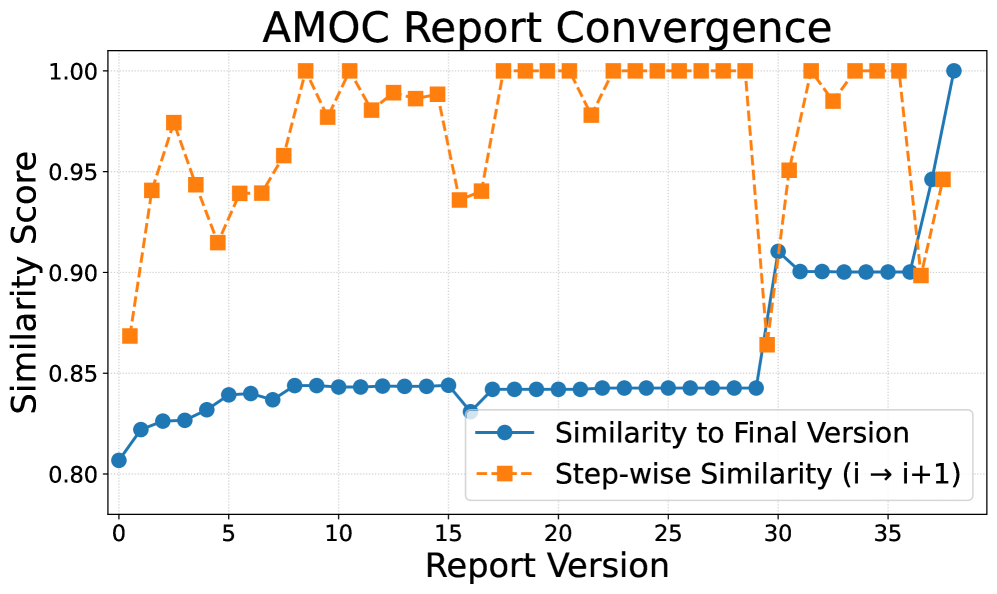
Analysis of the revision process revealed a substantial preference for AI-generated content, with these suggestions being implemented three times more often than manually crafted edits. This preference wasn’t merely quantitative; approximately 90% of the AI-generated revisions were ultimately retained in the final text, demonstrating a high degree of perceived quality and relevance. Such a retention rate underscores the efficiency gains achievable through this workflow and suggests a valuable role for artificial intelligence in accelerating and refining scientific communication, allowing researchers to focus on core discoveries rather than stylistic refinement.
The assessment of the Atlantic Meridional Overturning Circulation (AMOC) presents a quintessential ‘verification-poor problem’ – a system so complex that definitive proof of stability, or instability, remains elusive. This echoes a sentiment articulated by Blaise Pascal: “The eloquence of angels is not understood by men.” Just as angelic communication transcends human grasp, the subtle shifts within the AMOC defy simple observation. The study demonstrates how human-AI collaboration offers a pathway – not to perfect knowledge, but to a more nuanced understanding of these complex systems, acknowledging that every model, like every patch, is a philosophical confession of imperfection. The best hack is understanding why it worked.
What’s Next?
The exercise reveals, perhaps predictably, that a complex system’s confession of instability isn’t a singular event, but a cascade of admitted unknowns. The Atlantic Meridional Overturning Circulation, dissected through this human-AI collaboration, doesn’t offer definitive answers about tipping points-it exposes the limits of the questions themselves. The ‘signal’ of impending change remains obscured, not by a lack of data, but by the inherent difficulty of verifying predictions in systems resistant to controlled experimentation. This isn’t failure; it’s the system revealing its design sins.
Future work must confront the reality that certain problems-those endemic to high-dimensional, chaotic systems-are fundamentally verification-poor. The pursuit of increasingly complex models, while intellectually stimulating, may yield diminishing returns if those models remain untethered to robust validation strategies. A shift toward actively seeking ‘falsifiable’ indicators, even if imperfect, offers a more fruitful path than striving for unattainable predictive accuracy.
The demonstrated human-AI workflow isn’t a solution, but a scaffolding. The true leverage lies in identifying where human intuition and pattern recognition can best interrogate the outputs of AI, not simply accept them. The next iteration must explore methods for systematically ‘stress-testing’ the AI’s reasoning, forcing it to articulate its assumptions and expose the logical vulnerabilities inherent in its inferences. Only then can the collaboration transcend mere efficiency and approach genuine insight.
Original article: https://arxiv.org/pdf/2602.09723.pdf
Contact the author: https://www.linkedin.com/in/avetisyan/
See also:
- Invincible Season 4 Episode 4 Release Date, Time, Where to Watch
- Physics Proved by AI: A New Era for Automated Reasoning
- American Idol vet Caleb Flynn in solitary confinement after being charged for allegedly murdering wife
- Gold Rate Forecast
- “Wild, brilliant, emotional”: 10 best dynasty drama series to watch on BBC, ITV, Netflix and more
- Magicmon: World redeem codes and how to use them (March 2026)
- Seeing in the Dark: Event Cameras Guide Robots Through Low-Light Spaces
- Total Football free codes and how to redeem them (March 2026)
- Simulating Humans to Build Better Robots
- Olivia Colman’s highest-rated drama hailed as “exceptional” is a must-see on TV tonight
2026-02-11 16:15