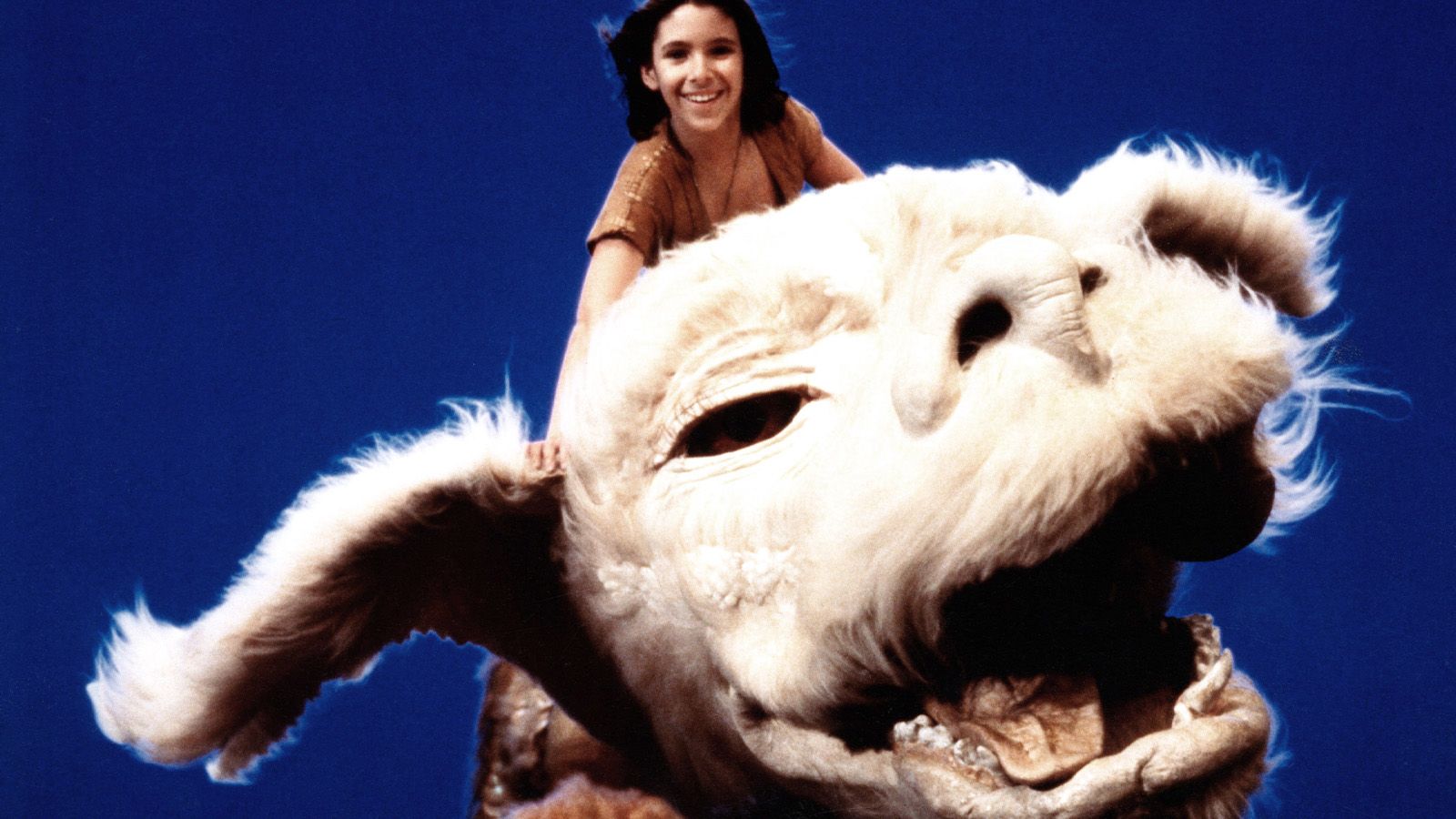
For many who came of age in the 1980s, The NeverEnding Story was a defining fantasy film. Released in 1984 and based on Michael Ende’s novel, the movie connected with audiences because of its focus on imagination and finding yourself. Its ending was particularly powerful, directly addressing viewers and encouraging them to use their own imaginations.
What really sticks with me about this film isn’t just the amazing practical effects – though they’re definitely a huge part of it – it’s how it keeps finding new audiences. It’s become one of those movies parents share with their kids, creating a legacy of fans. Sure, nostalgia is a factor, but it’s deeper than that. The film really connects with people on an emotional level, and I think it all comes down to one incredibly powerful line that just resonates with viewers.
The NeverEnding Story Still Speaks to the Inner Child In Its Fans
Wolfgang Petersen’s film version of Michael Ende’s The NeverEnding Story is a fantasy adventure, but at its heart, it’s a very human and touching story. The movie’s main message is captured in a single question asked by the Childlike Empress (Tammy Stronach) to Bastian: “Bastian, why don’t you pursue your dreams?”
There’s one question in The NeverEnding Story that always gets to me, and it really captures the heart of everything the film is about. As someone who grew up with this movie, it hits even harder now, especially when I share it with a new generation. It’s the point where the magical world of Fantasia beautifully connects with our own reality, and the story becomes about more than just fantasy – it starts to feel deeply human.
As a film lover, I always get a little emotional when I hear that line. When I was a kid, it felt like a direct invitation to dive into the story and really use my imagination. But now, as an adult, it hits differently. It’s a sad reminder of how life can sometimes beat that sense of wonder out of you, leaving you feeling jaded. It’s a surprisingly powerful line because so many of us can relate to that feeling. And as a long-time fan, it always makes me pause and think about the path I’ve taken and the choices I’ve made along the way.
As a film buff, I’ve always been drawn to stories about escaping reality, and The NeverEnding Story really hits that spot. The main character, Bastian, is a kid dealing with a lot – he’s lonely, gets picked on at school, and is still mourning the loss of his mom. His dad isn’t really around, so he throws himself into this incredible book for comfort. At first, it’s just a way to escape his troubles, but eventually, the story actually teaches him some really important lessons about life – lessons that even…
Throughout the story, the Childlike Empress’s words and the unfolding events demonstrate to Bastian—and the audience—that imagination isn’t about escaping reality, but about improving it. While Bastian reads, a destructive force called The Nothing is consuming the world he’s come to cherish. This Nothing arises from a lack of interest and lost dreams, mirroring challenges many people face in their own lives.
The story touches on universal themes of hope and loss that everyone can understand. Adults may connect with it on a deeper level because they’ve lived longer and considered more possibilities. It appeals to all ages – children identify with Bastian’s common problems, like being bullied, while adults recognize that fear and indifference don’t simply go away when you grow up.
When the movie directly addresses Bastian – and the audience – it’s a challenge to get involved. The NeverEnding Story isn’t just asking Bastian to save the world of Fantasia, but to take charge of his own life too. The meaning of this becomes more apparent as we get older – the story is really about rediscovering the sense of possibility we had as children and reclaiming those lost parts of ourselves.
As a critic, I’ve seen countless films showcase bravery through grand adventures and physical feats. But The NeverEnding Story, while not a flawless translation of the book, really gets what true courage is. It isn’t about fighting monsters; it’s about what’s happening inside. For me, the most powerful moment isn’t any of the fantastical imagery, but when Bastian finally finds the strength to believe in himself and his own value. It sounds simple, but that act of self-belief is what ultimately saves Fantastica, and honestly, it’s a surprisingly moving idea.
The NeverEnding Story Highlights the Power of Belief
Bastian, the child the story’s characters have been looking for, isn’t just a character—he represents a key message for viewers. He shifts the focus away from the magical world of Fantasia and towards the personal changes happening in the real world, ultimately changing how the entire story is understood.
Bastian needs to understand he’s the only one who can save the world of Fantastica. But because the story acknowledges the audience directly, we, too, realize we have the power to create our own realities. Bastian isn’t just a reader escaping into a book – he’s essential to the story. This highlights the story’s main idea: that what we believe in can truly change things.
The Nothing is a challenging concept because it reflects a universal human experience. It often symbolizes difficult emotions like sadness, grief, or mental health struggles – a feeling of losing yourself and control over your life. Importantly, The Nothing isn’t something outside of us; it’s created by our own despair and feelings of hopelessness.
The film deeply connects with adults who remember it from their childhoods. As people grow older, they often let go of their dreams and sense of wonder, and ‘The Nothing’ represents that loss. Essentially, becoming an adult often means losing touch with our imagination. What makes ‘The Nothing’ such a compelling villain is that it isn’t defeated by magic or power, but by qualities like bravery and hope.
As a huge film fan, I’ve always been captivated by Falkor in The NeverEnding Story. Sure, he’s a stunning example of classic practical effects, but what really makes him special is how perfectly he fits into the story. He’s essentially the antithesis of The Nothing – where that’s all darkness and despair, Falkor is literally made of air, warmth, and happiness! He’s a luckdragon, and he shows up right when Atreyu is at his lowest point. To me, Falkor isn’t just a cool creature; he is the heart of the film’s message – a living embodiment of hope and imagination.
After rescuing Fantasia with his imagination, Bastian flies home on Falkor, a symbol of hope, luck, and bravery. Falkor represents the strength Bastian gains in the fantasy world and brings back with him to face his fears in reality. The journey shows Bastian’s newfound confidence isn’t just for Fantasia – it’s something he can use in his everyday life.
As the story reaches its most exciting part, the audience sees a character realize that having a strong imagination and believing in things aren’t flaws – they’re actually vital for personal growth, even if others disagree. It’s not enough to just imagine things, and it’s also not enough to rush into action without thinking. True progress comes from using both imagination and thoughtful action together to solve problems and take charge of your life.
Lots of adults can relate to the feeling of losing hope, and today, more and more people are struggling with creative and emotional burnout. It’s easy to feel lost or disconnected when we’re constantly connected to everything happening in the world. This isn’t a new problem, though. The film The NeverEnding Story explores these feelings using a fantastical story and suggests a way to cope.
The NeverEnding Story is a Timeless Tale of Human Perseverance
Like Bastian, Atreyu experiences loss during his quest but perseveres. He’s largely on his own when facing the destruction of Fantasia, including the heartbreaking loss of Artax. Despite being so young, he tackles an incredibly difficult goal, and that’s really the heart of The NeverEnding Story: the desire to believe we can conquer any obstacle.
This film cleverly uses a fantastical setting to explore deeply human feelings and ideas that stay with viewers long after they’ve seen it. The core message, delivered through the character of the Childlike Empress, is timeless and continues to resonate with audiences today. When the world feels bleak and hopeless, embracing imagination, faith, and creativity can offer a powerful source of hope.
The film tackles some difficult and serious subjects, which is often just part of life. By honestly facing these challenges, The NeverEnding Story offers a way to cope with our own problems.
In The NeverEnding Story, the film shows that facing challenges and growing as a person is a continuous journey. No matter how much we try, difficult things are inevitable. While we never truly overcome fear, we learn to deal with it in different ways. The movie acknowledges that personal growth is ongoing, which is why it continues to resonate with audiences of all ages. Each time you watch it, the emotional impact deepens.
Read More
- Clash Royale Best Boss Bandit Champion decks
- Vampire’s Fall 2 redeem codes and how to use them (June 2025)
- Mobile Legends January 2026 Leaks: Upcoming new skins, heroes, events and more
- World Eternal Online promo codes and how to use them (September 2025)
- Clash Royale Season 79 “Fire and Ice” January 2026 Update and Balance Changes
- Best Arena 9 Decks in Clast Royale
- M7 Pass Event Guide: All you need to know
- Clash Royale Furnace Evolution best decks guide
- Best Hero Card Decks in Clash Royale
- How to find the Roaming Oak Tree in Heartopia
2025-12-15 01:12